Caring for Lacquered Wardrobes in Singapore's Tropical Climate: A Practical Guide for HDB and Condo Owners
Living in Singapore means living with humidity levels that hover between 70% and 85% for most of the year. Anyone who has watched the side of a fitted cabinet bloom with a faint white haze after the December monsoon knows exactly what that does to a lacquered surface. I learned it the hard way last March, when I visited a friend's new four-room HDB flat in Punggol. His wardrobe, only eight months old, already had three small cloudy patches along the bottom panel where the morning sun hit the corridor wall. The finish was matte lacquer, not cheap, but it had never been told what was coming. We spent a Saturday afternoon wiping it down with microfiber cloths, a few drops of pH-neutral soap, and a final buff with a dry cloth. The haze came off. The lesson stayed: a lacquered wardrobe in a tropical climate is not a fire-and-forget purchase. It is a relationship.
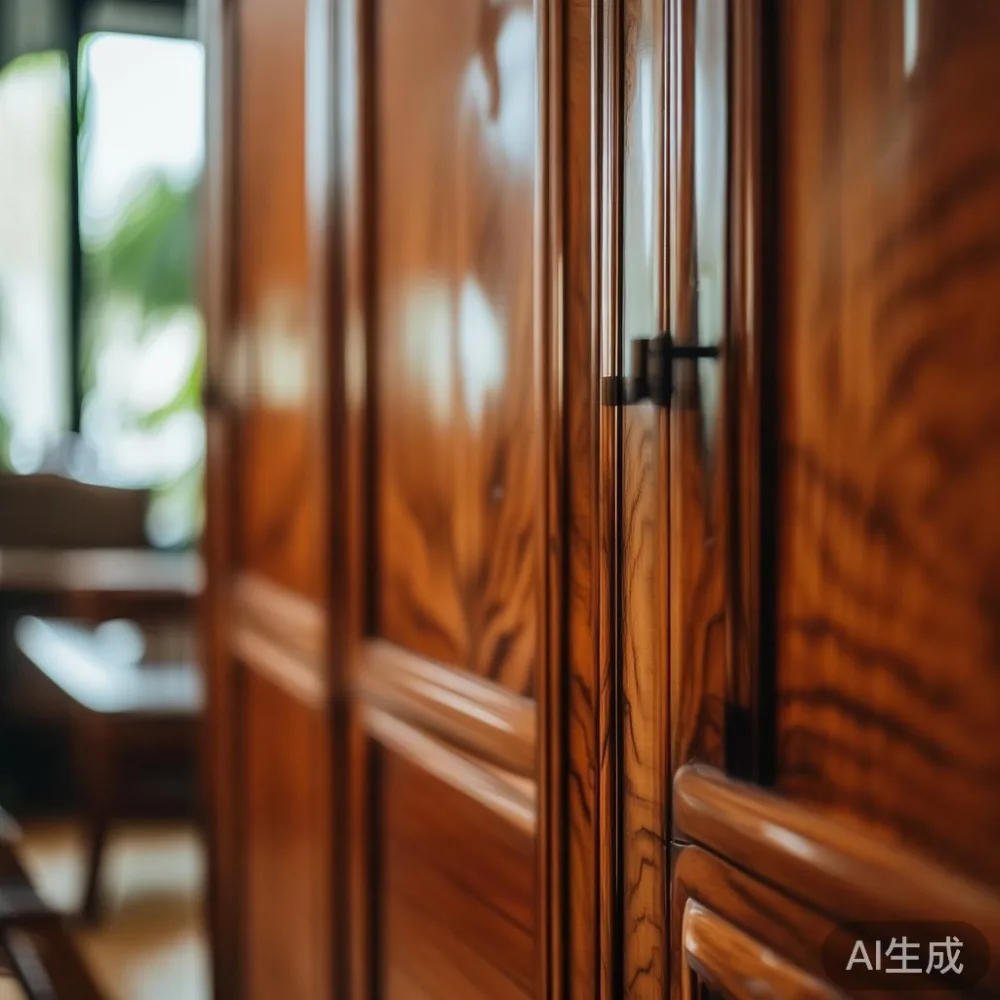
At MIDHILL, where we have built solid wood furniture since 2008 out of our Foshan workshop, we have shipped lacquered wardrobes to Singapore, Malaysia, Indonesia, and the Philippines. The same complaints show up in every after-sales email: dulling, micro-cracks near the hinges, sticky residue that will not come off. Most of those problems are preventable with a routine that takes about twelve minutes a week and a few pieces of kit you can pick up at any Tampines or Bedok hardware shop. This guide walks through that routine, the science behind it, and the specific traps that come with HDB corridor widths, condo lift dimensions, and the way GST nudges your budget.
Why does lacquer struggle in Singapore's humidity?
Lacquer is a cured film. Whether it is a traditional nitrocellulose, a conversion varnish, or the acid-catalyzed systems MIDHILL uses on our post-modern light luxury wardrobe line, it behaves like a thin, rigid skin stretched over a substrate that breathes. Solid wood moves; lacquer barely moves at all. When relative humidity climbs above 80% for weeks, the wood underneath expands. When the air-con cuts in at 23°C and drops indoor humidity to 55%, the wood contracts. The lacquer tries to follow but cannot, and over twelve to eighteen months you get the classic "spider web" of hairline cracks near joints, especially around the 1.8 m to 2.4 m vertical stiles of a full-height wardrobe.
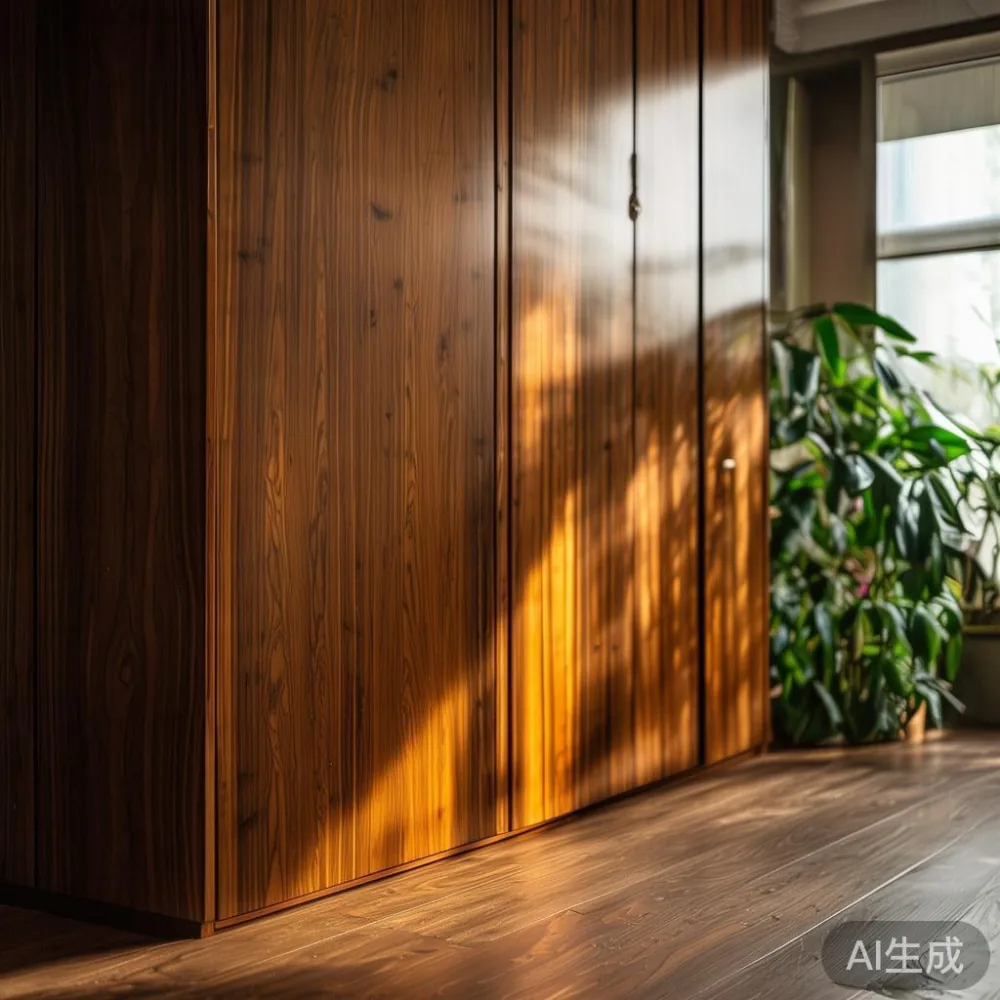
Singapore adds two more stressors. First, UV index. Even through corridor-facing glass, you are looking at a UV index of 8 to 11 between 11am and 3pm for most of the year. Lacquer, like any polymer, photodegrades. The clear coat yellows, the pigment layer fades unevenly, and the topcoat loses its slip. Second, salt. Homes within roughly 1.5 km of the coast at East Coast, Marine Parade, or Sentosa get a fine marine aerosol on every surface. Salt plus humidity plus heat is the worst combination for a cured film. The good news: lacquer survives all three if you control two of the three variables. You cannot control the weather, but you can control indoor humidity and cleaning chemistry.
What is the weekly routine a Singapore owner should actually follow?
Twelve minutes, once a week. That is the time budget I now give every customer who walks through the MIDHILL showroom or calls our Singapore delivery coordinator. Here is the exact sequence.
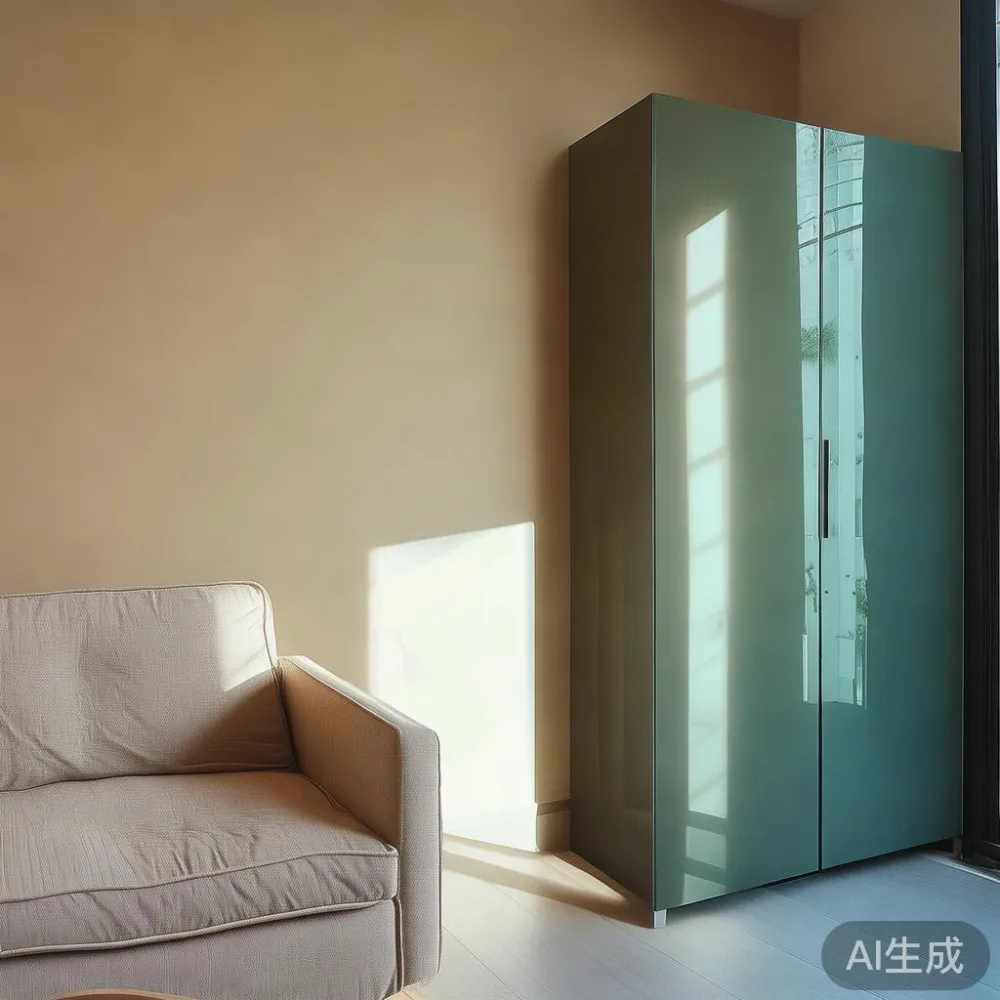
Minute 1 to 3: Dry dust with a clean microfiber cloth, 40 cm by 40 cm, GSM between 300 and 400. Wipe with the grain on the long panels, top to bottom. Skip feather dusters; they redistribute oil.
Minute 4 to 7: Damp clean with a second microfiber, wrung until no water drips. Add two to three drops of pH-neutral wood soap per 500 ml of water. Never use all-purpose spray, glass cleaner, or anything containing ammonia or silicone. Silicone is the silent killer of lacquer; it bonds to the film and creates a haze that no future refinisher can easily remove.
Minute 8 to 10: Dry buff with a third cloth. Circular motions, light pressure, until the surface "squeaks" under the cloth. That squeak tells you the surface is dry and the slip is restored.
Minute 11 to 12: Inspect the four hinge zones, the two top corners, and the floor-level plinth. These are where dust and humidity accumulate first. If you see a dull spot that does not respond to buffing within thirty seconds, mark it with a small painter's tape dot and check it again in seven days. If it is still there, you are looking at a finish break, not a dirt film, and it needs professional attention.
The cost of consumables in Singapore runs about SGD 18 to SGD 28 per quarter: three microfiber cloths (rotate, wash in fragrance-free detergent, no fabric softener), one bottle of pH-neutral soap, and a tube of natural paste wax if your wardrobe has a French light luxury satin finish rather than a high-gloss piano coat.
How do I choose a missing parts for a living room?
Choose a missing parts for a living room by measuring the existing hardware three times, matching the screw thread and shank length to within 0.5 mm, and ordering from a supplier who can ship a sample before you commit to a full set. The first sentence sounds obvious, but it is the rule that saves the most money. Hardware failure on a fitted wardrobe almost always traces back to a 2 mm mismatch between the replacement hinge knuckle and the original mounting plate, not to a design flaw in the wardrobe itself.
For a typical MIDHILL wardrobe installed in a Singapore HDB, the door hinges are 35 mm cup, 105° opening, with a 3 mm shank and M4 screws at 16 mm centres. If you lose a hinge cup or a soft-close damper after the warranty window closes, you need exactly those numbers, plus the overlay (usually 18 mm to 22 mm for a frameless door). Bring a digital caliper, not a ruler. A 2 mm error at the hinge becomes a 6 mm gap at the door edge, and that gap is where the December monsoon will find the raw MDF edge and swell it.
One more rule: never substitute zinc-alloy hinges for steel on a wardrobe door wider than 50 cm. Singapore humidity will pit the softer alloy inside eighteen months. Stick with cold-rolled steel with a nickel or zinc-nickel plating. A six-piece hinge set of the right spec retails for about SGD 24 to SGD 40 at hardware chains in Tampines or online, against the SGD 120 to SGD 180 a carpenter will charge for a single service call to Bedok or Punggol on a Saturday morning.
Which cleaning products actually work on lacquer, and which destroy it?
The product landscape in Singapore supermarkets is a minefield. I keep a small reference card for customers, and the categories are simple. Use: pH-neutral wood soaps (pH 6.5 to 7.5), pure distilled water when you need a streak-free finish on dark lacquer, natural paste waxes containing carnauba or beeswax, and microfiber rated for finishing (lint-free, split weave). Avoid: any cleaner with ammonia, bleach, or vinegar; silicone-based polishes marketed as "wood shine"; abrasive creams such as CIF or AJAX; and oil soaps containing linseed or tung oil, which penetrate the film and darken it permanently within a year.
Distilled water is worth the SGD 2.50 per five-litre bottle. Tap water in Singapore averages 60 mg/L to 80 mg/L of total dissolved solids. That is not catastrophic, but the calcium and magnesium will leave a faint, cumulative haze on a piano-black lacquer over six months of weekly wiping. Distilled water eliminates the variable. If you are finishing a 2.4 m tall wardrobe face, you will use roughly 80 ml per session, so a five-litre jug lasts about sixty sessions, or just over a year of weekly care.
Paste wax application is a quarterly task, not weekly. Use a rice-grain amount on a soft cloth, work it into the surface in overlapping circles, let it haze for eight to ten minutes (Singapore ambient is enough; do not force-dry), then buff off with a clean cloth. A 200 ml tin costs SGD 28 to SGD 45 and covers a wardrobe four to six times. The wax does not "feed" the wood on a lacquered piece; it fills micro-pores in the cured film and gives the slip layer something sacrificial to wear down instead of the lacquer itself.
What about spills, scuffs, and the dreaded white heat ring?
Spills on lacquer are a clock. You have roughly twenty minutes before water alone begins to cloud a satin finish and ten minutes before coffee or wine starts to stain through the topcoat. Blot, do not wipe. Wiping spreads the liquid and pushes it into the joint between stile and rail. Blot with a dry microfiber, then follow with the damp routine above. For sticky residue such as tape gum, a tiny amount of citrus-free adhesive remover on a cotton bud, followed by an immediate dry buff, usually works. Test on the inside of a door panel first, where any mark will be hidden.
White heat rings come from hot mugs, hairdryers, or steam from a kettle set on a wardrobe top. They are not stains; they are moisture trapped under the lacquer film. The home remedy that works on a French light luxury satin finish is a small amount of non-gel toothpaste (plain white, no microbeads, no whitening chemicals) rubbed in a circle with a soft cloth for ten to fifteen seconds, then wiped clean and waxed. The mild abrasive levels the film just enough to release the trapped water. On a high-gloss piano coat, do not try this; call a refinisher.
Scuffs from belt buckles, children's toys, or a vacuum cleaner head are the most common service call we receive at MIDHILL. About 70% are cosmetic and can be handled with a color-matched wax stick (SGD 12 to SGD 25 per stick at specialty shops in Joo Chiat or online). The remaining 30% have broken through to the wood and need a patch-and-reroll by a professional. The patch cost in Singapore runs SGD 90 to SGD 180 per panel for a satin finish, and SGD 220 to SGD 350 per panel for a high-gloss piano coat because of the multi-layer polish work.
How should I handle delivery, installation, and the 14-day returns window?
Singapore logistics are unforgiving on a 2.4 m tall wardrobe. Measure your lift before ordering, not after. Standard HDB passenger lifts are 1.1 m wide by 1.4 m deep with a 2.1 m door height; newer BTOs at Punggol and Sengkang have wider lifts at 1.3 m by 1.6 m. A flat-pack wardrobe panel from MIDHILL is usually 240 cm by 60 cm by 4 cm, with a diagonal of 247 cm. That fits a newer BTO lift with 12 cm to spare on the diagonal, but will not fit through an older Tampines or Bedok block without tilting the lift car against the back wall. Condos are usually easier: most have a service lift with a 1.5 m by 2.0 m cabin.
Free shipping from MIDHILL applies to orders above US$350, which works out to roughly SGD 480 at current exchange rates including GST. Below that threshold, shipping to a Singapore HDB address runs SGD 85 to SGD 140 depending on the lift access and whether a carry-up past the second floor is needed. Our standard delivery window is 18 to 28 working days from Foshan to Singapore, including vessel transit (around 7 days), customs clearance (2 to 4 days), and last-mile delivery booked through our Singapore partner. You will receive a 4-hour delivery window 48 hours in advance.
Assembly on site takes 90 to 180 minutes for a three-door wardrobe, depending on wall anchoring. HDB concrete walls need a 10 mm hammer drill and M8 anchors; condo drywall partitions need a different approach and often a spreader plate behind the plaster. Our Singapore team offers this as an add-on at SGD 140 to SGD 220 per wardrobe. The 14-day return window starts on the day of delivery. If you see a finish defect, a wrong colour, or transit damage, photograph it within 48 hours and email our service desk. We arrange return collection at no charge. After day 14, you move into the 10-year structural warranty for frame and joint integrity, and our lifetime refinishing service for the lacquer surface, which costs only the round-trip freight from Singapore to Foshan and back.
What is the long-term cost of owning a lacquered wardrobe in Singapore?
Over a ten-year horizon, the math is more forgiving than most owners expect. Year 1: purchase price, depending on configuration, SGD 1,650 to SGD 3,200 for a MIDHILL three-door wardrobe in solid rubberwood with a French light luxury satin lacquer. Year 2 to 4: consumables, SGD 80 to SGD 110 per year, mostly replacement microfibers and paste wax. Year 5: first professional inspection, SGD 60 to SGD 90, where a technician checks hinge torque, panel alignment, and finish integrity. Year 6 to 8: minor touch-ups, SGD 40 to SGD 120 per year for wax sticks and one or two hinge swaps. Year 9 or 10: optional full refinish, SGD 480 to SGD 720 for a satin wardrobe including return shipping and GST, against the SGD 1,800 to SGD 3,500 cost of buying new and disposing of the old one.
The wardrobe is also the anchor piece that ties a bedroom to the rest of the home. If you are ordering other pieces from MIDHILL, such as a solid wood bed frame, a dining table, a nightstand, or a marble table for the living room, batch the shipment. One consolidated container cuts the per-piece freight by 30% to 45% and gives you a single delivery window to coordinate with the lift booking at your condo. Our Singapore coordinator can sequence the wardrobe, bed frame, and nightstand so they arrive on the same afternoon, reducing the number of times you need to block the service lift and the corridor.
If you are reading this from a Tampines, Bedok, or Punggol flat, the climate does not get any easier than it already is. The lacquer will need you. Twelve minutes a week, a SGD 25 budget per quarter, and a habit of blotting instead of wiping will keep that wardrobe face quiet and reflective for the next decade. If something does go wrong, the warranty and the refinishing service exist because solid wood furniture, looked after, is meant to outlive the lease on the flat it sits in.