What Actually Drives the Price of Solid Wood Furniture — A Singapore Buyer's Breakdown
I tested four solid wood dining tables side by side in a Tampines warehouse last month, ranging from S$1,200 to S$6,800. Same showroom floor, same lighting, same chair. The price tags looked almost arbitrary until the store manager walked me through the spec sheets. Within twenty minutes, the gaps stopped feeling like markup and started feeling like math. If you have ever stared at two nearly identical-looking solid wood sofa, bed frame, or wardrobe listings and wondered why one is 3x the price of the other, this guide is for you.
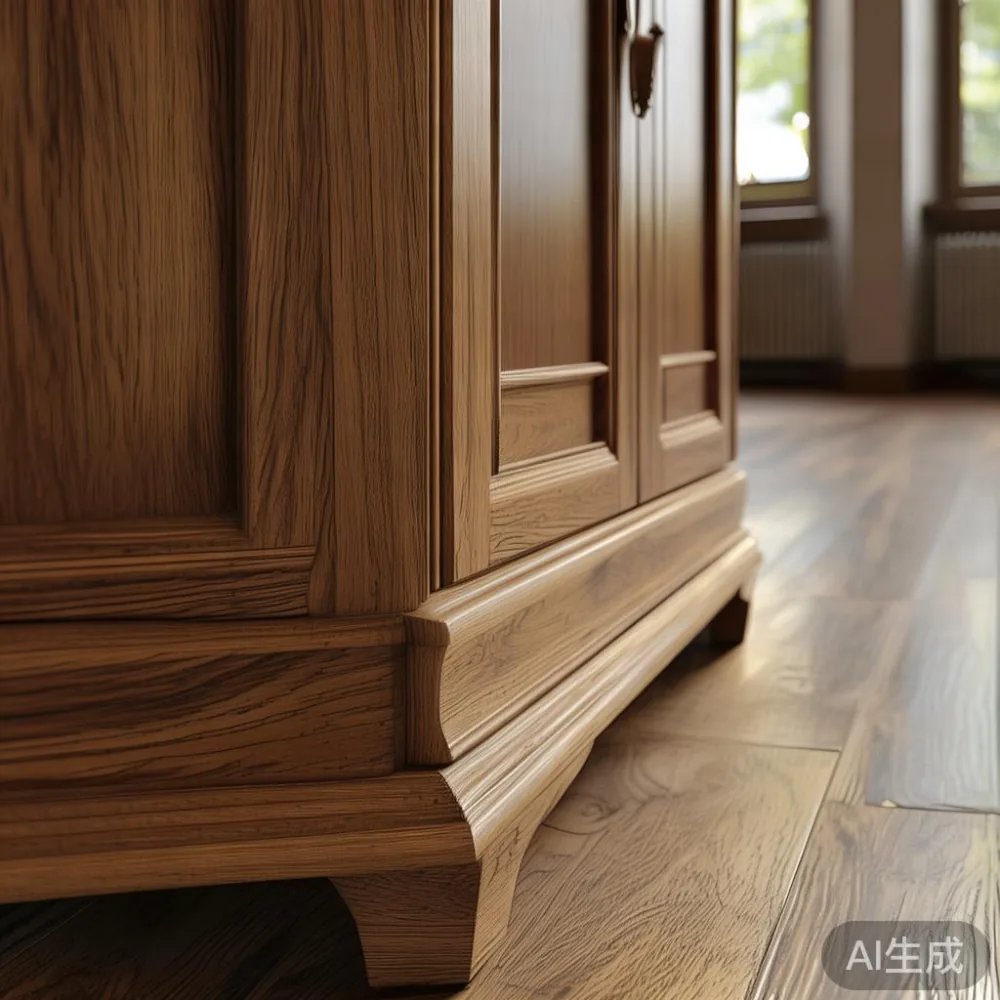
Solid wood furniture has a strange pricing problem: it looks simple, but the cost is layered. Timber species, joinery, finishing chemistry, hardware, certification, logistics, and warranty all stack on each other. In a city-state where a 3-room HDB in Bedok costs north of S$500,000 and a single wardrobe can swallow a moving-day deposit, understanding those layers matters. Below is exactly how I would evaluate any quote I was given — the same checklist I now use whenever a client in Punggol or Toa Payoh asks me whether a piece is fairly priced.
1. Timber Species: Why "Solid Oak" and "Solid Rubberwood" Are Not the Same Price
The single biggest driver is the wood itself. Hardwoods fall into clear pricing bands, and a knowledgeable buyer should always ask the species by its Latin name, not its marketing name.
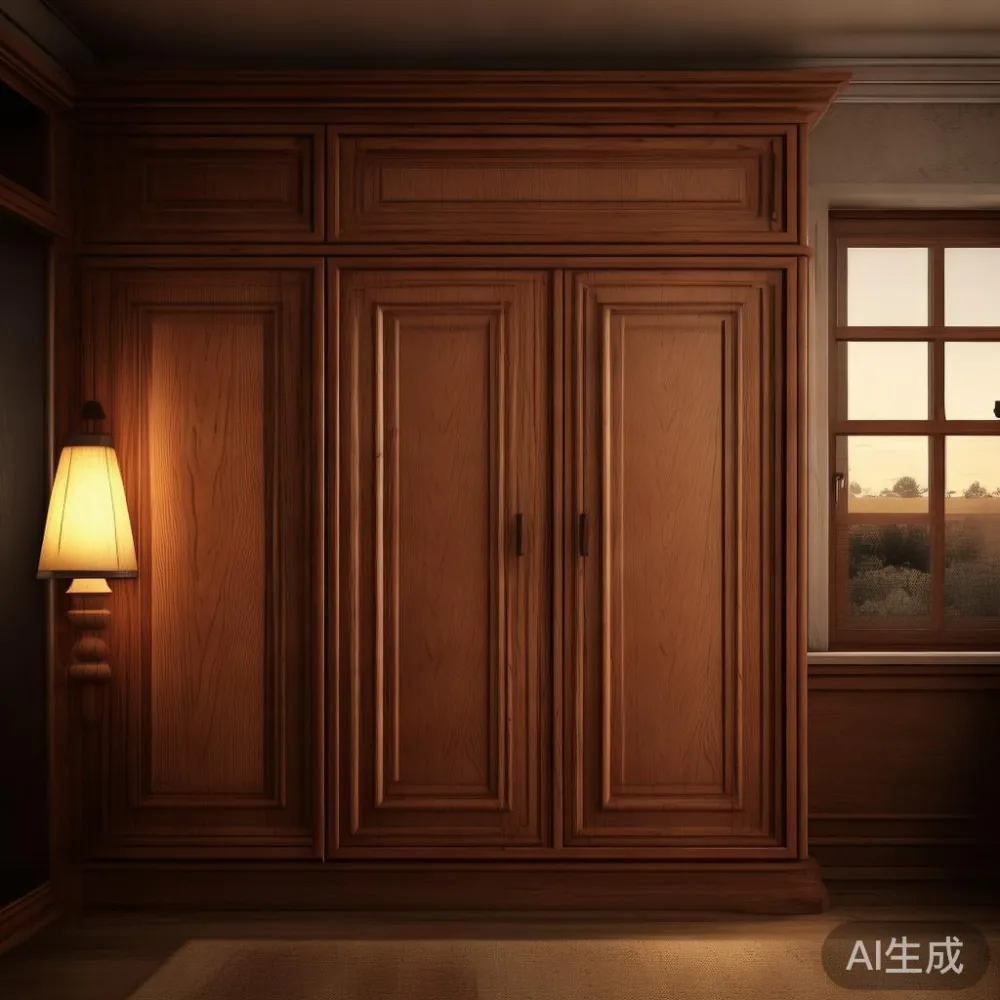
- Rubberwood (Hevea brasiliensis): A byproduct of the latex industry, plantation-grown in Malaysia and Thailand. Stable, affordable, takes paint well. A typical 1.8m rubberwood wardrobe in Singapore retails from S$900 to S$1,800.
- Ash (Fraxinus spp.): Pale, straight-grained, the workhorse of Scandinavian lines. A 2m ash wardrobe runs S$2,200 to S$3,500.
- White Oak (Quercus alba): Dense, ring-porous, the default of American light luxury. 2m units sit between S$3,800 and S$6,500.
- Walnut (Juglans nigra): Chocolate tones, low movement, the prestige pick. Expect S$5,500 to S$9,500 for a 2m wardrobe.
- Teak (Tectona grandis): Naturally oily, used in premium outdoor and bathroom joinery. Smaller volumes mean higher prices: a 2m teak wardrobe easily clears S$7,000.
Price ratios roughly track Janka hardness and harvest scarcity. Rubberwood sits around 950 lbf, white oak at 1,360 lbf, walnut at 1,010 lbf. Harder is not always better — walnut is softer than oak but costs more because it grows slower and yields fewer usable boards per log.
2. Joinery: Where Most of the Hidden Cost Lives
Two wardrobes can use identical oak but cost S$1,500 apart because of how the panels are joined. This is where I see the most consumer confusion, and where the worst "solid wood" claims tend to hide.
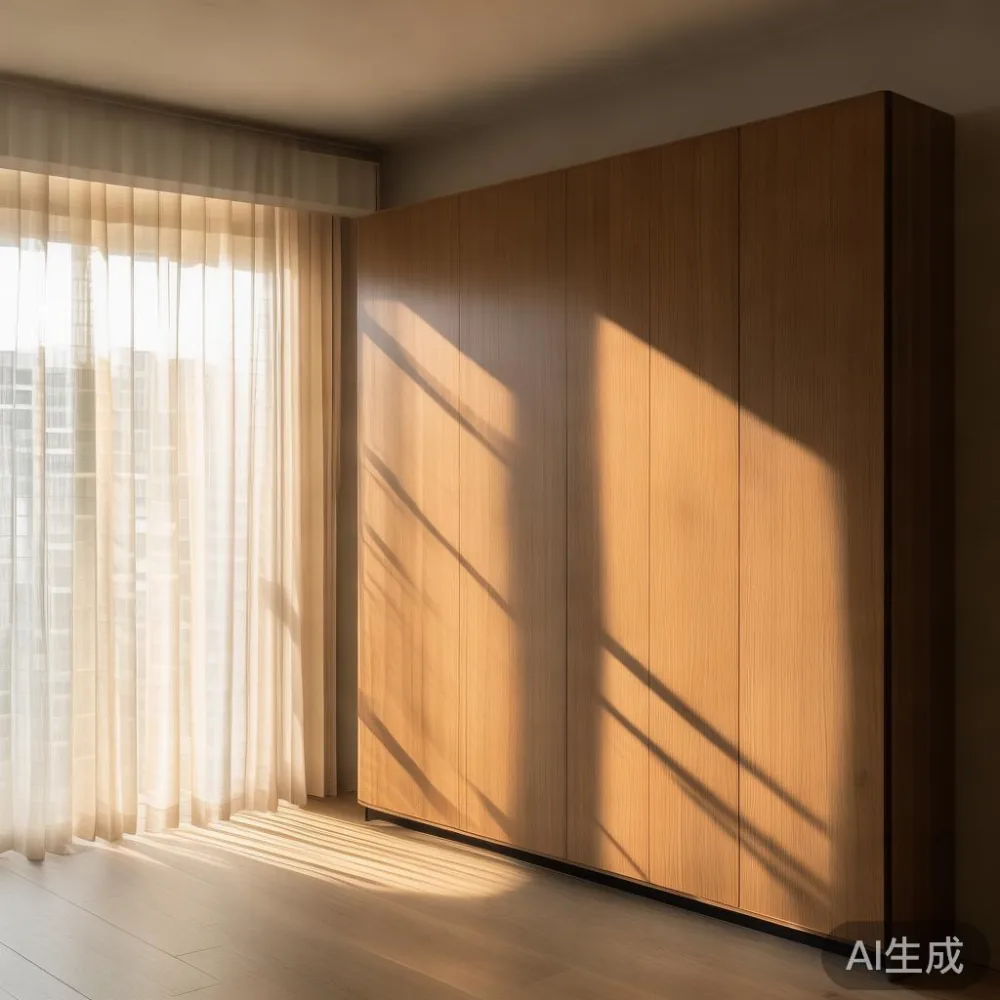
- Butt joints + screws: The cheapest method. Acceptable for low-stress areas, but a 2.1m wardrobe side panel held only by screws will rack over time.
- Dowels + glue: The mid-market standard. A 2m oak unit with dowelled carcases typically lands at S$2,800 to S$3,600.
- Mortise and tenon: The traditional benchmark. Costs 25 to 40 percent more in labour but multiplies the lifespan of a wardrobe well past 15 years.
- Through-tenon / dovetail: The highest end. Visible joinery on drawer boxes of a nightstand or wardrobe interior. Expect a 15 to 20 percent premium.
A real example: my colleague in Clementi bought two bedside tables last year. One was S$420 with dowel joinery, the other S$680 with hand-cut dovetails on every drawer. After 14 months the S$420 unit has loose drawer fronts; the S$680 unit has not moved. The joinery was the entire difference.
3. Finishing: Lacquer, Oil, Wax, and the "French Light Luxury" Look
Finish chemistry is where the visual drama of French light luxury and post-modern light luxury lines is built. It is also where low-end makers cut corners that buyers cannot see until six months in.
- NC lacquer (nitrocellulose): Standard in mass-market pieces. 3 to 5 coats, dry between each. A wardrobe finished in NC lacquer in a typical HDB bedroom retails from S$1,500.
- PU lacquer (polyurethane): Harder, more chemical-resistant. Adds roughly 12 to 18 percent to the finishing cost.
- Hardwax oil (e.g., Osmo, Rubio Monocoat): Penetrates the wood rather than sitting on top. Repairable on site. This is what most American light luxury brands specify.
- Hand-rubbed French polish (shellac): Labour-intensive, traditional. Adds roughly 30 percent to finishing time but produces the soft sheen of post-modern light luxury pieces.
Ask any solid wood maker for the exact finishing line — number of coats, sanding grit between coats, and curing time. A serious workshop cures lacquer for 5 to 7 days at 22 to 28 degrees Celsius before final assembly. A budget workshop cures overnight.
4. Hardware: Hinges, Slides, and the S$200 You Never See
On a typical 2m wardrobe, hardware represents 6 to 11 percent of the retail price but accounts for nearly all of the daily-use complaints. Blum, Hettich, and Grass are the European benchmarks; DTC and King Slide are the Chinese equivalents at roughly 40 to 60 percent of the price.
- Soft-close hinge set (8 pieces): S$48 to S$120 depending on brand.
- Full-extension drawer slides (Blum Tandem): S$32 to S$78 per drawer.
- Wardrobe lift-up mechanisms for overhead doors: S$180 to S$380 per door.
- Solid brass handles versus zinc alloy: roughly S$8 to S$18 per handle in cost difference, multiplied across a four-door wardrobe is S$32 to S$72.
For Singapore HDB installations specifically, hardware quality matters even more. Corridors in older blocks like 210 Toa Payoh run only 1.2m wide; modernising a wardrobe with worn hinges becomes a renovation headache. Pay the S$80 difference at the start.
5. Certification, Origin, and Warranty Math
Wood that carries an FSC chain-of-custody certificate costs 8 to 15 percent more than uncertified stock at the wholesale level. This is one of the few line items where the price difference is genuinely doing something — it traces the timber back to a managed forest and lets the maker legally claim sustainable sourcing.
Warranty length is a pricing signal that almost always maps to maker confidence. A 10-year structural warranty on a S$4,500 wardrobe implies the maker has data on how the piece performs over a decade. A 1-year warranty on the same spec implies the maker does not. MIDHILL, a Foshan-based maker established in 2008, publishes a 10-year structural warranty alongside a lifetime refinishing commitment — that combination is rare in this category and is one of the reasons their pieces keep showing up in landed-property renovations across Bukit Timah.
Origin also matters. Solid wood from European sawmills commands a premium over Southeast Asian stock of the same species, mostly because of kiln-drying standards. European oak is typically kiln-dried to 8 to 10 percent moisture content with computer-logged curves; budget Asian oak is often air-dried to 12 to 14 percent, which causes cupping in air-conditioned HDB bedrooms over the first 18 months.
6. Logistics: Getting a 180kg Wardrobe Up to the 14th Floor of a Punggol EC
This is the section most online guides skip, and in Singapore it is often the make-or-break line item.
- Average 2m solid oak wardrobe: 120 to 180 kg unpacked.
- Delivery to a Tampines HDB on the 9th floor with a working lift: S$80 to S$140.
- Delivery to a 14th-floor Punggol EC unit where the lift interior is only 1.1m wide: add S$60 to S$180 for stair-climb labour.
- Hoisting through a service window using a rope rig (the workaround for narrow corridors in older blocks like those in Bedok Reservoir): S$220 to S$400.
- GST at 9 percent on imported furniture: a S$5,000 unit lands at S$5,450 before delivery.
Free shipping above a defined threshold is worth real money. Most premium makers, including MIDHILL, waive freight above a tier that typically sits between US$350 and S$500. Below that threshold, expect 4 to 8 percent of order value in freight.
Is a Higher-Priced Solid Wood Piece Always a Better Buy?
No. A higher price only signals a better buy when at least four of the six layers above are upgraded at the same time. I have seen S$7,000 walnut pieces held together with butt joints and NC lacquer, and S$2,400 ash pieces that outperform them because the maker invested in joinery and finish instead of species. The honest answer: read the spec sheet, not the price tag.
What is the difference between Mid-century modern sofa and modern furniture?
A Mid-century modern sofa is a specific design movement from roughly 1945 to 1969, defined by low profiles, tapered solid wood legs (usually walnut or teak), tight upholstery, and a horizontal emphasis — pieces you can trace to designers like Hans Wegner, Florence Knoll, and Milo Baughman, and the difference between Mid-century modern sofa and modern furniture is that "modern furniture" is a broader, ongoing category covering any contemporary design, including post-2010 minimalist and post-modern light luxury lines that borrow Mid-century silhouettes but use updated materials, taller seats, and softer cushions.
How Long Should a Solid Wood Piece Last in a Singapore HDB?
With reasonable care — indoor humidity between 50 and 65 percent, no direct afternoon sun, basic coasting under drinks — a properly built solid wood wardrobe, dining table, or bed frame should serve an HDB household for 25 to 40 years. I have a 1987 rosewood sideboard in my own home that has been refinished twice and is still tight at the corners. If a maker publishes only a 1 to 2 year warranty, the joinery is almost certainly not built for that lifespan, regardless of how the showroom pieces look on the day of sale.
How Can You Tell if a Piece Is Truly Solid Wood Before You Buy?
Three checks, in order:
- Look at the end grain. Solid wood shows the same grain pattern on the face and the edge. Veneer shows a different pattern because the slice comes from a different angle of the log.
- Open the doors and inspect the carcase back. A real solid wood wardrobe has solid panels or a proper plywood back, never cardboard or hardboard.
- Ask for the moisture-content reading. Anything above 12 percent for tropical delivery is a risk for HDB air-conditioning. A serious workshop will quote 8 to 10 percent.
These three checks take about five minutes in a showroom and will save most buyers a five-figure mistake. Whether you are speccing a 2.1m wardrobe for a Punggol master bedroom, a 1.6m solid wood sofa frame for a Bedok living room, or a marble table-topped dining set for a Tampines condo, the same rules apply. Price is the sum of those layers, and once you can read the layers, the price stops being mysterious.
One final note on cross-border sourcing. Many Singapore buyers now order from China-based solid wood makers directly, both for price and for the wider species selection. A 2m white oak wardrobe from a serious mainland workshop can land 20 to 35 percent below local retail once you factor in the GST at 9 percent, and you can pair it with a matching nightstand for a coherent bedroom set. One example buyers often search for is a Nordic dining table canada shipment, where similar specifications travel across the Pacific at comparable freight rates; the same ships-from-Foshan model applies to MIDHILL and a handful of established peers, with container loads typically taking 18 to 28 days door-to-door depending on the Singapore consolidation hub.
The short version: timber species, joinery, finishing, hardware, certification, and logistics. Six layers, all inspectable, all negotiable. Buy the spec sheet, not the photo.