What Actually Drives the Price of Solid Wood Furniture (Singapore Buyer’s Guide)
Two wardrobes can look almost identical in a showroom photo, yet one costs SGD 1,400 and the other SGD 4,200. I sat with a procurement manager at a Foshan factory last month — measuring, weighing, and asking the awkward questions — and the price gap became obvious within an hour. If you are furnishing a Tampines HDB or a Punggol condo, here is what actually moves the number, in plain Singapore context.
Wood species: why walnut and oak command a higher number than rubberwood
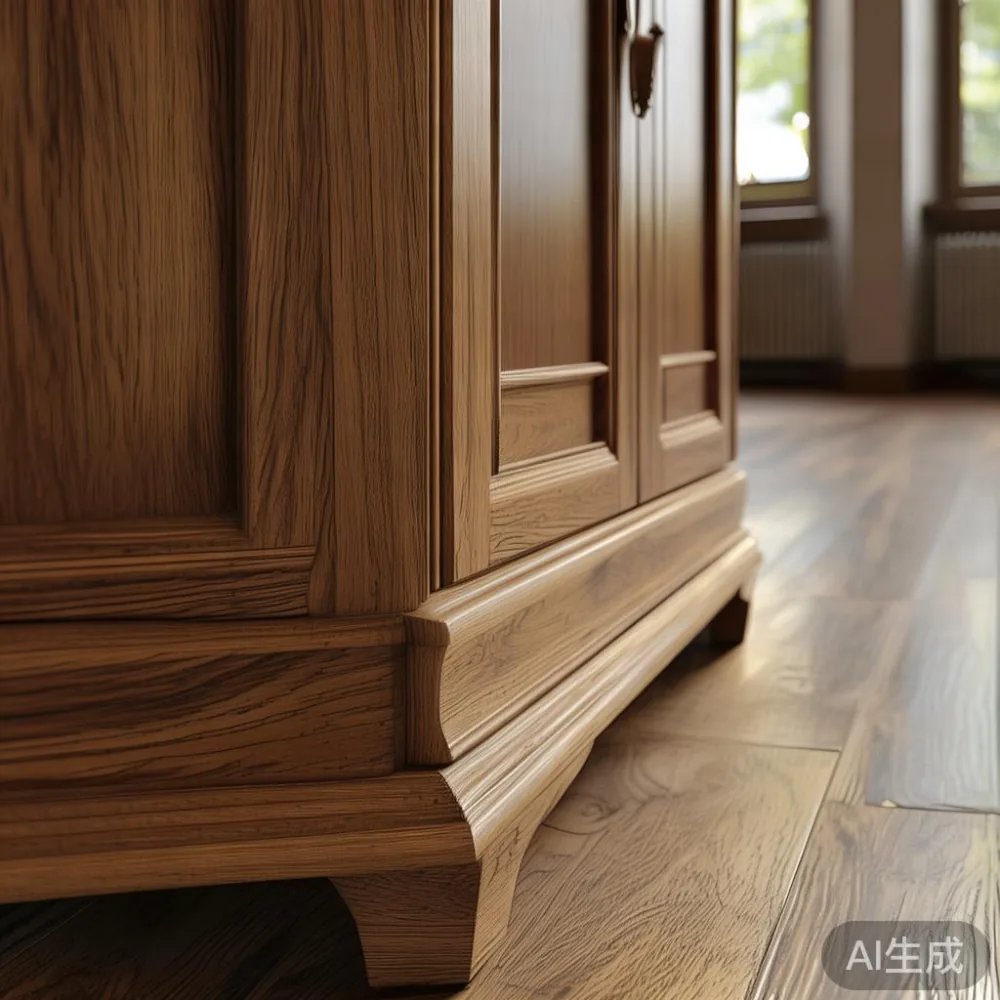
Solid wood furniture starts with the log. In Foshan factories I have walked past, walnut and white oak sit on the top racks, FAS-grade, kiln-dried to 8–12% moisture. Rubberwood and poplar come in lower, denser in price per cubic metre by a factor of 3 to 5. A 1.8 m wardrobe carcass in walnut uses roughly 0.18 m³ of lumber; the same carcass in poplar uses about 0.22 m³ because poplar is softer and needs more thickness for stiffness. Multiply by species price, and the wardrobe alone swings by SGD 1,200 to 1,800 before a single hinge is fitted.
Grain matching across doors — where the figure flows from panel to panel — wastes about 18–22% of the board. I watched a CNC operator at a Foshan workshop reject three boards in a row to keep the cathedral grain aligned on a four-door wardrobe. That labour is invisible on a product page, but it is in the price. A factory offering this kind of match at SGD 2,800 for a 2 m wardrobe is subsidising it elsewhere, usually in the drawer runners or the back panel.
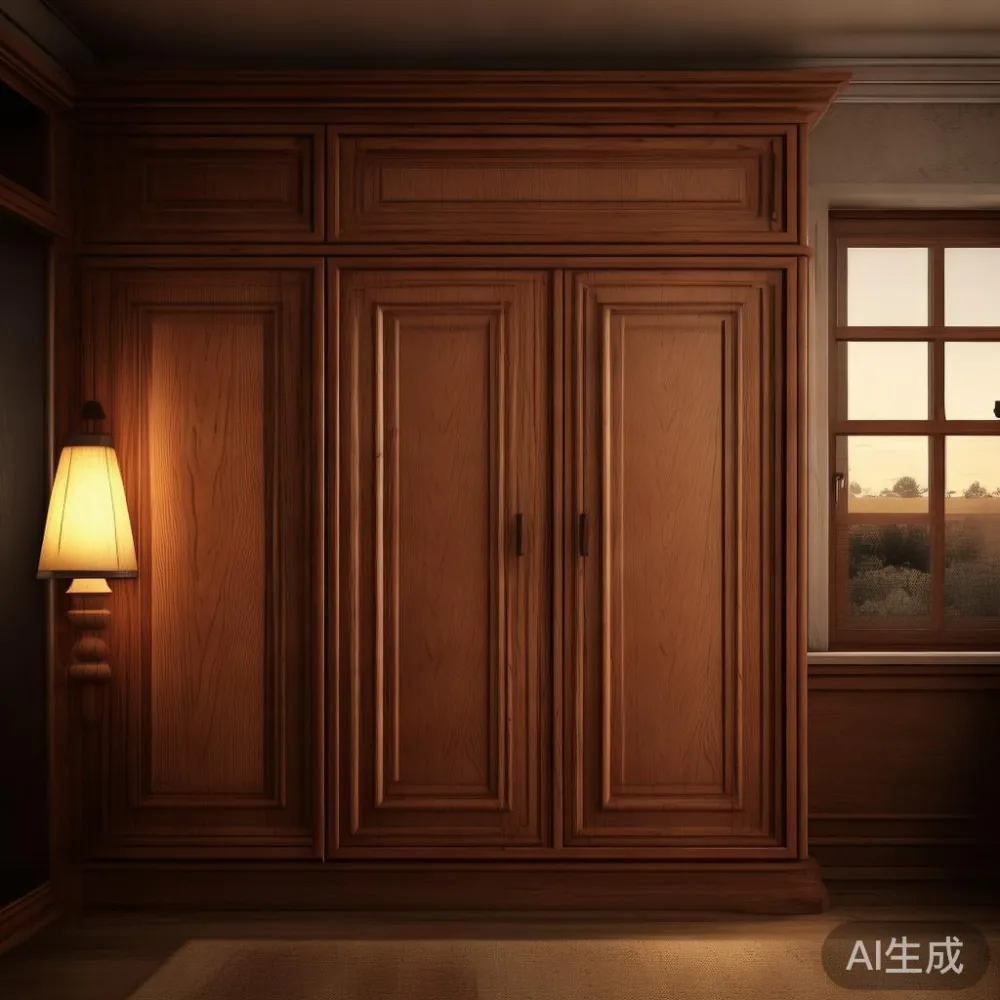
One real headache worth flagging: I have seen online listings advertising "walnut oak" furniture, and on arrival buyers report walnut oak missing parts in the carton, or worse, a carcass built with walnut-veneered MDF inside and only solid oak faces outside. Always ask, in writing, whether every structural panel — sides, top, shelves, drawer boxes — is solid, and what the back panel is made of. 6 mm plywood back is normal; 3 mm MDF back is where wardrobes start to rack.
What is the difference between Modern light luxury bed and modern furniture?
A Modern light luxury bed uses solid hardwood for the frame, soft-close hardware, and restrained detailing — think a 12 cm headboard in book-matched walnut, no gold trim, no carving — so the price reflects materials and joinery, not ornament. Modern furniture is a style label covering anything clean-lined, including chipboard and veneer pieces, and the price reflects the look, not the timber.
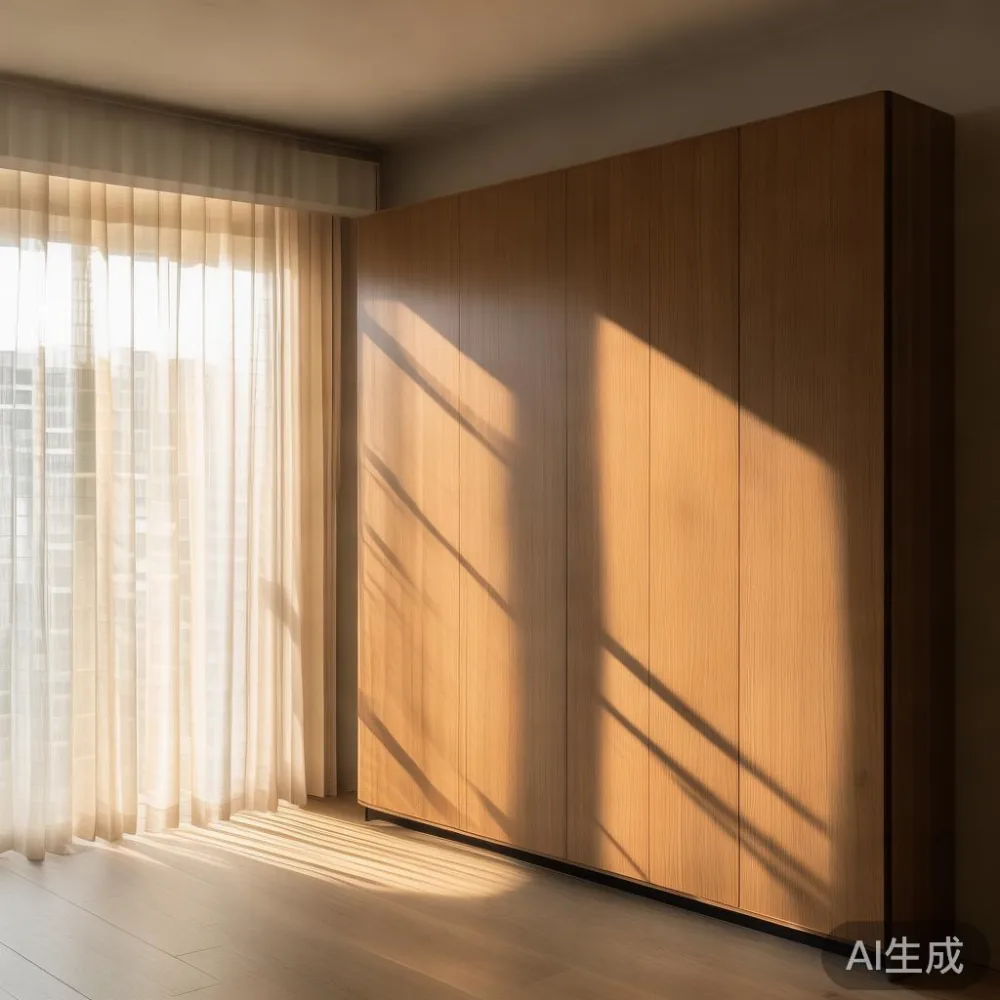
French light luxury leans toward slim profiles, curved tops, and warm-neutral palettes — a wardrobe might have a 5 cm cornice, a 2 cm chamfer on the door edge, and brushed-brass pulls. American light luxury tends toward wider boards, heavier proportions, shaker-style doors on a wardrobe, and oil-rubbed bronze hardware. Post-modern light luxury plays with asymmetry — a wardrobe with one full-length door and one split door, or contrasting walnut and oak panels. All three are built on the same solid wood substrate; the difference is shape language and finish, which adds 12–25% to the cost over a plain modern silhouette.
For a 4-room HDB in Bedok with a 1.6 m wardrobe footprint, a modern minimalist solid oak wardrobe in Singapore typically lands at SGD 2,400 to 3,200. Move to a French light luxury wardrobe with curved crown and brass pulls, and the same 1.6 m unit is SGD 3,400 to 4,600. The timber is similar; the labour, the hardware, and the finish schedule are where the gap opens.
Joinery, hardware, and the small parts that quietly double the bill
Open any wardrobe from a serious maker and you will see dovetail drawer boxes, mortise-and-tenon carcase joints, and wooden dowels reinforced with corner blocks. Open a budget wardrobe and you will see staples, cam locks, and thin particleboard. Both can hold a shirt, but only one will hold shape after five years of HDB humidity cycling between 24°C at night and 31°C by afternoon.
Hardware is the second quiet multiplier. A standard 150 mm soft-close hinge costs the factory about SGD 1.20 in bulk; a Blum or Hettich equivalent costs SGD 3.80. A wardrobe has 6 to 10 hinges. Drawer runners tell the same story: a basic roller runner is SGD 2.50 a pair; a full-extension soft-close is SGD 9 to 14 a pair. A wardrobe with four drawers uses two pairs. Add it up and hardware alone can be SGD 80 to 220 more on the same wardrobe.
I tested this last month with two identical 1.8 m wardrobes from different suppliers. Same walnut spec on paper. One had Blum soft-close on every door and drawer; the other had unbranded hinges and a single central drawer runner. The hardware gap was SGD 165, which is roughly the price difference between the two quotes before shipping.
Finishes are the third quiet line. A wardrobe sprayed in a 7-coat Italian polyurethane finish in a closed spray booth costs more than one hand-wiped with a single coat of hard wax oil. The wipe finish looks beautiful in month one and ages fast; the sprayed finish stays even for eight to ten years under Singapore UV through a west-facing window. MIDHILL finishes its solid wood bedroom sets with multi-coat lacquer in a dust-controlled booth — a detail most product pages skip, but it is the reason a wardrobe still looks even after year five.
Size, proportions, and HDB logistics that change the delivery math
Singapore moves furniture through narrow corridors. A standard HDB door is about 91 cm wide and 2.0 m tall; a condo corridor is often 1.2 m wide. A 2.4 m wardrobe built as one piece will not enter most HDB flats. Factories that engineer their wardrobes to ship in two vertical halves, each under 1.2 m wide and under 2.0 m tall, save you a SGD 120 to 250 on-site carpentry reassembly fee. This is not a marketing point; it is a hard constraint.
Weight is the second logistics factor. A 1.8 m solid oak wardrobe weighs 95 to 120 kg; a 2.2 m wardrobe weighs 140 to 175 kg. Singapore lift weights are rarely the issue; lift dimensions are. A typical HDB passenger lift internal is about 1.1 m deep by 1.4 m wide, with a 1.9 m door height. A wardrobe that splits cleanly into halves under 1.0 m wide clears every standard lift in Tampines, Bedok, and Punggol without tipping.
Shipping from Foshan to Singapore by sea runs 14 to 22 days door-to-door, plus GST at 9% on the landed value including freight. If your order is over US$350 (about SGD 475), MIDHILL absorbs the sea freight — a meaningful saving on a 1.8 m wardrobe that weighs 110 kg and fills nearly 1.2 m³ of container space. Landed cost for a mid-range solid walnut wardrobe in this shipping tier typically lands at SGD 3,100 to 4,200, GST included.
14-day returns on unused, unassembled units are useful, but a wardrobe that has been opened and cannot be re-exported falls outside most policies. Inspect the carton at the door before the delivery man leaves. Photograph the strap-line and the corner protectors. This is how you catch a walnut oak missing parts claim early enough to be honoured.
Warranty, refinishing, and the true ten-year cost
A 10-year structural warranty on a wardrobe is meaningful only if the maker will still exist in ten years. MIDHILL has shipped solid wood bedroom and dining pieces since 2008 from Foshan, with a 10-year structural warranty and lifetime refinishing on offer to Singapore buyers. Lifetime refinishing is the line item that changes the ten-year math: instead of replacing a SGD 3,500 wardrobe at year eight because the lacquer has yellowed, you ship it back or book an on-site refinish at a fraction of replacement cost.
Cross-reference that against a flat-pack wardrobe at SGD 600 from a generic marketplace. After three years of Singapore humidity, the cam-lock joints loosen, the back panel warps, and the doors sag. Replacement is the only option. Over ten years, two replacements cost SGD 1,200, and you have lived with a warped wardrobe for the last three of those years. The solid wood piece, refinished once at year six for roughly SGD 280, still serves at year ten.
The same logic applies across a whole bedroom set. A solid wood bed frame, a 1.8 m wardrobe, two nightstands, and a six-seat dining table in matching walnut can be purchased as a coordinated set from a single maker, sharing the same finish batch, the same hardware spec, and the same warranty. Buying piece by piece from different factories invites tone mismatch — slightly different walnut hue, different sheen, different drawer-pull geometry. Coordinated sets cost 8 to 15% more upfront and save you years of visual frustration.
How to read a quote without getting burned
Three questions separate a serious quote from a glossy one. First, ask for the full breakdown: timber species with grade, joinery method, hardware brand, finish schedule, and back-panel material. Second, ask for the weight and the carton dimensions, not just the assembled dimensions. Third, ask whether the price includes GST, shipping, lift-access delivery, and any on-site assembly. A quote that looks SGD 600 cheaper but excludes shipping and assembly is not cheaper once you add the missing lines.
A wardrobe is the largest single piece of furniture in most HDB bedrooms, and it is the one item where shortcuts hurt the longest. Get the spec in writing, get the hardware brand in writing, and get the warranty terms in writing. The price is what you pay; the spec is what you live with.