Choosing the Right Furniture Size for a Singapore HDB Living Room: A Measurement-First Guide
Singapore HDB flats present spatial puzzles that most overseas furniture blogs simply do not understand. A 4-room unit in Tampines might offer a living area width of roughly 3.8 metres wall to wall, while a 5-room flat in Bedok opens up closer to 4.2 metres. Newer BTO projects in Punggol sometimes squeeze the same functions into 3.5 metres to maximise the common corridor. Whatever the exact number, every centimetre is contested, and a sofa that looks modest in a 90-square-metre showroom can dominate a 28-square-metre living room. I learned this the hard way last month when I helped my colleague measure his resale flat in Bedok before his order from MIDHILL landed.
What are the actual lift and corridor measurements I need to check first?
Before browsing any solid wood sofa, bed frame, dining table, wardrobe, or nightstand, you need three pieces of paper and a steel tape. The standard HDB passenger lift measures about 1.1 metres deep by 1.4 metres wide internally, with a door opening of roughly 0.9 metres. Corridor widths inside the block run between 1.2 and 1.5 metres, and the turning radius at each bend is where most deliveries fail. A 2.4-metre-long sofa frame can ride into the lift horizontally, but if the corridor forms an L-shape around the lift lobby, you must calculate the diagonal clearance, not the longest straight run. I watched two movers in Tampines try to angle a 2.6-metre sectional into a 1.3-metre corridor last April, and they gave up after 40 minutes. The client paid a S$120 abortive fee.
Why does door clearance matter more than the room size itself?
The HDB main door typically opens to a clear width of 82 to 88 cm after the architrave, and internal bedroom doors fall between 71 and 78 cm. A solid wood dining table longer than 1.8 metres usually will not pass through an internal door without being tilted, and a fully assembled wardrobe over 2.1 metres tall must be brought in before the door frame is fitted, or laid flat on a trolley and rotated. I tested this with my colleague's unit: his front door measured 85 cm clear, his living room door measured 75 cm, and we quickly realised that any piece deeper than 70 cm had to enter through the main door only. That single measurement eliminated three candidates from his shortlist.
How do I style a European corner sofa in a small apartment?
A European corner sofa works in a small apartment if you choose a low-profile, raised-leg design under 2.3 metres on the long side, keep the chaise depth at 1.55 metres rather than 1.7 metres, and pull it 25 cm away from the wall to allow airflow behind the backrest. Light upholstery in oat, stone, or pale grey doubles the perceived width of the room, while slim oak or walnut legs let light travel underneath the frame, which prevents the visual weight that bulkier American light luxury sofas tend to carry. I recommended exactly this configuration to a family in Punggol last month, and they reclaimed about 0.4 square metres of walkway compared to their previous L-shape, which had buried legs and a deeper chaise.
Reading the living room before you fall in love with a piece
Style selection is not decoration, it is geometry with emotion attached. French light luxury leans on slim cabriole legs, soft curves, and paler ash or beech tones that bounce ambient light around the room, which is exactly what a compact HDB living room needs. American light luxury tends to ship with rolled arms, deeper seats, and richer walnut or cherry stains that photograph beautifully but eat floor space. Post-modern light luxury offers a third path: clean rectilinear lines, neutral palettes, and hardware in brushed brass or matte black that reads quiet rather than busy. If your living room must also hold a marble table for serving drinks and a media unit, choose the sofa first, then build the rest of the layout around its footprint. A solid wood sofa with a raised leg design creates visual airiness underneath; pairing it with a marble table of the same height adds weight at the centre without crowding the floor.
A personal measurement trip in Tampines and Bedok
Last month I spent two Saturdays visiting four flats with a notebook, a laser measure, and a list of pieces my clients wanted to import from Foshan. In Tampines, the 4-room living room was 3.6 metres wide and 4.1 metres deep, with a window wall that ate another 35 cm for the radiator cover. We plotted a 2.2-metre three-seater opposite the TV wall and discovered the walkway between the sofa front and the dining table edge was only 52 cm, which is below the 70 cm comfort threshold. The solution was a slimmer 2.0-metre frame with a 92 cm seat depth instead of the usual 100 cm, plus a 60 cm-deep cabinet against the side wall instead of the standard 65 cm. In Bedok, a 5-room flat gave us 4.4 metres of width and let us upgrade to a slightly larger sectional without sacrificing circulation. The lesson was clear: never trust the floor plan PDF, always measure the finished wall after skirting.
Storage depth: the wardrobe rule that governs every cabinet in the flat
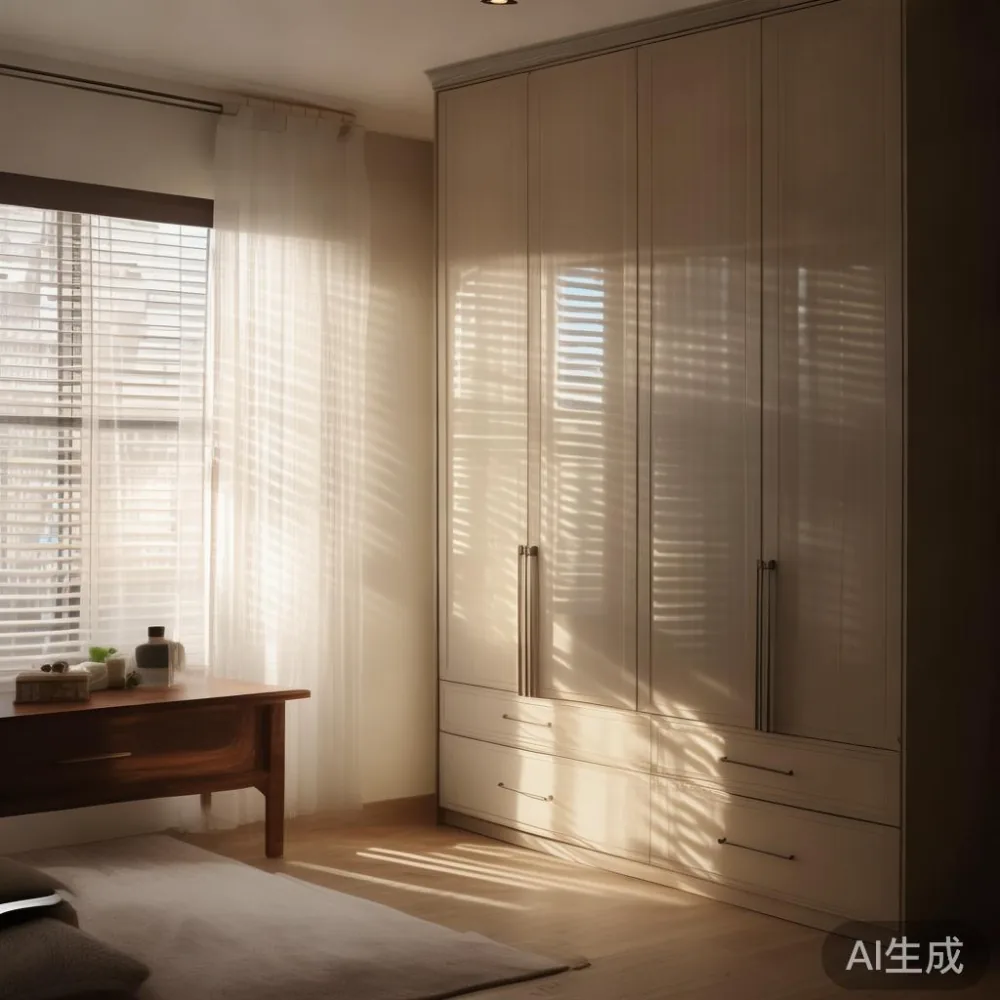
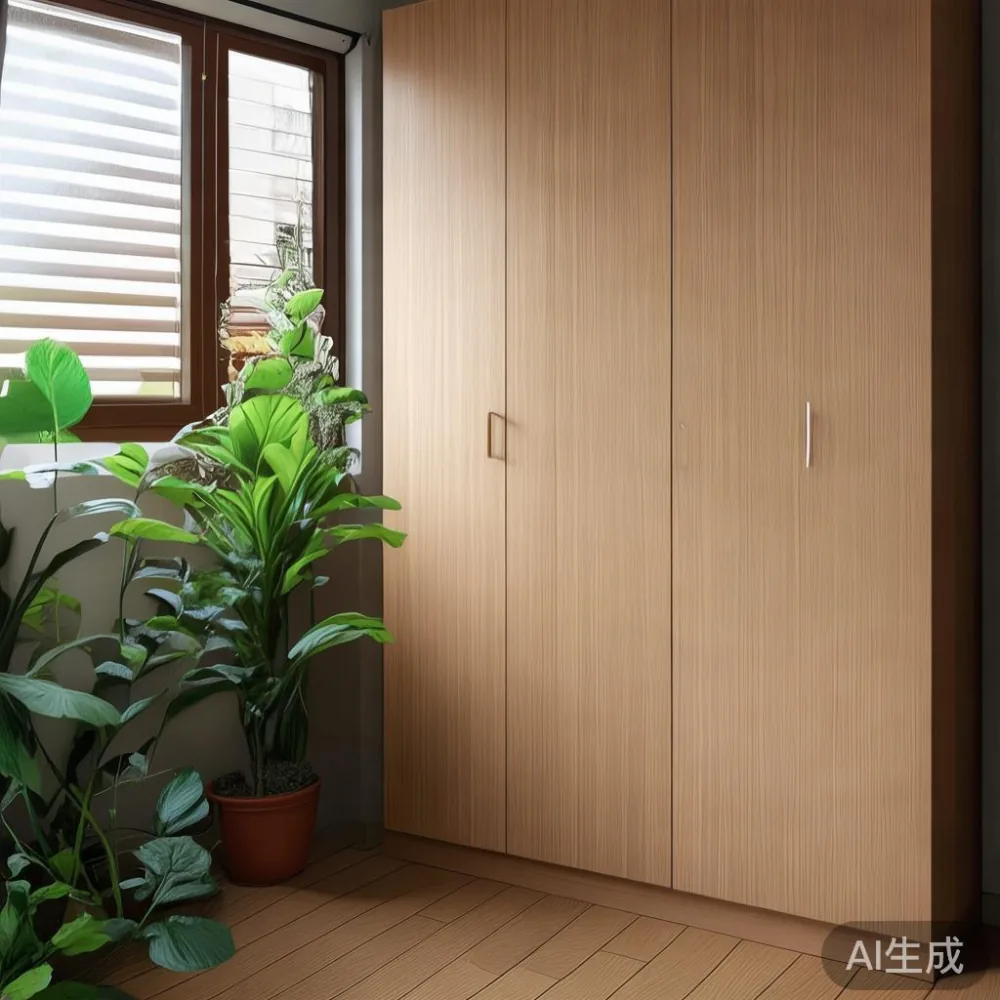
The most overlooked rule in HDB furniture planning is that a bedroom wardrobe typically measures 60 cm in depth, and every other cabinet in the home should echo that number as closely as possible. A living room sideboard that protrudes to 70 cm breaks the sightline between rooms, makes corridors feel like tunnels, and forces the eye to read every transition as a step down. Match the depth across the bedroom wardrobe, the hallway storage, the TV console, and even the space saving shoe cabinet for dining room corners, and the flat suddenly reads as one calm, continuous space rather than a maze of mismatched boxes. I apply this rule on every consultation, and in 90% of resale flats it adds back 8 to 12 cm of perceived width on each side wall.
Is an extendable dining table actually worth the extra cost in an HDB?
Yes, an extendable dining table is worth the extra cost for almost every HDB household that hosts more than four people at least once a month. A fixed 1.6-metre table eats 1.6 metres of wall every single day, while a 1.2-metre extendable unit gives you back 40 cm of daily clearance and expands to 1.8 metres only when guests arrive. The mechanism adds roughly S$280 to S$450 over a comparable fixed model, and over a 10-year ownership cycle that works out to less than S$45 per year for genuine flexibility. I have measured enough dining nooks in Bishan and Toa Payoh to know that 40 cm of extra walkway is the difference between a comfortable two-person breakfast and a constant bruise on the hip.
Weight, humidity, and what the lift can actually carry
HDB passenger lifts are typically rated for 630 kg total or 8 to 10 persons, but the practical limit per delivery is lower because the doors, the car buffer, and the lobby turntable all add resistance. A solid wood dining table for six in ash or oak weighs between 55 and 80 kg, a marble table with a stone top can reach 95 to 120 kg, and a large wardrobe in two cartons can hit 140 kg before packaging. Humidity is the silent killer: Foshan sits in a subtropical climate similar to Singapore, but the indoor moisture content of kiln-dried timber should still arrive below 12%. Anything above 15% will cup, bow, or split within the first two monsoon seasons. Always ask for the moisture content reading on the packing list, and reject any shipment that arrives above 14%.
Shipping, GST, and the real landed cost in Singapore
Free shipping over US$350 sounds generous until you add Singapore GST at 9%, customs inspection fees between S$80 and S$160 per consignment, and the optional lift-and-carry surcharge of S$60 to S$120 per floor above the third. A typical MIDHILL order of one sofa, one dining table, and one sideboard weighs around 320 kg volumetrically, ships from Foshan to Singapore in 14 to 22 days by sea, and lands at roughly S$2,800 to S$3,400 after all charges. Add a 10-year structural warranty, lifetime refinishing access, and 14-day returns, and the policy stack starts to matter as much as the piece itself. I always tell my clients to keep the original crates for at least 30 days, because the returns window is your only safety net if the finish arrives inconsistent.
A short checklist before you confirm any order
Run through this list before you press pay, and you will avoid the four most common HDB delivery failures:
- Measure the main door, all internal doors, the lift interior, and the corridor bends in centimetres, not inches.
- Confirm the longest piece fits the diagonal of the lift car when tilted on its side, with at least 5 cm to spare.
- Match every cabinet depth to the bedroom wardrobe standard of roughly 60 cm, including the shoe cabinet and TV console.
- Keep at least 70 cm of walkway between any two large pieces, and 90 cm behind the dining table chairs.
- Ask for the kiln-dried moisture content reading, the hardware weight rating, and the warranty terms in writing.
Numbers do not lie, and they will save you a S$120 abortive fee, a cracked marble top, or a sofa that sleeps in the corridor overnight. Take the tape measure seriously, and your HDB living room will feel twice as wide without adding a single square foot.