Humidity, HDB Corridors, and the Solid Wood Wardrobe: A Singapore Buyer's Guide
I delivered a 198 cm tall three-door wardrobe to a fifth-floor walk-up in Bedok last month, and the client texted me three days later asking whether the side panel was "warping." It was not warping. The panel, cut from FAS-grade white oak, had absorbed roughly 4% of its dry weight in atmospheric water over a 48-hour stretch of 86% relative humidity, and a fraction of a millimetre of movement is normal for solid timber. That single conversation is the reason I am writing this guide, because anyone who buys a real wood wardrobe in Singapore, whether they live in a Tampines HDB, a Punggol condo, or a landed terrace in Bukit Timah, will meet the same physics, and the same myths, within the first month.
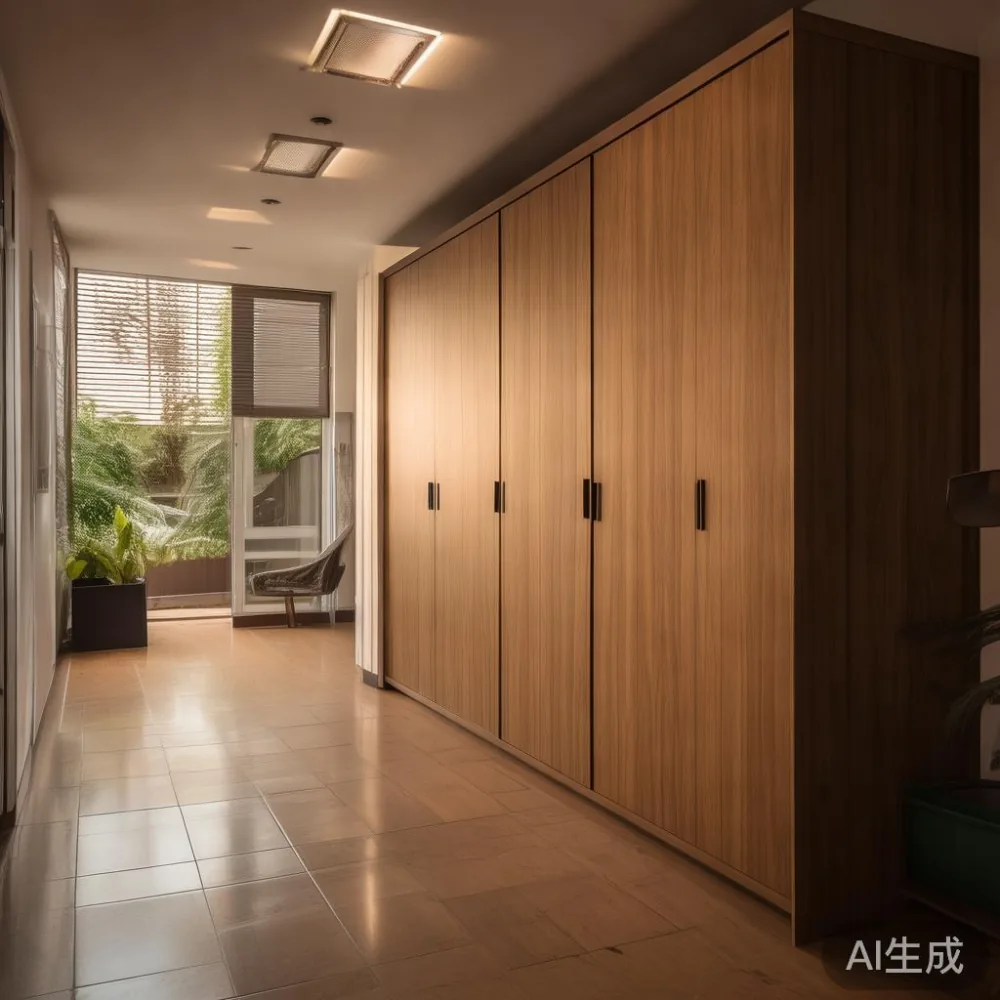
Singapore sits in a permanently humid belt. The Meteorological Service Singapore records a mean annual relative humidity of around 79.4%, and daily readings between November and March often climb above 85% from midnight to sunrise. Your air-conditioner may push bedroom humidity down to 55%, but the moment you open the door to the corridor, the wardrobe breathes in that warm, wet air. Over a year, that means your wardrobe cycles through a moisture band roughly 8 percentage points wider than what the same piece would experience in London or Vancouver. Solid wood is designed to handle this, but only if it is dried, joined, and finished correctly. That is why I send every MIDHILL client a one-page care sheet, and it is why a 10-year structural warranty matters more here than in almost any other export market.
Why does my wardrobe door stick in September but feel loose in February?
This is the most common question I receive from owners of solid wood wardrobes, and the answer is almost always humidity, not craftsmanship. Wood is hygroscopic: it absorbs and releases water vapour until it reaches equilibrium moisture content (EMC) with the surrounding air. In Singapore, EMC hovers between 14% and 18% across the year, dipping in the dry inter-monsoon weeks of February and climbing in the wet northeast monsoon of December. A 200 cm tall door panel that fits perfectly in March can swell by 1.5 to 2.0 mm along its width by September, enough to scrape the frame and ruin the soft-close feel.
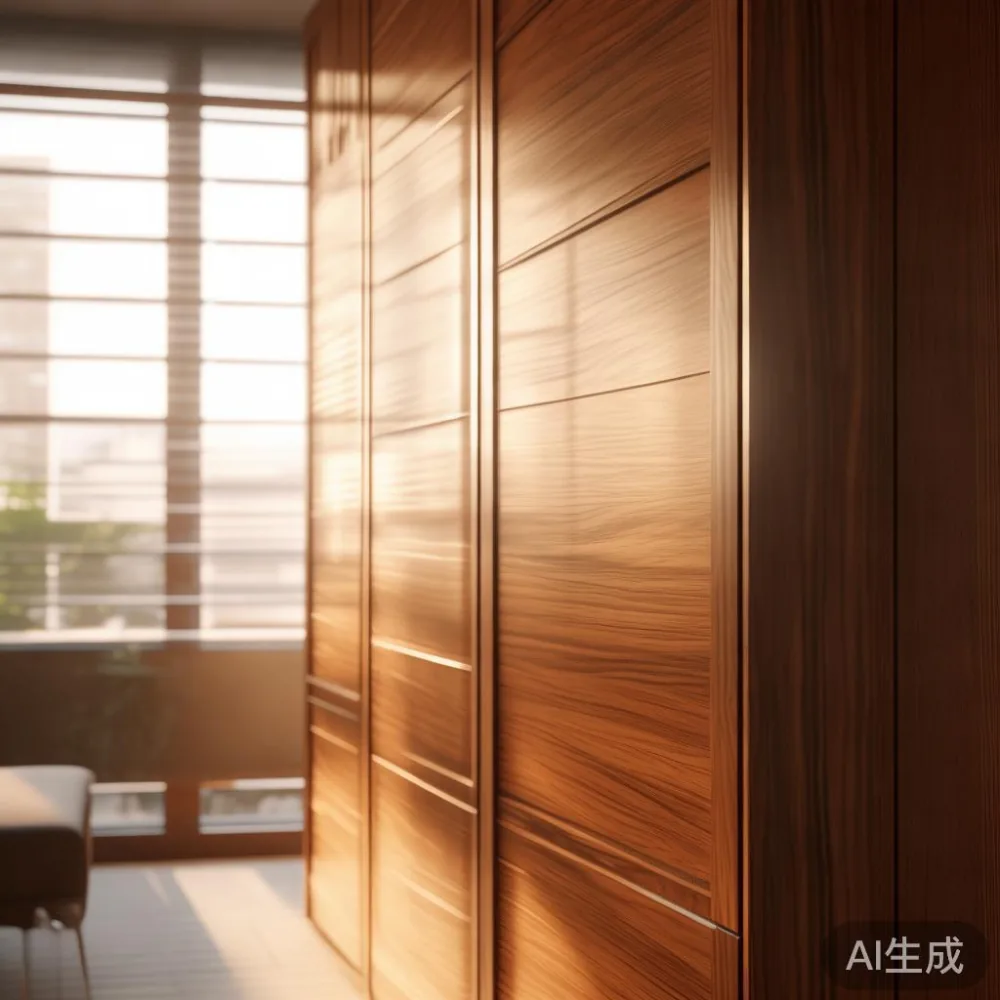
Three factors decide whether that movement becomes a problem:
1. Species selection. Teak, white oak, and walnut move less than rubberwood or pine. A 4 cm thick teak stile changes by roughly 0.4% across its width between 12% and 18% EMC; the same dimension in rubberwood moves closer to 0.9%.
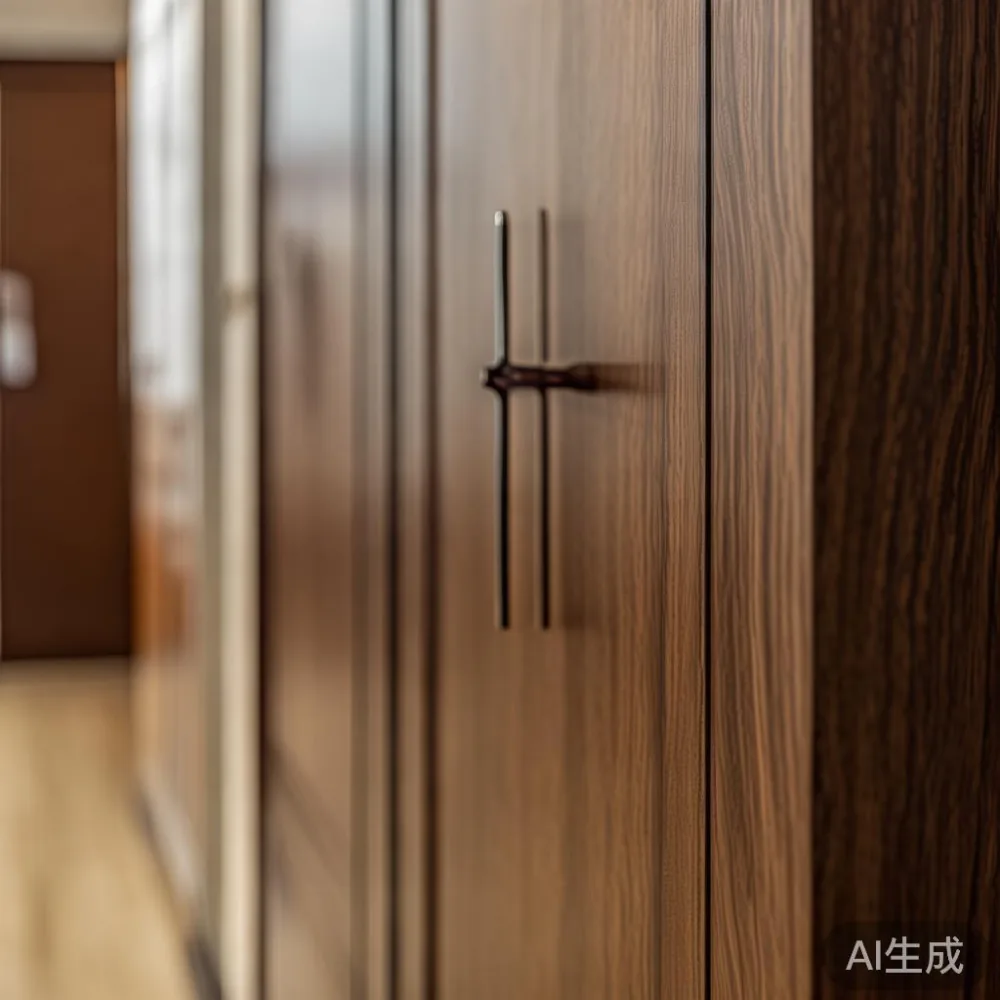
2. Construction method. Frame-and-panel doors with a 12 mm floating panel inside a mortised frame allow the panel to expand and contract without binding. Slab doors, common in post-modern light luxury wardrobes, must be cut slightly undersize with a 2 mm perimeter gap hidden by a felt seal.
3. Finish quality. A catalysed conversion varnish on all six sides slows moisture exchange dramatically. Cheaper nitrocellulose finishes only seal the face, leaving the back and end grain exposed.
If you are researching how to choose French wardrobe pieces, look for floating panel construction and a six-sided seal. French light luxury wardrobes from reputable ateliers have used this joinery since the Louis XV period for exactly this reason.
How much moisture movement should I actually expect on a 240 cm wardrobe?
Numbers help here. Take a typical three-door American light luxury wardrobe, 240 cm wide, 220 cm tall, 60 cm deep, with 2 cm thick side panels in white oak. Between 12% and 18% EMC:
- Width movement: 240 cm × 0.4% × 6 percentage points = approximately 5.8 mm across the full width
- Height movement: 220 cm × 0.2% × 6 = roughly 2.6 mm
- Depth movement: 60 cm × 0.4% × 6 = approximately 1.4 mm
None of that is damage. All of it is wood behaving like wood. The trouble starts when the wardrobe is shoved flush against a non-breathing wall (tile, built-in cabinetry) with no air gap, or when it sits in direct afternoon sun through a west-facing HDB window. Both situations create a moisture gradient: the outer face dries or wets faster than the inner face, and that gradient is what causes cupping, twist, or cracked panels.
Last month I visited a Punggol Waterway Terrace unit where the owner had placed a brand-new wardrobe 3 cm from a feature wall clad in 60 × 120 cm porcelain tiles. The back panel was reading 16% moisture content with a pin meter while the front face read 13%. That 3-point spread across 2 cm of thickness is the recipe for a cup. We pulled the wardrobe forward 5 cm, added four felt pads to lift the base 12 mm off the vinyl floor, and the differential dropped to 1 point within ten days. No sanding, no complaint, no warranty claim.
Will a marble table or solid wood dining table in the same room make things worse?
No, and here is a point many homeowners miss. Mixing materials actually stabilises a room. Marble does not absorb moisture, but it also does not release it, so it acts as a thermal and hydrometric buffer. A 180 cm marble dining table in the same bedroom will not dry the wardrobe out; it will simply sit there, indifferent, while the wood does its slow dance with the air.
What you want to avoid is layering a solid wood wardrobe directly next to a solid wood bed frame and a solid wood nightstand with no breathing room. Three large timber pieces in a 12 sqm HDB bedroom, all expanding in the same direction, can amplify each other's movement. If your layout demands it, leave a 25 mm gap on at least one side of every vertical panel, and use a slimline solid wood sofa in a lighter species (ash, for example) elsewhere in the home to spread the stress.
This is one of the reasons MIDHILL specifies mixed-species bedrooms for humid climates: oak wardrobes, ash beds, walnut nightstands. Each species has a slightly different EMC curve, so they never peak in the same week.
Is the lift and the HDB corridor going to be a problem for delivery?
Yes, sometimes more than the humidity. A standard three-door wardrobe from our Singapore stock arrives in two cartons, the largest measuring 232 cm × 68 cm × 22 cm and weighing 78 kg. The lift car in a typical Tampines HDB (HDB Design and Build Plan lifts from 1989 onward) is roughly 1.6 m deep, 1.1 m wide, and 2.3 m high, with a 630 kg capacity. The carton fits with 3 cm to spare on the diagonal, but you must tip it and feed it in at an angle. Older blocks in Bedok and certain walk-up clusters in Geylang still use 800 kg goods lifts with narrower doors, and there the carton may not fit. We send a surveyor for every condo in Punggol, Sengkang, and the newer master-planned estates because the service lift sizes vary by developer.
Two practical points:
- If your service lift is smaller than 1.5 m deep, the wardrobe can be flat-packed at no extra charge and rebuilt in your bedroom, adding about 90 minutes of on-site time.
- Free shipping kicks in for orders above S$480 (about US$355 at current rates). For wardrobes it almost always applies, but for smaller items like a nightstand or a marble side table under S$350, a S$60 delivery fee covers two-man handling and lift access.
GST is included in every price you see on the quotation. There are no hidden 9% add-ons at checkout.
How should I acclimatise the wardrobe once it arrives?
This is where most Singapore owners either overdo it or skip the step entirely. Acclimatisation is not about letting the wood "breathe"; it is about giving the moisture content time to equalise with your specific room before the panels are committed to a fixed position. The protocol I share with every MIDHILL client takes 7 to 10 days:
1. Move cartons into the bedroom, open the top flaps, and let the air circulate. Do not lean the cartons against the wall.
2. Keep the air-conditioner running on a 26°C, 55% setpoint if possible. A plug dehumidifier set to 50% RH is a strong second choice.
3. After 72 hours, lift the panels out and stand them vertically on their long edge, separated by 20 mm spacers. This lets both faces reach EMC together.
4. Day 7: assemble, level the base within 3 mm across 2 m, and anchor the wardrobe to the wall with the included anti-tip strap.
5. Day 10: oil any visible end grain with the supplied maintenance wax, then load the interior.
Skipping the 7-day wait and assembling on day one is the single most common reason I see 1 mm gaps open between stiles and rails six weeks later. The wood was still settling, and the joinery locked in a stressed state.
What about the wardrobe, the nightstand, and the marble table in a small HDB bedroom?
Layout matters as much as species. In a 10 sqm HDB bedroom, a 200 cm wide two-door wardrobe, a 150 cm solid wood bed frame, two 45 cm nightstands, and a 50 cm round marble side table is a typical light luxury arrangement. The wardrobe should be the tallest single object and placed on the wall opposite the window so it does not catch direct sun. The marble table, because it does not move, can sit anywhere with good airflow. The nightstands, being small, are the easiest to relocate if a panel ever needs space to swell.
If you are studying how to style Japanese wardrobe in apartment settings, the principle is similar but more austere: one tall timber volume, a low bed frame, no other large wood pieces. The Japanese approach is simply an extreme version of the mixed-material buffer I mentioned earlier.
For shoppers comparing under 2000 American furniture collections, focus on the joinery rather than the brand name. A solid American white oak wardrobe at S$1,580 (about US$1,170) is a stronger purchase than an imported rubberwood piece at S$1,200 if the cabinet has dovetailed drawers, six-sided sealing, and a 10-year structural warranty. For shoppers browsing under 2000 Coastal furniture ranges, the same rule applies, but pay extra attention to the finish. Coastal palettes lean toward limewashed oak and cerused ash, both of which need a marine-grade conversion varnish to survive a Singapore bedroom.
How does MIDHILL handle warranty, refinishing, and returns in Singapore?
Every wardrobe ships with a 10-year structural warranty against joint failure, panel cracking, and excessive warping beyond the documented movement bands. Cupping greater than 2 mm across a 60 cm panel, or twist greater than 4 mm over 200 cm of length, is covered. The warranty is non-transferable but follows the original owner for the full term.
Lifetime refinishing is the second benefit. Because the wardrobe is solid wood, not veneer over MDF, the surface can be sanded back to bare timber and re-oiled or re-lacquered at our Foshan workshop. Local freight from Singapore to our regional hub in Johor Bahru costs about S$220 per cubic metre round-trip, and refinishing starts at S$480 for a standard three-door piece. Most owners refinish every 12 to 15 years, which means a 1990 wardrobe can still be in service in 2035 looking like a 2026 Modern light luxury furniture piece.
Returns follow a 14-day window from delivery. The piece must be in original packaging, unassembled, and show no damage. We collect from your HDB or condo lobby at no charge, and the refund, including the original S$0 delivery above the S$480 threshold, is processed within 5 working days. You can read the full policy and current stock at www.midhill.co before placing any order.
A small purchasing checklist for the Singapore buyer
Before you click "buy" on a solid wood wardrobe anywhere, run through this 60-second list:
- Confirm the species and the six-sided finish. End grain must be sealed.
- Ask for the moisture content at the time of packing. It should be between 10% and 12% for Singapore delivery.
- Check that frame-and-panel doors have a 2 mm expansion gap on each side.
- Measure your service lift, not your passenger lift. The goods lift is what matters for wardrobes over 200 cm.
- Confirm the warranty in writing, including the numerical thresholds for warp, cup, and twist.
- Keep one corner of the bedroom free of rugs and large furniture so air can circulate behind the wardrobe.
- If your room stays above 70% RH for more than six weeks a year, run a 12-litre dehumidifier on a hygrometer for four hours a day. The unit costs about S$280 and pulls roughly 380 g of water per hour at 30°C, 80% RH.
For buyers cross-shopping best Italian light luxury furniture options, you will find that Italian ateliers use kiln-dried European oak at 9% to 11% moisture content, which is what we also target for our export line. The price premium for Italian craftsmanship is real, but the physics of the wood are the same physics your HDB bedroom will impose on any wardrobe you bring home, regardless of the label on the brass plaque.
A wardrobe is a 15- to 30-year companion. Treat the first 10 days as the foundation of that relationship, keep the air moving, and the rest of the decades will take care of themselves.