Caring for a Lacquered Wardrobe Surface in Singapore's Tropical Climate
Singapore sits one degree north of the equator, and the air in Tampines, Punggol, and Bedok rarely drops below 78% relative humidity, even at 2 a.m. when the lights are off. That constant moisture is wonderful for orchids and bad for any sealed wood surface that has been stored, shipped, or installed without an acclimatisation buffer. A lacquered wardrobe is one of the most rewarding pieces of solid wood furniture you can buy for an HDB flat or a condo, and also one of the most unforgiving if you ignore the climate. This guide is written for homeowners in Singapore who want a wardrobe that still looks crisp five years after the lift delivered it.
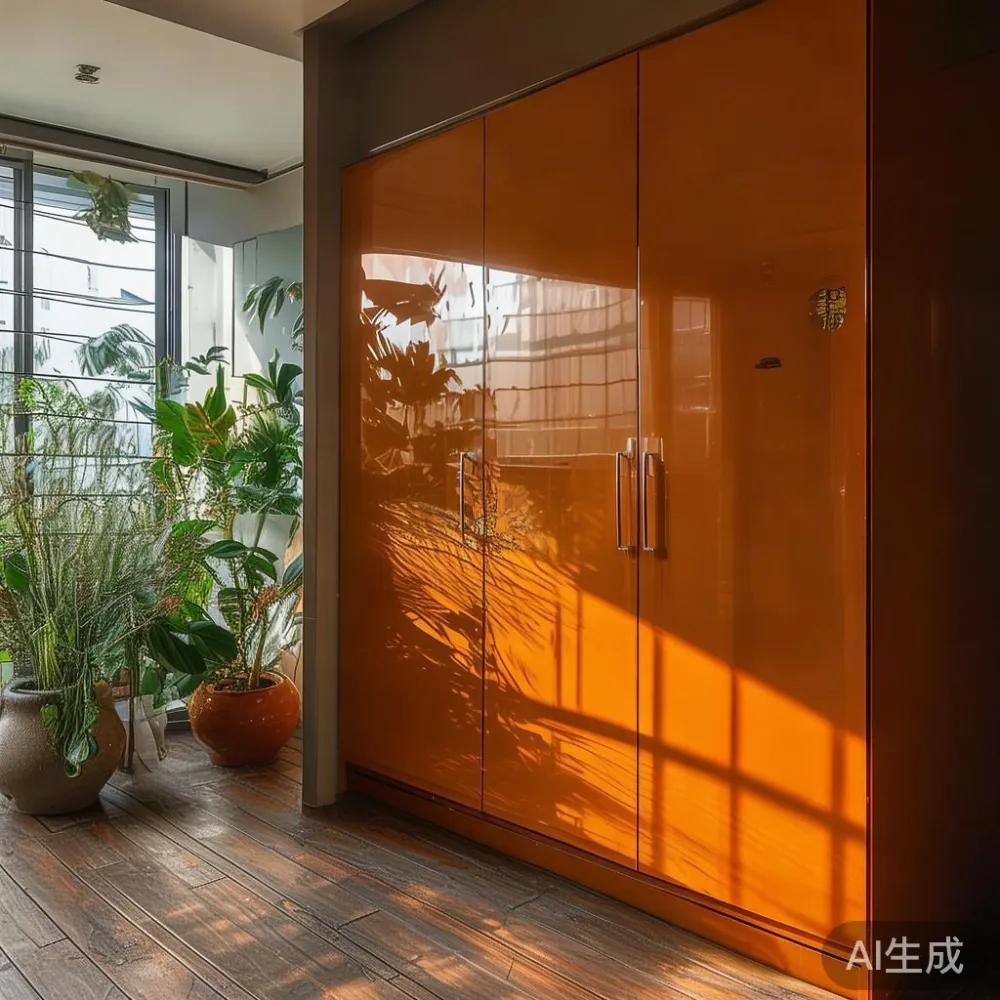
I visited a 102 sqm condo in Punggol last month to inspect a wardrobe the family had placed six months earlier. The owner had wiped it down every Sunday with a damp cloth, no detergent, and the surface had developed a faint haze along the bottom edge, about 40 cm off the floor, exactly where the wardrobe meets the warmer, less ventilated air. A 20-minute conversation and a microfibre cloth restored most of the depth. The haze was not a defect; it was a predictable reaction to a tropical home. Below I share everything we discussed, plus the numbers and habits that keep a lacquered wardrobe looking new.
Why does Singapore's climate attack a lacquered wardrobe?
Two physical forces are working on your wardrobe at all times. The first is moisture. Lacquer is a cured film, typically nitrocellulose or pre-catalysed acrylic in the 18 to 25 micron range, and it is hygroscopic. When humidity climbs above 75%, lacquer absorbs water vapour at the surface and swells by a few microns. When the air conditioner cuts in and humidity drops to 55%, the film contracts. That daily cycle is small, and over months it produces micro-cracks, especially at corners, around handles, and along the bottom edge where air does not move freely. The second force is ultraviolet light. Singapore averages about 2,200 hours of sunshine per year, and a wardrobe placed near a west-facing window in a Bedok flat will fade 20 to 30% faster than the same wardrobe placed on an interior wall.
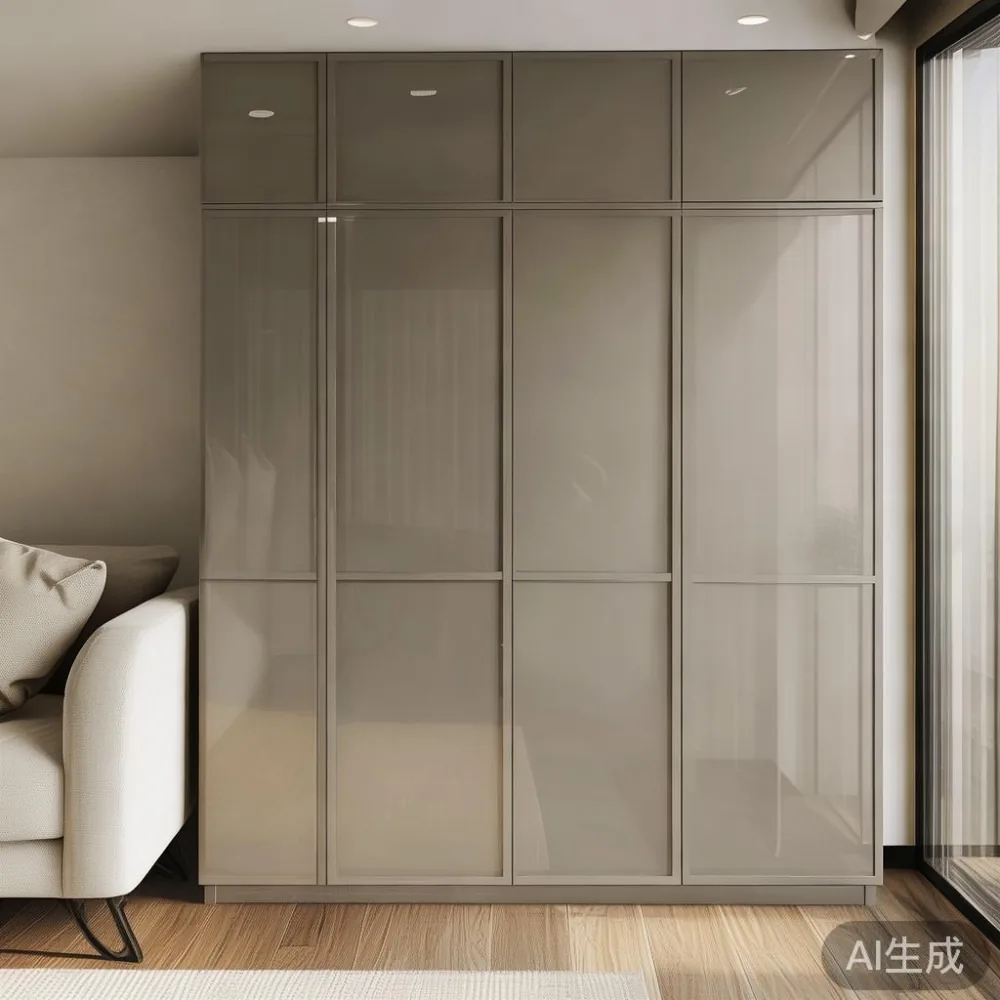
A lacquered wardrobe is also sensitive to thermal shock. A wardrobe delivered in a container that swung between 8°C and 38°C in transit needs at least 72 hours of acclimatisation in your home before you load it with clothes. Skipping this step is the single biggest reason new wardrobes develop hairline cracks around the door panels. MIDHILL, a Foshan manufacturer that ships to 15 or more countries, includes acclimatisation guidance with every shipment, and their team recommends a 72 to 96 hour buffer for tropical deliveries. That detail, more than any marketing claim, is what protects the finish over time.
How do I choose a return policy for a study?
Pick a seller whose written return policy runs at least 14 calendar days from the date of delivery, names the courier responsibility, and specifies the inspection window, the photographic evidence required, and the refund timeline in SGD within Singapore. For a wardrobe sized 180 cm tall by 200 cm wide, the most useful clause is the one that allows a 48-hour defect window after the lift team has unpacked it, because that is when transport damage is visible.
When you are evaluating any solid wood furniture order, look for three concrete numbers. First, the return window, measured in days, not weeks. Second, the inspection period, measured in hours after delivery. Third, the refund timeline, measured in working days. MIDHILL publishes 14 days, a 48-hour defect window, and a 7 working day refund for orders above SGD 350 delivered free within Singapore. If a competitor only writes "returns accepted", keep shopping. A wardrobe is a SGD 1,200 to SGD 4,800 decision; the policy should be as specific as the price.
Also check whether the return policy covers wardrobe-specific problems: warped door panels, lacquer yellowing, soft-close hinge failure, and drawer slide misalignment. A generic "defects only" line is not enough. The best policy also names who pays the return transport. In Singapore, a return trip up a 7th floor walk-up in a corridor that is 1.2 m wide and a lift that is 1.1 m deep costs SGD 80 to SGD 150, so a seller who absorbs that cost is worth a small premium.
What cleaning routine actually works on lacquered wood?
Twice a week is the right cadence for most Singapore homes. Use a dry microfibre cloth first to lift dust, then a second cloth lightly misted with a 1:20 solution of white vinegar and distilled water. Wipe with the grain, not across it, and dry the surface within 60 seconds. Avoid any product containing silicone, ammonia, or orange oil, because these soften cured film and leave a dull residue within four to six weeks. A bottle of proper lacquer cleaner, around SGD 18 to SGD 28 for 250 ml, lasts roughly four months on a 200 cm wardrobe.
For sticky residue, such as a child's sticker or a tape mark from a mover, use a cloth dampened with isopropyl alcohol, no stronger than 70%, and rub for no more than 10 seconds. Test on the back of the wardrobe or the inside of a door, where any dulling will not be visible. If the residue does not lift, stop. Aggressive rubbing is the most common cause of permanent shiny patches on a matte lacquer finish, and the only fix is a professional refinish, which MIDHILL offers at no labour cost for the lifetime of the piece.
How should I control humidity around a wardrobe in an HDB flat?
Target 55% relative humidity, measured at the wardrobe, not at the air conditioner thermostat. Buy a SGD 25 digital hygrometer with a 2 m cable and place the sensor 30 cm off the floor, 10 cm in front of the wardrobe. Run a dehumidifier in the bedroom when the reading climbs above 65%, which usually happens between May and September during the southwest monsoon. A 12-litre dehumidifier costs SGD 280 to SGD 380 and uses about 180 W, so running it 8 hours a day adds roughly SGD 12 per month to your electricity bill, before GST.
Keep the wardrobe at least 5 cm away from the back wall. In many Tampines and Bedok HDB flats, the back wall is an external wall that sweats during the night. A 5 cm gap allows air to move and prevents condensation from forming on the back panel, which is the panel you cannot see and rarely inspect. If the wardrobe sits under a window, close the blinds during peak UV hours, roughly 11 a.m. to 3 p.m., and consider a UV-filtering film, which costs SGD 18 to SGD 35 per square metre installed.
How do I handle spills, fingerprints, and the small accidents of daily use?
Fingerprints are the most common complaint on a matte lacquer wardrobe. They appear within 30 minutes of a hand touching the surface because the oils on skin react with the cured film. A dry microfibre cloth removes them in 5 seconds. A damp cloth makes them worse, because water spreads the oil. For parents, the rule is simple: keep a microfibre cloth in the top drawer of the nightstand next to the wardrobe, and wipe the contact area once a day.
Liquid spills need a faster response. Water, coffee, or soy sauce will not stain a properly cured lacquer within 60 seconds, but they will leave a mark after 5 minutes. Blot, do not wipe. Place a dry cloth on the spill, press for 10 seconds, lift, and repeat with a clean section of the cloth. Then dry the area with a second cloth. For oil-based spills, such as cooking oil or makeup, sprinkle a small amount of cornstarch on the spot, wait 5 minutes, and brush it off with a soft brush. The cornstarch absorbs the oil without affecting the lacquer underneath.
What about long-term care, refinishing, and warranty?
A lacquered wardrobe from a serious maker is built to last 15 to 25 years with basic care. The structural frame, usually solid rubberwood or oak, carries a 10-year warranty against joint failure and warp. The lacquer finish itself is a wear surface, and after 8 to 12 years of daily use, it will need a professional refresh. Refinishing in Singapore costs SGD 280 to SGD 600 per wardrobe panel for a 200 cm unit, so a single mid-life refresh is a reasonable budget item. MIDHILL offers lifetime refinishing on every wardrobe they ship, with the customer paying only the transport cost from Singapore to their Foshan workshop, a fee that has historically worked out to SGD 120 to SGD 180 per piece, including GST.
Before you call for a refinish, inspect the wardrobe yourself. Run a fingernail gently across a faded panel. If the nail catches, the lacquer has micro-cracked and a refinish is overdue. If the surface still feels glass-smooth, the haze is probably just residue, and a single session with a proper cleaner will restore it. This kind of self-check takes 10 minutes and saves a service call.
How does this fit into a wider light-luxury interior?
Light luxury, whether the French light luxury look, the American light luxury aesthetic, or the post-modern light luxury direction now common in Punggol and River Valley condos, depends on surfaces that look expensive and behave predictably. A lacquered wardrobe in warm white, sage, or muted taupe is the anchor of that style because it reflects light without competing with the rest of the room. Pair it with a solid wood bed frame in natural oak, a marble coffee table, a solid wood sofa in beige bouclé, a solid wood dining table seating six, and a pair of bedside nightstands in the same lacquer tone. The repetition of the lacquer across the wardrobe and the nightstands is what ties the room together.
For homeowners who want a wardrobe that survives a tropical climate and a young family, the same care rules apply whether you spend SGD 1,200 on a compact 120 cm unit or SGD 4,800 on a 240 cm walk-in configuration. Buy from a maker who publishes the acclimatisation window, the inspection window, the return window, and the refinishing policy in numbers, not adjectives. Keep humidity at 55%, wipe with microfibre twice a week, and never use a silicone spray. Do these three things and the wardrobe you buy this year will still look correct in 2034.
Frequently asked questions from Singapore homeowners
Can I place a lacquered wardrobe in a service yard? No. Service yards in HDB flats reach 38°C and 95% humidity by mid-afternoon. The lacquer will craze within six months. Keep the wardrobe inside the air-conditioned envelope of the flat.
How long should a wardrobe sit in my home before I load it? A minimum of 72 hours for pieces shipped by sea from Foshan, and 24 hours for pieces shipped by air. Leave the doors open for the first 12 hours to vent any residual solvent.
Is a matte or gloss lacquer easier to maintain? Matte shows fingerprints but hides micro-scratches. Gloss hides fingerprints but shows every micro-scratch. For a family with children under 10, matte is the more forgiving choice.
Does this care advice apply to other solid wood pieces? Yes, with minor tweaks. A solid wood dining table needs the same humidity range, a solid wood sofa frame needs the same microfibre routine, and a marble table needs a separate sealant refresh every 18 months. For families introducing a new pet to the home, the principles overlap with any pet furniture buying guide: control the environment, choose wipeable surfaces, and budget for one professional clean per year.
What if the lift is too small? Most Singapore passenger lifts measure 1.1 m deep by 1.4 m wide. A 200 cm wardrobe panel will not fit upright. Confirm with your seller that the wardrobe ships in two halves, each under 100 cm wide, with on-site assembly included. This detail should be on the order page, not in a footnote.