Wardrobe-First Guide: Matching Solid Wood Furniture to a Warm Minimal HDB Interior
I spent the second week of last month at three HDB flats in Tampines and one resale condo in Punggol, measuring wardrobes against bed frames and dining tables, and the same lesson kept repeating itself: when the wardrobe carries the room, every other piece has to be quieter, not louder. Warm minimalism only works if one anchor piece does the heavy lifting, and in most Singapore flats between 65 sqm and 95 sqm, that anchor is almost always the wardrobe facing the bed. Below is the field-tested method I now use when I help friends lay out a 3-room or 4-room flat, with SGD pricing, lift widths, and the exact mm to leave between a solid wood sofa and a marble table.
Why should the wardrobe set the tone in a warm minimal HDB flat?
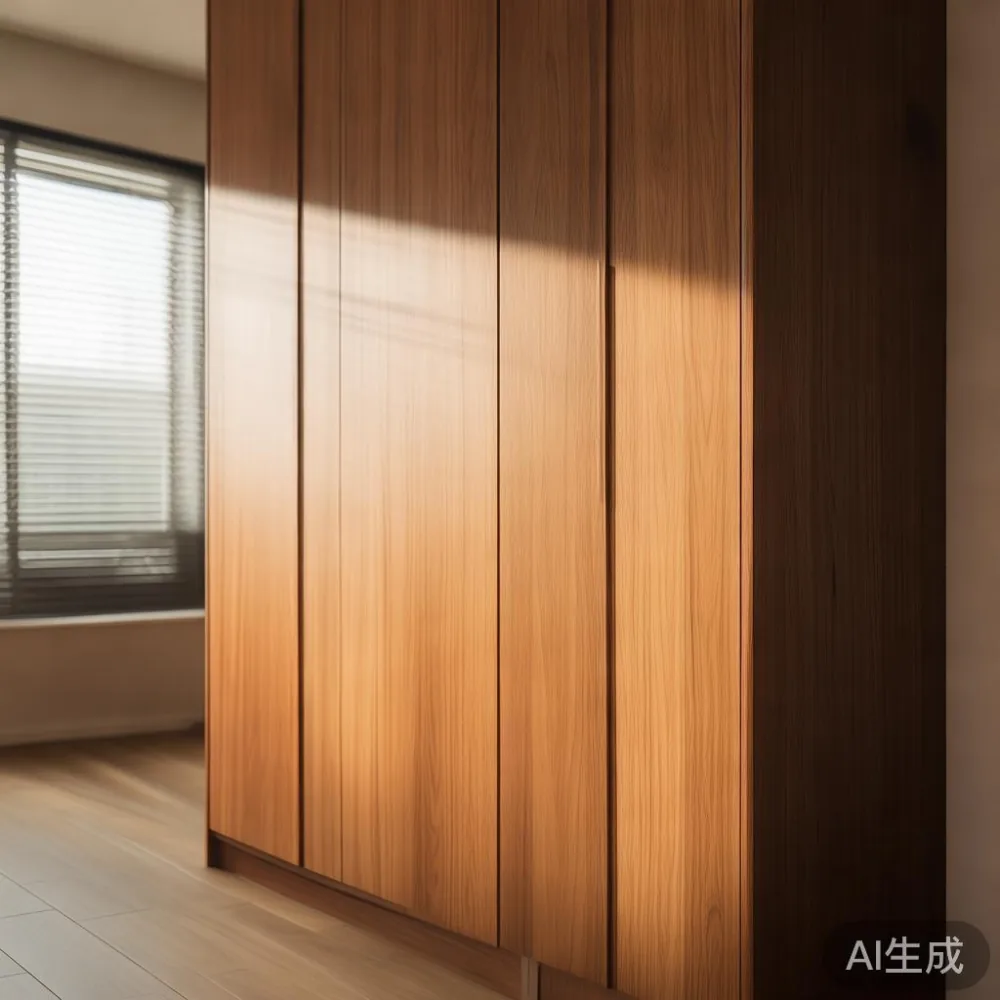
Most Tampines and Bedok HDB corridors run about 1.2 m wide, and the older 7-to-10-seater passenger lifts in those estates allow roughly 1.6 m deep by 1.8 m wide of usable cargo space once you subtract the door swing. A three-door wardrobe in white oak or ash veneer, around 200 cm tall, 240 cm wide, and 60 cm deep, will just clear those lifts if you remove the sliding doors and slide the carcass in flat-pack. Because that piece is the largest volume of solid timber in the room, its grain, its undertones, and even its handles end up dictating whether your apartment reads warm or cool. I watched this play out in a 4-room Punggol flat last month: the owners had picked a cool grey laminate wardrobe first, then tried to warm it up with a walnut dining table and a cream boucle solid wood sofa. The clash was visible. Once we swapped the wardrobe to a honey-toned European oak with vertical fluted panels, the dining table stopped fighting the room and the boucle sofa finally looked intentional.
For homeowners who want a softer, more decorative language, the search for the best French provincial wardrobe for 2026 usually starts here: 100 percent solid wood carcass, hand-brushed brass or bronze handles, raised panel doors, and a height that lands between 215 cm and 230 cm so it does not crash into the false ceiling that most HDBs install around 2.4 m. Pair that wardrobe with a low-profile platform bed frame, a thin marble side table, and one curved-back upholstered dining chair per seat, and the room reads warm minimal without drifting into country-cottage territory.
How do you pick a wardrobe that fits both the lift and the layout?
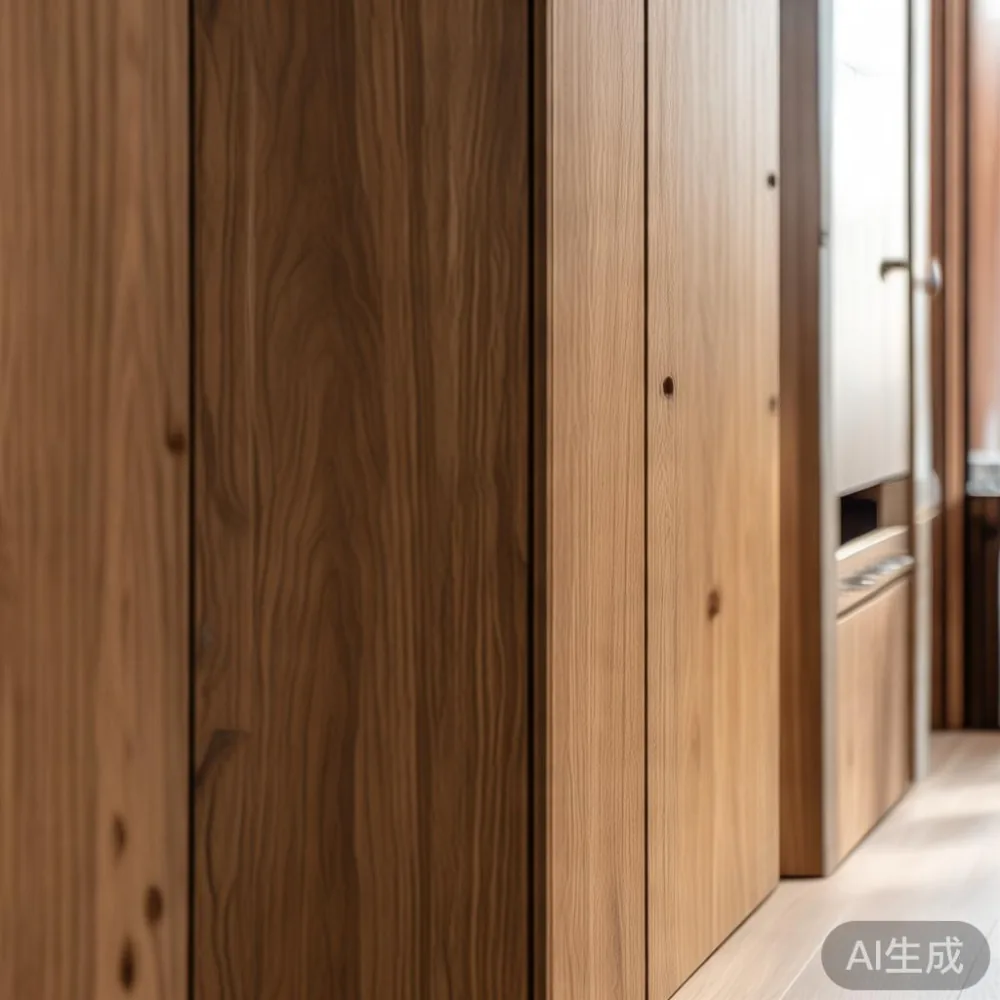
Start with a tape measure, not a mood board. In a typical 4-room flat, the master bedroom wall opposite the door is usually 3.6 m to 4.2 m long, which is exactly the right canvas for a 240 cm to 270 cm wardrobe. Anything wider than 270 cm starts to dominate and steals walking space from the 2.4 m to 2.7 m deep rooms. Depth matters more than most people realize: a 55 cm deep wardrobe gives you roughly 48 cm of usable hanging space after the back panel, which is enough for shirts on 38 cm hangers but tight for coats. A 60 cm deep wardrobe gives you 53 cm, and that extra 5 cm is the difference between a coat that brushes the door and a coat that hangs freely.
When you are learning how to choose American wardrobe options for a Singapore home, the practical questions are: how many long-hang sections (usually one per adult), how many shelves behind the doors (three to four per section), and whether you want soft-close hinges (about SGD 180 to SGD 320 extra for a three-door unit, worth it for the nightly 11 pm silence in a Punggol HDB). American-style wardrobes tend to run taller (up to 240 cm) and wider per section than European equivalents, so they suit rooms with 2.7 m or higher ceilings. French provincial wardrobes tend to sit lower and wider, around 200 cm tall, which works better in flats where the ceiling drops to 2.4 m after false ceiling installation.
What goes next to the wardrobe: bed frame, nightstand, and the small stuff
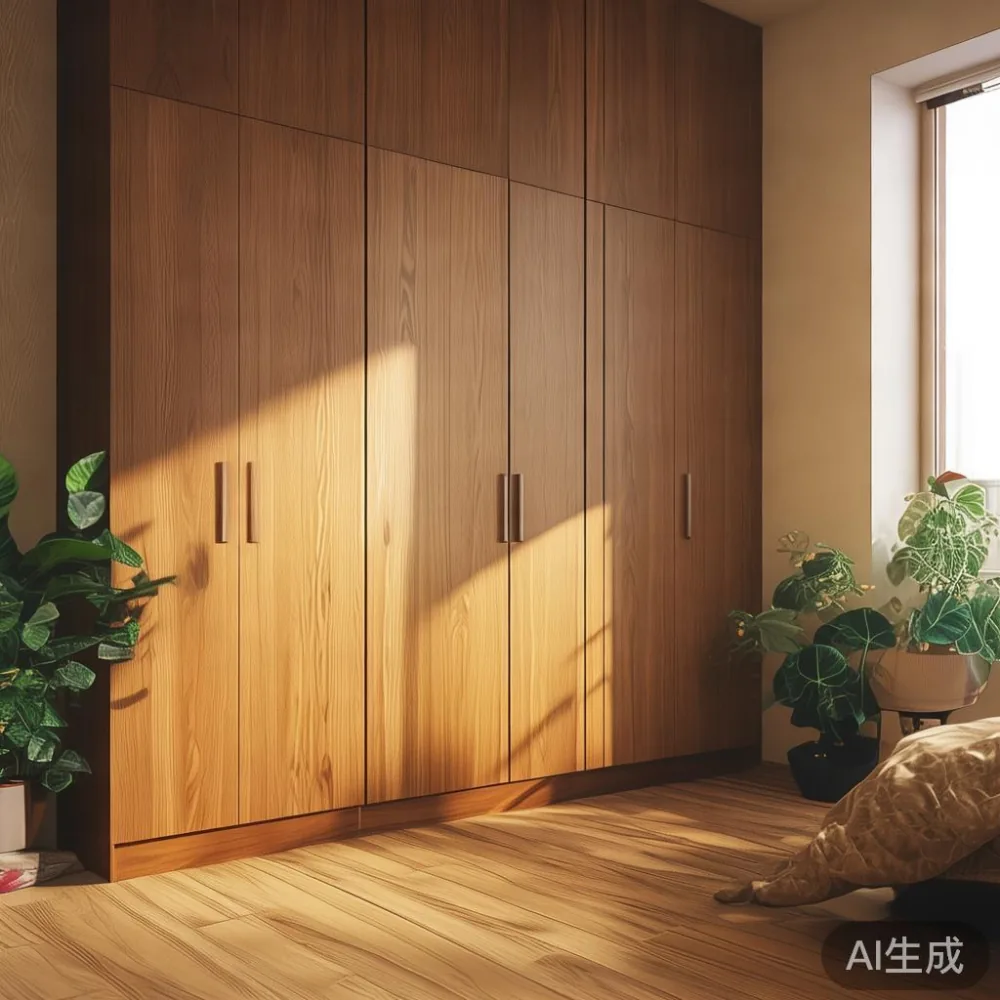
Once the wardrobe is locked, the bed frame is the second anchor. In a 3-room HDB, the typical master bedroom is about 3.2 m by 3.4 m, which fits a queen bed (152 cm by 191 cm) with about 60 cm of walking space on each side and a 70 cm to 90 cm run for the nightstand and a 45 cm wide slim drawer unit. The bed frame should be solid wood, not engineered wood wrapped in veneer, because Singapore humidity runs between 70 percent and 85 percent for most of the year and a wrapped MDF frame will swell at the joints within 18 to 24 months. A solid oak or ash platform frame, around 35 cm to 42 cm off the floor, leaves room for a robot vacuum underneath and keeps the visual weight low, which is what warm minimalism needs.
The nightstand should be simple: a 45 cm wide, 50 cm tall solid wood cube or a single-drawer unit with a 5 mm overhang top. Skip the handles entirely or pick recessed finger pulls, because visible hardware fights the quiet grain of the wardrobe. If you have a dressing corner, a 60 cm round marble table with a 6 mm to 9 mm stone top and a turned solid wood pedestal works well, and the cool grey veins of the marble are the perfect counterweight to a honey oak wardrobe. Marble tops are heavier than people expect: a 60 cm round top is roughly 14 kg to 18 kg, so the pedestal base has to be rated for at least 25 kg to feel stable when leaned on. For readers working out how to style light luxury bed in apartment layouts, the rule is consistent: keep the bed frame visually light, keep the nightstand cubic, and let one marble accent do the cooling work.
How do you extend warm minimal into the living and dining zone?
The living room in a 4-room flat is usually about 4.5 m by 3.6 m, which is tight. A 220 cm to 240 cm three-seater solid wood sofa in cream boucle or oat linen fits with a 90 cm to 100 cm coffee table and about 70 cm of walking lane behind. The sofa frame should be solid wood, kiln-dried to under 10 percent moisture content so the joints do not open up in the air-conditioned months (Singapore indoor humidity often drops to 50 percent to 55 percent with the AC on). The cushion fill should be high-resilience foam wrapped in a 70/30 down-feather jacket so the seat reads soft but recovers within 3 to 5 seconds when you stand up.
In front of the sofa, a 110 cm by 60 cm marble coffee table with an Italian Carrara top and a brass-trimmed solid wood base is the classic light-luxury pairing. The brass picks up the warm undertone of the wardrobe across the apartment and ties the two rooms together visually. If the budget is tighter, a sintered stone top at SGD 1,200 to SGD 1,800 looks 80 percent of marble at one-third the weight (about 22 kg versus 55 kg for a real marble top of the same size), which matters when your lift limit is what it is. For shoppers comparing under 2000 Italian light luxury furniture bundles, a sintered-stone coffee table, a pair of dining chairs, and a six-drawer chest of drawers often come in under the SGD 2,000 mark if you order solid ash rather than solid walnut.
The dining area, even in an open-plan HDB, deserves its own material moment. A 140 cm by 80 cm solid wood dining table seats four comfortably and six tightly, and pairs well with two upholstered host chairs and four side chairs in the same warm minimal palette. If you are exploring French provincial for dining room styling on a Singapore budget, the trick is to keep the dining chairs curved-back and the table rectangular with chamfered edges, then add a single brass pendant light about 70 cm above the tabletop. Avoid carved cabriole legs unless your ceiling is 2.7 m or higher, because they visually lower the room in a flat that is already at 2.4 m post-false-ceiling.
Which pieces should be light luxury, and which should be quiet?
Not every piece needs to announce itself. In warm minimalism, the rule is usually two hero pieces, two supporting pieces, and the rest invisible. The two heroes in a typical flat are the wardrobe and the bed frame, because they are the largest solid wood volumes and they sit on the longest walls. The two supporting pieces are usually the marble coffee table and the dining table, where stone and timber meet. Everything else, including the nightstand, the TV console, the shoe cabinet, and the bookcase, should be quiet: same wood tone as the wardrobe, no visible handles, no decorative trim.
For shoppers scanning the best European light luxury sofa for 2026 shortlists, the current direction is camel or oat boucle, a 78 cm to 82 cm seat depth, and a frame that sits 5 cm to 8 cm off the floor on recessed plinth rather than legs. The recessed plinth is what gives the piece its post-modern light luxury feel: heavy-looking, but visually light because no light catches under it. The same logic applies to the bed frame, which is why so many European light luxury collections have shifted to platform bases over slatted systems. As one industry contact told me when I visited a showroom in Punggol last month, post-modern light luxury is really about removing the visual cues of furniture (legs, visible handles, ornate trim) so the materials can speak. Solid oak at SGD 280 to SGD 420 per running foot installed, versus SGD 180 to SGD 260 for engineered oak, is the price gap that buys you that quietness for 15 to 25 years rather than 6 to 10.
What about pricing, warranty, and the boring but important logistics?
In Singapore, the landed cost of a solid wood wardrobe from a Foshan workshop runs roughly SGD 1,400 to SGD 2,600 for a three-door unit, SGD 2,200 to SGD 3,800 for a four-door unit, before GST. Add 9 percent GST on the imported value, plus SGD 120 to SGD 280 for white-glove delivery that includes hoisting up narrow HDB corridors (which sometimes need a 90-degree turn at the lift lobby). For shoppers comparing bundles, a four-piece warm minimal set, wardrobe, bed frame, dining table, and two nightstands, usually lands in the SGD 5,800 to SGD 9,400 range before GST when ordered direct from a workshop that controls its own kiln-drying.
This is one area where buyers in Tampines, Bedok, and Punggol should pay attention to warranty terms. A 10-year structural warranty on joinery and a lifetime refinishing offer are useful because Singapore humidity will eventually haze a matte oak finish after 6 to 8 years, and refinishing a three-door wardrobe costs about SGD 480 to SGD 720 if you pay retail, so a lifetime refinishing clause can save you SGD 1,500 to SGD 2,200 over the life of the piece. Free shipping thresholds above SGD 350 in order value matter less for a single wardrobe order, but they matter a lot when you add a nightstand, a marble table, and a dining bench to reach the threshold on a small add-on order. 14-day returns are useful for verifying that the wardrobe actually fits the lift you thought it would, because a three-door unit that has to be partially disassembled to enter a 1980s-era lift in Bedok is a different project than one that walks straight in.
If you want a single contact for specification drawings, lift-clearance checks, and refined finishes, MIDHILL runs a Foshan workshop that ships container-direct to Singapore and handles the lift-and-corridor math before dispatch, which is the single biggest reason Singapore homeowners I have spoken with end up happy with their wardrobe order. Their team can be contacted at +86 188 2788 2512 for technical drawings and finish samples before you commit to a 240 cm or 270 cm run. MIDHILL also publishes corridor minimums for common HDB block types, which saves the usual 30 to 45 minutes of guessing on delivery day. Two of the three Tampines homeowners I visited last month had ordered from MIDHILL, and both said the piece arrived with the grain pattern they had approved on the sample, which is rarer than it should be.
Any final layout numbers I should write down before I order?
Yes, three. First, leave at least 90 cm between the foot of the bed and the wardrobe doors so you can open the wardrobe fully without folding back the duvet, and at least 70 cm between the side of the bed and the nearest wall for a nightstand plus dressing space. Second, keep the dining table at least 110 cm away from the kitchen counter so two people can pass each other when one is sitting and one is serving. Third, keep all marble pieces at least 30 cm away from any AC vent, because direct cold airflow across a marble surface causes micro-condensation that etches polished finishes over 18 to 30 months. With those three numbers on a Post-it next to your floor plan, and a wardrobe that fits the lift, the rest of the warm minimal interior tends to fall into place on its own.