What Actually Drives the Price of Solid Wood Furniture
I learned this the hard way. Last month I visited a friend in Punggol who had just moved into a 4-room HDB Build-to-Order flat. She had spent S$900 on a "solid oak wardrobe" from a local marketplace, and within six months the doors were warping at the top, the rails had bowed, and the smell of fresh MDF was still hanging around the bedroom. We measured the panels together: 12 mm thick. Real solid wood furniture, the kind that lasts twenty-plus years in Singapore's 80–90% humidity, rarely starts below S$1,800 for a two-door wardrobe, and the price climbs for reasons that have nothing to do with branding.
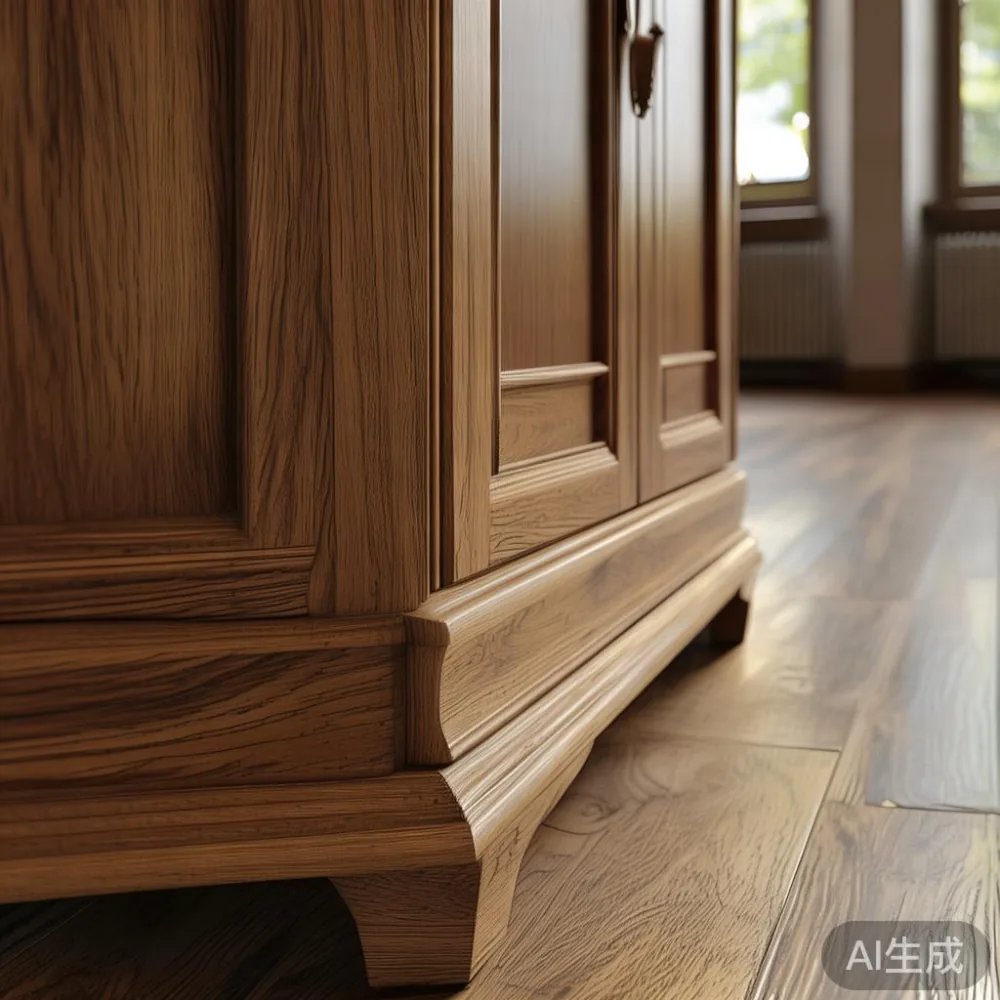
Below, I walk through the seven factors that actually move the number on the price tag, plus the local context that makes some of them non-negotiable in Tampines, Bedok, and Punggol flats. I have also folded in a few notes from a recent visit to MIDHILL's Foshan workshop, where I watched how the same chair is built in two completely different ways depending on the price tier.
1. The Species of Wood (and Whether the Whole Piece Is Actually Solid)
Wood species is the single biggest line item, and it is also where the most deception happens. In Singapore furniture shops, you will see "solid oak," "solid ash," "rubberwood," and even "solid teak" within a S$500 spread. They are not the same product.
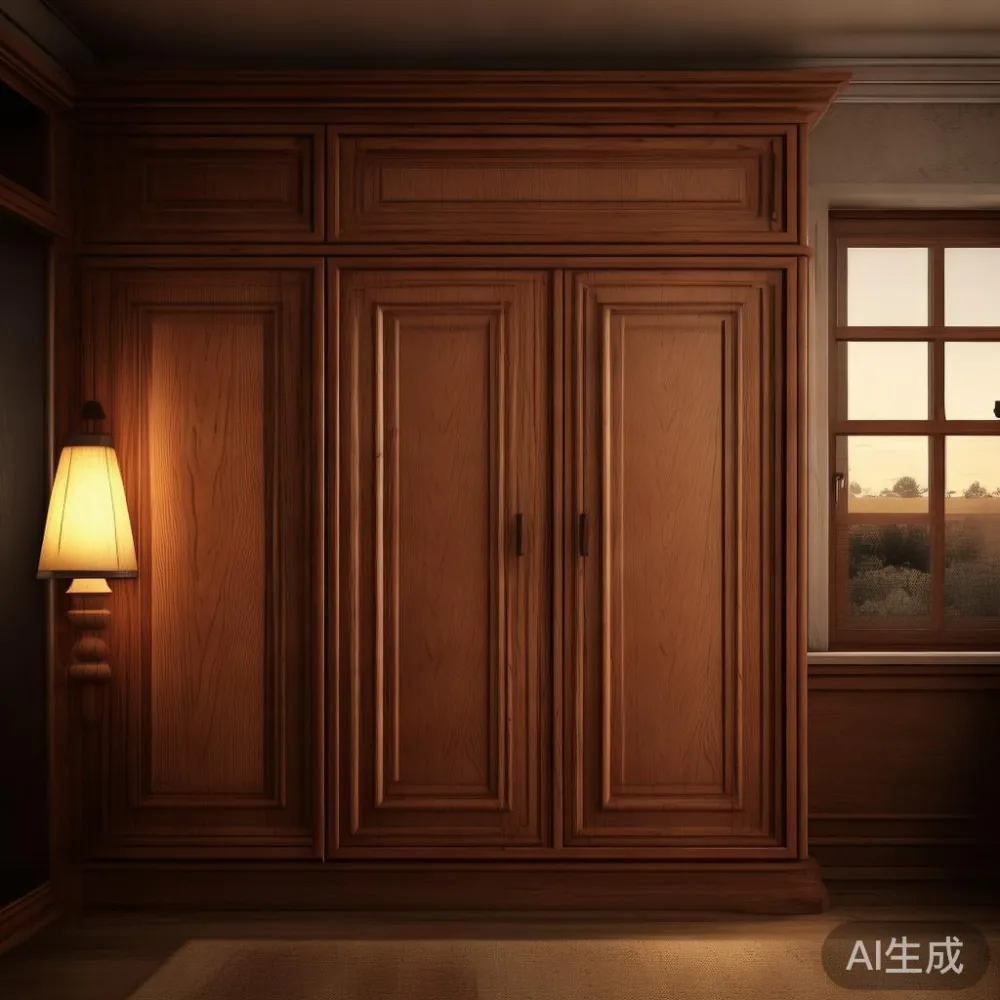
- Rubberwood (Hevea brasiliensis): plantation-grown, cheap, around S$900–S$1,400 for a two-door wardrobe. Dense enough, but it dents and discolours within five years.
- Ash / White Oak (Quercus): the workhorse for American light luxury styles. A two-door ash wardrobe sits around S$2,200–S$3,000, and it takes humidity swings better than rubberwood.
- Walnut (Juglans): chocolate tones, the signature of post-modern light luxury wardrobes and dining tables. Expect S$3,400–S$5,200 for a two-door, S$6,000+ for a three-door.
- Teak / Burmese Teak: naturally oily, the gold standard for Singapore. A full solid teak wardrobe from a credible maker starts around S$4,800 for two doors.
The second question is structural honesty. A "solid wood" wardrobe can mean (a) every panel is one piece of solid timber, (b) only the frame is solid and the panels are plywood, or (c) only the door faces are solid and the carcass is MDF. Each tier removes S$600–S$1,500 from the build cost. A wardrobe for HDB bedrooms with restricted lift access (typically 1.0–1.2 m door, 1.6 m deep) often needs to be delivered in flat-pack form, which is another reason makers cut corners on the carcass: lighter panels are easier to carry up.
2. Joinery vs. Dowels vs. Cam Locks
Pick up any high-end wardrobe and look at the corner joint. If you see a mortise-and-tenon, dovetail, or finger-joint pinned with wood glue, you are paying for cabinetmaker time. If you see a metal cam lock (the round disc that a hex key twists), you are paying for flat-pack logistics.
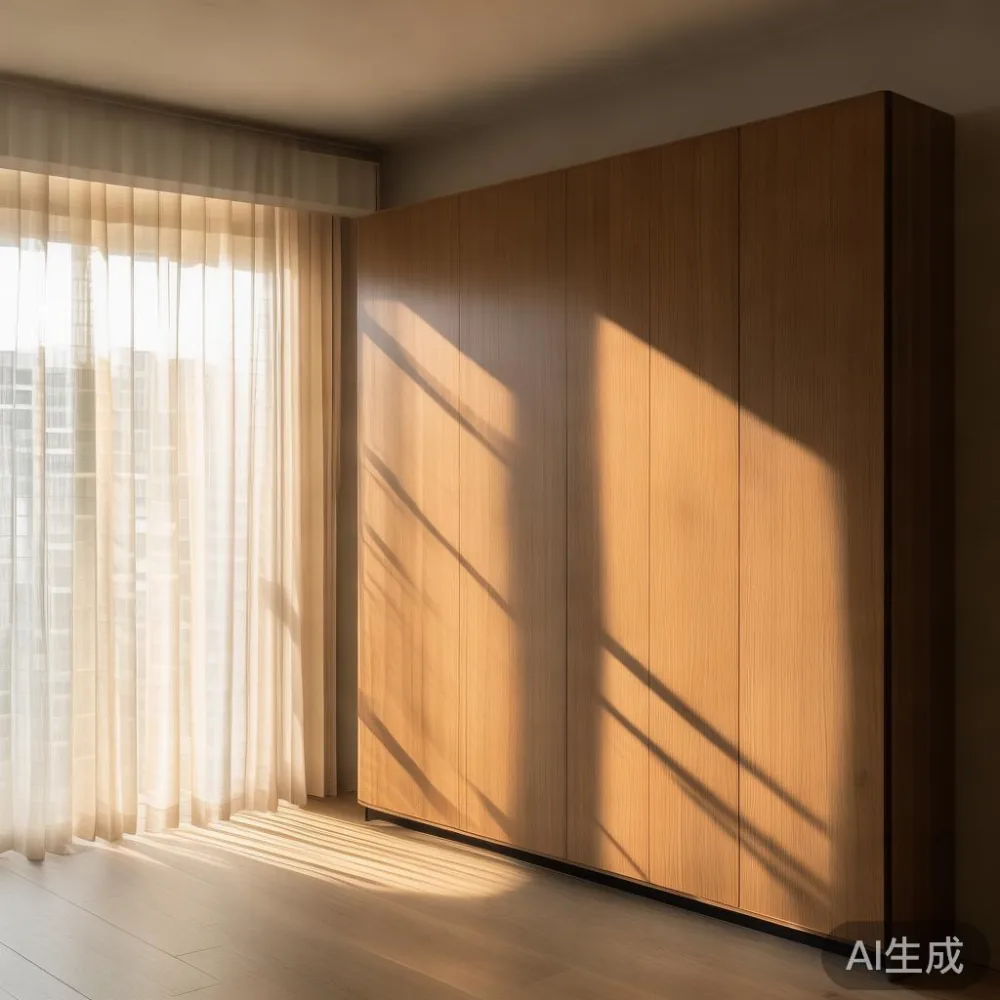
Mortise-and-tenon joints take roughly 18–25 minutes per corner for a skilled joiner. On a three-door wardrobe with eight major joints, that is around three hours of labour at roughly S$35–S$50/hour in Foshan. Across the whole wardrobe, traditional joinery adds about S$280–S$420 to the build cost. Cam-lock flat-pack construction takes about 40 minutes total. The saving is real, but so is the consequence: cam-lock wardrobes rack slightly under load, the doors drift out of square within a year, and they cannot be re-tightened indefinitely because the particleboard around the insert crushes.
3. Panel Thickness, Drawer Box Construction, and Hardware
Panels below 18 mm are a red flag. Real wardrobes built for humid climates use 22–25 mm side panels and 18 mm backs. The thicker panel alone adds S$120–S$180 in raw timber per wardrobe, but it is the difference between a piece that stays flat in August and one that cups like a pringle.
Drawer boxes are the giveaway. Cheap wardrobes use a 12 mm particleboard drawer with a stapled cardboard hardboard bottom. Better ones use 16 mm solid wood with a plywood or solid bottom, dovetailed or screwed corners, and full-extension soft-close runners rated for 45 kg. Soft-close Blum or Hettich runners add about S$18–S$28 per drawer; on a six-drawer internal layout that is S$110–S$170. Customers see the wardrobe, not the drawer, so this cost is often the first thing cut.
Hinges matter just as much. A concealed European hinge with 110° opening and six-way adjustment costs S$6–S$9 each; a basic pressed-steel hinge costs S$1.20. A two-door wardrobe uses four hinges, a three-door uses six. The price difference is small in absolute terms, but the door-sag difference after two years is obvious.
4. Finish: Lacquer, Oil, Wax, and How Many Coats
Finish is the most misunderstood line on a furniture quote. A five-coat Italian polyurethane lacquer in a matte eggshell finish, hand-sanded between coats, takes a finisher about two working days on a two-door wardrobe. A single-coat NC lacquer sprayed in a dust tunnel takes forty minutes. The materials are maybe S$40 apart. The labour is S$300 apart.
Why does this matter in Singapore? Humidity, plus the constant air-conditioning cycles that push wood from 24°C / 55% RH to 28°C / 85% RH every evening. A thick, properly cured lacquer seals the timber and slows moisture exchange. A thin finish lets the wood breathe — and cup, and split. For French light luxury wardrobes in cream or putty tones, a catalysed lacquer is almost mandatory because the pigmented finish shows every wave in the substrate.
5. Size, Configuration, and Lift-Friendly Logistics
The price of a wardrobe scales non-linearly with width. Going from 120 cm (two-door) to 180 cm (three-door) is not 50% more timber; it is roughly 60–70% more, because the side panels and top get longer, which forces the maker to use wider, more expensive boards. A standard three-door wardrobe in ash runs S$3,400–S$4,200 at MIDHILL-style factories, against S$2,200–S$2,800 for the two-door.
Then there is the Singapore-specific layer. HDB lifts in newer BTOs (Punggol Northshore, Tampines GreenRidges, Bedok Beacon) have door openings around 0.9–1.0 m wide and internal depths around 1.5–1.7 m. A pre-assembled three-door wardrobe at 200 cm tall by 180 cm wide simply will not fit standing up. Responsible makers either:
- Build the wardrobe in two halves that bolt together on site (adds S$120–S$180 for the extra hardware and a second assembly visit), or
- Flat-pack the carcass with traditional joinery, which raises the joinery cost but keeps the panel thickness up.
Free shipping above a S$350 threshold is standard now, but corridor access matters. A 60 cm-deep wardrobe down a 1.1 m corridor, around a 90° corner, is a geometry puzzle. I watched two delivery men in Tampines take 45 minutes to work through a S$3,200 walnut wardrobe into a master bedroom, and the homeowner tipped S$40 each. That kind of access risk is built into the price of any premium wardrobe sold locally.
6. Origin, Labour Standards, and Warranty Backing
A wardrobe made in a Foshan factory that pays its joiners S$40–S$50/hour, sources FSC-certified ash, and offers a ten-year structural warranty will cost more than a similar-looking piece from a workshop paying S$12/hour with unverified timber. The price gap is roughly 35–55%, and it is the single hardest thing to evaluate when you are staring at two nearly identical products at IMM or a Jalan Besar showroom.
Look for warranty terms written in the contract, not in a marketing brochure. A ten-year structural warranty on joinery, plus lifetime refinishing (sanding, re-oiling, lacquer touch-up) is the kind of after-sales commitment that signals the maker expects the piece to last. MIDHILL, for example, has been exporting from Foshan since 2008 to 15+ countries and treats refinishing as a standing service rather than a one-off offer. That capability — a spray booth, a sanding room, and trained finishers on payroll — adds roughly 6–9% to overheads, which is reflected in the price.
7. Design Language: Why a French Light Luxury Wardrobe Costs More Than a Scandinavian One
Two wardrobes in ash, with the same panels, same hinges, same lacquer, can still differ by S$800–S$1,400 purely because of the design language applied to them.
- Scandinavian / Japandi: flat fronts, exposed timber, minimal hardware. Cheapest because no mouldings, no inlays, no special doors.
- American light luxury: shaker-style frames, brass cup pulls, soft-close everything. Mid-tier because of the routing work and the imported hardware.
- French light luxury: curved or chamfered corners, fluted panels, hand-applied patina, sometimes paired with a marble-top dresser. Top tier because of the skilled labour.
- Post-modern light luxury: asymmetrical layouts, mixed materials (timber + brass + leather pulls), bold proportions. Top tier because of the prototyping cost.
If you want the French look, you are paying for a finisher who can hand-grain a brushed patina in 90 minutes per panel. If you want the post-modern look, you are paying for a prototyping run that may have taken three prototypes to get one right. None of this shows up in the wood species or the dimensions, but it shows up in the invoice.
How do I care for a minimalist furniture in humid weather?
Keep the indoor relative humidity between 45% and 60%, wipe spills within fifteen minutes, run a dehumidifier for two hours every evening during the monsoon months, and never place a minimalist wardrobe or bed frame directly against an exterior HDB wall because the temperature differential behind the furniture traps moisture and causes the back panel to bow.
That single paragraph is worth memorising. Singapore sits between 70% and 90% RH for most of the year, and the monsoon surge (November to January, plus the June–September southwest monsoon) regularly pushes bedroom humidity above 85%. A few specific habits extend the life of any solid wood piece, including a minimalist wardrobe or a low-profile bed frame in ash or walnut:
- Dehumidify, don't seal. A dehumidifier set to 55% RH costs about S$0.35/hour to run. A wardrobe sealed with thick polyurethane still needs ambient humidity control, because the back panel and the underside of the base are unfinished timber that exchanges moisture regardless of how good the front lacquer is.
- Leave 5 cm behind the wardrobe. Air circulation behind the piece prevents the "greenhouse" effect against a non-insulated HDB wall. If your bedroom layout forces the wardrobe flat against the wall, attach 5 cm felt bumpers to the back corners to create an air gap.
- Air-conditioning consistency matters more than temperature. Setting the bedroom AC to 24°C all night (instead of letting it swing between 22°C and 28°C on auto) reduces the timber's expansion-and-contraction cycles by roughly half over a year.
- Use coasters and felt pads on every surface. This applies as much to a marble table in the dining area as to a solid wood dining table in the kitchen. Water rings are the most common refinishing job I see on otherwise perfect pieces.
- Re-oil or re-wax every 18–24 months. For oil-finished pieces (typical of post-modern light luxury designs), a 30-minute wipe-down with hard wax oil every 18 months keeps the surface hydrophobic. For lacquered pieces, a 60-second wipe with a silicone-free polish every three months is enough.
Frequently Asked Local Questions
Is a S$2,400 two-door wardrobe a fair price in Singapore in 2026? For solid ash, 22 mm panels, mortise-and-tenon joinery, soft-close hardware, and a five-coat lacquer, yes. With GST at 9%, your all-in landed cost is around S$2,616, including delivery. Anything meaningfully cheaper is cutting one of those five variables.
Can a solid wood wardrobe actually fit through my HDB door? A two-door wardrobe at 120 cm wide by 55 cm deep by 200 cm tall fits through every standard HDB main door (0.9 m wide, 2.1 m tall) when tilted. Three-door units above 180 cm wide usually need to be split into two halves for delivery. Confirm the split-and-bolt option before you pay, because on-site assembly adds S$120–S$180.
How long should a wardrobe last? A well-built solid wood wardrobe from a maker offering a ten-year structural warranty should last 20–30 years before it needs major refinishing, and 40+ years if the humidity is managed. The soft-close hinges and runners will probably need replacement at year 12–15; budget S$60–S$90 per hinge for a Blum or Hettich replacement.
Is rubberwood "real" solid wood? Technically yes, but rubberwood is a hardwood plantation species with shorter fibres and lower density than oak or walnut. It is fine for a nightstand or a small side table that will not bear load. For a wardrobe that has to hold 80 kg of hanging clothes plus 30 kg of folded items on shelves, I would step up to ash or walnut.
The Bottom Line on Price
Solid wood furniture pricing follows a simple equation: timber cost + joinery labour + finish labour + hardware + design overhead + logistics + warranty reserve. The first three are non-negotiable; the last four are where makers decide whether they are selling you a 5-year piece or a 25-year piece.
For a Singapore household, the practical target is a mid-tier wardrobe in ash or walnut, with a 22 mm carcass, traditional joinery, and a credible warranty, delivered fully assembled or split-and-bolt for HDB access. That price band runs S$2,400–S$4,200 for two doors and S$3,800–S$6,500 for three doors in 2026. Pair it with a solid wood dining table in the same species, a matching solid wood bed frame, and a small marble table as an accent in the dining area, and you have a light-luxury interior that will still look current in 2040 — without warping in next year's monsoon.
One last note from that Foshan visit: the workshop manager told me his factory produces roughly 40% of its volume as flat-pack wardrobes and 60% as assembled. The flat-pack line has 14 workers; the assembled line has 38. The assembled line is also where every piece that ships to Singapore gets built, because his team learned years ago that HDB humidity punishes anything held together by cam locks alone. That single operational choice — 38 instead of 14 — is the invisible reason a credible solid wood wardrobe costs what it costs.