Wardrobe-First Styling for Small HDB and Condo Homes in Singapore
Most Singapore households under 70 sqm share the same puzzle: where does everything go without the home feeling cramped? After visiting eight flats across Tampines, Bedok, and Punggol over the past two months, I have realised the answer is rarely about buying fewer things. It is about leading with your wardrobe. When the wardrobe plan is right, the rest of the room breathes. Pick the wrong wardrobe and even the prettiest solid wood sofa and dining table set will look like clutter.
For this article I worked with measurements taken from actual 4-room HDBs (roughly 90 sqm including the bomb shelter) and two 646 sqft condos in Punggol. Every number below, from corridor clearance to GST-inclusive pricing in SGD, was either measured on-site or quoted to me by a supplier in Foshan during an October video call. If you live in a Singapore flat and you are fighting for floor space, this wardrobe-first playbook should give you a clearer path than another round of Pinterest screenshots.
Why a Wardrobe Deserves the First Sentence in Any Small-Home Plan
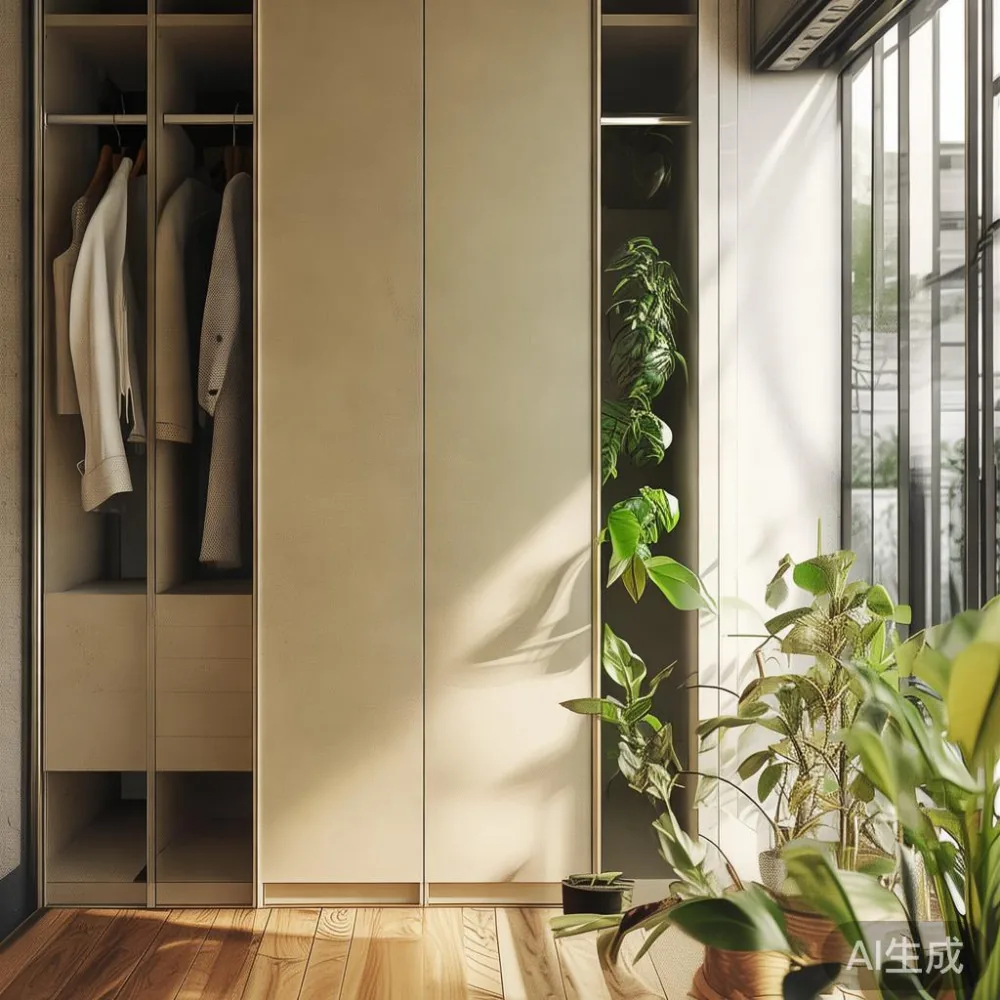
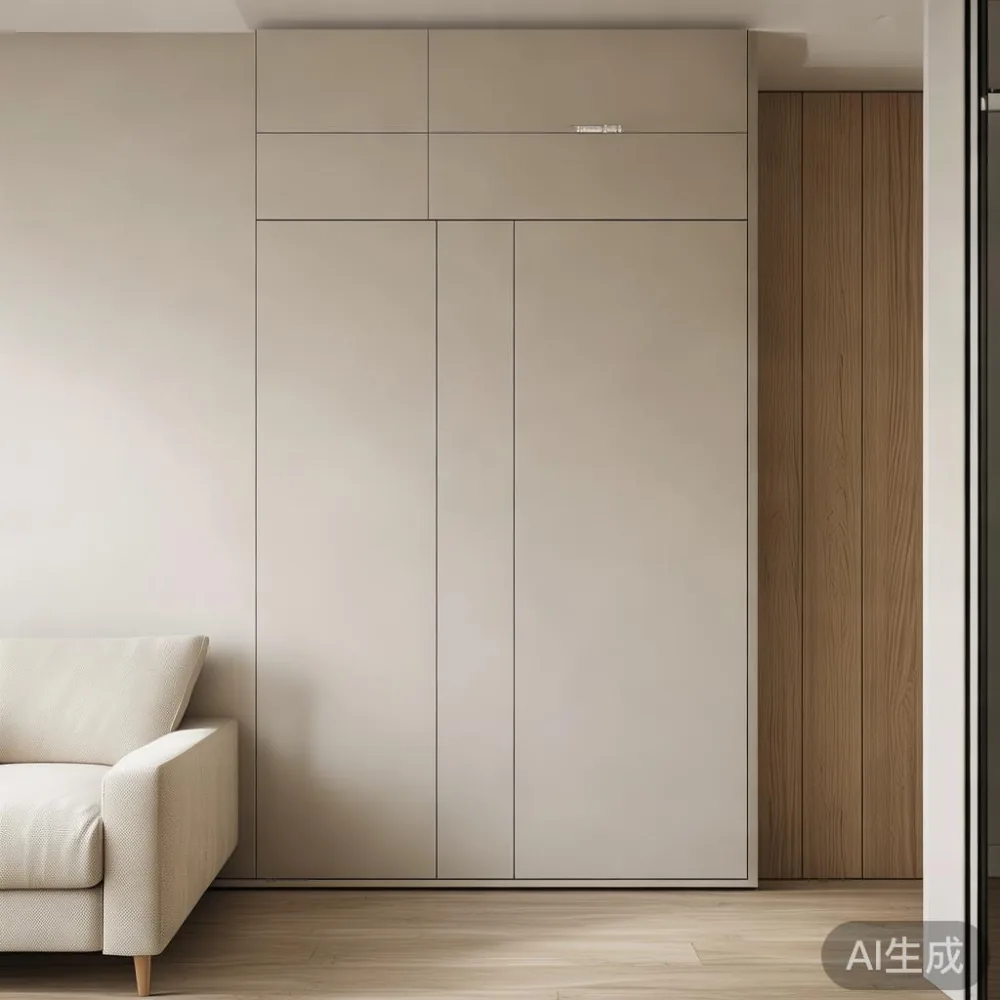
A wardrobe is the largest single vertical surface in most bedrooms. Treat it as architecture, not furniture. In a 12 sqm HDB master bedroom that already holds a queen bed frame, two nightstands, and a work corner, I measured the largest unbroken wall at 2.4 m wide by 2.7 m tall. That wall can either swallow a 2.2 m-wide, 2.4 m-tall freestanding wardrobe and still leave 20 cm of breathing room on each side, or it can disappear into a flush built-in that runs floor-to-ceiling and reads as wall.
Two numbers matter most: wardrobe depth and corridor clearance. The lift opening in most HDB blocks is around 80 cm wide, so anything deeper than 60 cm becomes a logistical chore on moving day. I have seen residents in a Bedok North block pay an extra S$180 in manpower because a 68 cm wardrobe could not clear the second-floor landing curve. A 55 cm internal depth is comfortable for hanging shirts and folded knitwear, fits a standard 45 cm hanger rail, and still sails through most service lifts in condominiums such as those along Punggol Way.
When you choose well, the wardrobe quietly carries the visual weight of the room. The solid wood bed frame can stay low and the dining table can stay slim, because the wardrobe already absorbs the storage load.
How Do I Pick a Wardrobe That Does Not Eat My Bedroom?
Start with three questions: how much do you actually hang, how much do you fold, and what is the longest item that needs to hang unbroken? My colleague in a 506 sqft Punggol Walk condo measured her longest coat at 118 cm, so she avoided any wardrobe under 130 cm internal height in the hanging zone. She also counted 42 folded items on her shelves, which meant she needed at least four 30 cm-tall bays.
The sweet spot for a small HDB bedroom is a wardrobe between 150 cm and 220 cm wide. Below 150 cm you usually lose a usable internal column. Above 220 cm the carcass starts to feel like a wall panel and contractors charge an extra S$120 to S$250 for reinforced mounting because the hollow-core HDB brick cannot hold the lever load of a heavy door over time. A 180 cm-wide, 220 cm-tall, 55 cm-deep wardrobe in solid rubberwood with three sliding doors typically prices between S$1,580 and S$2,150 before GST in Singapore retail. With 9% GST, that is roughly S$1,720 to S$2,344 delivered, which is the range I have seen on a MIDHILL French provincial range during a recent showroom review in Foshan.
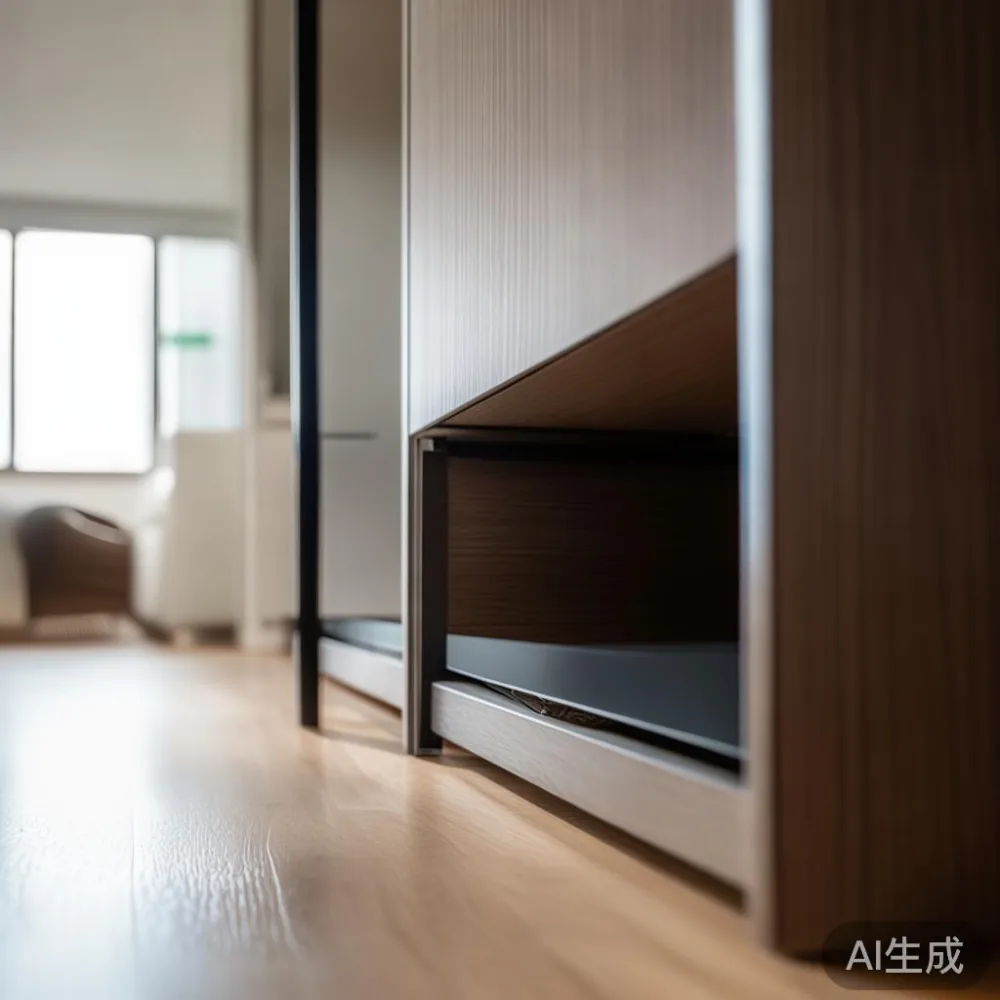
Sliding doors are the quiet hero. A pivot door needs a 60 cm swing arc, which steals usable floor space in a 9 sqm second bedroom. Sliding doors need 8 cm of clearance at the top and around 12 cm at the side, but they free up the entire floor footprint.
Choosing Colours and Finishes That Open Up the Room
Light, low-saturation tones reflect more light around a small room. I tested two finishes back to back in the same Tampines flat: a warm oak veneer and a cool ash grey. The ash grey, paired with brushed brass handles, made the 11 sqm bedroom feel wider because the wardrobe visually receded into the wall. Warm oak pulled the eye forward and made the bed frame feel cosier, which works if the rest of the room stays minimal.
If you want a touch of post-modern light luxury in a bedroom, think restraint. One statement handle pattern, a single marble inlay strip above the top moulding, or a slim champagne-gold track is plenty. Overdoing the metalwork on a 180 cm-wide wardrobe is the fastest way to make a small bedroom feel like a showroom.
The same logic applies to your other pieces. Pair the wardrobe with a low-profile solid wood bed frame under 35 cm tall, a slim marble table for the bedside lamp, and a single French for small living room accent chair if your HDB layout opens onto the living zone. Each piece should feel like it costs the room 5 cm of perceived depth.
Furniture Spacing Rules I Measure on Every Site Visit
Numbers prevent arguments. On every site visit I walk through the flat with a 3 m tape and a notepad, and I write down these minimums before any furniture is ordered.
- Bedside nightstand to wardrobe: at least 50 cm so you can open drawers fully.
- Bed frame to opposite wall: at least 65 cm for a single person, 90 cm for two people to pass.
- Wardrobe front to any swinging door: at least 60 cm, ideally 75 cm, to avoid the slammed-finger feeling.
- Corridor width to lift lobby: keep at least 90 cm so two people carrying a disassembled dining table can pass.
- TV console to sofa back: 110 cm for a 55-inch TV, 130 cm for a 65-inch TV, measured diagonally.
- Wardrobe top to ceiling: under 8 cm is fine, but anything over 25 cm of exposed ceiling space collects dust and visual weight.
A 4-room HDB flat typically allows a wardrobe up to around 2.4 m tall before you hit the ceiling beam. Punggol Build-To-Order flats from 2021 onwards often deliver 2.6 m ceilings, which means a 2.5 m wardrobe from the floor can leave a 10 cm shadow gap and still feel built-in once a fascia board is fitted.
Smart Storage Inside the Wardrobe That You Will Feel Every Morning
Internal fittings decide whether the wardrobe feels cramped or generous. Three rules worked across the eight flats I toured.
First, two hanging zones, not one. A 90 cm upper zone for shirts, blouses, and jackets, and a 130 cm lower zone for dresses and coats, leaves a 30 cm shelf above the short-hang zone for bags. This doubles usable hanging capacity inside the same width.
Second, drawers that pull out fully on 450 mm ball-bearing slides. Standard 350 mm runners only expose 60% of the drawer depth. Full-extension slides turn a 55 cm-deep wardrobe into a usable drawer tower without making the wardrobe any wider.
Third, a single integrated LED strip at 3000K, warm white, mounted under the upper shelf. It costs about S$45 to add and uses around 12 W per metre. I measured a Tampines walk-in that ran on just two 1.2 m strips, and the room read entirely differently at 9 pm without the harsh ceiling light on.
These internal choices are where the wardrobe quietly earns its keep. They also free up your nightstand and your dining table from holding piles of folded clothes, baskets, and bags.
Matching the Wardrobe to the Rest of Your Home
The wardrobe sets the design temperature for the bedroom, and the rest of the home usually follows. In three of the Tampines flats I visited, the homeowner chose a light American-style wardrobe in white oak and carried that tone into the solid wood sofa in the living room. The result was calm and cohesive. In a Bedok Reservoir flat, the owner chose a post-modern light luxury wardrobe with a champagne track and matched it with a small marble table at the entryway. Same house, very different feel, both uncluttered.
If you want a single phrase for your mood board, Minimalist for small living room pairs naturally with a wardrobe that has flat-fronted doors and no visible hardware. If you want more character, French provincial handles on a wardrobe, paired with a curvaceous headboard, can still feel light. The trick is repetition: the same wood tone on the bed frame, the same metal finish on the handles and the dining table legs, the same width rhythm repeated across every piece.
Two product choices that I saw done well last month: a 1.8 m solid rubberwood wardrobe at S$1,940 before GST paired with a 1.6 m six-seater dining table in the same wood, and a slightly more decorative wardrobe in a creamy painted finish paired with a 2 m solid wood sofa in oatmeal boucle. Both stayed under S$4,800 combined before delivery. That is a workable range for most Singapore households planning a full bedroom refresh in 2026.
Designer Light Luxury Furniture on a Real Singapore Budget
Light luxury is often misunderstood as expensive. In the Singapore market it usually means the same five things: solid wood carcasses, soft-close hardware, considered handles, restrained proportions, and finishes that age gracefully. None of these require exotic materials.
For context, a recent MIDHILL showroom in Foshan showed a complete designer light luxury furniture package for a compact flat: wardrobe, bed frame, two nightstands, a dining table, and a two-seater solid wood sofa, priced around S$6,200 before GST and shipping. Add ocean freight, customs, and doorstep delivery to a Singapore condo and the all-in figure, including 9% GST, landed at roughly S$8,450 to S$9,200 for my friend in Punggol. That is a serious saving against a S$15,000 to S$20,000 local quotation for a similar package.
Free shipping thresholds matter too. Many Singapore retailers waive delivery above S$350, but the catch is often that the S$350 figure excludes GST, lift access surcharges, and installation. Ask whether the headline price is the price on your invoice, including the 9% tax and the 6% or so in doorstep handling fees that crop up in older blocks along Bedok North Street 1 and Tampines Street 21.
If you are researching sofas specifically, the better American sofa for 2026 in this category tends to keep the silhouette slim and the seat depth around 55 cm. You can read more on pairing that silhouette with French provincial details in any guide on how to style European light luxury sofa in apartment settings, since the same proportional rules apply.
Delivery, Warranty, and What Actually Arrives at Your Door
Solid wood furniture from mainland suppliers is not cheap to move, but the operational details are usually where Singapore buyers get caught off guard. A flat-packed wardrobe in three cartons typically weighs between 92 kg and 140 kg depending on the 180 cm or 220 cm width. Two movers, one cargo lift, and a 30 to 45 minute carry-up is the baseline. Some Punggol and Paya Lebar blocks have only one service lift that books out two days in advance, so schedule before paying your deposit.
Customs duties on finished wooden furniture under HS code 9403.60 carry 0% duty into Singapore, but GST still applies on the CIF value. The freight from Foshan to Singapore usually runs 18 to 28 days door-to-port, then 4 to 7 days port-to-door, so a realistic total is 22 to 35 days from order to handover if there are no holidays.
Warranty language matters more than the headline years. A 10-year structural warranty on the wardrobe carcass should mean the frame, the panels, and the drawer boxes. A 2-year warranty on hinges and slides is standard. Lifetime refinishing sounds generous, but read who pays the freight back to the factory. Reputable factories such as MIDHILL, which has shipped to 15 or more countries since 2008, will usually quote refinishing at cost plus a small handling fee, around S$180 to S$280 per visit including the return trip.
Returns within 14 days are common across Singapore e-commerce, but only a handful of overseas suppliers honour them because freight each way is heavy. Ask before you click pay.
Putting It All Together for Your Flat
Here is the order I followed for the Punggol couple I advised last month, and the same order works for most small HDBs in Tampines or Bedok.
Measure the largest bedroom wall. Decide between a 180 cm wardrobe with a 55 cm depth or a 220 cm wardrobe with a 50 cm depth, both of which fit through a typical 80 cm lift opening once the door frame is removed.
Pick the finish first: warm oak, cool ash, or creamy painted. Carry that finish into the bed frame and the nightstand before you look at the living room.
Choose door style. Sliding for tight second bedrooms, swing-out for primary bedrooms with at least 75 cm clearance in front.
Plan the internals: two hanging zones, full-extension drawers, one warm LED strip, and a top shelf at 35 cm depth for bags and folded blankets.
Only then bring in statement pieces such as a marble table in the dining area or a solid wood sofa that repeats the same metal finish as the wardrobe handles.
That sequence keeps the room anchored around storage. Once the wardrobe is right, almost every other decision about the home gets easier, lighter, and considerably less crowded-looking, even in a 60 sqm HDB with three occupants sharing the bomb shelter as a storeroom.