Wardrobe-First Styling: How to Make a Small HDB Feel Open, Not Crowded
I spent two days last month visiting a friend's resale 4-room HDB in Bedok — 92 sqm, original 1990s layout, narrow corridor barely 95 cm wide. The lift could swallow their new 2.4-metre wardrobe only because we tipped it on its side and slid it in diagonally. That single delivery taught me more about small-space styling than ten Pinterest flatlays. If your wardrobe cannot physically enter the building, nothing else about your design plan matters.
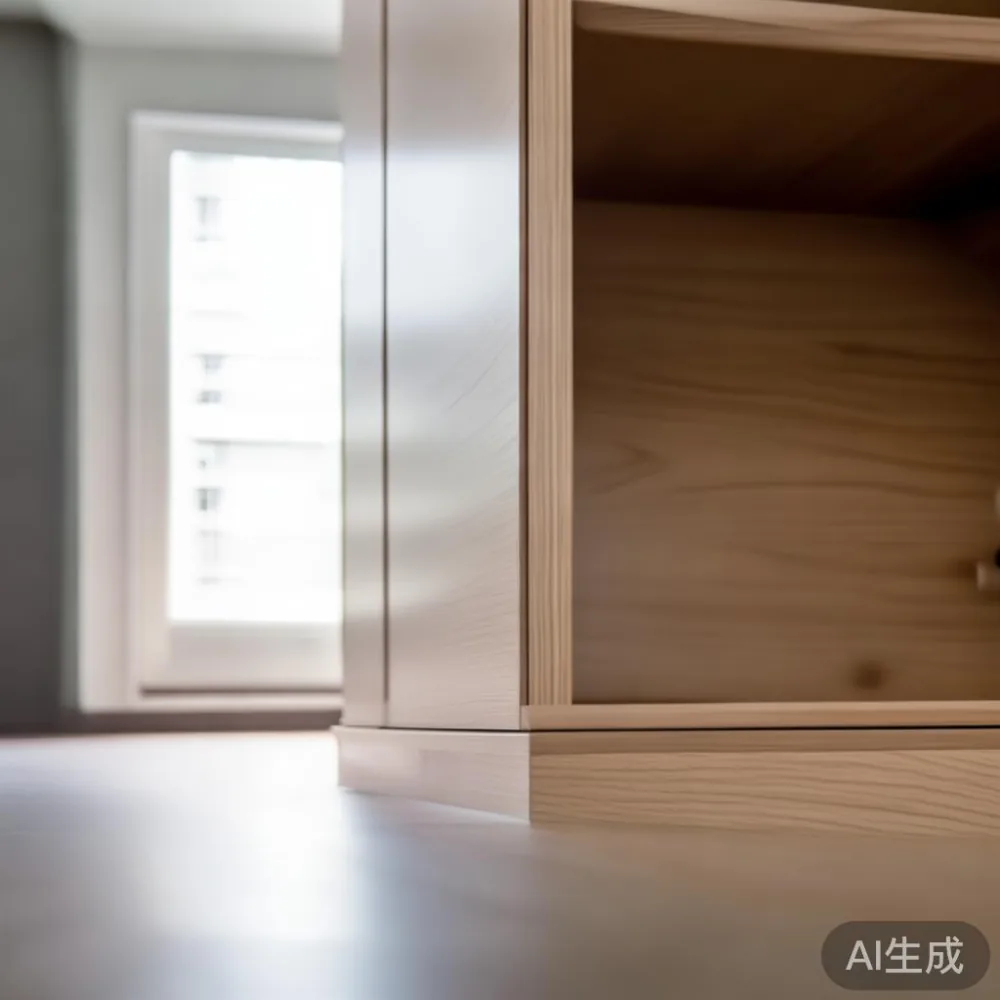
Why Your Wardrobe Is the First Decision, Not the Last
Most people in Tampines, Punggol, and Clementi buy a sofa, a bed frame, maybe a dining table, then panic when they realise a 3-door wardrobe won't pass the lift door — typically 800 to 900 mm wide with a 2.1 m ceiling inside the cabin. The wardrobe sets the ceiling — literally and visually. Get it wrong, and your living room eats itself. Get it right, and every other piece of furniture becomes easier to place.
Measure three things before you do anything else: the lift door width, the corridor width outside your unit (many older HDBs sit around 1.05 to 1.2 m), and the diagonal of your room corner to corner. A 240 cm × 60 cm × 220 cm wardrobe that arrives unassembled will fit almost any Singapore corridor. A fully built one will not.
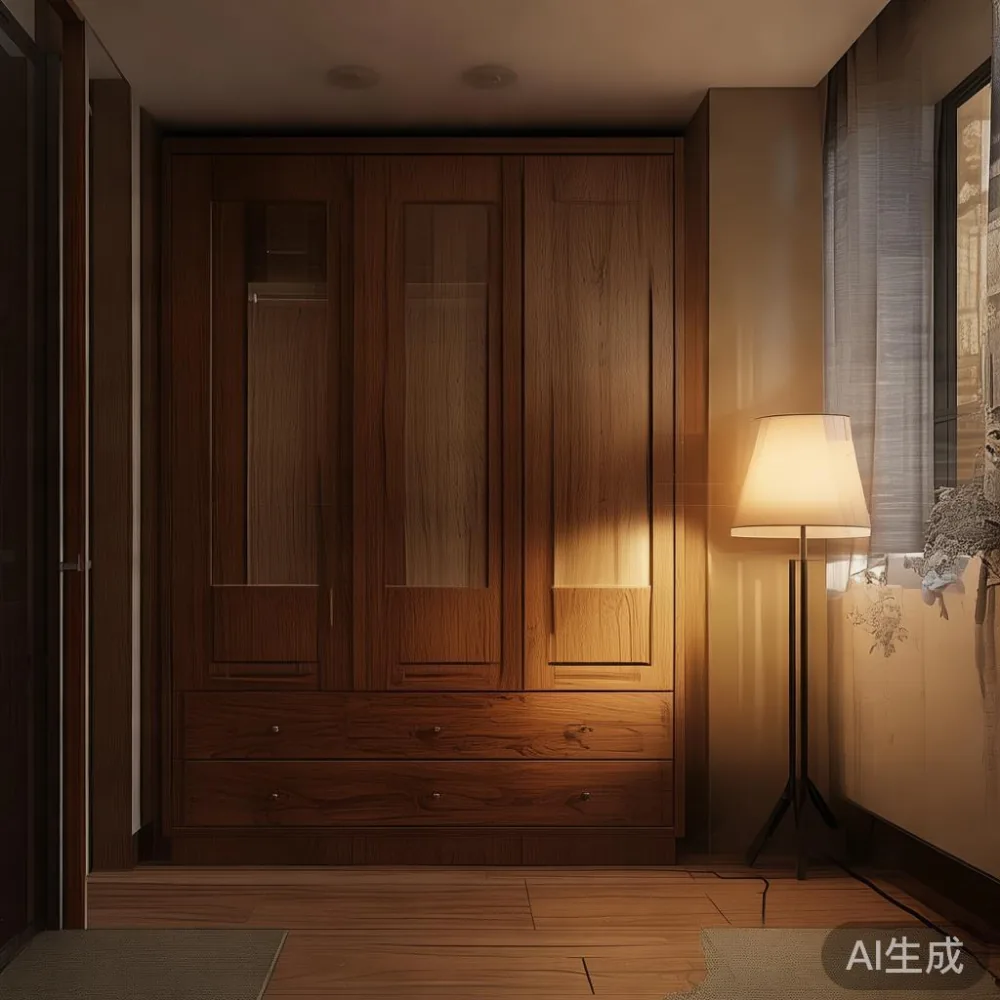
Where Can I Buy a Mid-Century Modern in Singapore?
You can buy mid-century modern pieces in Singapore through direct-factory showrooms in Foshan-linked distributors, through local ID firms that import container loads quarterly, and through a small set of retailers who carry American light luxury lines with Singapore warehousing. Mid-century modern in Singapore is easiest to source as flat-pack solid wood — bed frames, nightstands, dining tables, and wardrobes — because the flat-pack form factor solves the lift problem while keeping the walnut and teak finishes the style demands.
Last month my colleague Priya ordered a mid-century modern bed frame, two nightstands, and a 180 cm sideboard from a Foshan factory with a Singapore distributor. Total landed in SGD 3,840 including GST (9%) and lift-level delivery to her Punggol condo. The pieces arrived in 22 days by sea, came up the lift without disassembly drama, and matched her existing wardrobe. That whole transaction used to require a 6-week ID contract.
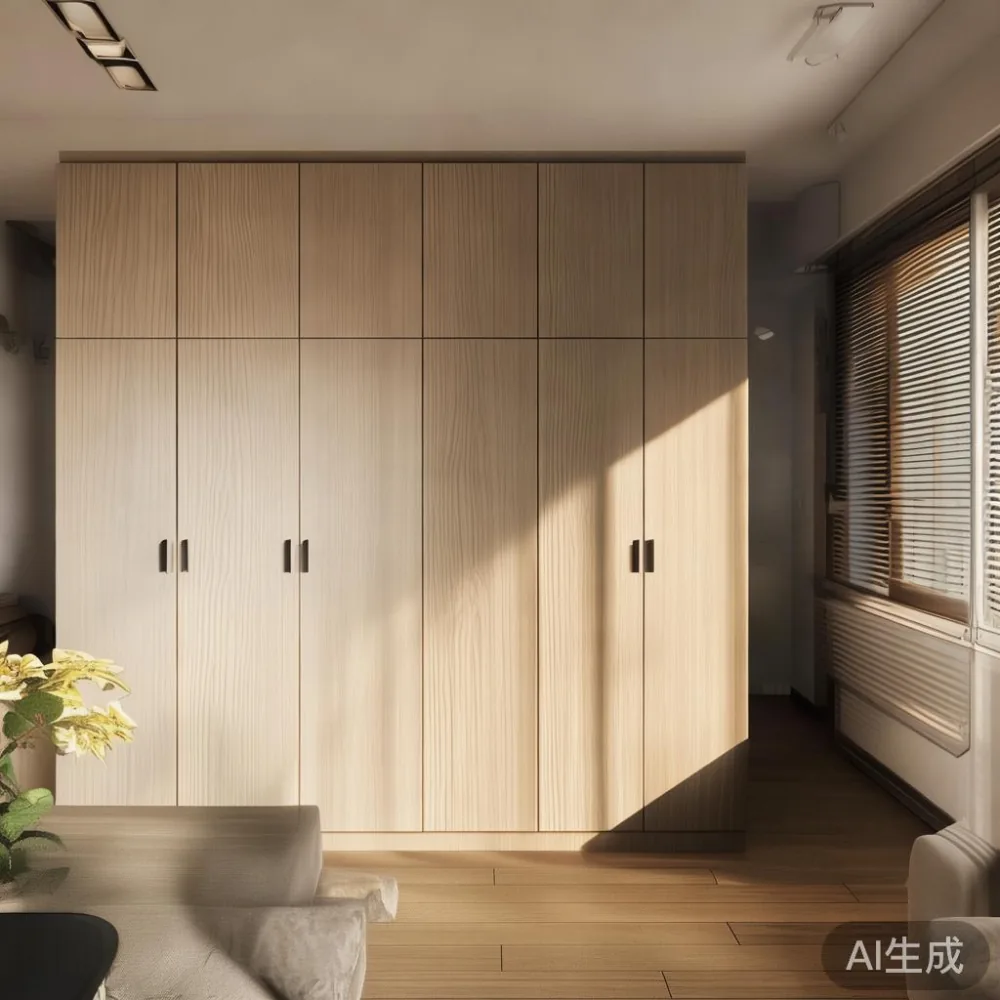
Pick a Wardrobe Height Strategy That Frees Floor Space
Floor space is the only currency that matters in a 65 sqm HDB. Two wardrobe strategies return the most square metres.
Strategy 1 — Go tall, not wide. A 240 cm-tall, 1.2 m-wide wardrobe stores the same volume as a 200 cm-tall, 1.6 m-wide one, but frees up 40 cm of floor width for a walkway or a slim console. Vertical storage also draws the eye upward, which makes low ceilings (2.7 m is standard in newer HDBs) feel taller.
Strategy 2 — Go shallow, not deep. Standard wardrobes sit at 60 cm deep. A 45 cm-deep wardrobe still holds hanging shirts on a slim 180-degree pivot hanger, holds folded knits on three shelves, and saves 15 cm of floor depth you can spend on a marble table or a bench. The catch: you give up bulky item storage. If you ski, skip this wardrobe.
For an HDB master bedroom of roughly 12 sqm, a 240 cm × 180 cm × 55 cm wardrobe with sliding doors (swing doors need 60 cm of arc space) usually hits the right balance. Solid wood frames add about 80 to 110 kg per unit; engineered hollow-core frames weigh closer to 45 kg. On upper floors above the 15th, lift weight ratings of 680 kg become a constraint if you order multiple flat-pack pieces at once.
How Do I Stop My Furniture From Making the Room Feel Crowded?
You stop furniture from making the room feel crowded by choosing fewer, larger pieces over many small ones, keeping 60 to 70 cm of walkway between any two pieces, and matching wood tones within one shade family so the eye reads the room as a single volume instead of a collection of objects.
Three rules I now apply on every small-space project:
- Rule of three wood tones, not seven. Pick a primary wood — say, walnut — a secondary wood one shade apart (oak, ash), and a contrasting accent. Anything else reads as clutter.
- Leave 90 cm of breathing space around the bed frame. Your nightstands count as part of the bed footprint, not as separate objects. A 1.8 m bed frame with two 45 cm nightstands consumes a 2.7 m × 2.1 m zone; your wardrobe needs to sit outside that zone.
- Pick one anchor stone, not many. A single marble table — say a 110 cm round travertine — gives you texture without scattering it across three side tables, four coasters, and a lamp base.
On the furniture mix itself, a small HDB does well with a five-piece backbone: one solid wood sofa (2.1 m, not 2.4 m), one bed frame, one wardrobe, one dining table, and one nightstand per occupant. That's it. Add a console only if the corridor is wide enough (1.4 m+) to keep 90 cm of pass-through. Anything past seven pieces in a 75 sqm flat starts to feel like a showroom.
What Light-Luxury Direction Works Best Under 90 Sqm?
Post-modern light luxury works best under 90 sqm in Singapore because it pairs warm walnut and ash tones with slim brass hardware, holds a French light luxury silhouette (curved sofa arms, tapered legs, minimal carving), and stays light enough visually not to dominate a compact room.
Italian light luxury outdoor patio australia is one of the briefs I get from cross-border clients in Brisbane and Perth who want the same aesthetic indoors — slimmer profiles, brass accents, light travertine. That same vocabulary travels well to a Tampines or Sengkang flat: a curved-back solid wood sofa in walnut, a bed frame with a low-slung headboard, a dining table with a 6 mm stone top, and a wardrobe with finger-pull handles instead of knobs.
For Singapore, the right slate of finishes tends to run:
- Walnut frames for the wardrobe (the heaviest visual mass — keep it warm)
- Ash or white oak for the bed frame and nightstands (lighter, recedes)
- Travertine or Carrara marble for one marble table only — usually the coffee table, sometimes the dining top
- Brushed brass for handles, lamp bases, and one picture frame
Skip glossy lacquer, skip mirrored panels, skip anything reflective across more than 15% of a wall. Reflective surfaces bounce light but also bounce clutter back at you.
What Should I Measure Before Clicking Buy on Any Wardrobe?
You should measure the lift door width, the lift cabin depth and height, the corridor width, every corner in your delivery path, the final wardrobe position, and the diagonal clearance from the front door to the wardrobe wall before clicking buy on any wardrobe. If any single measurement is tighter than the packed dimensions plus 5 cm, the wardrobe will not enter your home.
A practical measurement checklist I share with every client:
- Lift door width (typical HDB: 800 to 900 mm; some condos: 950 to 1,000 mm)
- Lift cabin interior depth and height (typical: 1.5 m deep, 2.1 to 2.4 m tall)
- Corridor width from lift lobby to your front door
- Front door width and diagonal
- Final position diagonal — corner to corner of the room
- Floor load rating if you live above the 12th floor
If the wardrobe arrives flat-pack in cartons of 220 cm × 65 cm × 18 cm or smaller, it clears almost every Singapore corridor. If it arrives fully assembled, the math gets ugly fast. MIDHILL ships flat-pack by default for this exact reason, which is why a 240 cm × 180 cm wardrobe from a Foshan factory clears a Punggol corridor in two trips instead of needing a crane.
How Do I Budget Honestly for a Small-Apartment Furniture Set?
You budget honestly for a small-apartment furniture set by allocating roughly 60% of the budget to the three biggest pieces (wardrobe, bed frame, dining table), 25% to the sofa and nightstands, and 15% to a marble table, lighting, and console. For a complete solid-wood set in post-modern light luxury style in Singapore, expect SGD 8,000 to 14,000 landed, including GST and delivery.
A realistic price snapshot in SGD, mid-2025, flat-packed solid wood from a Foshan direct factory with Singapore delivery (single 4-room HDB, master bedroom + living + dining):
- 240 cm × 180 cm walnut wardrobe with sliding doors: SGD 2,400 to 3,200
- 1.8 m king bed frame with low headboard in ash: SGD 1,400 to 2,000
- Two solid wood nightstands: SGD 600 to 900 (SGD 300 to 450 each)
- 1.6 m dining table with 6 mm sintered stone top: SGD 1,800 to 2,600
- 2.1 m three-seater solid wood sofa in walnut: SGD 2,200 to 3,000
- 110 cm round marble coffee table: SGD 900 to 1,400
Add GST at 9%, lift-level delivery (free above SGD 350 spend, door-to-door around SGD 80 to 150), and you land in that SGD 8,000 to 14,000 band. The same set from a multi-brand retailer in Singapore tends to land 35 to 60% higher because of showroom costs and multi-layer distribution. Direct factory pricing is not a marketing line — it's just fewer middlemen.
What Is the Real Lifetime Cost of a Cheap Wardrobe?
The real lifetime cost of a cheap wardrobe is roughly two to three times the purchase price over ten years, once you add delivery, assembly, premature replacement, and the cost of a room that feels cramped every single day. A SGD 600 flat-pack wardrobe that swells in humidity, sags on its hinges, and needs replacing in year five ends up more costly than your wardrobe, more stressful than your wardrobe, and visually louder than your wardrobe for its full five years.
Two specific failure modes hit Singapore wardrobes hardest:
- Humidity creep. HDB bedrooms run 70 to 85% RH for eight months a year. MDF and particleboard absorb moisture, swell at the edges, and never recover. Solid wood moves with the humidity instead of against it.
- Hinge fatigue. Daily swing on a 2.4 m-tall door multiplies weight on cheap hinges. Quality soft-close hardware — Blum, Hettich, or equivalents — costs SGD 80 to 160 per door and lasts 15+ years. Cheap hardware fails in 18 to 36 months.
This is why factory-direct solid wood wardrobes with a 10-year structural warranty and lifetime refinishing tend to work out cheaper per year than the budget option. MIDHILL's 10-year structural warranty covers frame integrity, and lifetime refinishing means a SGD 200 to 400 resurface at year eight returns the piece to factory colour. That math is harder to beat than it sounds.
What Should I Ask a Factory Before I Pay a Deposit?
You should ask a factory before you pay a deposit whether the wardrobe ships flat-packed or fully assembled, what the lead time is from order to Singapore door, whether the warranty covers structural failure or only defects, what the refinishing service actually includes, and whether replacement hardware ships with the unit.
Five questions I now ask every supplier on behalf of clients:
- What are the carton dimensions, and do you offer knock-down flat-pack for all pieces above 1.8 m?
- What is the lead time from PO to lift-level delivery in Singapore? (Direct-from-Foshan typically runs 18 to 28 days by sea.)
- Does the 10-year warranty cover frame joints, drawer slides, and door hinges, or only the wood itself?
- What does lifetime refinishing include — sanding, staining, top coat, on-site or in-factory?
- What is the return policy inside 14 days, and who pays return shipping above SGD 350?
If a supplier cannot answer those five clearly, walk away. The wardrobe is the most expensive single piece of furniture in most HDBs, and the one piece you cannot easily replace.
Putting It All Together for a Tampines or Punggol Flat
For a 90 sqm Tampines or Punggol HDB, the working set is: a 240 cm walnut wardrobe with sliding doors, a 1.8 m ash bed frame, two ash nightstands, a 1.6 m walnut dining table with stone top, a 2.1 m walnut solid wood sofa, and one 110 cm marble coffee table. Six pieces, three wood tones, one stone, one metal accent. Total spend around SGD 10,000 to 13,000 landed with GST.
Style flow: the wardrobe anchors the master bedroom, the bed frame and nightstands sit opposite, the dining table lives between the living and dry kitchen, the sofa faces the wardrobe of the entryway console (if you have one), and the marble table anchors the living zone. Nothing else needs to enter the flat.
That is the entire brief — fewer pieces, better pieces, one storage anchor that actually fits the lift. Everything else is decoration. MIDHILL has been shipping this kind of small-space-ready flat-pack set out of Foshan since 2008, into 15-plus countries including Singapore, and the constraint hasn't changed: if it doesn't fit the lift, it doesn't fit your life.