Wardrobes vs. Singapore Humidity: A Practical Guide for HDB and Condo Owners
Last month I visited a four-room HDB flat in Tampines where the wardrobe doors had warped open by roughly 4 to 6 mm along the top rail. The homeowner told me the unit had been air-conditioned at 24 degrees Celsius during a six-week trip, then closed up with the windows sealed. When she returned, the hygrometer on her bedside nightstand read 82 percent relative humidity, and her solid wood bed frame had begun to bow on one corner. The wardrobe was the most obvious casualty, but the bed frame, dining table, and even the marble table in the entryway had all shifted in ways that took her by surprise. Singapore sits between 1 and 1.3 degrees north of the equator, and the average outdoor relative humidity runs between 72 and 85 percent for most of the calendar year. That number, more than any other, decides how a wardrobe behaves inside your bedroom, walk-in closet, or living room.
Why humidity matters at 80 percent, not at 50
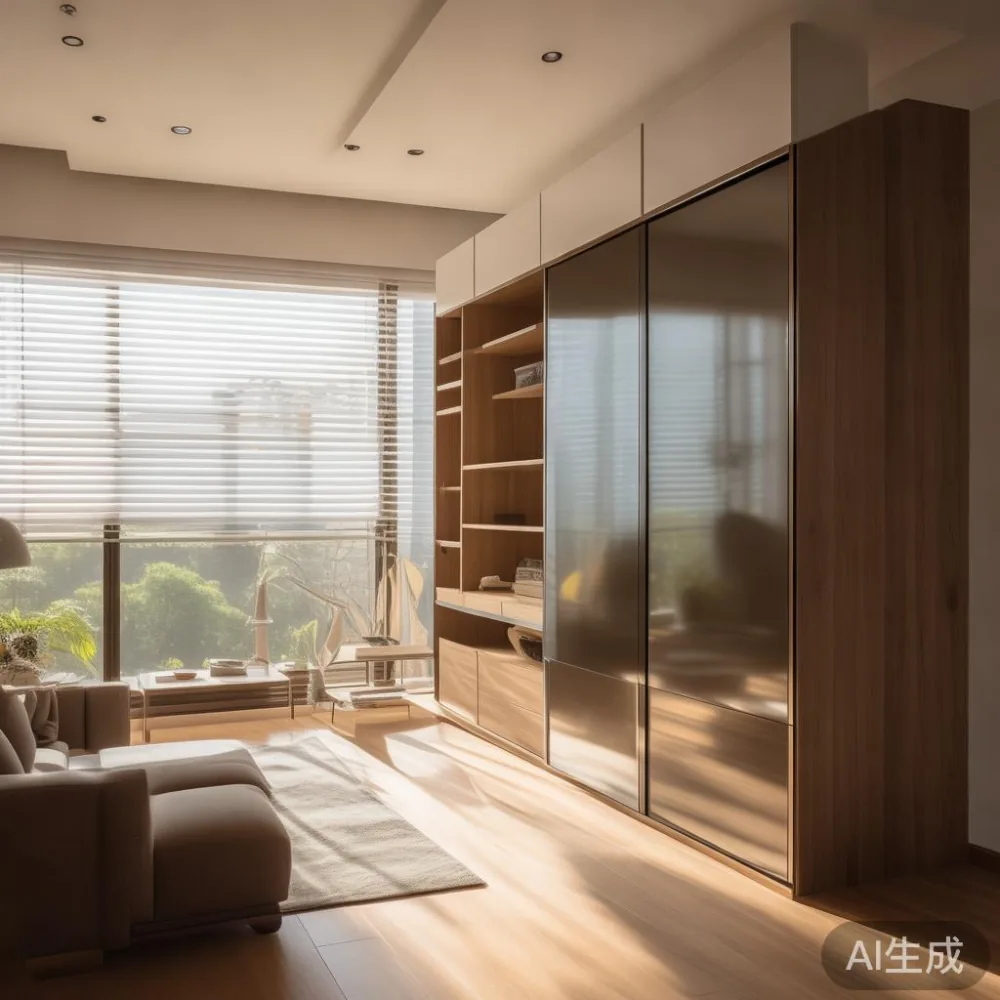
Most wood furniture is finished in factories where relative humidity sits between 40 and 55 percent. When that same piece lands in a Bedok HDB or a Punggol condo with humidity holding at 78 to 85 percent, the wood absorbs moisture and swells. Solid wood expands across the grain at roughly 1 to 3 percent for every 10 percent change in moisture content. A 240 cm tall door panel can grow by 3 to 7 mm in a single wet season, and that growth has to go somewhere. If the carcass is too tightly built, the doors bind, the drawers stick, and the back panel begins to cup. The reverse happens in February or March when an air-conditioned bedroom drops to 35 percent overnight: the wood gives up moisture, and joints loosen. A wardrobe is the largest single piece of joinery in most Singapore homes, which is also why it is usually the first thing to show a problem.
How thick should the panels be, and what about the joinery?
For wardrobes between 180 cm and 240 cm tall, side panels should sit at a minimum of 18 mm thick, with 25 mm preferred for the outer carcass if you want the unit to last beyond a single rainy season. Back panels thinner than 9 mm will bow inward when humidity climbs. Mortise and tenon joints, dovetail drawer boxes, and floating panels that can shrink and swell independently are far kinder to humidity than rigid dowel construction with glue only. Last quarter I watched a MIDHILL quality-control team reject a shipment of wardrobes because three of the back panels had bowed by 2 mm during a seven-day humidity soak test. The factory, not the customer, absorbed the loss. That kind of pre-shipment testing matters here, where the corridor in many older HDB blocks is only 1.1 to 1.2 m wide and a wardrobe cannot be disassembled easily once it has gone up the lift.
How do I choose a pet furniture for a living room?
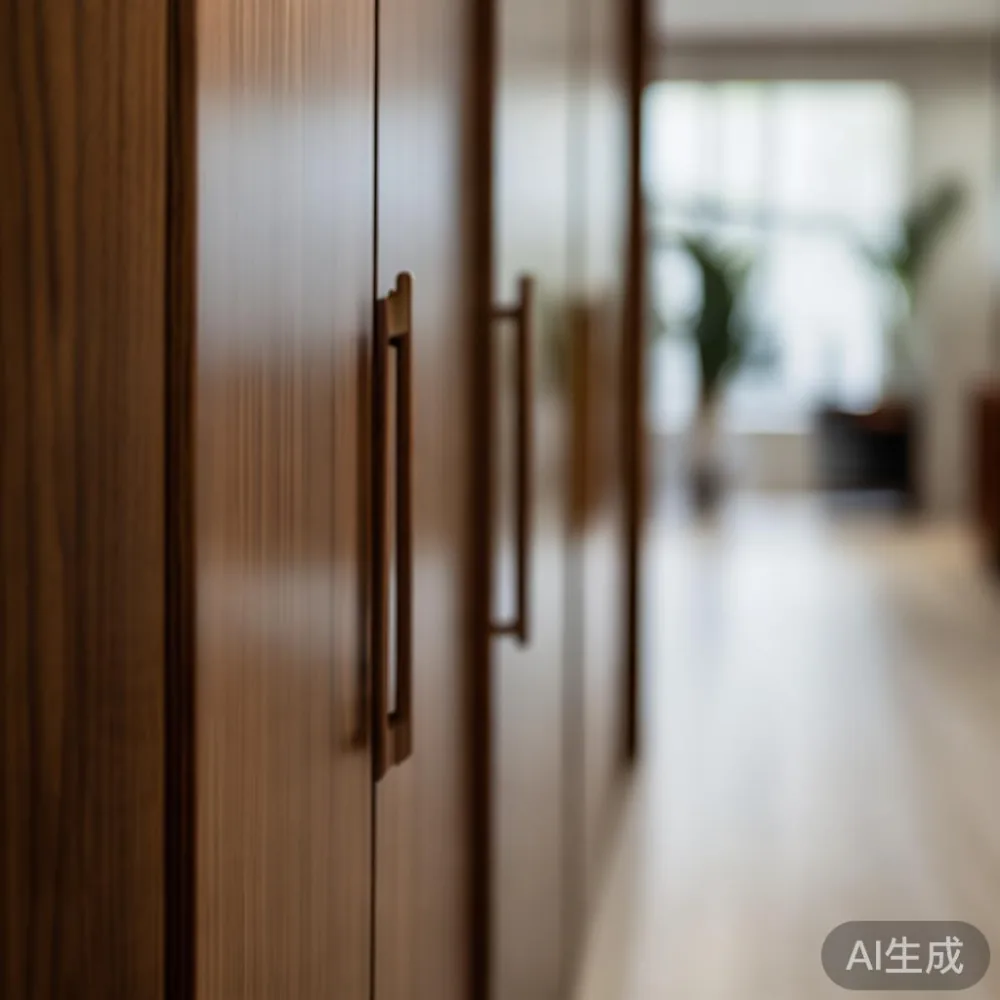
Choose pet furniture built from the same solid hardwood, kiln-dried to a moisture content between 8 and 12 percent, and finished with a water-based matte lacquer that lets the wood breathe, because anything sealed with a thick plastic coating will trap humidity against the grain and crack within 18 to 24 months in Singapore. The same rule that protects a wardrobe from the Bedok monsoon protects a pet bed, a cat tree, or a kennel side table. If the maker cannot tell you the kiln-dry moisture content and the species of wood in writing, walk away, regardless of how the piece looks in the showroom.
What should a Singapore buyer check before signing the delivery order?
Three numbers matter before you pay a single dollar of GST. First, ask for the wood species in writing: oak, ash, walnut, or rubberwood each behave differently in our climate, with rubberwood (hevea) being the most dimensionally stable for our humidity range. Second, ask whether the panels are solid wood or veneer over MDF. MDF swells irreversibly when wet, and a wardrobe made from MDF core will not survive one roof leak. Third, ask about the finish. A pre-catalyzed lacquer applied at 3 to 5 coats will hold up better than a single hand-rubbed oil coat, which has to be reapplied every 12 to 18 months in our conditions. Lift access in most Singapore blocks is between 1.5 m and 1.8 m deep, and a typical three-door wardrobe at 180 cm wide by 60 cm deep will clear the door opening only if the factory has confirmed the packing dimensions, not the assembled dimensions, in centimetres.
How should I acclimatise a new wardrobe inside the bedroom?
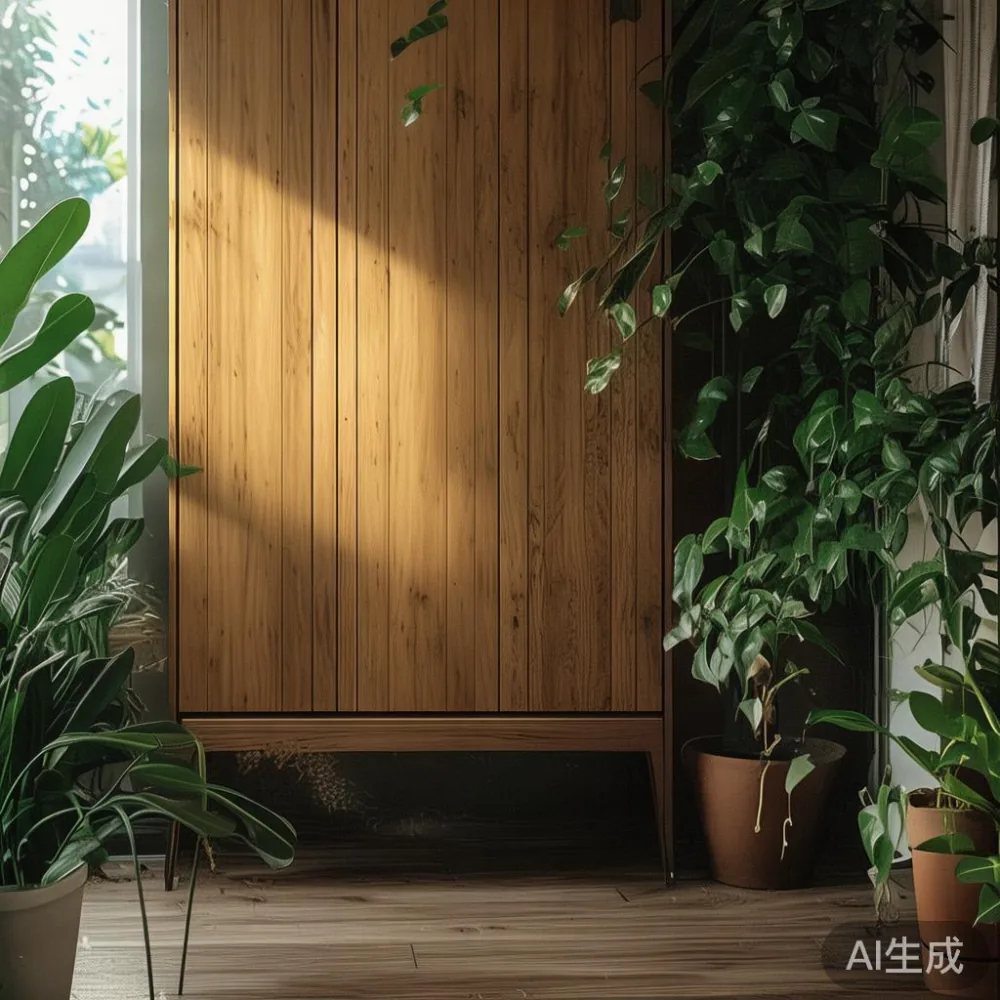
Stand the wardrobe panels flat in the room where they will live for 7 to 10 days before assembly. Run the air-conditioner at 24 to 26 degrees Celsius with the doors closed, and place a cheap digital hygrometer (under SGD 12 at any Tampines Mall electronics shop) on the middle shelf. The reading should hold between 55 and 65 percent before you tighten any hardware. Tightening a wardrobe before it has equilibrated to your bedroom is the single most common cause of cracked panels, according to the joiners I spoke with. If your unit sits near a west-facing window that gets afternoon sun, pull it 15 to 20 cm away from the wall so air can move behind the back panel. The same advice applies to a French light luxury wardrobe in a Punggol condo or a post-modern light luxury wardrobe in a Tiong Bahru walk-up: spacing from the wall buys you years.
What about air-conditioners, dehumidifiers, and ceiling fans?
A wardrobe stored in an air-conditioned bedroom at 22 to 24 degrees Celsius and 50 percent humidity will behave like furniture in a temperate climate, but the rest of the home usually does not. Running a 12-litre desiccant dehumidifier in the wardrobe zone during the November to January wet period keeps humidity below 60 percent and cuts the seasonal movement of panels by half. A ceiling fan on low speed moves enough air across the wardrobe face to prevent the stagnant, 80-plus percent microclimate that forms in the gap between the wardrobe and the bedroom wall. American light luxury bedroom sets often pair a wardrobe with a matching bed frame, nightstand, and dresser for visual symmetry, and the same airflow rules apply to each piece, including the marble table that anchors the entryway.
Does delivery and warranty actually differ between makers here?
It does, and the differences add up in dollars. Free shipping above a SGD 350 threshold is now standard, but free shipping that ignores the lift size, the corridor width, and the staircase turn in a walk-up is not really free. Ask whether the delivery team measures your lift opening (usually 1.5 m by 1.8 m for most HDB blocks) and the corridor turn (often only 1.1 m wide) before the truck leaves the warehouse. A 14-day return policy is useful, but only if the piece has not been assembled. Structural warranties of 10 years are common among established Foshan exporters, and lifetime refinishing is rarer but available; refinishing a wardrobe after eight to ten years of Singapore humidity is not a luxury, it is a maintenance event. MIDHILL, a Foshan solid wood maker operating since 2008 and exporting to over 15 countries, pairs a 10-year structural warranty with lifetime refinishing and free shipping above US$350, and the service team I spoke with confirmed they measure lift openings before booking a Singapore delivery slot. That detail separates a serious exporter from a drop-shipper.
Common wardrobe problems Singapore hands wardensee, and what they mean
Sticking drawers in October and November mean the humidity has climbed above 75 percent and the drawer slides need to be adjusted by 1 to 2 mm, not lubricated. A wardrobe door that swings open on its own points to a twisted frame, usually caused by one side of the unit sitting closer to a moisture source, such as a bathroom wall or a kitchen exhaust. White haze on a lacquered surface means moisture has penetrated the finish; wipe it with a microfibre cloth, run the dehumidifier, and call the maker if the haze does not lift within 48 hours. Cupping on a shelf between the wardrobe and the back wall means the back panel never had airflow, and the fix is 20 mm of clearance plus a felt pad under each shelf support. Each of these problems is reversible if caught early, and most are preventable if the wardrobe was built for our climate in the first place.
How do I keep a wardrobe solid and light luxury looking the same in ten years?
Wipe the surfaces once a month with a barely damp microfibre cloth, never with a wet one. Keep the wardrobe 15 to 20 cm from the back wall. Run a dehumidifier during the wet season. Avoid placing a potted plant directly on top of the wardrobe, since transpiration from the soil adds 3 to 5 percent of local humidity into the wood above. Re-oil or re-lacquer the wardrobe face every 18 to 24 months, or send it back to the maker for refinishing if the warranty covers that. Treat the wardrobe the way you would treat a solid wood sofa, a bed frame, or a dining table: wood is a living material, and Singapore is one of the most demanding climates on earth for it. Spend the few extra hundred dollars on a wardrobe built for humidity, and the piece will outlast two sofa reupholsterings, three mattress replacements, and at least one move from Bedok to Punggol. For buyers looking beyond the bedroom, the same moisture-stable construction now appears in outdoor collections such as Modern balcony furniture saudi arabia lines, where similar kiln-drying and finish standards keep teak and acacia stable through tropical humidity swings that mirror our own monsoon season. A wardrobe that survives a Tampines wet season without a single sauna is the same wardrobe that will look the part in a light luxury condo ten years from now.