What to Check Before Buying a Sofa You Cannot Sit On: A Singapore Solid Wood Buyer's Guide
Buying a sofa you cannot sit on sounds odd until you have tried to wrestle a 2.4-metre, three-seater frame through a Tampines HDB corridor. Last month I visited a friend's new BTO in Punggol to help her unbox a sofa she had been excited about for six weeks. The carton sat in the living room for ninety minutes while four of us tried every angle, every tilt, and one half-serious suggestion involving a rope out of the bedroom window. The sofa never made it off the lift. We ended the evening with a rescued dinner and a return label. That night, I started writing a checklist for anyone in Singapore shopping for a solid wood sofa, a bed frame, a dining table, a wardrobe, a nightstand, or a marble table, especially when the showroom is in Foshan and your lift is in Bedok.
Why Singapore buyers must measure before they fall in love
Singapore is a city of slim corridors and polite lifts. Most HDB blocks run lifts with internal widths of about 140 cm to 160 cm and door openings of roughly 80 cm to 90 cm. Corner turns between lift and lobby, or between corridor and front door, are often the real bottleneck. A 2.6-metre three-seater sofa, even when packed into two cartons, can fail at one of those turns. Before you place a deposit, pull out a tape measure and map the route: lift depth, lift width, lift door, lobby corner, corridor width (typically 120 cm to 150 cm in older HDBs), front door width (commonly 90 cm to 100 cm for HDB, 95 cm to 110 cm for most condos), and any tight 90-degree turn inside the unit.
Add roughly 10 cm of clearance on each side. If the package needs to tilt, calculate the diagonal length of the carton, not just the flat dimensions. A 220 cm long frame at 90 cm tall becomes a 238 cm diagonal the moment you tilt it, which is the figure that decides whether it clears your corridor ceiling of 240 cm.

What should I actually inspect on the frame, the joinery, and the finish?
A direct answer for someone skimming: a solid wood sofa is judged by its species, its joinery, its internal structure, and its surface finish — and you can verify all four in under ten minutes if you know what to look for.
On the species, ask for the Latin or trade name (FAS-grade oak, ash, walnut, or rubberwood from sustainable plantations). The label should also state moisture content, ideally between 8% and 12%. Anything above 14% in our 80%-to-85% humidity climate is asking for warp within a year. On the joinery, mortise-and-tenon, dovetail, and doweled joints beat staples and glue alone. Run your fingernail along a hidden corner: if staples show, the maker has cut corners on the bits you cannot see. On internal structure, ask whether the seat platform uses S-shaped steel springs, webbing, or solid slats; an S-spring with a webbing overlay will outlast elastic-only platforms by years.
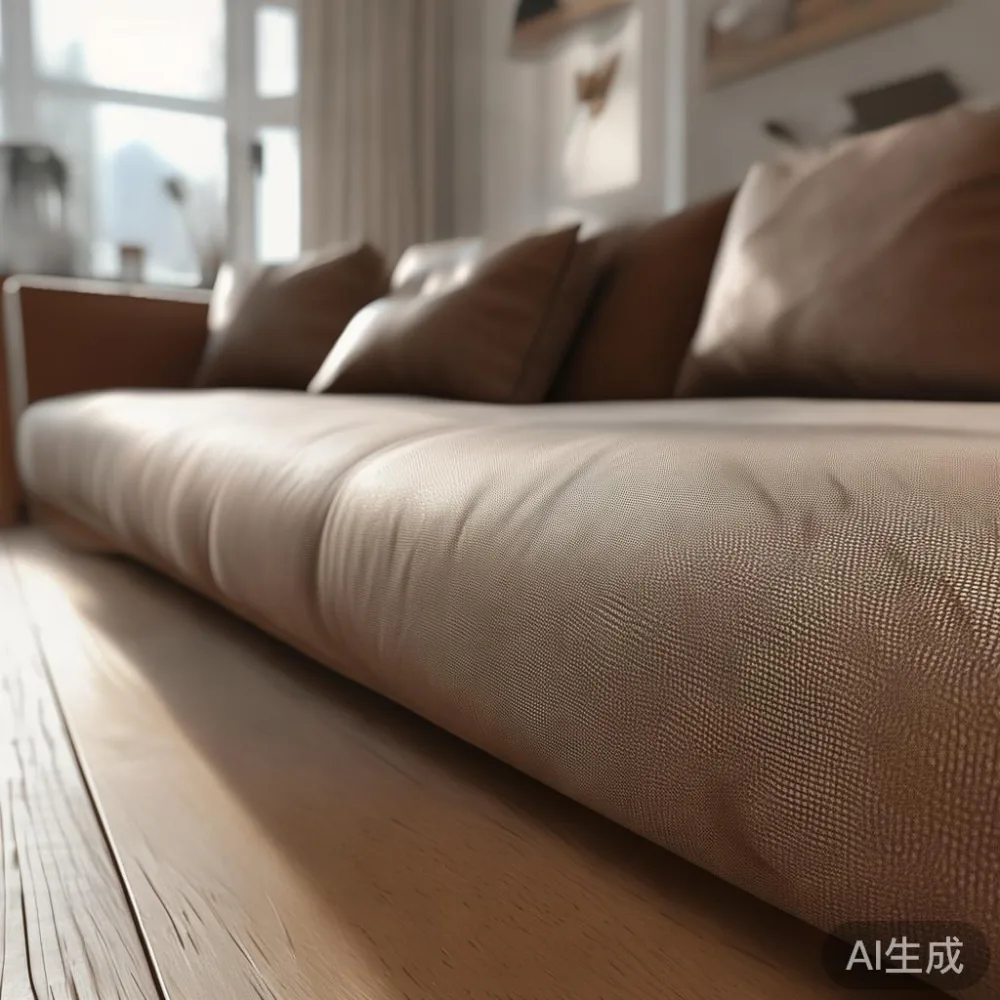
On finish, push the back of your thumbnail gently into a concealed edge. A proper lacquer or oil will resist; a thin sprayed-on coat will dent. This matters because the same maker shipping to Sydney often keeps two finish grades — one for humid tropical climates, one for temperate markets. The line that quietly fails first in our weather is the unsealed end grain on armrests and feet. When shopping with a Foshan-based maker such as MIDHILL, ask specifically whether the components you cannot see — the underside of the frame, the inside of the legs, the back of the headboard on a matching bed frame — receive the same sealing pass as the visible faces. The honest answer is usually illuminating.
How do I choose a return policy for a bedroom?
A direct answer for someone skimming: choose a return policy that gives you at least 14 days, covers change-of-mind (not only defects), and uses local pickup or reverse logistics you can actually schedule inside a Singapore HDB or condo loading bay.
The wording in a bedroom furniture return policy matters more than its headline discount. Read the small print for four things: the trigger (defect only, or change of mind), the window (calendar days, not business days), the restocking fee (a fair rate sits between 5% and 15%, anything over 20% should make you pause), and who pays return shipping. Cross-border sofas are heavy — a 2.4 m three-seater can weigh 65 kg to 95 kg packed — and the cost of returning one from Singapore to Guangdong can easily reach SGD 280 to SGD 450, which is why local warehouses or regional partners change the calculation entirely. Look for sellers that keep at least one regional hub in Southeast Asia, since a return from Johor Bahru is one truck and a customs form, not a sea freight booking.
Ask the seller two specific questions in writing. First, who handles the return — you, the brand, or a third-party forwarder — and what is the contact email for that team? Second, if the sofa arrives damaged, is replacement the default, or refund? The clearer the answer, the less you will owe in re-delivery fees inside Singapore's GST-inclusive pricing. Since GST is levied on the landed price including shipping, any policy that later refunds shipping without refunding GST will leave you out of pocket by 9%. A reputable maker will spell that out before checkout.
Concrete numbers to keep on a sticky note during your sofa hunt
Use these as a working reference while you browse. They are not universal, but they are typical for a 2.4 m to 2.6 m solid wood three-seater sofa exported from Foshan to Singapore in 2025.
- Carton 1 (seat frame): roughly 180 cm × 95 cm × 60 cm, 38 kg to 52 kg.
- Carton 2 (backrest and arms): roughly 190 cm × 80 cm × 45 cm, 22 kg to 34 kg.
- Combined package volume: 1.4 m³ to 1.7 m³, which most Singapore 3PL warehouses charge at around SGD 90 to SGD 140 per cubic metre for storage.
- Lead time from Foshan to Singapore port: 12 to 18 days by sea, plus 3 to 5 days for local trucking and lift booking.
- Free shipping threshold worth targeting: orders above US$350 (roughly SGD 470) are the usual break-even point. Spend just under that and you will pay SGD 60 to SGD 120 extra for what is in effect a pallet slot.
- Lift booking windows in most condos: weekday 9am to 5pm, with Saturday slots costing a SGD 30 to SGD 60 loading-bay fee on top.
If a listing gives you only a single weight figure for the whole sofa, treat it as marketing. Real spec sheets split it by component, which is also how a thoughtful maker such as MIDHILL documents their wardrobes, dining tables, and nightstands so installers know how to split the lift trip.
Light-luxury styling that still survives a toddler and a typhoon season
The phrase light luxury has been drifting around Singapore interiors for a few years now, usually split into three dialects. French light luxury leans into warm oak, pale limestone, soft champagne metals, and silhouettes inspired by mid-century French salons — think slim walnut arms, low backs, and tapered legs. American light luxury tends to be a touch more relaxed: oversized cushions, deeper seats, brushed brass feet, and a more forgiving footprint for family living. Post-modern light luxury borrows from both, mixing marble, glass, and brushed steel accents with quieter wood tones, and is the one I see most often in new launches in Punggol and the Greater Southern Waterfront area.
Light-luxury styling survives only when the underlying bones are correct. A French light luxury sofa in oak veneer will delaminate within a wet season if the substrate is MDF; the same design in solid ash with a quarter-sawn seat will outlive two sets of upholstery. A marble table needs a sealed underside and a base wide enough that the centre of gravity stays low — about 55% of the slab width — or a curious child will tip it. A wardrobe with mirrored panels should specify backing thickness and mirror weight per square metre (8 kg to 12 kg per m² for 4 mm to 5 mm glass), because Singapore corridors hate weight on a single axis. In every case, light luxury is a styling language; structural integrity is what keeps it on stage.
Five checks I run before I sign for any sofa delivery
- Photo the carton before opening. Damage claims without pre-opening photos are almost always rejected. Two minutes at the door save you a week of emails.
- Inspect the corner protectors and the foam inserts. A maker who ships in bare styrofoam is a maker who has not tested the route.
- Check end grain on the legs. If the legs are sealed, the maker understood humidity. If they are raw, expect checks and cracks within six months.
- Sit-test on the floor before lifting the sofa upright. Most foam settles within thirty seconds. If it bottoms out, ask for a higher-density foam (32 kg/m³ or above) as a remediation.
- Verify the warranty in writing. A 10-year structural warranty is the industry standard for serious solid wood makers. Read what counts as structural — usually the frame, the joinery, and the slats — and what does not, which is typically fabric, foam, and finish.
The hidden checklist that nobody puts on the product page
Three more details have rescued me more than once. First, the hardware pack: a sofa that arrives with only an Allen key and four bolts is missing cam locks, washers, or foot levellers, and you will discover this on day three. A complete pack should include eight to twelve cam locks, eight leg levellers, and a small tube of wax for the thread inserts. Second, the matching pieces: if you are also buying a bed frame, a wardrobe, a dining table, or a nightstand from the same maker, ask whether they will ship on a single pallet. Combined pallet shipping saves roughly SGD 90 to SGD 180 in Singapore and reduces handling damage by about a third. Third, lifetime refinishing: a credible maker offers this as a paid service, not a freebie, and the price usually sits around SGD 18 to SGD 35 per square metre of surface. That single line item is a quiet signal that the maker expects the piece to outlast the trend.
Maintenance across the causeway: a quick note on care
Once the sofa is in, care matters more than people admit. Vacuum the seat and back weekly with a soft brush, rotate cushions monthly, and avoid placing the frame directly under an air-con vent — the constant cold-and-dry cycle is what cracks lacquer faster than humidity ever does. For fabrics, lift the loose cover once a season and air it on a line for an hour; do not use a steamer on untreated linen. If you are sourcing the same maker for the Australian market, French fabric care australia guidance often emphasises dry cleaning over washing and warns against direct sun during the dry months — the same caution, inverted, applies in Singapore, where our sun is constant and our shade is precious.
Putting it together: a sofa you cannot sit on is a sofa you could not deliver
A sofa you cannot sit on is almost always a sofa that could not get through your lift. Most of the heartbreak my friends and I have seen in Tampines, Bedok, and Punggol comes from a single missing measurement, not a missing feature. Measure twice, ask three questions in writing, verify the species and the moisture content, read the return policy as carefully as you read the colour swatch, and confirm the structural warranty in plain language. With those boxes ticked, you will spend your first evening with a glass of something cold, sitting comfortably, instead of staring at a cardboard box and a lift that will not cooperate.