Wardrobe Singapore: The Honest Buying Guide for HDB and Condo Shoppers
What wardrobe size actually fits a Singapore HDB bedroom?
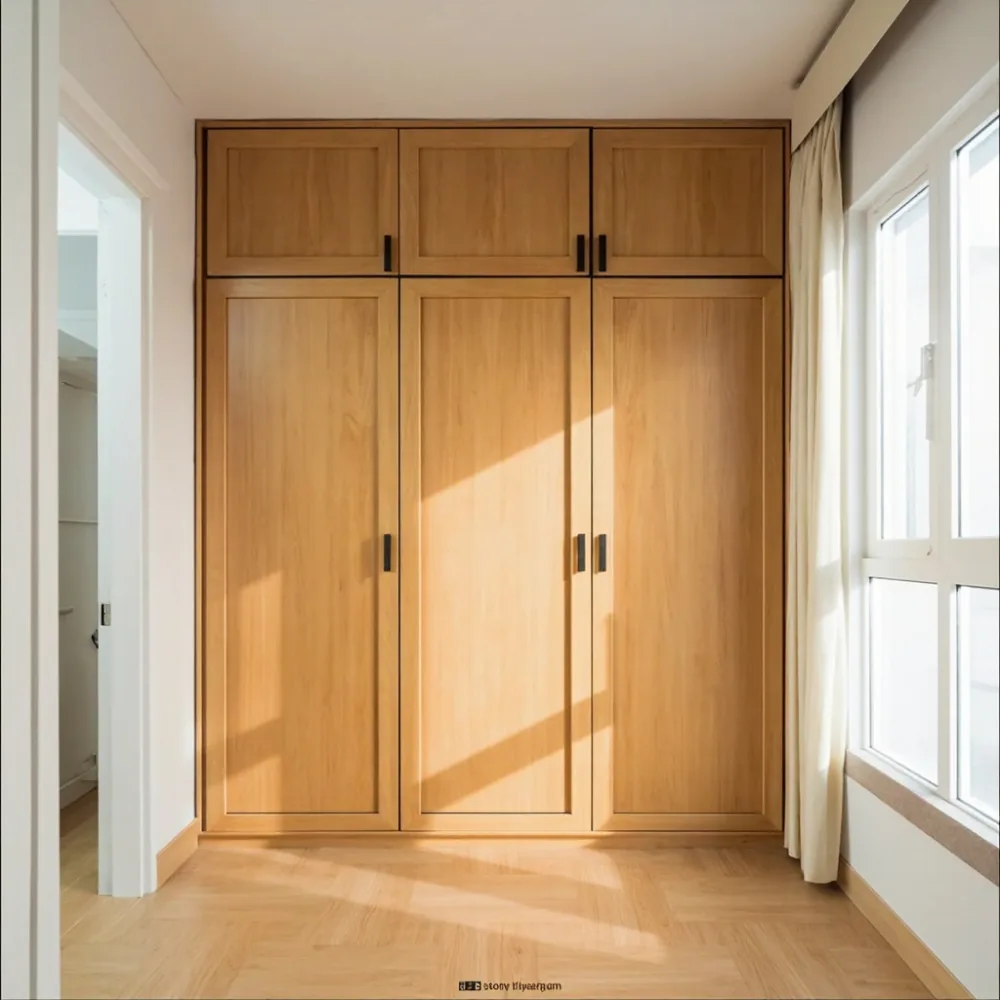
Measuring your floor and ceiling first
Standard wardrobe widths for 2-door, 3-door, 4-door
Most Singapore HDB bedrooms measure between 9 and 14 square metres after the bed is in. I have learned the hard way that you measure the wardrobe space before you fall in love with a Pinterest photo. Start with the actual wall length minus 5 cm on each side for hinge clearance, and check the ceiling height — HDB ceilings are usually 2.6 m, so anything over 2.55 m will not stand upright on delivery.
Here is the rough size map I use when chatting with buyers in Toa Payoh, Tampines, and Jurong:
- 2-door wardrobe: 80-120 cm wide, 55-60 cm deep, 180-200 cm tall. Fits a single user or a tight guest room.
- 3-door wardrobe: 135-180 cm wide, same depth, same height range. Most couples land here.
- 4-door wardrobe: 180-240 cm wide. Pushes the wall but absorbs a full week's wardrobe for two adults.
If your bedroom door swings into the wardrobe wall, drop down one size. I once saw a 200 cm wardrobe refused at the doorstep in a Woodlands 4-room flat because the lift opening was only 195 cm wide.
How much wardrobe depth do you really need for hanging shirts?
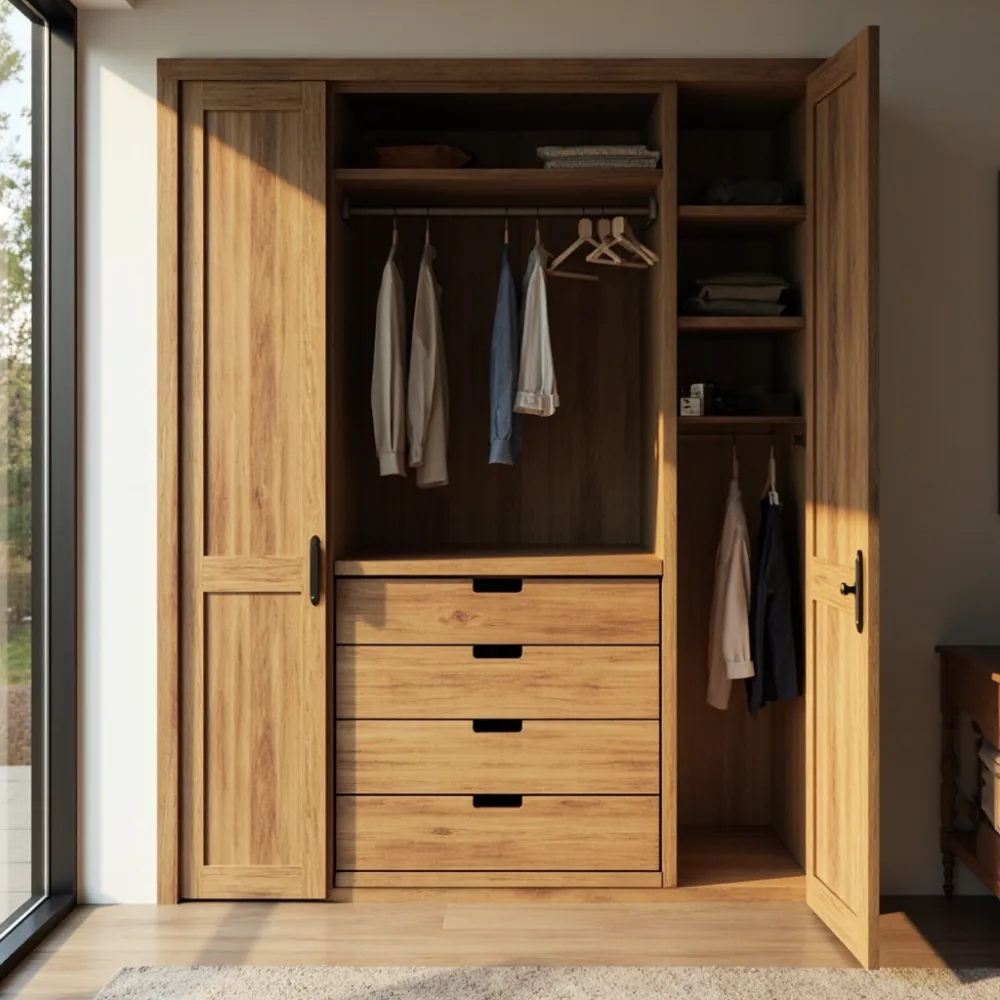
Why 60 cm is the magic number
Sliding door depth savings
A standard shirt on a hanger measures about 45 cm from hook to hem. Add 5 cm for the hanger head and 8-10 cm of air gap so your shirts do not crush the back panel, and you land at roughly 60 cm of internal depth. Anything shallower than 55 cm and your cuffs will drag against the door.
Sliding door wardrobes are the classic small space furniture move in a Singapore condo. The catch: most sliding door sets save 6-8 cm of swing space but eat 8-10 cm of internal depth because the doors overlap. So if the spec says 55 cm external, expect about 45 cm inside, which is too tight for hanging shirts. Insist on at least 60 cm external on a slider.
Does Singapore humidity actually damage wardrobe materials?
MDF versus plywood versus solid wood
What I look for on the back panel
Yes, and I say this as someone who has watched a white wardrobe bloom yellow mildew around the base panels in a Punggol flat. Humidity sits at 70-90% for most of the year, and wardrobes sit against walls that do not breathe. Material choice matters far more here than in a temperate climate.
My quick hierarchy for humidity:
- Solid hardwood (teak, oak, ash): Most stable. Moves with humidity rather than swelling permanently. Heavier, pricier.
- Marine plywood with melamine laminate: The local default. Handles moisture well if edges are sealed. Avoid raw chipboard.
- MDF with paper laminate: Cheapest, but swells irreversibly if the laminate peels once.
For buyers searching for durable furniture, the spec I always check is the back panel — a 9 mm plywood back, not a 3 mm hardboard sheet. Hardboard backs bow in humid months and never recover.
Is a custom wardrobe worth the SGD 2,000 to 4,000 premium in Singapore?
Where custom pays for itself
Where it does not
Custom wardrobe makers in Singapore quote roughly SGD 1,800-5,500 installed depending on width and finishes. A comparable ready-made 3-door set from a furniture warehouse runs SGD 600-1,400. The gap is real.
Custom pays for itself when:
- Your ceiling is non-standard (some older walk-ups in Tiong Bahru are 2.4 m).
- You have an odd alcove, a structural column, or a sloped ceiling bay window.
- You want internal layouts built around specific drawers, tie racks, or laundry hampers.
Custom does not pay for itself when you are kitting out a standard HDB bedroom with a flat 2.6 m ceiling. You are paying for joinery hours you do not need. For that case, a modular wardrobe is the rational middle ground.
For buyers open to overseas sourcing, MIDHILL in Foshan has built wardrobes since 2008 and offers custom sizing on solid wood furniture shipped to Singapore. Their 10-year structural warranty is one of the longer ones I have seen in this category, and it matters because humidity failures usually show up in years three to five.
What is the difference between a 2-door, 3-door sliding, and 4-door corner wardrobe?
Side-by-side spec comparison
I get asked this every weekend, so here is the table I walk buyers through. Prices below are typical 2025 retail in Singapore for entry- to mid-tier ready-made sets, not custom.
| Type | Typical Width | Depth | Height | Weight | Price (SGD) | Best For |
|---|---|---|---|---|---|---|
| 2-door hinged | 80-120 cm | 55-60 cm | 180-200 cm | 60-90 kg | 450-900 | Single user, guest room |
| 3-door hinged | 135-180 cm | 55-60 cm | 200-220 cm | 100-140 kg | 900-1,800 | Couple, most HDB masters |
| 3-door sliding | 150-200 cm | 60-65 cm | 200-220 cm | 120-160 kg | 1,100-2,200 | Tight bedroom door clearance |
| 4-door sliding | 200-260 cm | 60-65 cm | 220-240 cm | 160-220 kg | 1,800-3,200 | Full wall in condo master |
| Corner wardrobe | 95-110 cm per side | 55-60 cm | 200-220 cm | 90-130 kg | 1,200-2,500 | Awkward L-shaped room |
Notice the weight column. Anything over 140 kg is a two-person delivery and you should expect an extra SGD 80-150 assembly fee on top of the unit price.
How long does wardrobe delivery and assembly actually take in Singapore?
Lead times for ready-made versus custom
What to do on delivery day
Ready-made wardrobes from local showrooms in Tai Seng, Balestier, or the furniture belt along Sungei Kadut typically deliver in 5-10 working days. Custom wardrobe lead times in Singapore are 4-8 weeks for local carpenters and 6-10 weeks for overseas makers shipping flat-pack from Malaysia or China.
On delivery day:
- Confirm the lift dimensions before booking. Most HDB lifts are 1.2 m deep x 0.9 m wide with a 1.9 m door height. A 220 cm wardrobe will not fit standing up.
- Ask the delivery crew to bring the panels up unassembled if the lift is tight. Reassembly usually adds 30-45 minutes.
- Check the wardrobe position before drilling anything to the wall. Condo false ceilings in District 9 and 10 often hide cables.
Should you choose a mirror door on the wardrobe in a small bedroom?
Light gain versus scratch risk
Where I would not put one
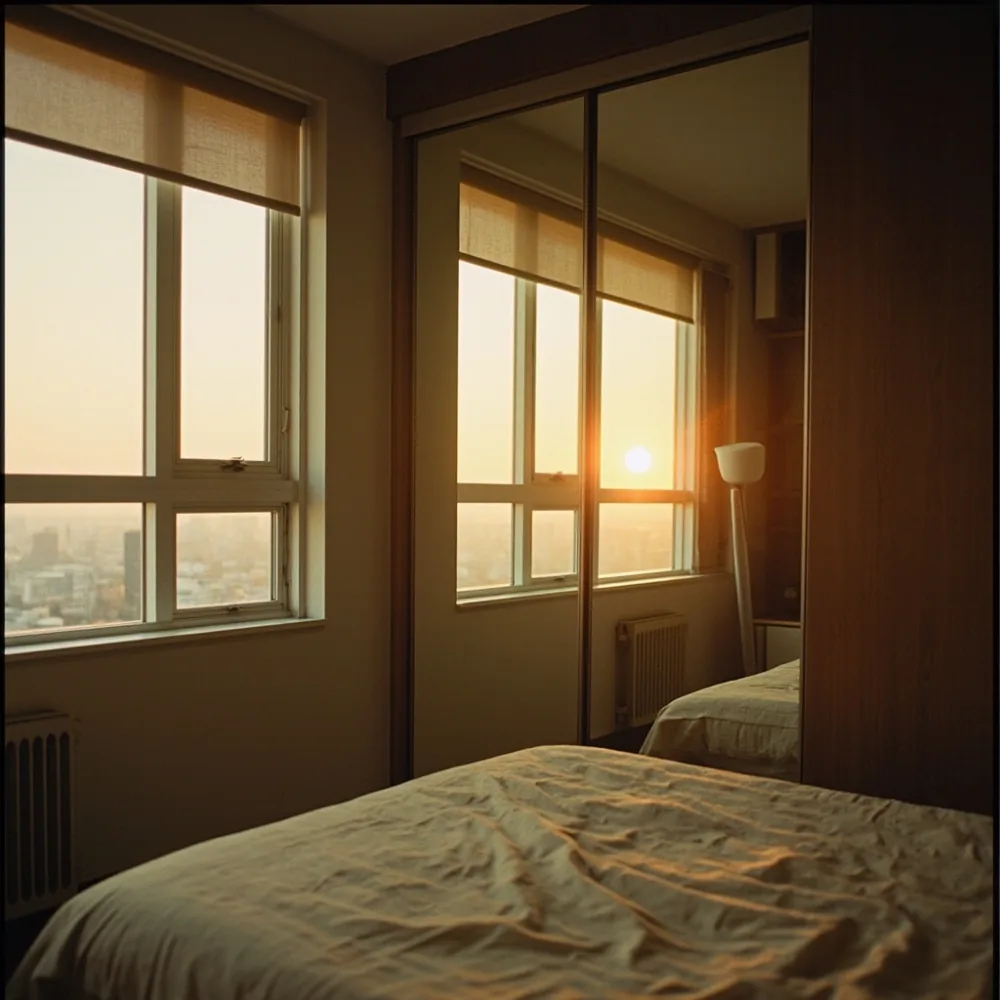
Mirror doors are a popular small space furniture trick in Singapore because they bounce light around and replace a separate dressing mirror. In a 10 sqm HDB room with one window, a mirrored wardrobe face can genuinely feel like adding a second window.
The downside is scratch risk and fingerprint smearing in humid weather. If you go mirrored, pick tempered glass over acrylic film — acrylic yellows in two to three years under Singapore UV.
I would skip mirrored doors if the wardrobe faces the bed directly. Feng shui aside, waking up to your own reflection every morning is more annoying than people admit until they live with it.
What wardrobe layouts work best for short and tall users?
Double hanging versus long hanging
Drawer placement
The default layout in most ready-made wardrobes is wasted space. Buyers under 170 cm get a long-hang section that is half-empty, and buyers over 180 cm get a short-hang section that crumples their dresses and coats.
My preferred layout for a Singapore couple:
- Left third: Double-hang section (two rails stacked) for shirts, blouses, folded trousers. Fits roughly 60 garments.
- Middle third: Long-hang at 150 cm from floor for coats and dresses.
- Right third: Four drawers plus two shelves for bags, sweaters, and linen.
Put the drawers at waist height rather than the floor. Bending into a bottom drawer ten times a week is the fastest way to regret a wardrobe.
How do you keep a wardrobe from smelling musty in Singapore?
Ventilation, silica, and dehumidifier habits
Even with the right materials, a closed wardrobe in a humid flat will develop a stale smell within months. The fix is circulation.
- Leave a 2-3 cm gap behind the wardrobe against the wall. Many buyers push it flush and trap moisture.
- Run a small dehumidifier drawer unit, or a 500 g silica canister, changed every two months.
- Wipe the interior with a diluted white vinegar cloth every quarter. It kills the mildew spores before they colonise.
- Avoid cedar blocks sold online — they go inert in six months in our climate.
I treat the wardrobe like a small room. If air cannot move through it, water will settle in it.
Frequently asked questions
How much does a good wardrobe cost in Singapore?
Ready-made 3-door wardrobes run SGD 900-1,800 for mid-tier quality. Custom wardrobes from local carpenters cost SGD 2,500-5,500. Imported custom solid wood sets from makers like MIDHILL land at SGD 2,200-4,000 after shipping and duties, which is competitive for the material grade.
What is the best wardrobe material for Singapore?
Marine plywood with melamine laminate for budget builds, and solid hardwood for buyers wanting durable furniture. Avoid raw MDF and thin hardboard backs, which swell and warp in our humidity.
Can a wardrobe fit through an HDB lift?
Usually yes if assembled flat and rebuilt upstairs. Assembled upright, a 220 cm wardrobe will not fit through a standard HDB lift door which is about 190 cm tall. Always confirm lift dimensions before delivery.
How wide should a wardrobe be for a couple?
Plan for 150-200 cm of width as a couple, which gives roughly 1.5-2 running metres of hanging space. Anything under 135 cm forces one partner to fold everything.
Questions about specifications, fabric or delivery? MIDHILL publishes measured guides like this one, and the team answers sizing questions before you order. See the full collection or contact the team.