Wardrobe Singapore: HDB vs Condo Sizing, Materials, and What I’d Buy Again After 10 Years
How do HDB and condo bedrooms actually change the wardrobe you should buy in Singapore?
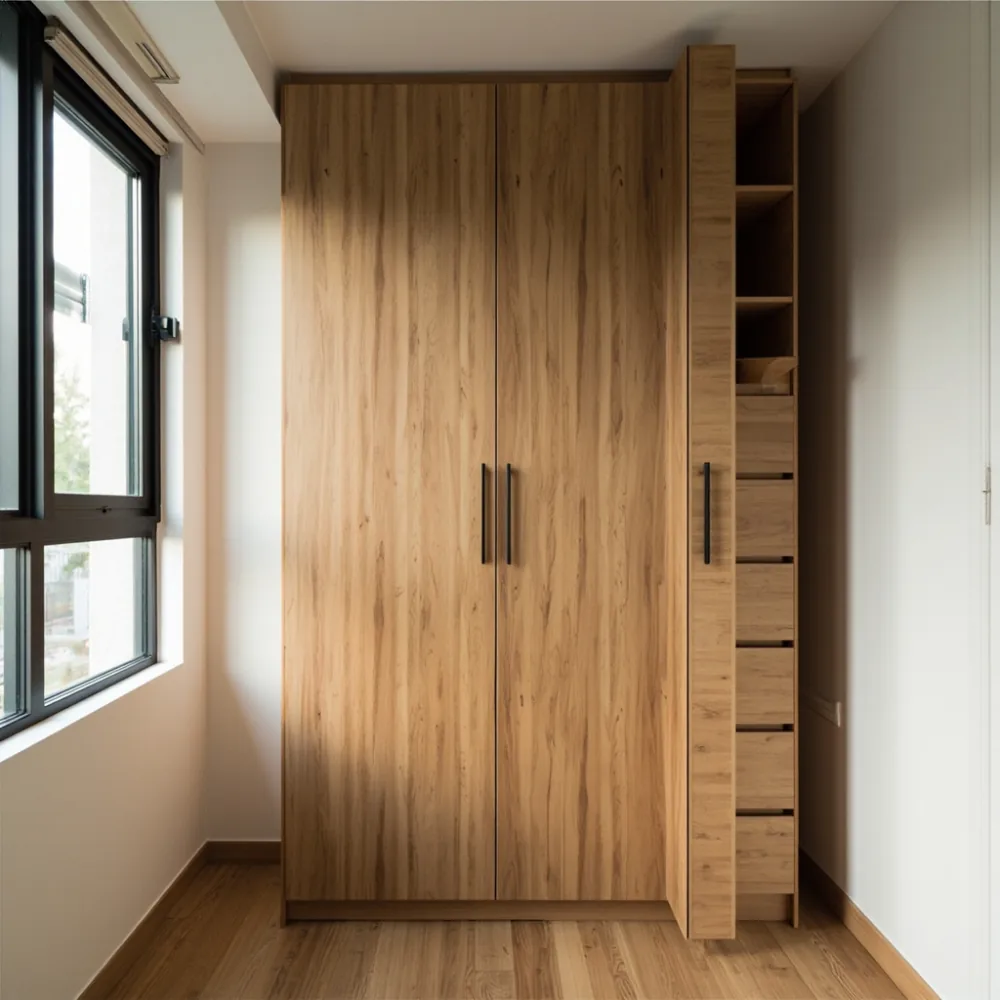
Standard bedroom footprints
Why ceiling height matters more than floor area
The hallway and door-swing trap
After helping my sister measure three HDB flats in Bishan and two condos in River Valley, I can tell you the bedroom is the only room that quietly dictates the wardrobe you end up with. A 4-room HDB master bedroom in a BTO from 2018 onward is typically 3.2 m by 3.0 m with a 2.8 m ceiling. A typical 2-bedroom condo in District 9 or District 15 gives you around 3.0 m by 3.4 m, sometimes with a bay window eating 40 cm of wall. Those numbers, not the brochure, decide everything.
Width is the silent killer. You need 60 cm minimum to hang a shirt flat, 65 cm for a winter coat, and 70 cm if you also want a sliding trouser rack behind the door. Depth is the one buyers get wrong: most off-the-shelf wardrobes are 60 cm deep, but once you add a 3 cm door panel and a 2 cm back board, internal depth is closer to 54 cm. That fits a standard hanger, but a hanger plus a jacket in a garment bag will brush the door.
Ceiling height is where the small space furniture game changes. Older HDB blocks sit at 2.6 m. Newer BTOs and most condos hit 2.8–3.0 m. Every extra 20 cm of height is worth roughly one extra shelf row, so a 2.8 m ceiling gives you a usable loft zone that a 2.6 m ceiling simply cannot.
- HDB master (4-room BTO): 3.2 × 3.0 m, 2.8 m ceiling, allow 180–200 cm wide wardrobe
- HDB common bedroom: 2.6 × 2.4 m, plan for 120–150 cm wide, sliding doors only
- Condo master: 3.0–3.4 m wide, watch for bay windows and AC ledge
- Condo study (sometimes a bedroom): under 2.4 m wall length, consider 100 cm 2-door
And the hallway trap: if your bedroom door swings into the wardrobe zone, you lose 70–80 cm of usable width. Measure the door arc with a tape before you order anything custom.
Is solid wood or engineered board the smarter choice for a wardrobe in Singapore’s humidity?
What "solid wood" actually means in a wardrobe
Engineered board: MDF, particleboard, plywood
How each material reacts at 80–90% RH
Why a 10-year structural warranty matters
I’ve owned both. My first wardrobe in a Yishun HDB was a 6-door engineered board unit from a large retailer. It lasted 7 years before the shelves sagged. My second, in a Punggol condo, is solid wood furniture with a teak-veneer ply backing, and after 10 years the only issue is a light sun fade on the side panel.
Singapore sits at 80–90% relative humidity for most of the year. Engineered board (MDF or particleboard with a melamine laminate) swells at the edges when the core absorbs moisture. The first sign is a bubbling laminate near the floor. Plywood with a proper hardwood face is far more dimensionally stable, but the cheapest wardrobes in showrooms are usually particleboard with a 0.6 mm paper laminate — that is what I would avoid.
True solid wood, on the other hand, breathes. A teak or rubberwood panel will expand 2–3 mm across its width between dry February and wet November. That sounds like a flaw, but it is why a well-built solid wood wardrobe does not split along the edges the way laminate does. The joints move as one piece.
| Material | Typical lifespan in SG | Weight (200 cm wardrobe) | Price range (SGD) | Humidity tolerance |
|---|---|---|---|---|
| Particleboard + laminate | 5–8 years | 80–100 kg | 600–1,200 | Poor (edge swell) |
| MDF + acrylic/polyurethane | 8–12 years | 110–130 kg | 1,200–2,200 | Moderate |
| Marine plywood + veneer | 12–18 years | 120–150 kg | 2,000–3,500 | Good |
| Solid hardwood (teak, oak, ash) | 20+ years | 160–210 kg | 3,500–7,500 | Excellent |
If you want durable furniture that you will not replace when you renew your flat, solid wood wins on lifespan per dollar, even at a higher upfront cost. A 10-year structural warranty is a useful signal: it is hard to offer that on particleboard without bleeding money on claims. Foshan makers like MIDHILL have built their reputation on solid-wood construction since 2008 precisely because the material survives tropical climates better than the alternatives.
Sliding doors or hinged doors — which actually works in a small HDB bedroom?
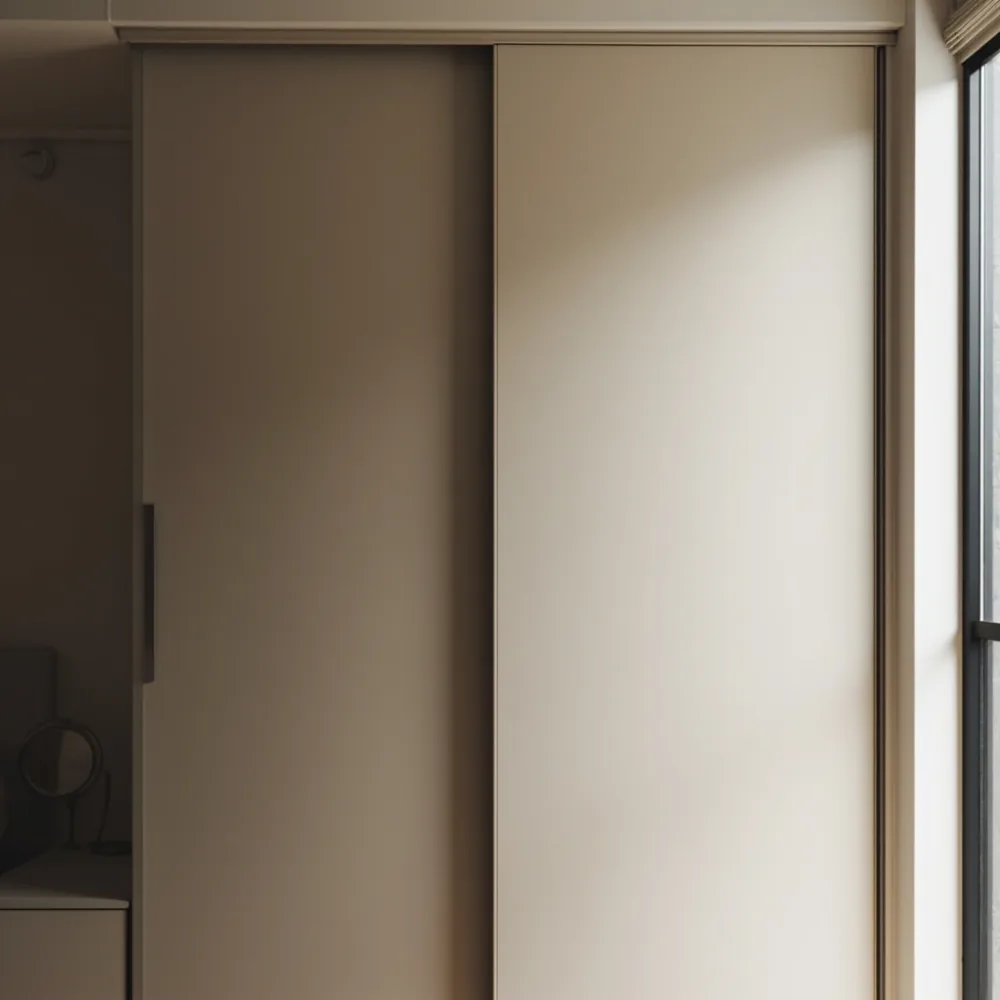
Floor space saved by sliding doors
Track failure points in Singapore
Hinged doors for narrow wardrobes
The hybrid I would pick today
This is the question I get asked most often by friends furnishing their first BTO. Sliding doors save 60–80 cm of swing clearance, which sounds like a lot until you realise a 60 cm slider only opens 30 cm of internal width at a time. You end up reaching across the whole wardrobe to grab a shirt from the far end.
Hinged doors give you full access in one pull, but they need 55–60 cm of clear floor in front. In a 2.6 m wide common HDB bedroom, that is half the room. The honest answer is that the door style is downstream of the wardrobe width, not the other way round.
- Wardrobe < 120 cm wide: 2 hinged doors, no sliding tracks to fail
- 120–180 cm wide: 2 sliding doors, soft-close tracks, expect to clean the bottom track every 6 months
- 180–240 cm wide: 3 sliding doors, middle door becomes the daily-use panel
- > 240 cm wide (walk-in feel): mix hinged + sliding, hinged for the hanging zone
Track failure is the real issue with sliders in Singapore. Dust, hair and the occasional cockroach nest will jam a cheap roller within 2–3 years. Spend the extra $150–$250 for branded soft-close rollers, and clean the bottom track with a brush every 6 months. If I were furnishing a 4-room HDB master today, I would actually go with two 80 cm hinged doors and a 40 cm end-of-run drawer stack — no tracks, full access, and a quieter bedroom.
How much should a decent wardrobe cost in Singapore, and what do you really get?
Off-the-shelf at IMM, Tampines, or Jalan Besar
Modular systems from European brands
Bespoke and custom furniture makers
Hidden costs that blow the budget
Price is the part of wardrobe shopping that I find most confusing for first-time buyers, because the same 200 cm wide box can be quoted at $900 or $4,500. The difference is not marketing, it is in five places: carcass thickness, hardware, finish, joinery, and warranty.
Here is what I have seen across actual showrooms in Singapore over the last two years of helping relatives shop.
| Tier | Price (200 cm, 2-door) | Carcass | Hardware | Warranty |
|---|---|---|---|---|
| Off-the-shelf (IMM, Tampines 1) | $700–$1,400 | 15 mm particleboard | Basic hinges, no soft-close | 1 year |
| Mid-range (local brands) | $1,600–$2,800 | 18 mm MDF or ply | Blum or Hettich soft-close | 3–5 years |
| Modular (European systems) | $3,200–$5,500 | 18 mm melamine | Brand hinges, full soft-close | 10 years |
| Bespoke / custom furniture | $4,500–$9,000 | Solid wood or marine ply | Premium runners, dovetail drawers | 5–10 years structural |
The off-the-shelf tier is fine for a 2-year rental, weak for a 10-year HDB stay. The bespoke tier is where solid wood furniture makers earn their keep, and where a 10-year structural warranty is a real promise, not a sticker. Foshan workshops shipping to Singapore have closed the quality gap with European modular systems over the last five years, and the SGD price often undercuts local bespoke carpentry by 25–40%.
Hidden costs to budget for:
- Delivery into the unit: $80–$180, more if a crane is needed above the 7th floor
- Assembly: $150–$350, typically 2–4 hours for a 3-door unit
- Disposal of old wardrobe: $80–$200, MAS or licensed e-waste collector
- Wall anchoring kit: $40–$60, mandatory for tall units over 180 cm in HDBs
How long does delivery and installation actually take once you order a wardrobe in Singapore?
Off-the-shelf lead times
Custom furniture lead times
The HDB and condo delivery access checklist
Reassembly after a future move
Lead time is where Singapore buyers get frustrated. A 4-room BTO renovation timeline is already tight, and the wardrobe is usually the last big item to land.
- Off-the-shelf: 3–7 days for delivery, same-day assembly if stock is in Singapore
- Local modular brands: 4–6 weeks from order to install
- Custom furniture (local carpenter): 6–10 weeks, plus 1–2 weeks for site templating
- Overseas bespoke (China, Malaysia, Indonesia): 8–14 weeks including sea freight, customs, and final fit-out
I waited 11 weeks for my current solid wood wardrobe, ordered from a Foshan maker in March, landed in Singapore in mid-May, installed in the unit on a Saturday. The whole process ran like clockwork because I confirmed three things in writing before paying the deposit: the exact panel thickness, the corner-block reinforcement, and whether the wardrobe would arrive flat-pack or pre-assembled.
Access is the other half of delivery. Measure your lift, your doorframe, and the corridor turn at the unit entrance. A standard HDB corridor turn is 1.2 m wide, which is fine for a flat-pack. A pre-assembled 200 cm wardrobe will not make that turn, and the installer will tell you on the day — at $80 per attempt. Condo service lifts in developments like The Interlace or Reflections at Keppel Bay are bigger, but service lift booking windows are often 2-hour slots, and missing one can push the install by a week.
Finally, ask whether the wardrobe can be disassembled for a future move. A flat-pack with cam-lock hardware can be taken down and rebuilt in 3–4 hours. A glued-and-nailed bespoke unit usually cannot. If you rent out or sell in 7–10 years, this matters more than the finish colour.
What internal layout actually works day-to-day in a Singapore wardrobe?
The 3-zone principle
Drawers vs shelves for small wardrobes
Accessories worth the spend
After 10 years of living with three different wardrobes, I am convinced internal layout beats external styling. The trick is the 3-zone rule: long-hang at the top, folded-stack in the middle, shoes and bags at the bottom.
- Top zone (170–200 cm): long-hang for dresses, coats, work shirts; minimum 90 cm drop
- Mid zone (80–170 cm): two adjustable shelves, one pull-out trouser rack
- Bottom zone (0–80 cm): two deep drawers plus an open shoe bay at 35 cm internal height
In a small space furniture layout, drawers beat shelves for shirts and tees because you see everything at once. A 60 cm wide drawer fits roughly 12 folded shirts. Four drawers will out-store two shelves every time, even though the drawer stack costs more.
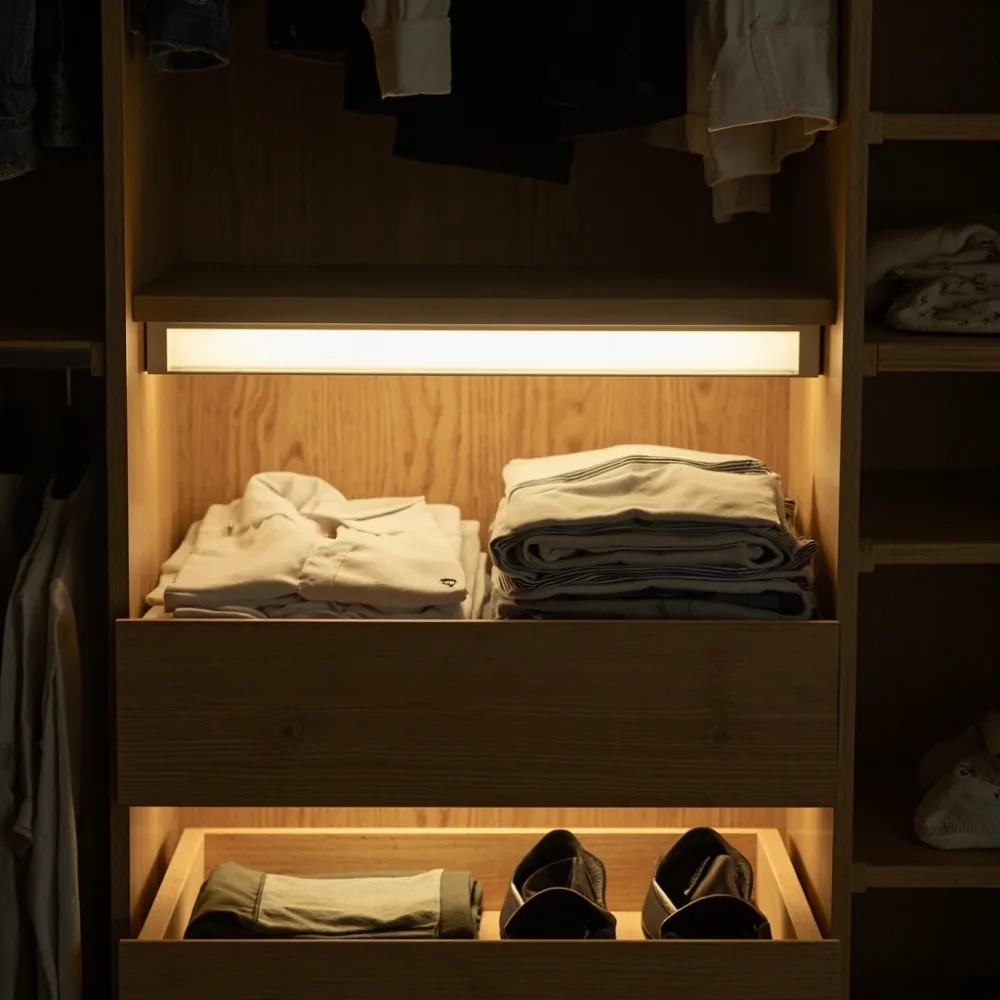
Accessories that earned their money in my current wardrobe: full-extension soft-close runners (no more reaching into a dark void), a valet rod that pulls out for the next day’s outfit, and a single LED strip on a motion sensor inside the door. Skip the pull-down hanging rail unless you are over 180 cm tall — the mechanism is the first thing to fail.
How do you keep a wooden wardrobe from warping in a Singapore home?
AC and dehumidifier strategy
Placement away from direct sun
Annual maintenance that takes 30 minutes
People overthink this. The enemy is not humidity per se, it is rapid humidity change. A wardrobe that sits at a steady 75% RH for years is fine. A wardrobe that swings from 60% (full AC at night) to 90% (windows open all day) is what develops cupping in the door panels.
- Keep the bedroom between 65–80% RH; a $120 dehumidifier on a hygrometer will pay for itself
- Place the wardrobe on an interior wall, not the wall that faces unfiltered afternoon sun
- Avoid floor-to-ceiling wardrobes flush against a bathroom or kitchen wall — moisture migrates through concrete
- Once a year, tighten the hinge screws and wax the runners; 30 minutes, no tools beyond an Allen key
If you choose solid wood furniture, accept that the wood will slightly darken in the first 6–12 months. That is the finish curing, not a defect. Teak goes from pale gold to warm amber. Oak goes from straw to honey. Wiping with a dry microfiber cloth monthly is all the maintenance you actually need.
Frequently asked questions
What is the standard wardrobe size for a 4-room HDB in Singapore?
Plan for 180–200 cm wide, 60 cm deep, and 220–240 cm tall to match the 2.8 m ceiling. This fits 2 sliding doors or 2 hinged doors plus an end-of-run drawer stack, and leaves 60–80 cm of swing or walk space in a typical 3.2 × 3.0 m master bedroom.
Is a custom wardrobe worth the extra cost over off-the-shelf?
If you plan to stay in the flat for 5+ years, yes. Custom furniture at $4,500–$9,000 gives you 18–25 mm solid or marine-ply carcass, premium hardware, and a 5–10 year structural warranty. Off-the-shelf at $700–$1,400 is fine for 2–3 year stays but the edges usually swell within 5 years in Singapore humidity.
How long does a custom wardrobe from China take to reach Singapore?
Plan 8–14 weeks from deposit to installed. Sea freight from Foshan to Singapore is about 7–10 days, then 1–2 weeks for customs, delivery scheduling, and on-site assembly. Foshan solid-wood makers shipping to Singapore typically have a fixed 4-week production window after templating.
Do I need a carpenter or a furniture brand for a fitted wardrobe?
A local carpenter is cheaper ($2,800–$5,000 installed) but warranty is usually 1–2 years and the finish is spray-painted MDF. A furniture brand offers 18 mm boards, branded hardware, and a 3–10 year structural warranty at 30–50% more. For a 10-year HDB stay, I would pick the brand every time.
Can a wardrobe be dismantled and moved to a new HDB or condo?
Only if it was originally flat-packed with cam-lock or bolted hardware. Glued, nailed, or welded bespoke units usually cannot be moved without damaging the panels. Confirm with the maker in writing before you order, and keep the original hardware bags — they matter at reassembly.
Questions about specifications, fabric or delivery? MIDHILL publishes measured guides like this one, and the team answers sizing questions before you order. See the full collection or contact the team.