Delivery and Assembly Realities When Buying a Wardrobe Online in Singapore
Buying a wardrobe online sounds simple enough: pick a style, pay, wait for the truck. The reality in Singapore is more layered. HDB corridor turns at 1.2 metres, lift openings at roughly 0.9 m wide, tight loading bays at condo service lobbies, plus a 9% GST on imports — every one of those factors decides whether a solid wood wardrobe lands in your bedroom looking like the photo, or whether it sits in a parcel at the door for three weekends while you figure out the carpentry.

Last month I visited a friend in Punggol who had ordered a 2.4-metre American country headboard for family with kids room from a regional e-commerce platform. The bed frame arrived in two long cartons, neither of which fit into the service lift of her 18-storey block because the lift car was 1.1 m deep and the carton was 2.5 m. The driver offered to carry it up the stairwell. She declined. The cartons sat in her living room for nine days while she arranged a final-day-of-month staircase delivery with the condo management. She told me later, “I didn’t know a wardrobe could cost me two Saturdays.”
What does “delivery” actually mean for a solid wood wardrobe to a Singapore HDB or condo?
Three numbers determine almost everything: carton dimensions in centimetres, total weight in kilograms, and the doorway-to-bedroom path measured in linear metres around corners. A standard three-door solid wood wardrobe typically ships in 2 to 4 flat-pack cartons, with the longest panel often between 180 cm and 220 cm. Add packaging and you are realistically moving pieces in the 190–230 cm range, weighing 35 kg to 55 kg each. A king-size bed frame in solid timber can hit 90 kg total across two cartons.

For HDB flats in Tampines and Bedok, the typical 3-Door wardrobe corridor turning circle is around 1.2 m. A 200 cm long carton needs a corridor width of at least 1.1 m to pivot, and that assumes you are not also carrying the second carton. For condominiums, the constraint is usually the service lift. Common lift car interiors in newer developments such as Punggol or Sengkang measure roughly 1.5 m deep by 1.2 m wide with an opening of about 0.9 m. A 2 m panel fits diagonally only if the lift has no handrails eating into the corners. Always ask the lift service your vestibule depth before ordering.
Is American country corner sofa furniture worth it?
For Singapore households that want a relaxed, lived-in look without going rustic, an American country corner sofa is worth it when you choose solid wood framing, a deep seat of around 95–105 cm, and washable slipcovers — the silhouette holds up for ten years, the timber keeps creaking away from the heavy MDF alternatives, and you can refresh the fabric after year five. After-sales support and warranty terms matter more than upholstery trends.
I checked an American country corner sofa furniture piece at a Tampines showroom last quarter. The frame was solid oak, the joinery was mortise and tenon at every load-bearing joint, the cushions were high-resilience foam wrapped in down-feather, and the price tag was around SGD 2,850 for a four-seater L-shape. The corner sofa I looked at was next to a solid wood sofa in the same collection, and the finish matched. The same vendor also stocked a marble table dining set and a marble side table, both heavy enough to need two delivery staff. Across the room, a bed frame wardrobe combo was displayed with a small nightstand and a dining table, all in matching solid oak. Walking out, what struck me was not the variety but the consistency of construction: solid wood, mortise and tenon, and clear labelling on weight and dimensions for every piece.
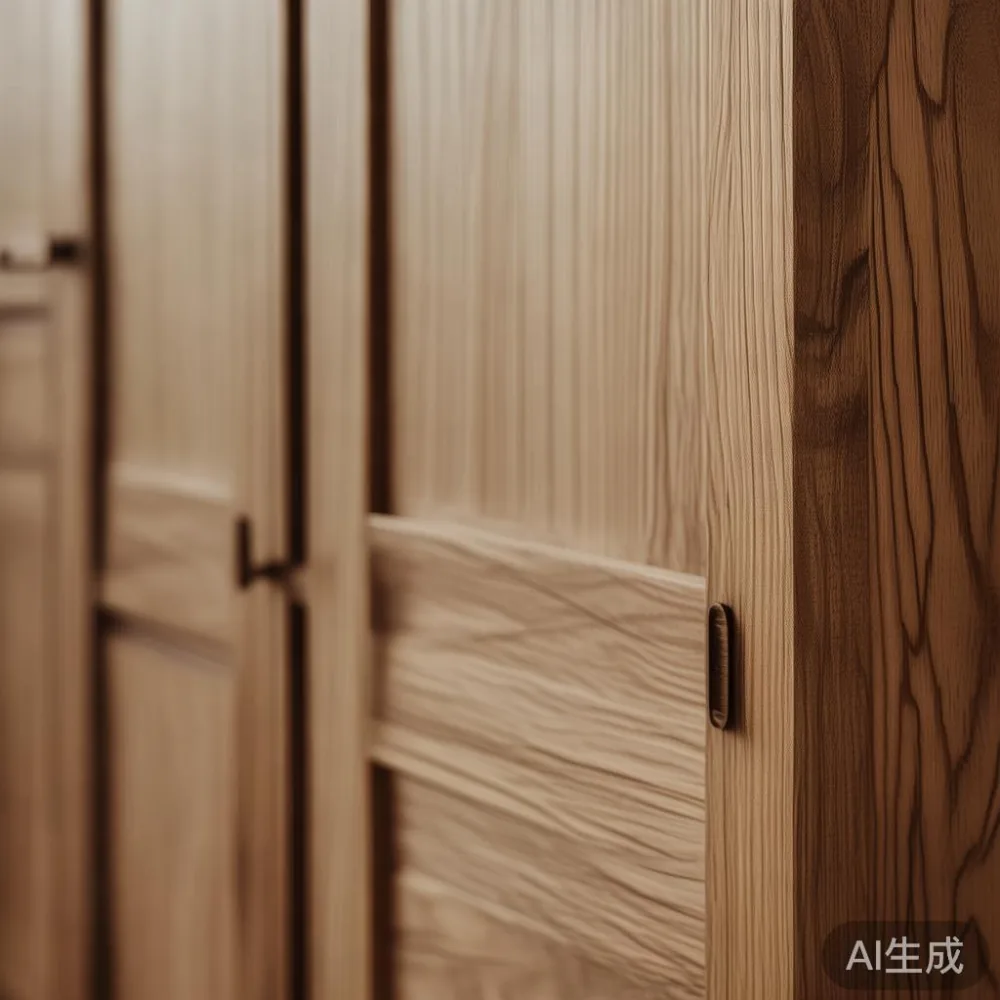
How long does delivery actually take, and what does the GST cost add?
For stock items shipped from a regional warehouse in Johor or Shenzhen, Singapore delivery typically runs 7 to 14 working days. Made-to-order solid wood pieces, especially wardrobes with custom internal layouts, run 30 to 60 days from order confirmation. Add 9% GST on the declared CIF (cost, insurance, freight) value for imports above SGD 3.01, which is every meaningful furniture shipment. A SGD 2,200 wardrobe therefore carries roughly SGD 198 of GST, billed before delivery.
Look for three concrete commitments in writing: dispatch date in calendar days, not business weeks; a re-delivery policy if the first attempt fails (typically one free re-delivery within 14 days); and a staircase surcharge quoted in SGD per floor. A reliable figure is SGD 15–25 per floor above the second storey for items above 30 kg, capped at four floors. Anything higher without explanation is padding.
What should you measure before the truck arrives?
Measure five things, in this order, and write them on a single sheet of paper:
1. Lift car interior depth and width, plus door opening height.
2. Corridor turn at the lift lobby, measured wall-to-wall at the tightest point.
3. Front door frame width and height, including any architrave that protrudes.
4. Bedroom doorway width and the angle of approach from the corridor.
5. Final wardrobe position dimensions, allowing 50 mm clearance on every side for ventilation around a solid wood piece.
Send the same measurements to the vendor a day before delivery. If the vendor cannot tell you the carton dimensions of your specific order, treat that as a red flag. Reputable Foshan manufacturers, including MIDHILL, list each carton in centimetres and kilograms on the packing list, and they can usually email a stacking diagram for the assembly team.
Who assembles it, and what does that actually cost?
There are three models. Model one: free assembly by the vendor’s own team, included in the quoted price, typically taking 90 to 180 minutes for a three-door wardrobe with two assemblers. Model two: paid assembly at SGD 80 to SGD 180 per wardrobe, depending on the number of doors and drawer units, with the fee waived above a purchase threshold (for context, MIDHILL waives assembly fees on Singapore orders above SGD 1,500, which most three-door wardrobes meet). Model three: DIY assembly, where the furniture arrives with an allen key and a manual written for a 25-year-old male with no concept of wall-to-floor squareness. Pick models one or two for any solid wood wardrobe above 60 kg total.
For an American country headboard for family with kids room setup, professional assembly usually adds 45 minutes. The headboard bolts to the bed frame, the frame brackets to the wall, and the safety strap anchors into a concrete or brick wall — not the gypsum board partition common in newer HDBs. If your child’s room shares a wall with the neighbour’s bedroom, ask the assembler to anchor into the structural wall, not the lightweight partition, or the bracket will loosen within months.
What goes wrong, and how do you avoid the common problems?
Four failure modes appear in roughly eight out of every ten Singapore delivery complaints I have seen in the last six years.
Carton too long for the lift. Solution: ask for the longest carton dimension before paying the deposit. If it exceeds your lift car interior depth by more than 50 mm, request a split-box option where the wardrobe ships in shorter panels. Most Foshan factories can split a side panel into two pieces for a small surcharge, usually SGD 60 to SGD 120.
Assembly team does not turn up. Solution: book the assembly slot only after you have confirmed the delivery slot. Some operators schedule assembly 24 hours after delivery for free, others require a separate booking 72 hours ahead. Get the assembly booking reference in writing.
Damage in transit. Solution: photograph every carton on arrival before opening. If a corner is crushed beyond 5 mm of deformation, write it on the delivery order and refuse that carton. Vendors with proper insurance, including the export-grade coverage that MIDHILL attaches to cross-border shipments, the quality risk drops to near zero because each panel is foam-wrapped, corner-guarded, and crated.
Wrong hardware in the box. Solution: count every bolt, cam lock, and dowel against the parts list before the team leaves. A missing dowel delays drawer alignment by a week if the replacement part ships from overseas. Keep the parts list and the empty hardware bag for at least 90 days.
What does a fair warranty actually cover?
A fair warranty covers the carriage of the wardrobe, the bed frame, the dining table, the nightstand, and every other piece in the same order. Specifically: structural integrity of solid wood frames for 10 years against cracking, splitting, and joint separation under normal residential use. Hardware such as hinges, drawer runners, and soft-close mechanisms is covered for 3 to 5 years. Surface finishes such as paint, oil, and lacquer are covered for 1 to 2 years against peeling and yellowing under indoor conditions.
What is not covered: damage from direct sunlight (solid wood fades), humidity above 70% RH (common in ground-floor HDBs without mechanical ventilation), and modifications by third-party carpenters. The latter matters in Singapore because many buyers ask DRG to cut a side panel to clear an air-con trunking. Once a third party cuts into the panel, the warranty on that panel ends. Plan the air-con trunking before the wardrobe arrives, not after.
How does shipping above a threshold change the economics?
Free shipping above SGD 350 is common for compact items such as a single nightstand or a small marble side table. For full-size wardrobes, the realistic threshold for free delivery in Singapore is SGD 1,500 to SGD 2,500, depending on the origin port. Below that, expect a SGD 60 to SGD 220 delivery fee. Above that, the fee disappears but the 9% GST remains. Above SGD 10,000, expect a dedicated truck with a single driver and a helper, which is the safest option for a 120 kg four-door wardrobe with mirror panels.
For a mid-sized order such as a solid wood bed frame, a three-door wardrobe, a six-seater dining table, and two nightstands totalling around SGD 9,000 to SGD 12,000, dedicated delivery and assembly run within 30 to 60 days from Foshan. The same polished piece you saw in the showroom photo in Shanghai, the same finished wood you touched at the Beijing showroom, the same calibration across hinges and drawer runners — that is what a well-managed international shipment looks like.
What should you photograph and keep after delivery?
Three documents, three photos. Documents: the sales invoice with line-item prices in SGD, the warranty card with serial numbers, and the assembly diagram with the assembler’s signature and date. Photos of: every carton on arrival (date-stamp visible), the unpacked wardrobe with all panels laid out, and the final installed wardrobe in its final position with a tape measure showing the 50 mm ventilation gap on each side.
Keep the photos in a folder named with the order number for at least three years. If a hinge fails in year four, the photo evidence shows the original installation angle, the wall material, and the room humidity at the time of install. That evidence short-circuits most warranty disputes within a single email exchange.
A realistic checklist before you confirm the order
Before you pay the deposit on any wardrobe, run this checklist printed on one A4 sheet:
1. Longest carton in cm versus lift depth in cm.
2. Total weight in kg versus staircase policy of your MCST.
3. Dispatch date in calendar days, written into the invoice.
4. Assembly model: included, paid, or DIY, with SGD fee if paid.
5. Warranty years on frame, hardware, and surface finish.
6. GST amount in SGD calculated at 9% on CIF.
7. Re-delivery policy if first attempt fails.
8. Staircase surcharge in SGD per floor.
9. Return window in calendar days, with return fee if any.
10. Refinishing policy for solid wood surfaces in years five through ten.
If the vendor answers all ten points in writing within 24 hours, the delivery and assembly reality will match the showroom promise. If any answer is vague, walk away. The wardrobe you save is the Saturday you save.