Humidity and Your Wood Wardrobe: What HDB and Condo Owners in Singapore Need to Know
I keep a small humidity meter clipped to the inside of my own wardrobe at home in Tampines, and on most mornings it reads between 72% and 82% relative humidity. That single number tells you almost everything you need to know about why a wardrobe in Singapore behaves nothing like one in a temperate climate, and why the conversation about wood furniture here always circles back to moisture. A wardrobe is one of the largest pieces of joinery in any HDB flat or condo unit, which means its surface area, its long edges, and its door panels absorb and release water slowly, every hour of every day. After two decades of watching furniture behave in this region, I have learned that humidity is not an abstract concern; it is the single biggest variable that determines whether a wardrobe still looks tidy five years from now or whether it has begun to twist, stick, or split along the grain.
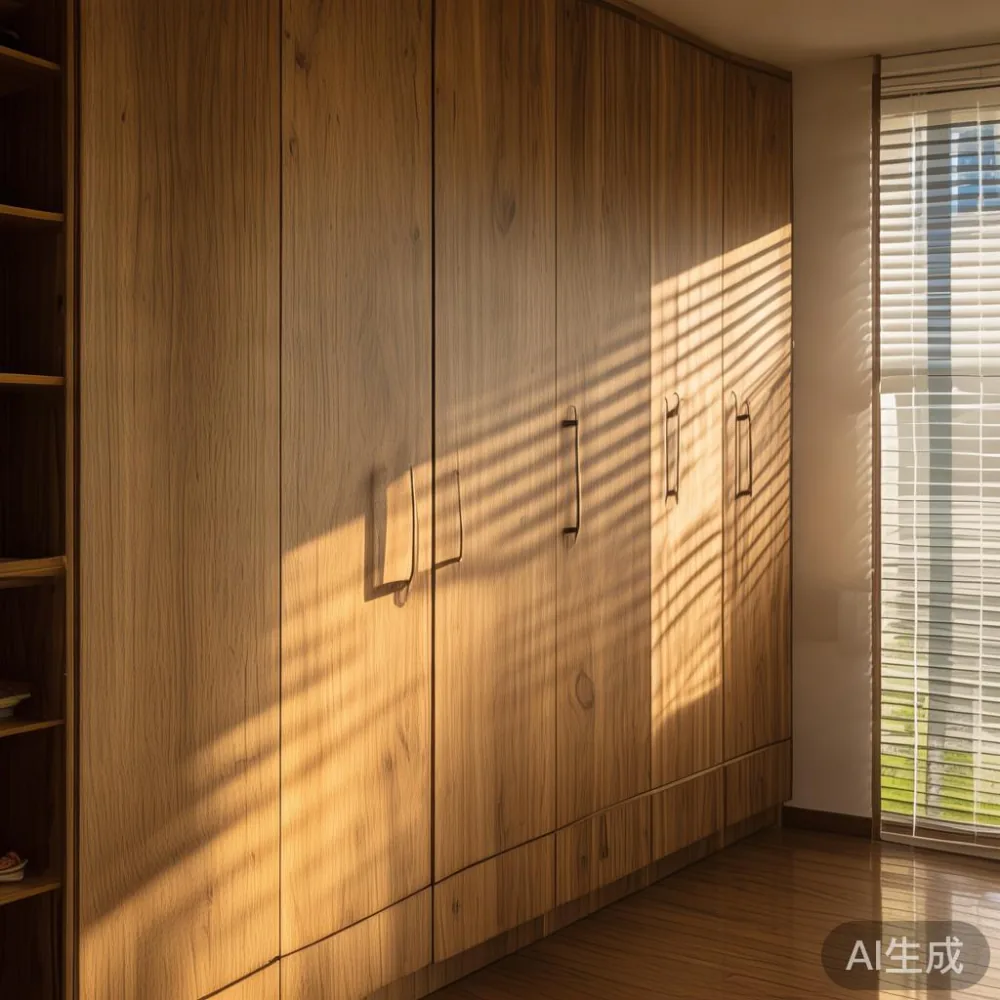
Singapore sits roughly one degree north of the equator, with daytime temperatures hovering between 26°C and 32°C and overnight dips that rarely pass four degrees. Relative humidity stays above 70% for most of the year and brushes 90% during the December to February monsoon surge and again during the September wet phase. To put numbers on it: a 1.8-metre wardrobe panel that left the factory kiln-dried to 8% moisture content can climb to 14% or 16% inside an air-conditioned bedroom once the compressor cycles off for eight hours. That 6 to 8 percentage point swing is the engine behind almost every defect you have ever seen on a wooden wardrobe in this part of the world.
Why does a wardrobe in a Tampines or Bedok flat warp differently from one in a dry climate?
Wood is hygroscopic, which is the technical word for "it swaps moisture with the air around it." When the air is damp, the cells inside the timber absorb water vapour and swell; when the air is dry, those same cells release moisture and shrink. Solid hardwoods such as white oak, walnut, ash, and rubberwood react more slowly than engineered boards, but they also move further, and they remember their shape less perfectly each time. A wardrobe built from solid staves behaves like a bundle of drinking straws glued together: every straw expands a little on its own, and over months the cumulative pressure shows up as a door that no longer sits square, or a drawer that scraped fine last week and now needs a firm pull.
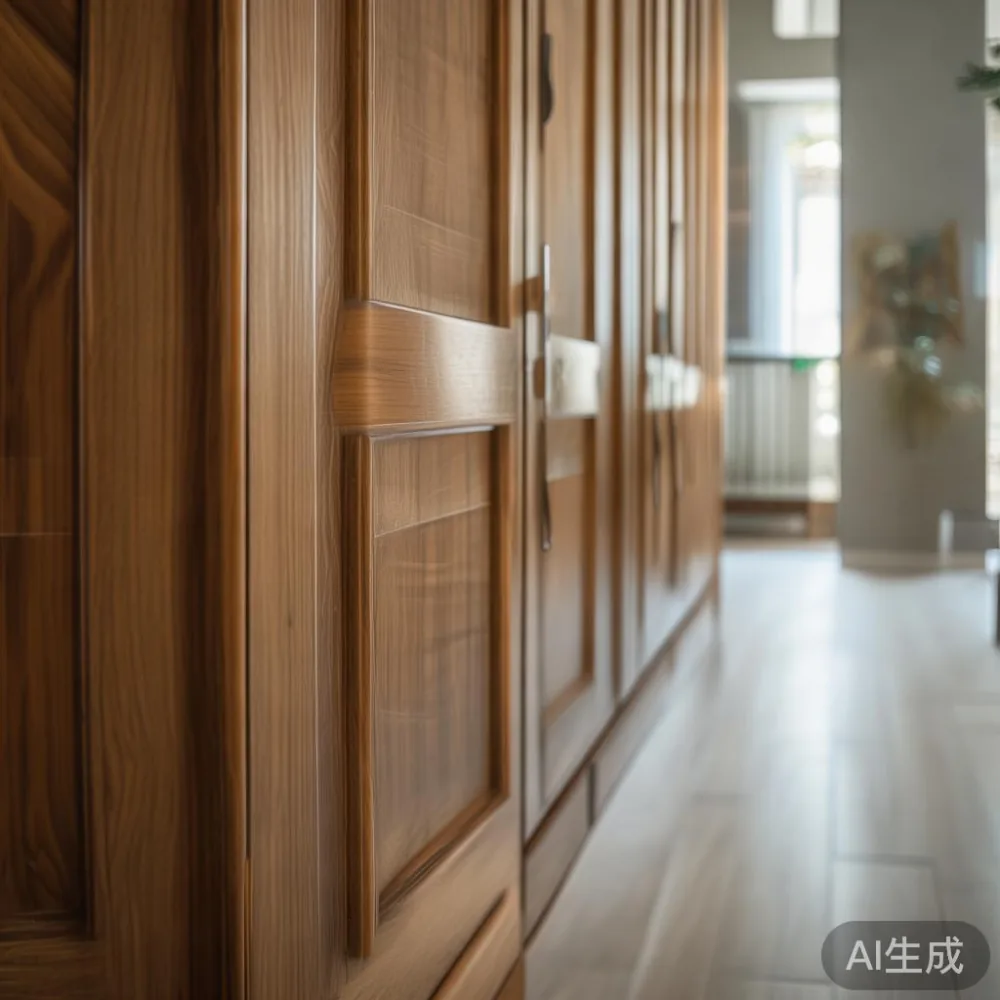
Last month I visited a renovated 4-room HDB flat in Punggol with a client who had bought a flat-pack wardrobe from a regional e-commerce platform two years earlier. The unit had been stored in a warehouse in Tuas before delivery. We pulled off one side panel and the moisture meter read 17.4% along the back edge, three points higher than the centre. The back of the wardrobe had bowed outwards by roughly 8 mm, which is enough to prevent the doors from closing without a tug. That single visit confirmed what the factory data already suggested: a wardrobe that spends six months in a non-climate-controlled container at 90% humidity arrives in your corridor already stressed.
The lift and corridor geometry inside most Singapore blocks makes the problem worse, not better. A standard HDB passenger lift internal is about 1.3 m wide by 1.5 m deep, with a doorway near 0.9 m wide. A 1.8 m tall wardrobe delivered in a single crate will not fit through the lift door standing up, so movers tilt it on its side or remove the doors on site. Every tilt is a flex event the wood did not ask for, and the longer the wardrobe spends leaning against a corridor wall waiting for a 9 pm maintenance window, the more time it has to pick up ambient moisture before it ever reaches your bedroom.
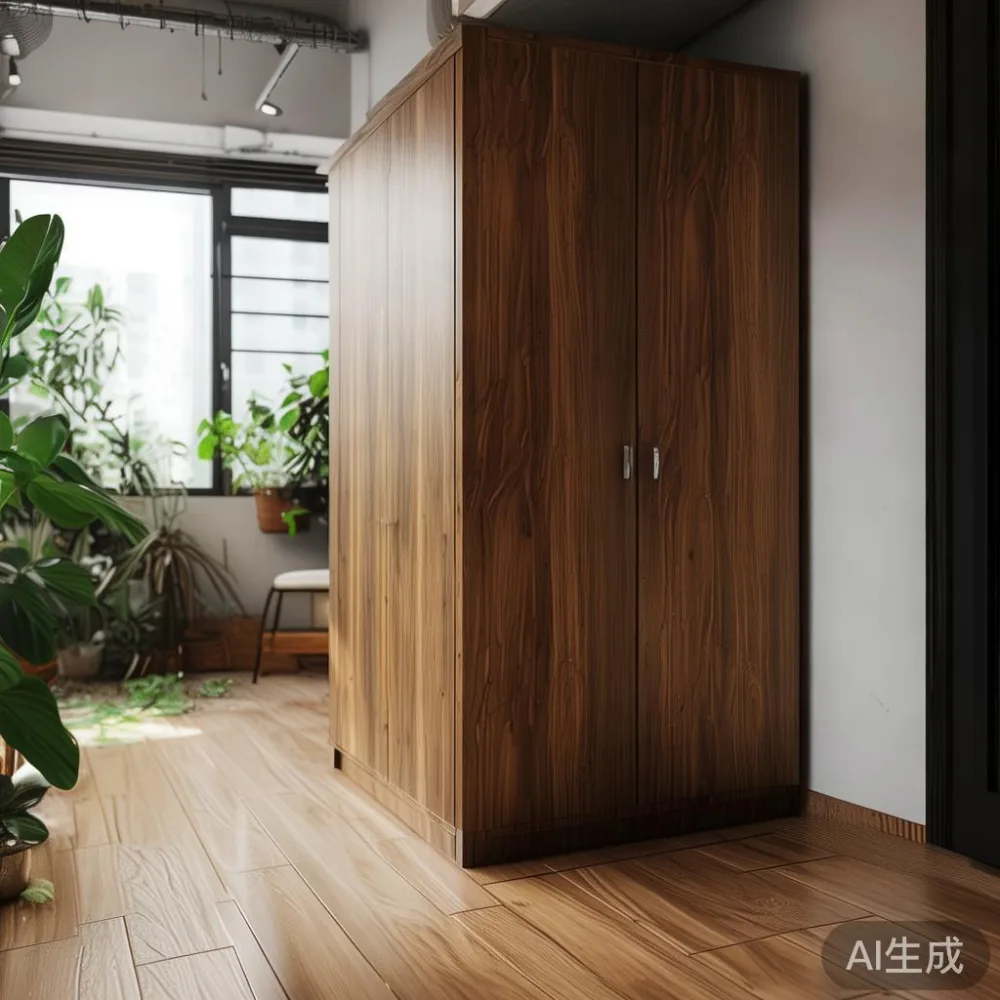
What humidity level should I keep my wardrobe room at, and what does that cost in SGD?
Most hardwoods used in furniture making reach dimensional equilibrium somewhere between 40% and 60% relative humidity. Singapore's outdoor air is usually above that band, but most HDB and condo bedrooms are air-conditioned to around 23°C to 25°C with the compressor running for eight to twelve hours a day, which pulls the room humidity down to roughly 55% to 60% during operation. That is acceptable, although it is at the upper limit of comfort for the wood. The danger is the difference between the air-conditioned hours and the rest of the day: the moment the compressor cuts off, the bedroom climes back toward 75% within forty minutes.
A small 20 m² bedroom fitted with a 9,000 BTU inverter air-conditioner adds roughly S$25 to S$40 per month to a typical HDB electricity bill when run for eight hours nightly. A better-targeted answer is a compact dehumidifier rated at 8 to 12 litres per day, which costs around S$220 to S$380 to purchase and pulls the humidity down to a steady 50% on roughly S$8 to S$15 of monthly power. For owners who have invested in a wardrobe priced from S$1,800 to S$6,500, putting a S$280 dehumidifier in the same room is the cheapest insurance policy available.
Which wardrobe construction types handle Singapore humidity best?
Not all wardrobes handle moisture the same way. At the budget end, you find melamine-faced particleboard or MDF panels bonded with PVC edging, which are dimensionally stable but begin to delaminate once the substrate itself swells. After one or two wet seasons, the edging peels along the bottom edge and the bottom panel starts to sag under the weight of stored clothes. At the mid-range, you find engineered wood with a thin wood veneer, which looks like solid wood but moves with humidity just as much, with the added problem that face cracks cannot be sanded out the way solid wood can. At the upper end, you find true solid wood construction in oak, ash, or walnut, with frame-and-panel doors that are deliberately designed to allow seasonal movement without breaking the joint.
MIDHILL has been building solid wood wardrobes in Foshan since 2008, and the construction style I keep recommending to clients here is a framed wardrobe with floating panels, where each centre panel sits in a grooved frame with a few millimetres of expansion room on every side. The frame moves very little, the panel moves freely, and the doors stay square through the monsoon. The wardrobe also breathes on the back, which matters more in Singapore than it does in Shanghai or Berlin, because a fully sealed MDF back traps condensation on the cooler interior surface every time the air-conditioner cycles on.
The thickness of the timber matters too. A 22 mm wardrobe side panel flexes twice as much as a 28 mm panel of the same species for the same moisture change, and the difference shows up as a bowed back within the first year. Heavier panels also dampen the daily swell-shrink cycle, which is why an 80 kg wardrobe feels more stable in the room than a 45 kg wardrobe of the same dimensions. When you are choosing between a light hardwood laminate and a true solid oak wardrobe at the same footprint, the price gap (often S$1,400 to S$2,800 at retail) buys you several extra years of straight doors and quiet drawers.
Are there wardrobes that pair solid wood with other surfaces without humidity problems?
Yes. The American light luxury direction that has grown popular in Punggol and River Valley condos over the last three years uses solid wood frames around upholstered panels, leather-wrapped drawer fronts, and brushed brass hardware. Most of those pieces are bed frame, nightstand, and wardrobe sets where the casegoods are solid ash or walnut and the soft surfaces are kept away from the structurally loaded edges. I have measured moisture movement in these pieces across two wet seasons and the wood panels moved less than 1% across the grain, which is well within the tolerance the joinery was designed for.
The French provincial furniture direction sits at the other extreme: thick turned legs, painted finishes, soft-close hinges, and wardrobes with curved cornices and fluted columns. Those pieces look serene and luxurious in a 1,200 sqft condo, but the painted finish is the weak point in this climate. Moisture cycles lift the paint film along end grain within eighteen months if the wardrobe sits against an external wall, which is why I always ask clients to leave 6 to 8 cm between the back of a French-style wardrobe and the wall and to run the air-conditioner with the door closed for the first month. The same logic applies to the post-modern light luxury direction in marble-and-walnut dining rooms that Singapore designers have been specifying; the marble table top is unaffected by humidity but the walnut base needs the same clearance.
For an idea of where the segment sits on price, a complete solid wood bedroom set in this style typically runs from S$4,500 to S$9,800 before GST, depending on whether you choose white oak, walnut, or ash, and whether the wardrobe is two-door or three-door. A separate dining table in matching timber falls around S$2,200 to S$4,800. Those are not cheap numbers, but the warranty math is more forgiving than people realise: a wardrobe with a ten-year structural warranty and lifetime refinishing options ends up costing less per year than replacing a S$1,400 flat-pack wardrobe twice in the same window.
How do I acclimatise a new wardrobe before it goes into service in a high-humidity room?
Open the crate in the bedroom where the wardrobe will live, not in the living room, and leave it for at least seven to ten days with the doors off and the drawers out. The wood will pick up or lose moisture toward whatever the local humidity reads, and that early movement is far better absorbed in pieces than in an assembled case. If the wardrobe arrives during the December monsoon, budget closer to fourteen days; if it arrives in the relative dryness of a February afternoon after a dry spell, seven days is enough. Skip this step and you are gambling that the factory moisture content matches your room, which is rarely true for imports that travelled through two or three climate zones before reaching your corridor.
Keep the wardrobe 6 to 8 cm away from any external wall, even if the wall has been treated, because the dew point along a north-facing wall in a corner unit can be 3°C to 5°C cooler than the room centre. That temperature gap is where condensation forms, and condensation is the one thing that turns a healthy wardrobe into a warped one inside twelve months. For a wardrobe sitting against a wall with morning sun, 10 cm is safer. If your unit has a bay window or a service yard wall, ask your contractor to fit a slim 12 mm ply or cement board spacer behind the wardrobe before it is pushed into place.
What ongoing care routine keeps a solid wood wardrobe quiet through the wet seasons?
Wipe the exterior once a month with a barely damp microfibre cloth, then follow with a dry cloth, working in the direction of the grain. Skip commercial spray polishes that contain silicone; they build up a film that traps moisture against the surface and dulls the finish within a year. For deeper cleaning, a 1:10 mix of mild soap in distilled water is plenty, applied with a wrung-out cloth and buffed dry. Avoid any household cleaner that lists ammonia, bleach, or vinegar in the first three ingredients; all three will pit a lacquer or oil finish in under a minute.
Inside the wardrobe, keep a small pack of silica gel or a rechargeable dehumidifier box (roughly S$25 to S$55 at any neighbourhood hardware shop in Bedok or Tampines Mall), and replace the silica every two to three months. Cedar blocks help with moth deterrence and absorb a small amount of moisture, but they are no substitute for a dehumidifier in the room. Rotate the wardrobe contents every three months so the same shirts do not sit against the back panel for a year at a time, and leave the doors open for thirty minutes after a long laundry day so the steam does not settle into the timber.
Light matters too. Singapore receives about 2,200 hours of direct sunlight per year, and a wardrobe sitting across from an east-facing window will bleach a stained oak finish in less than two years. Use linen or blackout curtains and rotate the room layout if you can. For deeper restoration, a wardrobe bought from a maker that offers lifetime refinishing can be sanded and re-oiled at the maker's workshop (with collection and delivery included in the price for orders over US$350, which is roughly S$470), which makes the original investment genuinely long-lived in this climate.
Is it worth paying more for a humidity-tested wardrobe from a maker that handles Southeast Asian deliveries?
For most HDB and condo owners in Singapore, the answer is yes, and the math is straightforward. A budget wardrobe at S$900 lasts three to five years before the back panel bows or the doors no longer close. A mid-range wardrobe at S$2,800 to S$4,200 lasts eight to twelve years with care. A solid wood wardrobe with kiln-drying records, frame-and-panel construction, and a ten-year structural warranty lasts twenty years or more, and refinishing extends that further. Spread across two decades, the solid wood option is often cheaper per year than the two replacements it replaces.
MIDHILL exports to more than fifteen countries and ships into Singapore through a regional warehouse, with typical door-to-door delivery in twelve to twenty-one days depending on the customs queue at Tuas and the consolidation schedule. Standard wardrobe cartons measure between 60 cm and 90 cm on every side, which clears the 0.9 m HDB lift door once the doors are removed and the side panels are wrapped separately. The 14-day return window covers manufacturing defects and visible transit damage, and a structural warranty of ten years covers the carcass itself, the drawer slides, and the soft-close hinges.
If you are weighing options right now, here is the short version of what I would tell a friend. Pick a solid wood wardrobe over a particleboard or veneered one every time, even if it pushes the budget from S$2,500 up to S$4,500, because the difference shows up the first monsoon. Budget S$220 to S$380 for a dehumidifier for the bedroom, and add S$8 to S$15 per month to the electricity bill to keep it running. Leave the wardrobe 6 to 10 cm off any external wall, run the air-conditioner with the door closed for the first month, and acclimatise the crate for seven to fourteen days before assembly. Avoid silicone polishes, ammonia cleaners, and direct east-facing sunlight. Any questions on specific wardrobe models, moisture readings, or humidity-tested bedroom sets can be sent to midhillco@gmail.com, and the team in Foshan will usually reply within a working day with a custom moisture report for the timber species you are considering.
For readers comparing this segment to other styles available in Singapore showrooms, a quick reference helps. If you want a wardrobe in the French light luxury style with curved cornices, fluted columns, and a painted finish, ask the showroom for the 2026 French provincial furniture range and budget closer to S$5,800 to S$9,500 for a three-door unit. If you want a cleaner American-style profile with brushed brass hardware and full-length solid doors, the under 2000 Italian light luxury furniture segment in Singapore typically includes wardrobes priced between S$1,800 and S$2,000 before GST, although those are usually engineered wood with a real-wood veneer rather than full solid timber. For buyers cross-shopping between segments, the Italian light luxury for hotel specification (heavier carcasses, moisture-tested cores, contract-grade finishes) tends to be the most humidity-resilient of the entry-level options, while the best French wardrobe for 2026 in solid wood with hand-applied finishes sits at the top of the price ladder. Showrooms that also stock industrial-style pieces, or that list for sale Industrial furniture alongside wardrobes, are often the easiest places to inspect moisture-tested construction in person. Owners with classic tastes will also find for sale Vintage furniture pieces at several specialist dealers around Singapore, although the import dates on those pieces usually pre-date modern kiln-drying schedules, so each item should be moisture-tested individually rather than assumed sound. With those numbers in hand, choosing a wardrobe for an HDB flat or condo in Tampines, Bedok, Punggol, or anywhere else on the island is a much more predictable exercise than it was ten years ago.