How to Style a Compact Singapore Apartment Without the Cramped Look
Most Singapore renters and owners will tell you the same thing: space runs out faster than your renovation budget. I watched my colleague Aisyah in her 65 sqm two-bedder at Tampines GreenRidges wrestle with this for six months. She owned a perfectly good 4-seater sofa, an inherited teak dining table for six, and a wardrobe so deep it swallowed half the corridor. After she shipped half of it out and rethought the rest, the same flat started breathing. That journey — plus a fair bit of number-crunching on lift dimensions and delivery charges — is what shaped this guide.
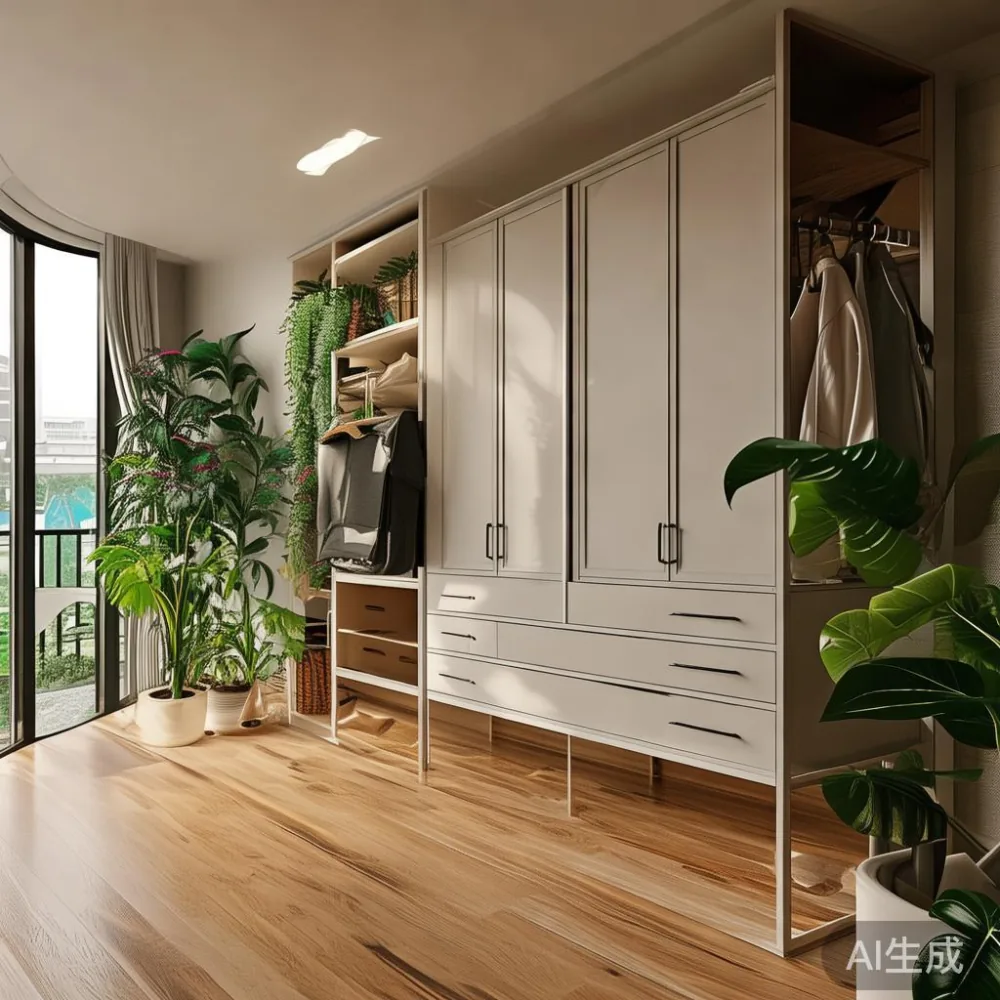
For anyone in a 3-room HDB, a compact condo in Punggol, or a shoebox unit near Bedok Reservoir, the rules below apply. They also assume you care about how things are built, not just how they look online — solid wood sofa frames, kiln-dried wardrobes, and dining tables that survive three moves are worth the slight premium when you live in a place where every centimetre counts.
Why Your Wardrobe Is the Single Biggest Space Decision You Will Make
Before we touch a single cushion, the wardrobe deserves its own section. In Singapore flats, the built-in wardrobe is almost always the tallest, deepest, and heaviest piece in the bedroom. Get it wrong and the entire room loses 1 to 2 sqm of usable floor. Get it right and you reclaim enough space for a proper bedside reading lamp, a slim desk, or simply room to swing a laundry basket.
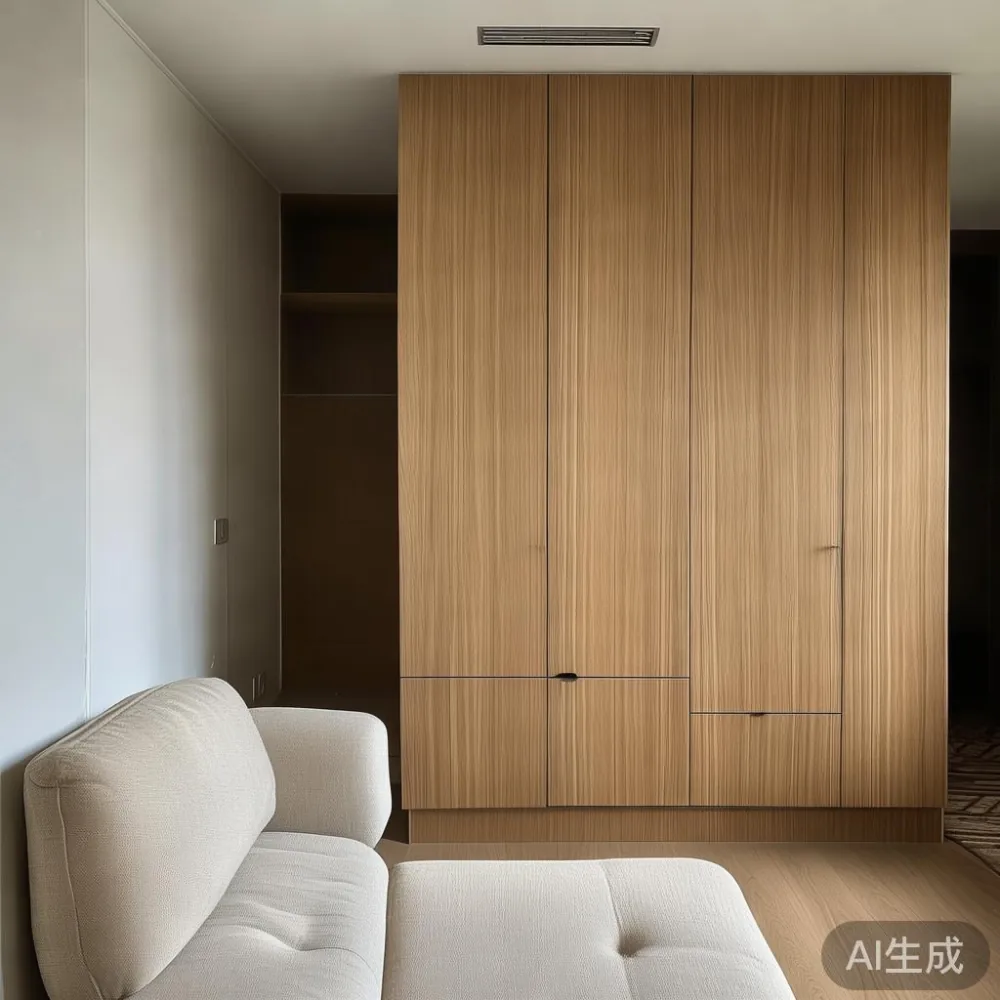
Three numbers matter most:
- Depth: Aim for 55 cm external depth (50 cm internal). Anything beyond 60 cm eats into your walkway, and in HDB flats the bedroom corridor between bed and wardrobe is typically only 70 cm to 90 cm.
- Height: A 240 cm floor-to-ceiling wardrobe uses 100% of vertical space and adds roughly 30% more storage compared to a 200 cm unit. Just check your lift opening — most HDB passenger lifts are 2.1 m high, so the wardrobe will arrive flat-pack or assembled in two halves.
- Door clearance: Hinged wardrobe doors need 55 cm to 60 cm of swing space. Sliding doors need only 8 cm to 10 cm of side overlap. In a 3.2 m x 3.0 m bedroom, sliding is usually the calm choice.
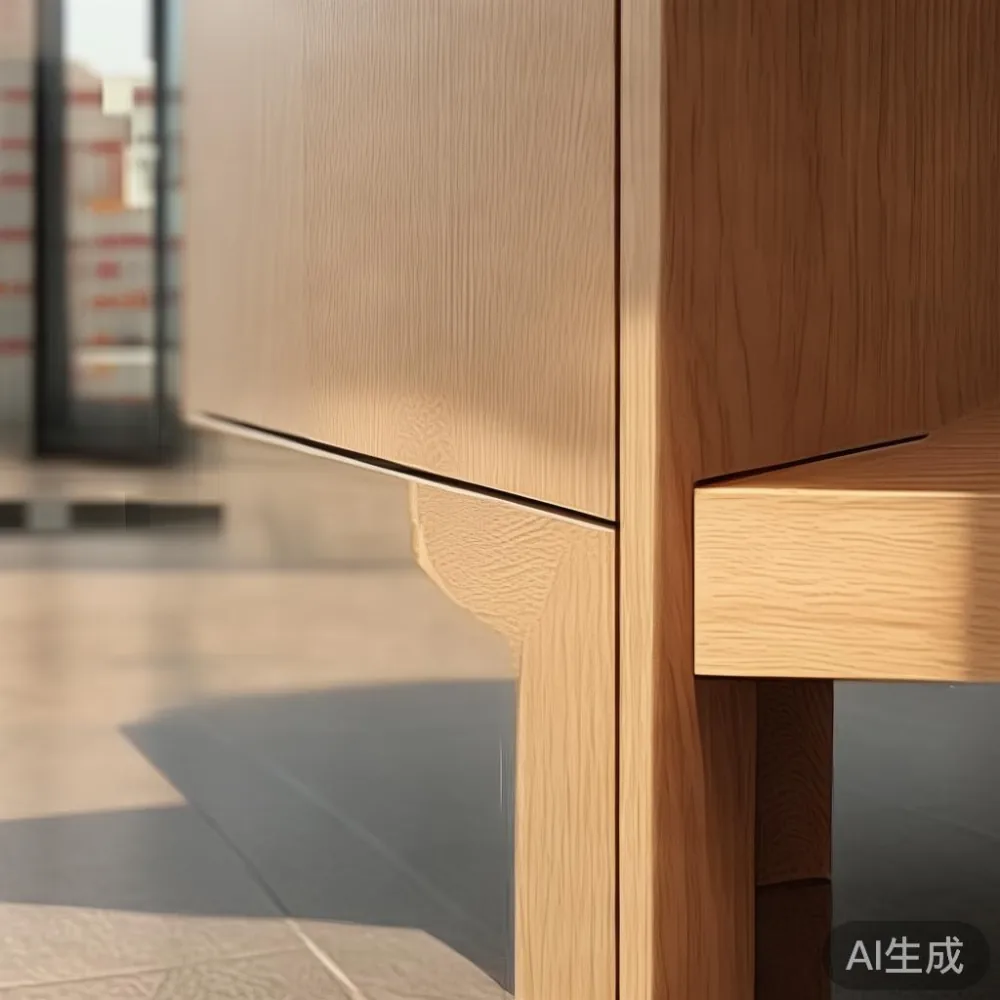
Look for solid wood construction with dovetail drawer joins and a 10-year structural warranty. A Foshan factory with that kind of warranty is usually a factory that kiln-dries its own timber — important in Singapore where humidity sits at 80% most nights.
Which Pieces Should Leave the Apartment?
Edit before you add. Be ruthless.
The four-piece rule that works in any unit under 80 sqm:
- One solid wood bed frame, queen size (152 cm x 188 cm). A king (183 cm x 198 cm) needs a room at least 3.4 m x 3.6 m to feel right. Measure, don't guess.
- One wardrobe, fitted or freestanding, not exceeding 180 cm wide. Wider units dominate the wall and visually shrink the room.
- One dining table for two to four, 80 cm to 120 cm long. Skip the extendable six-seater unless you host weekly — every extra 30 cm of table length adds 0.5 sqm of visual weight.
- One nightstand per person. Two is the cap. Anything more pushes the bed off-centre.
Move out: extra chairs, bulky bookshelves wider than 80 cm, glass display cabinets, and bar stools that block a 90 cm corridor. In Singapore HDB corridors are 1.2 m to 1.5 m wide, and the lift interior of most blocks is about 1.4 m deep x 1.1 m wide with a door opening of roughly 0.9 m — so whatever you keep must actually fit through both.
A good sanity check: if a piece of furniture cannot be carried by two movers through your lift door without tilting 45 degrees, it does not belong in your flat.
How Do You Mix Light-Luxury Pieces Without Overcrowding?
This is the question I get from almost every client in the East: the look they want is light luxury — French, American, or Italian post-modern — but the apartment is small. The trick is choosing one statement piece per room, not five quiet ones.
For the living room, anchor the space with a French light-luxury sofa in cream or warm beige, around 200 cm to 220 cm long for a 3-seater. Pair it with a slim marble table (90 cm diameter, 35 cm tall) rather than a chunky wood coffee table. The marble reflects light, which is the cheapest way to fake square metres in a Singapore afternoon. If you are searching online for inspiration on how to style European light luxury sofa in apartment settings, look for editorial shots where the sofa is the only upholstered piece in the frame — no ottoman, no bench, no extra armchairs.
In the dining zone, a light luxury for dining room setup works best when the table is on slender legs (under 8 cm thickness) and the chairs have open backs. A 140 cm x 80 cm rectangular solid wood dining table seats four comfortably and leaves 70 cm clearance on each side, which is the HDB-friendly minimum.
For the bedroom, consider an Italian light luxury bed with a low upholstered headboard (110 cm to 120 cm tall). Low profiles free up vertical space for art or a tall slim wardrobe, and Italian light luxury bed frames in boucle or linen instantly soften a compact room. Add a single Modern light luxury nightstand — slim, two drawers, around 50 cm wide — and resist the urge to put a second one if the partner has a separate wardrobe corner.
If you work from home, the same light luxury rules apply to a desk nook. Italian light luxury for office desks tend to be 130 cm to 150 cm wide with leather tops; one such desk, pushed against a window wall, lifts a corner from "spare" to "purposeful" without adding clutter.
Where Should the Wardrobe Sit in a HDB Bedroom?
Three practical placements, ranked by how often they actually work in Singapore flats.
1. Full-length wall opposite the door (most common). Works if the wall is at least 2.4 m wide. A 180 cm wardrobe leaves 60 cm on one side for a tall mirror or a narrow shelf — useful for bags, folded towels, or a laundry hamper. Budget around S$2,400 to S$3,800 for a solid wood three-door unit with a 10-year structural warranty, delivered flat-pack.
2. Beside the door, perpendicular to the bed. This works in narrow 3-room HDB bedrooms where the bed has to go against the window wall. The wardrobe acts as a visual barrier and gives you a "dressing corridor" between wardrobe and bed. Make sure the wardrobe is no deeper than 55 cm or your walking lane collapses.
3. Recessed into a false wall. More expensive — typically S$4,500 to S$6,500 including carpentry — but it hides the wardrobe depth and creates a flush look. Worth it only if you are doing a full BTO renovation.
Whatever you choose, leave 5 cm to 10 cm between the wardrobe top and the ceiling. That gap traps dust, but skipping it makes the room feel boxed in. If ceiling height is below 2.6 m, build the wardrobe floor-to-ceiling instead and skip the cornice.
What Colours and Materials Make a Small Singapore Flat Look Bigger?
Three palettes consistently outperform everything else in our local light conditions:
- Warm white + oak. Walls in Benjamin Moore White Dove or Jotapaint 9016, wardrobe and bed frame in light oak, floor in a slightly darker oak. This is the safest Modern light luxury for apartment base — it reflects the strong afternoon sun we get in places like Punggol and Tampines.
- Greige + walnut. A slightly more grown-up palette. Walls in greige (Dulux 30YY 46/053 or similar), wardrobe in walnut, single accent chair in rust velvet.
- Soft black accents on white. Black picture frames, black slim wardrobe handles, black bedside lamp. Keep black under 8% of the room's visible surface or the space starts feeling heavier.
Material rule: one metal, one wood, one soft fabric. Marble table tops count as metal-adjacent (cool to the touch, light-reflective). Boucle, linen, and velvet count as soft. Beyond those three categories, the eye starts reading clutter.
How Much Should You Budget for Furniture That Actually Fits?
Prices below are 2025 SGD landed in Singapore, including 9% GST, for a typical two-bedder outfit:
- Solid wood queen bed frame: S$1,400 to S$2,800
- Three-door solid wood wardrobe (180 cm wide): S$2,400 to S$3,800
- Modern light luxury nightstand (pair): S$600 to S$1,100
- Three-seater solid wood sofa (French light luxury): S$2,800 to S$4,800
- Marble coffee table (90 cm round): S$900 to S$1,600
- Solid wood dining table for four (140 cm): S$1,200 to S$2,200
- Two dining chairs: S$400 to S$700
Total: roughly S$9,700 to S$17,000 for a complete, well-built set. Shipping is usually free over S$450 for flat-pack deliveries within Singapore; fully assembled pieces cost an extra S$80 to S$150 because of the lift access and two-man handling at HDB car parks.
Delivery times from a Foshan factory to a Singapore HDB door typically run 35 to 50 days by sea, plus 7 to 10 days for customs and last-mile. If you need it faster, air freight cuts this to about 12 to 18 days but adds S$600 to S$1,200 per consignment.
Are 14-Day Returns Worth It for Big Furniture?
Yes, provided the supplier offers them on Wardrobe-sized pieces and not just chairs. A 14-day return window gives you time to:
- Confirm the wardrobe fits the lift of your specific block (some old HDB lifts in Bedok and Marine Parade are 0.8 m wide at the door).
- Check the colour under your actual lighting at 10 a.m., 3 p.m., and 8 p.m.
- Sit on the sofa for at least one full evening before committing.
Return shipping for a three-door wardrobe from Singapore to a Foshan factory is rarely worth claiming — it costs around S$280 to S$420 and cancels most of your savings. So the 14-day window matters mostly for pieces under 80 kg, which is roughly anything below a dining table for six.
What About Storage Beyond the Wardrobe?
Once the wardrobe is locked in, the next-tier storage to plan is usually:
- Under-bed drawers. Adds 90 to 120 litres of hidden space per drawer. Important in HDB where storerooms are rare.
- Over-door hooks. 4 to 6 hooks hold bags, robes, and tomorrow's outfit without a single extra piece of furniture.
- Tall narrow cabinets (40 cm wide x 220 cm tall). Slot into dead corners beside the wardrobe or at the end of a corridor. A solid wood nightstand is usually too short for this job.
- Bedside caddy. For tiny rooms where even a Modern light luxury nightstand feels like too much.
Skip the storage ottoman in the living room. It tempts you to keep things in it, which defeats the editing we did earlier.
Do Custom Wardrobes Beat Off-the-Shelf in a Small Flat?
Sometimes. The rule of thumb I share with clients:
- If your room has an awkward column, slope, or air-con ledge — go custom. A bespoke wardrobe from a local carpenter runs S$1,800 to S$3,200 for a 2.4 m tall unit, materials extra.
- If your room is a standard 3-room HDB rectangle — go flat-pack from a factory-direct supplier. Solid wood, 10-year structural warranty, free refinishing for life, and roughly 30% cheaper than local custom for the same wood spec.
- If you move every two to three years — go flat-pack. A flat-pack wardrobe can be disassembled, moved, and reassembled twice without joint failure. A custom built-in becomes part of the apartment.
MIDHILL ships flat-pack wardrobes from its Foshan factory with that exact promise — 10-year structural warranty and lifetime refinishing — which is one of the reasons the brand has quietly landed in 15-plus countries without much fanfare. The lifetime refinishing in particular is rare at this price band; most local carpenters quote S$400 to S$700 per respray after year five.
Where Should I Place the Dining Table in an Open-Plan HDB?
Three placements, in order of how often they work:
1. Against the kitchen counter, perpendicular. Saves space, defines the dining zone without a partition, and keeps the walkway to the living room open.
2. Centre of the combined living-dining area, under a pendant. Works if your unit is at least 28 sqm combined. The pendant visually anchors the table so it stops feeling like clutter.
3. Window wall, parallel to the counter. Best in units with a long balcony door. Lets natural light hit the tabletop, which makes a 120 cm table feel like 160 cm.
Avoid placing the dining table directly behind the sofa. It blocks the entry sightline and makes the room feel sectional even when it isn't.
Last Checks Before You Click Order
Run this list the night before delivery:
- Lift door width (W) and depth (D) of your block — measure both.
- Corridor width from lift to your door — should be at least 1.2 m.
- Staircase turning radius if the lift fails or the item is too tall — usually 1.8 m to 2.0 m in newer HDB.
- Final wardrobe position marked with tape on the floor, so movers know exactly where to stop.
- Wardrobe height vs ceiling height — 5 cm to 10 cm clearance is fine, zero clearance will trap the wardrobe against the cornice.
Once those numbers line up, a small Singapore flat stops being a compromise and starts feeling like a curated space — one where the wardrobe disappears into the architecture, the dining table earns its 90 cm, and the solid wood bed frame quietly does its job for the next fifteen years.