Optimizing Wardrobe Size for Singapore HDB Living Rooms
Choosing a wardrobe for a Singapore HDB living room is less about finding the largest possible cabinet and more about making 90 cm of circulation space feel comfortable. In a Tampines, Bedok, or Punggol flat, a room may measure 3.0 m by 4.0 m, while the sofa, bed frame, dining table, television console, and daily traffic route already occupy much of the floor. A wardrobe that looks generous in a showroom can feel crowded once its doors are opened, especially near a lift lobby or along a narrow HDB corridor.
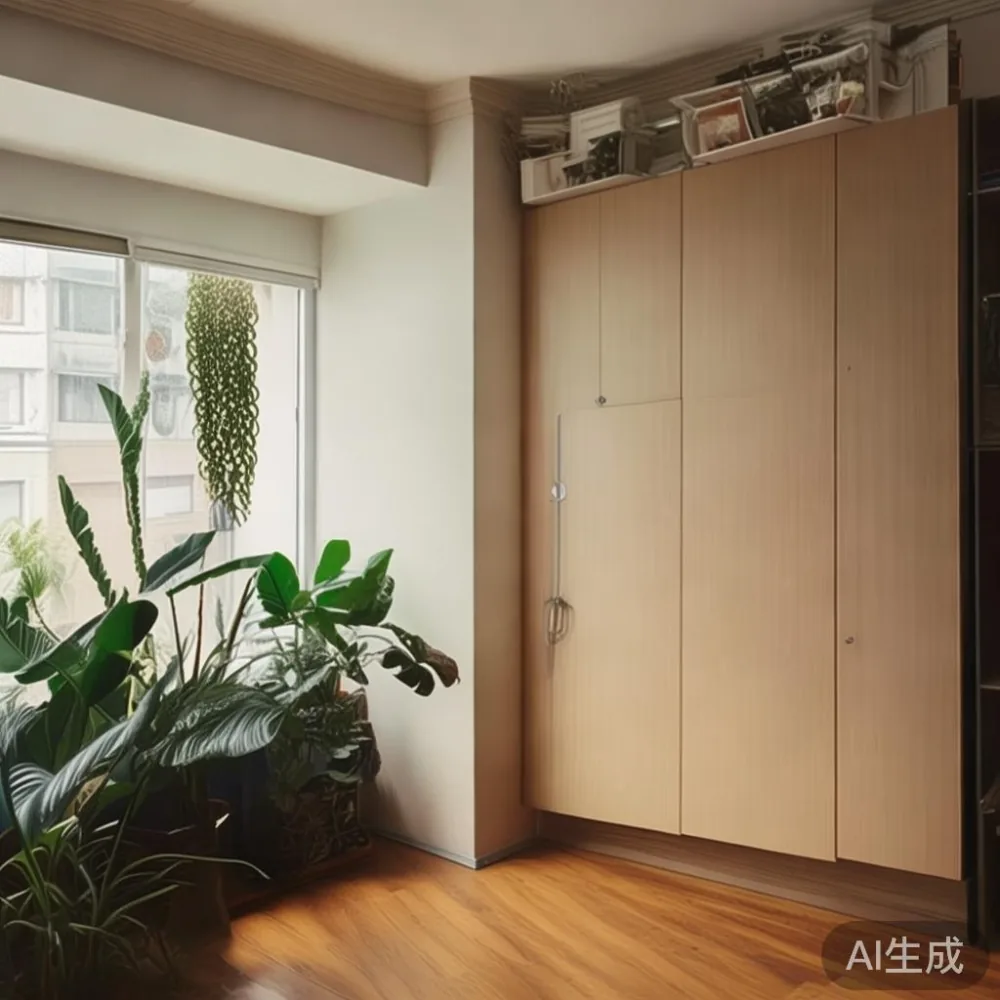
This guide explains how to measure the room, compare common wardrobe sizes, plan delivery, and select a finish that suits a light-luxury home. For shoppers who also enjoy searching for an Italian light luxury coffee table or asking where to buy dining table from MIDHILL, the same principle applies: measure the setting before choosing the furniture. MIDHILL has manufactured solid wood furniture since 2008, exports to more than 15 countries, provides a 10-year structural warranty, and offers lifetime refinishing. Its shipping terms include free delivery for orders above US$350, equivalent to about SGD 460 before GST, although the final Singapore delivery charge should be confirmed before purchase.
How wide should a wardrobe be in a Singapore living room?
For most HDB living rooms, a 120–180 cm wide wardrobe provides a practical balance between storage and breathing room. A 100–120 cm model suits compact rooms or a secondary storage wall, while a 200–240 cm wardrobe can make sense in a wider 4.5 m room or a combined bedroom and living area. Width alone does not determine capacity; a 150 cm wardrobe with 60 cm deep hanging space may hold more usable clothing than a 210 cm unit filled with narrow shelves.
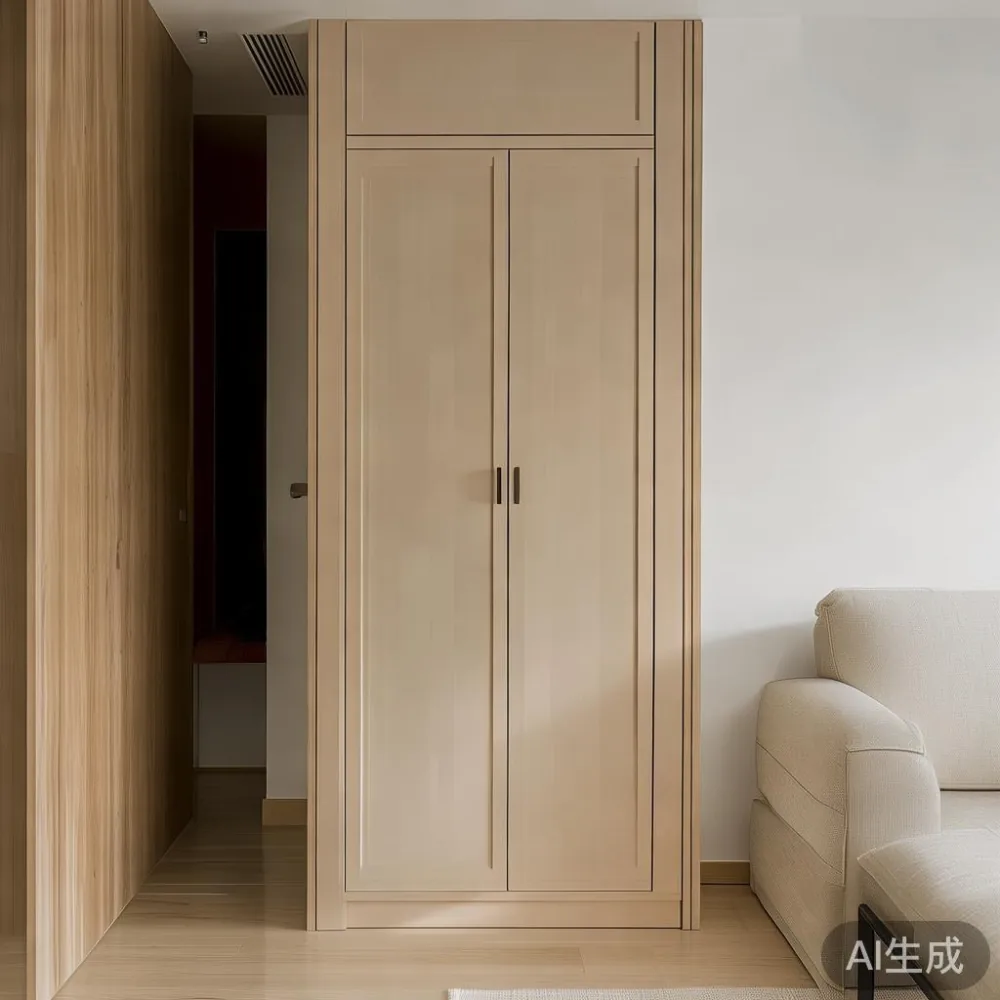
Leave at least 90 cm in front of sliding doors and approximately 60 cm where hinged doors need to open. If a bed frame sits opposite, maintain a 75–90 cm passage where possible. Ceiling fans, air-conditioning outlets, skirting boards, and projecting wall pipes also affect placement. Measure these after the room has been cleared, not merely from the floor plan.
Singapore’s HDB corridor and lift dimensions deserve attention during delivery planning. Standard residential lifts often provide an internal door opening of about 90 cm and a car depth near 130–150 cm, though older blocks vary. A boxed wardrobe can exceed 200 cm in length even when its assembled width is 120 cm. Check the packaged dimensions with the supplier, and request delivery to the unit lobby rather than carrying a large cabinet through several corridors yourself.
What room dimensions should you measure before ordering?
Record the room length at 3 locations, the width at 3 locations, and the ceiling height. Then mark doors, windows, sockets, vents, and furniture that cannot move. Use a tape measure rather than estimating from a photograph. In a compact 9 m² living room, for example, a 240 cm wide and 60 cm deep wardrobe consumes about 1.44 m² of floor area, leaving roughly 7.56 m² for circulation and other functions before accounting for furniture.
Draw the room to scale at 1 cm for every 10 cm. Place the wardrobe on the paper plan, then swing or slide its doors open. This quick test prevents a common mistake: buying a wide unit that blocks the route from the entrance to the kitchen or balcony. In a Punggol flat with a narrow entry route, moving the wardrobe 20 cm nearer the wall can sometimes create the clearance needed for an 80 cm door.
Check whether the wardrobe will be built flat-packed or delivered as finished modules. Flat-pack construction usually suits narrow access better and can reduce package volume, but assembly requires floor area and time. Finished modular construction arrives closer to its final appearance, yet each package must fit through the lift and corridor. Ask for the largest carton length, width, height, and weight before confirming the order.
Which wardrobe depth and internal layout work best for daily use?
A depth of 55–60 cm is appropriate for most Singapore living rooms. It allows full-length hanging space while preserving floor area. Going to 65 cm may improve shelf and drawer storage, but it reduces passage space and makes the cabinet appear heavier. A depth below 50 cm is more suitable for folded clothes, jackets, or accessories than for everyday long garments.
For a shared household, consider at least 120 cm of hanging rail within a 150 cm unit and use the remaining width for shelves. Allow roughly 8–12 cm between hanging garments of different types, and check the rail’s safe load rating. A useful internal arrangement may include one long-hanging section of 80–100 cm, one double-height section of 80 cm, six to eight shelves, and three drawers. Drawer fronts should open smoothly without striking the opposite wall; a 45–50 cm clearance is generally enough for shallow drawers.
Last month I visited a colleague’s three-room Bedok HDB flat to check a wardrobe installation. The living room measured 3.4 m by 3.1 m, and the family initially wanted a 220 cm cabinet. After we measured the door swing and the television console, we used a 170 cm solid wood wardrobe with a 58 cm depth instead. It lost 50 cm of width but preserved a clear 92 cm passage. The family has used the layout daily for 4 weeks without the doors obstructing the balcony route.
That visit also revealed why drawer direction matters. A drawer on the hinge side may open into a tight corner, while a drawer placed toward the room centre can hit a chair. For any proposed layout, test the swing direction with masking tape on the floor before the wardrobe arrives.
How much does a solid wood wardrobe cost in Singapore?
Expect a broad price range because timber, hardware, finish, and construction differ. A compact solid wood wardrobe measuring 120 cm wide, 55 cm deep, and 200 cm high may cost around SGD 1,500–2,600 before GST. A 160–180 cm model commonly falls around SGD 2,400–4,200 before GST, while a larger 220 cm unit with extensive drawers, glass sections, or elaborate carving can exceed SGD 5,000 before GST.
Singapore GST is currently 9%. Confirm the displayed price with the seller because tax treatment and delivery terms can vary by transaction. For example, a SGD 3,200 wardrobe before GST becomes SGD 3,488 after GST. A 10% deposit on that GST-inclusive total is SGD 348.80, with the balance due before dispatch.
Compare quotes on the same basis: include GST, in-room delivery, assembly, stair or lift charges, and damage coverage. A lower quote that excludes delivery may not suit an upper-floor HDB unit. Conversely, a quotation that includes a full 10-year structural warranty and lifetime refinishing can offer clearer long-term value than a cabinet supported by a 1-year replacement promise.
Search terms such as wholesale Modern light luxury furniture can produce very different products, from loose components to complete collections. Confirm whether a “wholesale” wardrobe includes solid timber carcasses, solid wood drawer boxes, finished interiors, and installation. Hardware specifications matter too: soft-close hinges, metal runners, and anti-tip fittings should be stated rather than implied by the style photograph.
How should a light-luxury wardrobe suit an HDB interior?
French light luxury works well in a compact flat when the cabinet has restrained moulding, warm oak or walnut tones, and slim bronze hardware. Avoid covering an entire wall with tall carved doors if the room is under 12 m²; visual weight can make the space feel smaller. Post-modern light luxury offers another route through clean rectangular forms, a mix of matte and lightly reflective surfaces, and simple metal pulls. American light luxury tends toward broader proportions, practical storage, and a more relaxed finish.
Material scale should suit the room. A wide plank floor can support a solid wood wardrobe with visible grain, while a smaller room may benefit from a warmer, quieter tone that blends with curtains and upholstery. A marble table already introduces a strong hard surface, so the wardrobe does not need equally dramatic stone patterning. The aim is balance, not a display of competing luxury signals.
If you are considering how to style European light luxury wardrobe in apartment, focus on vertical alignment, a 5–8 cm reveal around tall units, and coordinated lighting. A 2700–3000K LED strip beneath the top shelf adds usable illumination, but keep the transformer accessible for servicing. For HDB living rooms, keep electrical work within local safety requirements and avoid trailing extension leads across the circulation path.
Can a wardrobe double as a display and storage wall?
Yes, provided open sections remain shallow enough for the room. Use an 18–25 cm deep open niche for books, a 30 cm deep niche for ornaments, and a 55–60 cm deep enclosed cabinet for clothing. This stepped profile creates display space without making the whole unit too deep. A 180 cm wardrobe could combine 120 cm of enclosed storage with a 60 cm open niche.
Display shelves should be spaced around 30–35 cm for books and 38–45 cm for decorative pieces. If the unit includes glass doors, account for finger clearance and avoid placing them opposite a television, where reflections can be distracting. For a solid wood sofa, bed frame, dining table, wardrobe, nightstand, or marble table arrangement, repeat one finish rather than matching every item exactly; that keeps the room coherent while allowing natural variation in wood grain.
Storage density should reflect actual routines. Add a pull-out tray for jewellery, a valet rod for daily wear, and a shelf no deeper than 25 cm for folded knitwear. Do not fill every opening simply because the unit has capacity. A practical wardrobe with 70% usable space often serves a household better than a crowded one with 20 poorly placed shelves.
How do lift access, assembly, and delivery affect the order?
Measure the lift opening, internal diagonal depth, and turning space on each floor. For narrow HDB access, the supplier may need to split the wardrobe into sections no larger than the lift can accept. A 60 cm wide module with a 190 cm side panel is easier to handle than a single 180 cm finished carcass. Confirm whether assembly can occur inside the flat and whether packaging must be removed from the corridor.
Allow 7–14 delivery days for Singapore orders after stock confirmation, although made-to-order pieces may require 30–60 days. The manufacturer can state a more accurate lead time before payment. For orders above the equivalent of US$350 in value, MIDHILL’s stated free shipping arrangement applies according to the seller’s current terms, but a lift surcharge, remote-area charge, or GST may still require confirmation.
Inspect the package before signing. Photograph the carton, corners, and visible panels within 10 minutes of arrival. If there is damage, record it and contact the supplier before assembly. Keep the hardware bag and care instructions for future servicing. A 14-day returns policy can provide a review window, but check whether assembled, modified, or damaged-on-arrival items are covered.
What questions should you ask before placing the order?
Ask for the exact external and internal dimensions, carton dimensions, heaviest carton weight, and delivery lead time. Confirm the timber species and whether “solid wood” applies to the carcass, doors, drawer boxes, or only selected visible parts. A cabinet with a solid wood sofa-like finish but particleboard internals should be evaluated differently from an all-solid construction.
Request the warranty terms in writing. MIDHILL provides a 10-year structural warranty and lifetime refinishing, which gives a buyer a clearer picture of expected service over a 10–20 year furniture lifespan. Ask whether refinishing includes labour and return transport, and what documentation is needed.
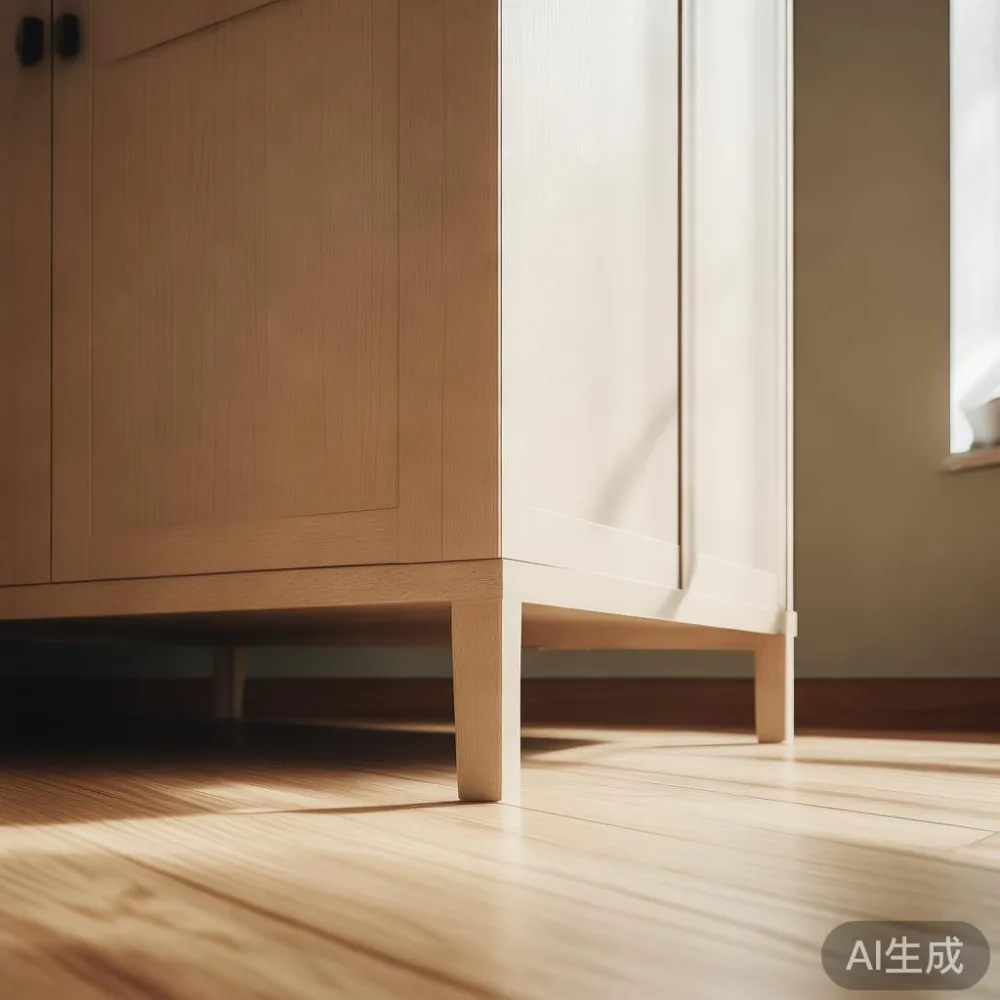
Top 10 Mid-century modern furniture lists can help with style direction, but evaluate each piece for the room’s actual proportions. A mid-century silhouette works beside a 170 cm wardrobe when the cabinet has tapered supports, restrained handles, and warm timber. If the wardrobe is a French-style statement piece, the rest of the room can remain simpler.
Finally, compare several widths on the floor plan before paying. A 150 cm wardrobe may leave 105 cm of clear passage in a 3.2 m wall run, while a 210 cm version leaves only 45 cm. The smaller option is usually easier to use, but the right answer depends on storage needs, room dimensions, and delivery access. Measure twice, request the carton specifications, and choose a wardrobe that supports daily routines rather than merely filling the largest wall.