Caring for a Lacquered Wardrobe in Singapore's Tropical Climate
I keep a small notebook of every wardrobe-related question customers send me from Tampines, Bedok, and Punggol, and one topic comes up more than any other during the June to September monsoon: how to keep a lacquered wardrobe looking new when the humidity hovers around 80 to 90 percent. Last month I visited a 4-room HDB flat in Bedok Reservoir where the homeowner had positioned a 240 cm wide three-door lacquered wardrobe directly across from a window that gets western afternoon sun. Within eighteen months, the panels had developed a faint orange-peel texture and the edges had begun to haze. The finish was not bad — it just had not been matched to the room. That visit, and the dozens like it that my colleagues in our 3,000 sqm Foshan workshop have logged over the past decade and a half, is the reason I want to put everything we know about lacquer care in one place for Singapore readers.
Why Tropical Humidity Is Harder on Lacquer Than You Think
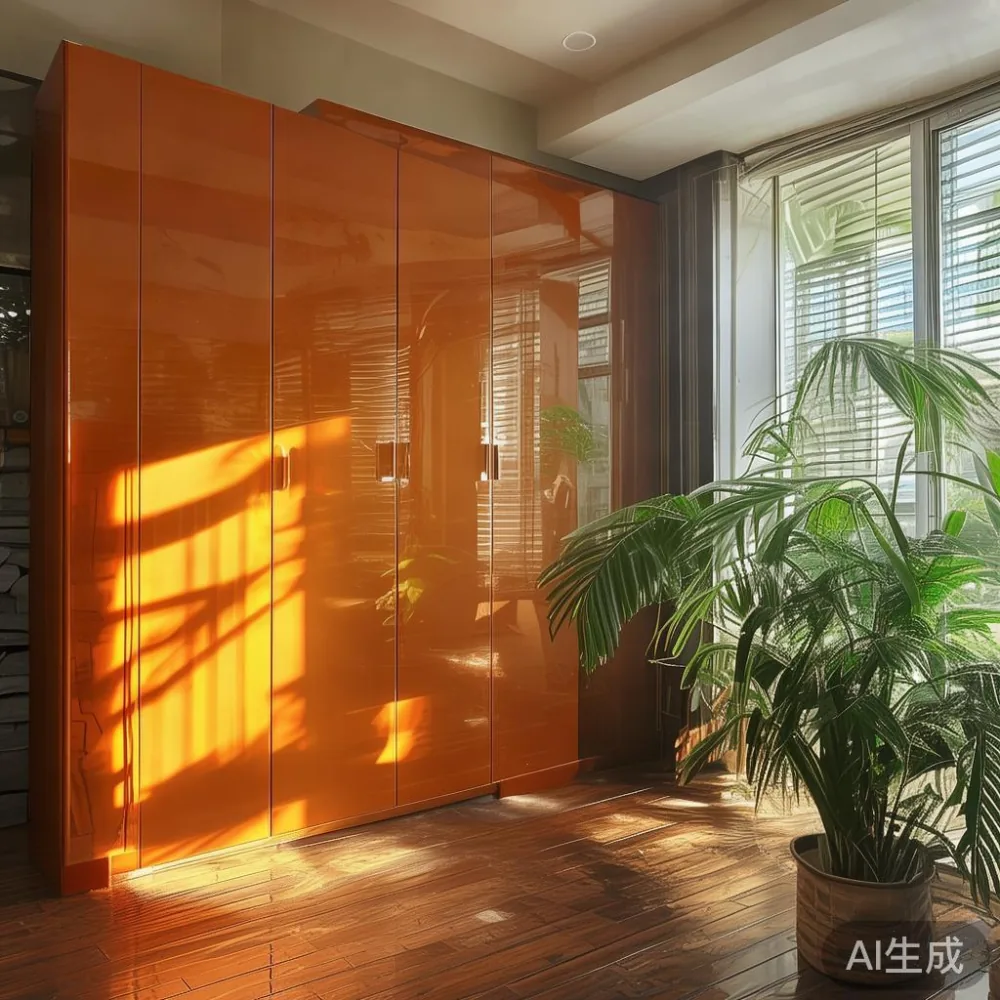
Most lacquered wardrobes sold in Singapore are finished with either a nitrocellulose lacquer, a pre-catalyzed acid-cure lacquer, or a two-component polyurethane. All three are moisture-resistant once fully cured, but the curing window is the danger period — typically the first 14 to 30 days after the finish is applied in the factory. A lacquered wardrobe that ships from our Foshan facility spends roughly 18 to 22 days inside a 40 HQ container, and during that voyage the air inside the box can reach 95 percent relative humidity. By the time the wardrobe is uncrated in your HDB living room, the lacquer film has already absorbed and released moisture several times. This is why a piece of furniture you spent SGD 2,400 to SGD 6,800 on can arrive looking perfect and still develop micro-checking within the first wet season.
The second issue is thermal cycling. A typical HDB bedroom in Punggol Field or Tampines GreenRidge runs at about 27 to 29 degrees C with the air-con off and drops to 23 to 24 degrees C when the unit runs. That 5 to 6 degree swing, repeated every night, causes the wood substrate beneath the lacquer to expand and contract by roughly 0.3 to 0.5 percent across its width. Lacquer is rigid; wood is not. Over a year, that mismatch creates the faint cloudy patches you sometimes see on the upper panels of a 180 cm by 60 cm by 220 cm wardrobe, exactly where the doors meet the ceiling — the spot with the least air movement.
What Is the Right Indoor Climate for a Lacquered Wardrobe?
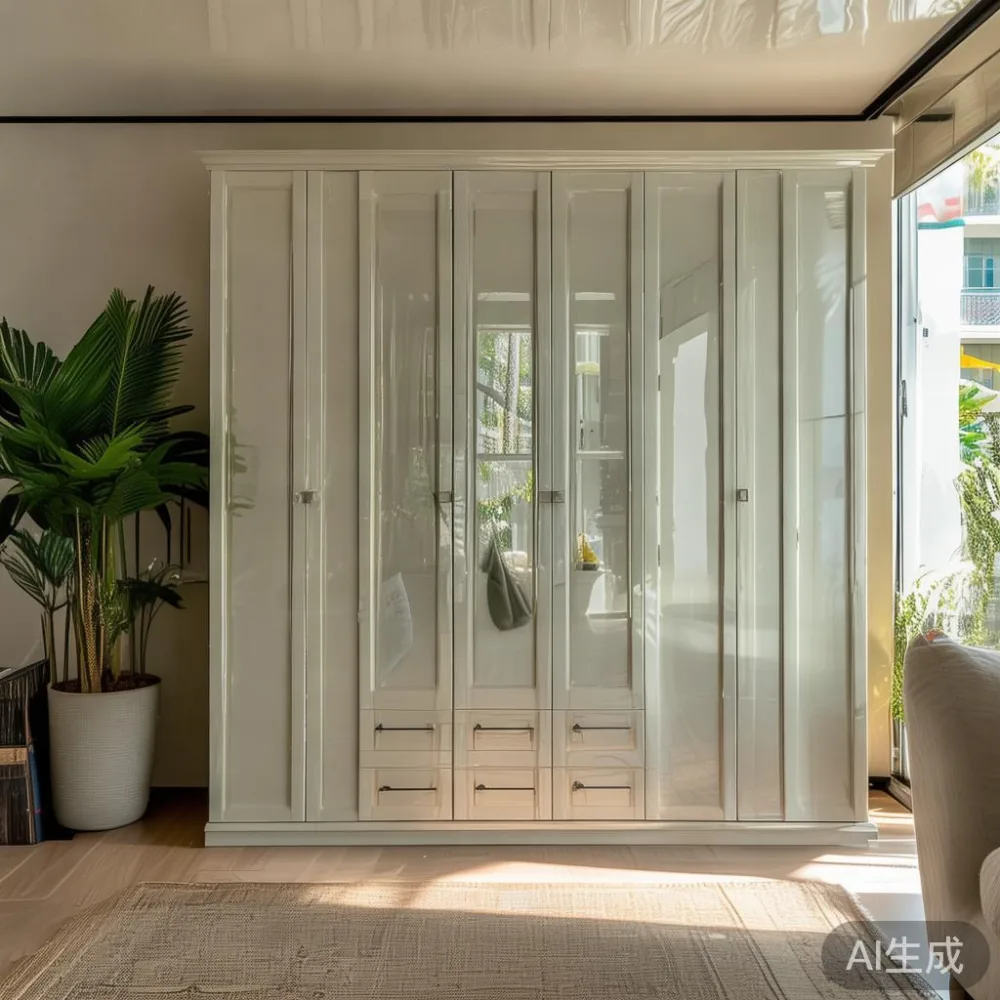
For a lacquered wardrobe, the target range is 45 to 60 percent relative humidity at 22 to 26 degrees C. In Singapore, you will rarely achieve that without mechanical help. A 12,000 BTU inverter air-conditioner set to 24 degrees C will typically pull a 14 sqm bedroom down to 50 to 55 percent RH within 90 minutes. Pair that with a desiccant dehumidifier rated at 8 to 12 litres per day, and you create a stable microclimate inside the wardrobe cavity too. For homeowners who worry about the SGD 0.18 to SGD 0.24 per kWh cost of running both, the practical compromise is to run the dehumidifier on a hygrometer trigger set to 60 percent, which usually means 6 to 8 hours of operation per day, costing roughly SGD 4 to SGD 7 per month.
Air circulation matters as much as humidity. A wardrobe placed flush against a feature wall with no rear gap will trap moisture behind the carcass. The international furniture standard calls for a 25 to 40 mm rear standoff; in our Singapore deliveries we add a pair of 8 mm felt pads at the top corners specifically to maintain airflow even when the unit is pushed close to the wall. If you are customising a 4-door wardrobe for a 3.2 m by 0.6 m niche in a Punggol Waterway condo, ask the installer to leave a 30 mm gap at the top and route a slim LED strip there — the heat from the LEDs is just enough to discourage mould spores, and the wardrobe gains a soft ambient glow that suits the post-modern light luxury aesthetic many of our customers in District 19 prefer.
Is Italian light luxury accent chair furniture worth it?
Yes, Italian light luxury accent chair furniture is worth it for Singapore buyers who want understated silhouettes, soft mineral-tone fabrics, and metal trim that pairs with a lacquered wardrobe rather than competes with it. The phrase "light luxury" does not mean flimsy — it refers to a visual language where the ornament is restrained, the proportions are slim, and the materials do most of the talking. A solid wood frame under the upholstery, brass-toned legs in a brushed rather than mirror finish, and boucle or velvet in oatmeal, dove grey, or muted terracotta are the usual moves. When you place one of these chairs beside a wardrobe finished in warm ivory lacquer, the room reads as a complete suite rather than a collection of unrelated pieces, which is the point of choosing this design direction in the first place.
The catch is that Italian light luxury is a finish vocabulary, not a guarantee of construction. Always check that the chair carries a structural warranty of at least five years, that the legs are solid beech or ash rather than hollow steel, and that the cushion fill is high-resilience foam at 32 to 35 kg per cubic metre density wrapped in a down-proof cambric ticking. A solid wood sofa from the same collection will share those specifications, and so will a matching nightstand, which means you can build a bedroom around a single design brief instead of mixing four or five suppliers. We supply the Italian light luxury line for projects as small as a single accent chair and as large as a 12-piece condo fit-out, and the colour matching between, say, an Italian light luxury marble garage storage panel and a wardrobe door is consistent to within a Delta E of 1.5, which the eye reads as identical under normal lighting.
How Should You Clean a Lacquered Wardrobe in Singapore?
The single most common mistake I see is using a generic all-purpose cleaner. Lacquer — even post-catalyzed polyurethane — does not tolerate d-limonene, ammonia, or sodium hydroxide. Any of those will dull the sheen within three or four wipes. The correct routine uses two cloths and one solution: a microfibre cloth at 220 to 260 gsm, a second dry microfibre for buffing, and a solution of 1 part 70 percent isopropyl alcohol to 9 parts distilled water, applied as a mist, never poured. Wipe with the grain, dry the panel within 30 seconds, and buff in a circular motion with the second cloth.
Frequency matters. During the December to March dry season, dust every 7 to 10 days. During the May to September monsoon, dust every 4 to 5 days and run the damp-cloth pass every 14 days. For a 240 cm wardrobe with four doors, the full routine takes about 12 to 15 minutes. Avoid silicone polishes — they leave a film that attracts dust and yellows under UV exposure, both of which are intense in Singapore, where horizontal UV irradiance reaches 800 to 1,000 W per sqm at midday. If a panel has light surface scratches, a single-stage lacquer polish such as a wax-free Mohawk or equivalent applied with a soft pad will restore 80 to 90 percent of the gloss in one pass.
What About Stains, Water Rings, and Sticky Drawer Slides?
Water rings are almost always caused by wet bathrobes, gym bags, or umbrellas left on the wardrobe top for more than 20 minutes. If the ring is fresh (under 12 hours), place a cotton towel over the mark and press with a warm iron set to silk temperature for 8 to 12 seconds. The heat re-fuses the lacquer film and the towel absorbs the trapped moisture. If the ring is older than 24 hours, the lacquer has whitened at a molecular level and the panel needs professional refinishing. Our MIDHILL service desk handles roughly 40 to 60 such cases a year from Singapore alone, and we refinish affected panels in our Foshan workshop for about SGD 180 to SGD 320 per door depending on size, with return shipping of 14 to 21 days.
Sticky drawer slides on a 60 cm wide nightstand or wardrobe internal drawer are usually caused by either humidity swelling the solid wood side panels or by lubricant migration in the soft-close damper. A standard 35 mm ball-bearing slide tolerates 0.5 mm of swelling before friction rises sharply. Wipe the runners with a dry cloth, apply one drop of 3-in-1 oil at each ball-bearing, and cycle the drawer 8 to 10 times. If the drawer still sticks after that, the panel has swollen beyond tolerance and needs a 0.5 mm sanding pass by a technician — do not attempt this yourself, as over-sanding a 16 mm side panel compromises the dowel joints.
How Can You Match a Wardrobe to the Rest of the Room?
A lacquered wardrobe is a large visual block, often 200 to 240 cm tall and 180 to 300 cm wide, which means its colour sets the temperature of the whole bedroom. In the American light luxury tradition — slightly warmer than Italian, slightly less formal than French — the wardrobe is usually finished in bone white, champagne, or a soft greige, and paired with a solid wood bed frame in white oak at 600 to 800 mm finish depth. French light luxury, by contrast, leans into ivory and pale taupe with brushed bronze handles, and pairs a wardrobe with a marble table on a slim brass base for a dressing corner. Post-modern light luxury is the most permissive: lacquered panels in dusty blue, sage, or terracotta are acceptable, especially in a Punggol condo where the developer palette already includes accent walls in muted earth tones.
Whatever style you choose, keep the undertones consistent. A wardrobe in cool ivory reads as out of place next to a warm oak dining table, and vice versa. If you already own a solid wood sofa in a warm tone, do not buy a wardrobe in a cool grey — pick up the sofa's undertone in a champagne or honey lacquer. The same logic applies to your nightstand and your dining table: a matching suite reads as intentional, while a mixed suite reads as a clearance sale. At MIDHILL we sample-match every wardrobe, nightstand, and dining table in a suite under the same D65 light source before shipment, which is why a six-piece order from the same collection arrives with consistent sheen levels from piece one to piece six.
How Often Should You Refinish a Lacquered Wardrobe?
A properly maintained lacquered wardrobe in a Singapore bedroom will hold its gloss for 8 to 12 years before a full refinish is needed. Spot refinishing — for one or two damaged doors — can extend that interval indefinitely. Our lifetime refinishing service, which is included with every wardrobe shipped from our Foshan workshop since 2008, costs the customer only the return freight, which from Singapore to Foshan and back runs roughly SGD 380 to SGD 520 for a 240 cm four-door unit via a 20 ft shared container. Turnaround is 35 to 50 days including sea transit. If a full wardrobe is being replaced rather than refinished, the structural warranty covers manufacturing defects in joints and lacquer adhesion for ten years from delivery, and the warranty extends door-to-door, including the SGD 60 to SGD 120 of GST assessed on replacement parts.
For households that prefer to refinish in place, a Singapore-based refinisher will charge about SGD 600 to SGD 1,100 per door for on-site work, which is competitive with the shipping cost only if more than four doors are involved. For one or two doors, shipping back to the factory is usually cheaper and produces a better result, because the panel can be sprayed under controlled conditions with the original lacquer formula on file. Whichever path you choose, refinish before the underlying wood darkens, because once the wood oxidises beyond the stain tone of the rest of the wardrobe, a patch will never match perfectly. Schedule a check at year 6 to year 8 in a climate-controlled bedroom, or year 4 to year 6 in a room without air-conditioning.
Practical Tips for Delivery Day and the First 30 Days
Singapore HDB corridors are typically 1.2 to 1.5 m wide and lifts are 1.0 to 1.4 m deep with door openings of 0.9 m. A 240 cm wardrobe in its crate measures roughly 245 cm by 65 cm by 225 cm, so it will not fit through a standard HDB lift if the crate is taller than 215 cm or wider than 130 cm. We build our export crates to a maximum external dimension of 224 cm tall, 128 cm wide, and 65 cm deep specifically to clear Punggol and Tampines lift shafts, and we tilt the crate at a 15 degree angle on a piano dolly to work through the 90 degree turn from lift to corridor. Allow 45 to 75 minutes for the two-man delivery team to bring the wardrobe from the lift to the bedroom, uncrate it, and lift it onto its base.
During the first 30 days, keep the wardrobe away from direct sunlight — close the bedroom curtains between 11 am and 3 pm — and run the air-conditioner or dehumidifier for at least 18 hours a day. Do not place wet laundry, gym bags, or freshly steamed clothing on top of the wardrobe. Do not stick tape or suction hooks to the lacquered surface, because the adhesive can lift the film within 48 hours. After 30 days, the lacquer film is fully cured and the wardrobe is ready for normal use, with the maintenance routine described above keeping it in showroom condition for the next decade.
Final Notes on Long-Term Ownership
A lacquered wardrobe is a 15 to 25 year piece of furniture if you treat it correctly. The most common reasons for premature replacement in Singapore are not manufacturing defects but environment-related — high humidity without dehumidification, direct western sun without curtains, and cleaning with the wrong product. None of these are expensive to prevent. A SGD 160 dehumidifier, a SGD 25 hygrometer, two SGD 8 microfibre cloths, and 30 minutes of attention per month will protect an investment of several thousand dollars and keep the wardrobe looking the way it looked on delivery day.
Whether your home leans Italian light luxury with a marble garage storage panel as a side accent, American light luxury with a solid oak bed frame, or post-modern light luxury with dusty blue lacquer panels, the care routine is the same. Treat the wardrobe as a finished surface that deserves the same attention you would give a leather sofa or a marble table, and it will repay that attention for two decades. If you ever need a hand — whether it is a quick answer about a sticky drawer, a quote for a refinish, or a custom wardrobe in a non-standard width up to 320 cm — our Foshan team is on email six days a week, and we ship directly to Singapore with a typical lead time of 28 to 38 days including production and sea transit.