Matching Furniture to a Warm Minimal Interior Design
A warm minimal interior is not an empty room. It is a space where pale timber, soft textiles, disciplined storage and a few sculptural pieces create comfort without visual clutter. For Singapore homes—especially HDB flats in Tampines and Bedok, and newer condos in Punggol—the right proportions matter as much as the finish. A wardrobe can frame an alcove, soften a hard corner and make a compact bedroom feel deliberate rather than constrained.
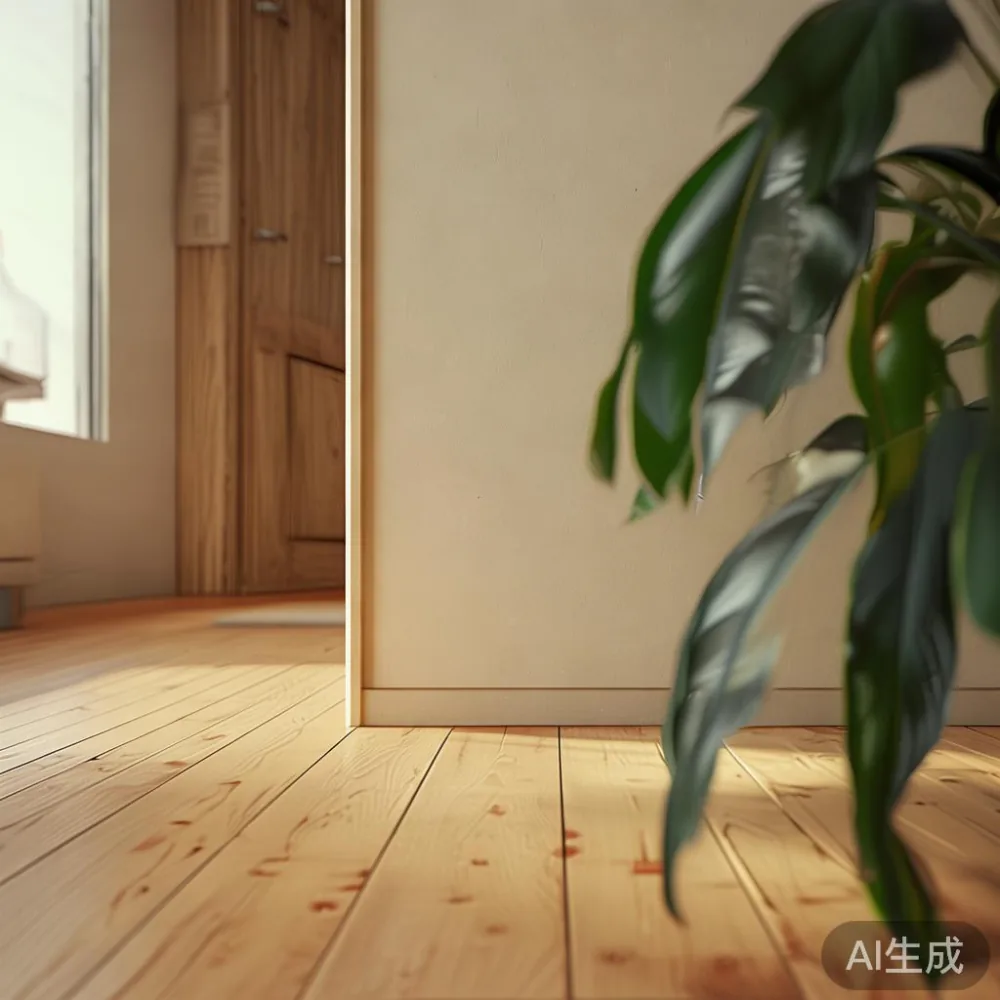
This guide explains how to coordinate a solid wood wardrobe with a solid wood sofa, bed frame, dining table, nightstand and marble table while preserving the airy character of a warm minimal home. Measurements are given in centimetres, delivery targets in working days, and example prices in Singapore dollars, including GST where indicated.
What makes a warm minimal interior work in Singapore?
Warm minimalism relies on contrast: light and shade, smooth and textured, architectural and tactile. European white oak or pale ash gives the room a natural foundation, while oiled walnut can add depth without making a small apartment look heavy. Keep the main timber tone within a narrow range—ideally no more than 2 shades apart—and introduce warmth through lighting, rugs, linen and stone rather than a crowded collection of furniture.
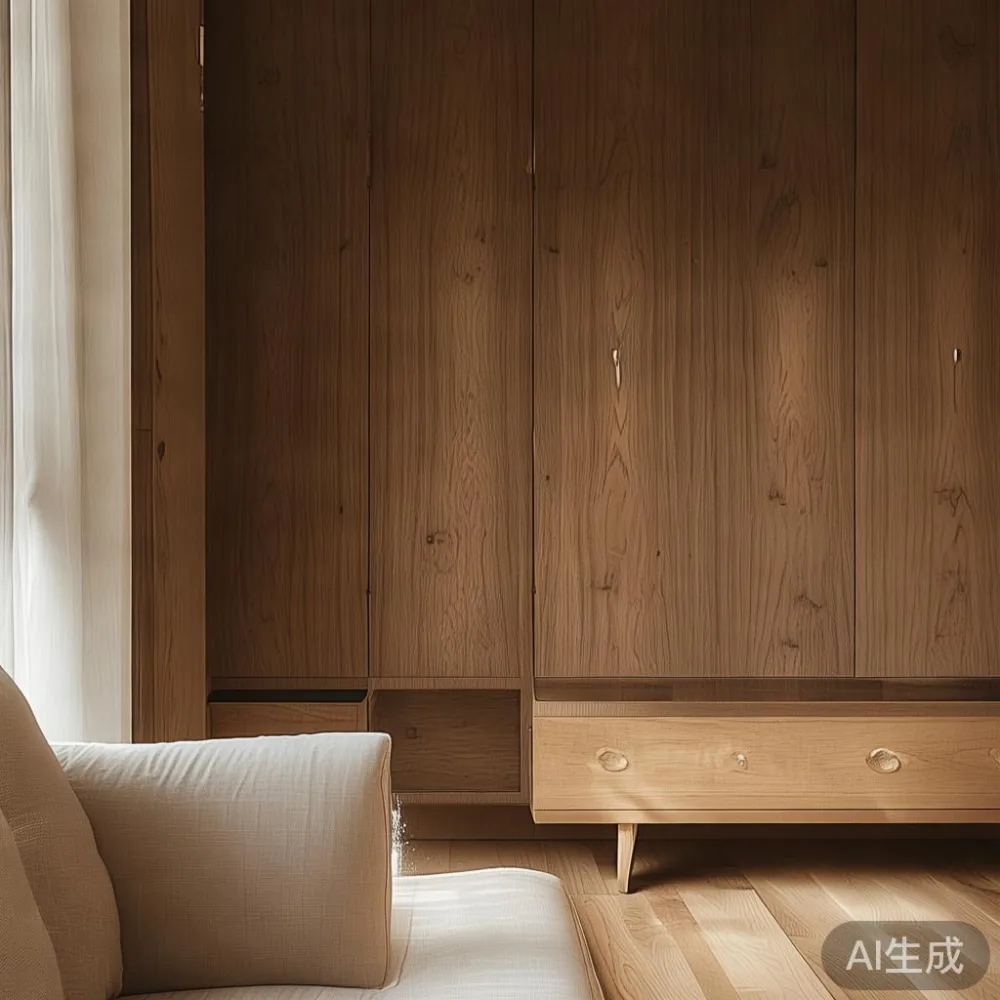
Colour temperature also affects the result. Aim for bulbs around 2700K to 3000K, with a CRI of 90 or above. This produces a gentle amber glow that complements oak and makes brass fittings look intentional. In a compact HDB living room, use 2 or 3 lighting layers instead of one bright ceiling fixture: a 30 cm table lamp, a 45 cm floor lamp and indirect ceiling light at approximately 60% brightness after sunset.
Before moving or ordering furniture, measure circulation routes. A standard HDB lift interior may be roughly 100–110 cm wide and 120–140 cm deep, though older blocks vary. Corridors can be narrower at turns. A wardrobe carcass of 180 cm or 200 cm width can still be delivered, but check the route from the loading point to the bedroom, including door handles, skirting and lift buttons. The manufacturer should confirm the packed carton dimensions rather than relying on the assembled size.
How do I choose a wardrobe for a warm minimal bedroom?
Begin with the wall, not the catalogue. In a typical 3-room HDB bedroom, a wall length of 300 cm can accommodate a 240 cm wardrobe with 60 cm remaining for a nightstand or a 30 cm clearance on each side. In a Punggol condo with a recessed alcove, the wardrobe can be built more precisely, but leave access to sockets, service ducts and the dust shaft.
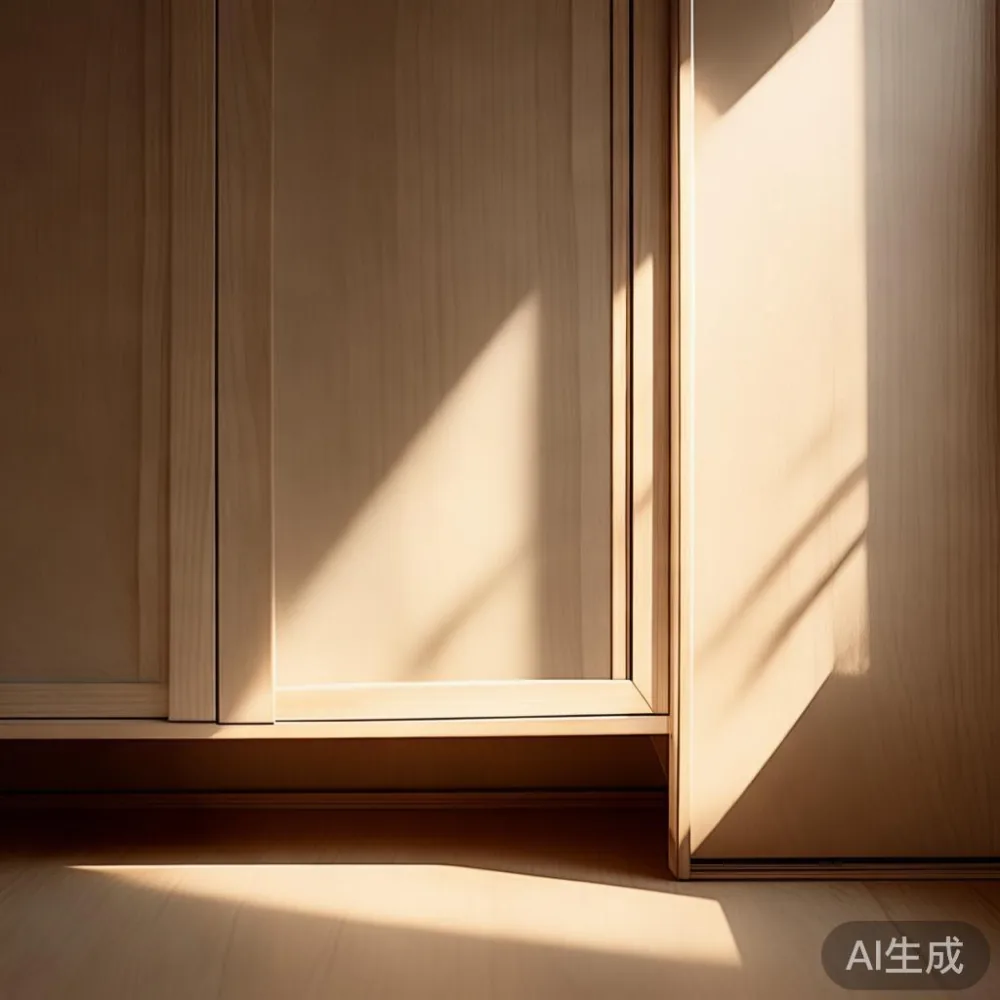
For a lighter visual effect, use a full-height wardrobe with flat fronts and minimal handles, but avoid a wall of identical pale panels. Pair warm white or oatmeal doors with pale oak frames, or use matte greige fronts with a narrow timber reveal. A slightly darker interior can help the eye read the wardrobe as a deep architectural recess. Sliding doors can reduce the swing clearance to about 6–8 cm, while hinged doors need roughly 90 cm in front for comfortable use.
If you are comparing current European collections, the phrase best French wardrobe for 2026 is useful as a style checkpoint, but French light luxury is not defined by ornate carving. Look for restrained joinery, balanced proportions, fluted or reeded detail used sparingly, and muted hardware in brushed nickel, aged brass or dark bronze. A 220 cm wardrobe with 3 doors, 4 hanging rails, 2 drawers and interior LED strips might retail from SGD 2,900 to SGD 4,600 before GST, depending on timber and hardware.
For American light luxury, the wardrobe often has deeper carcasses, more generous drawer boxes and straightforward Shaker or flat-panel fronts. A 200 cm solid ash model with 6 drawers might cost SGD 2,400 to SGD 3,800 before GST. Post-modern light luxury offers another route: simpler geometry combined with one expressive finish, such as a fluted oak door section against smooth cream panels.
Choose the internal layout around actual clothing volumes. Allow at least 55–60 cm for most hanging garments, 40–45 cm for folded trousers and shirts, and 35–40 cm for a drawer stack. Heavy coats need deeper hanging space of 65 cm. Internal shelves should be adjustable at 5–8 cm intervals if household heights vary. Confirm the carcass material, drawer construction and warranty in writing; appearance alone does not establish durability.
How should the wardrobe relate to a bed frame and nightstand?
The bed should feel visually connected to the wardrobe, yet separate enough to remain the bedroom’s focal point. A low solid wood bed frame in pale oak can sit beside an off-white wardrobe with slim black or bronze legs. Keep the bed’s headboard below the wardrobe’s horizontal lines, or repeat one narrow element—such as a 3 cm timber reveal—in both pieces. Avoid matching every component perfectly, which can make the room feel overly coordinated.
Scale is the key measurement. For a queen bed measuring 155 × 200 cm, leave 60–75 cm between the bed and a side wall for a nightstand and passage. A 45 cm-wide nightstand with a 40 cm top is suitable for a bedside lamp, a 13-inch laptop and a glass of water. A solid wood nightstand in oak may cost SGD 320–650 before GST. Its drawer should move on smooth runners, and its footprint should not block the wardrobe door.
Textiles can bridge the finishes. Use cotton or linen bedding in cream, taupe, dusty olive or muted clay, with 2–3 pillows rather than a dense arrangement. A 230 × 250 cm rug extending 50–70 cm beyond each side of the bed will visually connect the frame to the wardrobe. In a small room, the rug should sit under at least the front legs of the bed and the nearest nightstand.
Lighting improves the relationship. A wall-mounted reading light 120–140 cm above the floor can clear a 95 cm headboard. If a table lamp is used, choose a shade with a broad base to prevent tipping. Set it around 2700K and keep cords out of the walkway. This functional restraint is central to warm minimalism: every visible line should feel useful.
How do I style an American wardrobe in an apartment?
Knowing how to style American wardrobe in apartment interiors is largely a question of proportion, utility and controlled contrast. American light luxury typically favours clean, craftsman-like construction and solid timber rather than thin decorative veneers. In an apartment, that can work well when the wardrobe is fitted to the available wall and its darker tones are balanced by white walls and pale floors.
One dependable arrangement places a 200 cm walnut-toned wardrobe along the longest bedroom wall, with the bed frame centred opposite it. If the bed is 155 cm wide, this leaves about 22 cm on each side—an intentionally tight but workable layout for a compact flat. Use sliding wardrobe doors if the opposite route needs more clearance. The door faces can be warm white, while the carcass remains natural timber, preventing the wardrobe from reading as a heavy dark block.
For HDB storage, consider the volume above or beside the wardrobe rather than filling it with more objects. Closed storage should carry most visual weight. Limit open shelving to 2 bays, each no more than 35 cm wide, and display 3–5 items such as a woven basket, 2 books and a ceramic vessel. The basket should have a labelled front rather than exposed fabric spilling over the edge.
A compact dressing table can replace a second nightstand. A 90 cm solid wood dressing table with 2 drawers might retail for SGD 420–780 before GST. Pair it with a 35–40 cm round mirror, which echoes circular details without competing with the rectangular wardrobe. For local conditions, specify moisture-resistant finishes for surfaces near windows and allow 3–5 cm behind movable furniture for air movement.
What living-room pieces keep the style warm rather than severe?
A solid wood sofa is the main centrepiece. Choose a low-back model in oatmeal, mushroom or sand-coloured fabric, ideally with solid wood feet visible beneath the frame. A 220–240 cm three-seat sofa suits most 3-room HDB living rooms, while a 180–200 cm two-seat version preserves circulation in smaller units. Seat depth around 55–58 cm is practical for daily use, and the frame should be kiln-dried hardwood with joints that can be warranted for 10 years.
When comparing silhouettes, the question American sofa vs Italian light luxury sofa comes down to construction and visual emphasis. American light luxury often prioritises a generous, upright profile and deep seat; Italian styling may use lower profiles, sleeker arms and more refined textile detail. Neither requires an oversized footprint. A 210 cm solid wood sofa with a fixed beige linen-look cover might cost SGD 2,200–3,600 before GST.
In a multipurpose HDB flat, consider a european sofa bed with storage if the living room also serves as a guest room. A 190–210 cm unit may include a concealed 140 × 190 cm sleeping surface and 40–60 cm of internal storage. Check the fully extended depth and the mattress height, because guests should not need to climb over a high edge. This is especially relevant in Tampines, where family members may frequently convert the living area into an overnight room.
Balance the sofa with a round marble table rather than several small tables. A 90 cm diameter marble table with a solid wood base works beside a three-seat sofa, while a 60 cm round side table fits a two-seat model. Warm veining or soft cream stone complements pale oak; high-contrast black marble may feel too severe in a small room. If a marble table is between SGD 1,100 and SGD 2,200 before GST, confirm the slab weight, because a 90 cm stone top can weigh 60–90 kg.
Use one material-focused layer on the floor: a 160 × 230 cm wool-look rug in sand, or a handwoven rug with a restrained geometric pattern. Add a timber tray, 2 ceramic objects and a stack of 3 books. Curtains in warm white should fall from 15 cm below the ceiling track to 1–2 cm above the floor, making the room taller and softening hard Singapore apartment finishes.
How can a dining table complete the warm minimal home?
The dining table establishes the rhythm of the home, but it should not overpower the wardrobe or compete with the solid wood sofa. A rectangular solid wood dining table measuring 160 × 90 cm seats 6 in compact settings, while 200 × 100 cm seats 8 with more elbow room. Allow at least 90 cm around the table; 75 cm is the minimum at a non-traffic edge. For a 4–6 person HDB dining zone, a 140–160 cm extension table can be more useful.
Choose a finish that repeats, rather than duplicates, the bedroom timber. Pale oak dining table with a matte finish can connect with an oak wardrobe frame and solid wood bed frame, while a warmer walnut nightstand can bridge the room. Rounded ends or softened corners make a rectangular table feel gentler and improve movement around it. A 160 cm oak dining table might cost SGD 1,300–2,300 before GST.
Keep the tabletop mostly clear. Use one low ceramic bowl or a linen runner approximately 40 cm wide and 180–220 cm long, plus 1–2 napkins at each place. Pendant lights should hang roughly 70–90 cm above the table; warm 2700K bulbs flatter timber and food photography. In an open kitchen-dining area, repeat the same light temperature used beside the wardrobe to make the whole apartment feel coherent.
The dining table can also provide the marble accent. A small 40–50 cm marble side table can stand near the dining area without adding visual weight, or a marble table can serve as the coffee table in the living room. Do not use both heavily veined surfaces in one compact zone. Warm minimalism depends on restraint: pale wood carries the room, stone adds one cool note, and textiles provide softness.
What should I check before ordering from a Singapore furniture supplier?
Check the maker’s specifications and service terms before payment. MIDHILL has operated since 2008 and exports to more than 15 countries. Its solid wood furniture includes a 10-year structural warranty and a lifetime refinishing service, while free shipping applies to orders over US$350, equivalent to approximately SGD 470 before exchange-rate movement. The 14-day return period is another point to confirm in the order terms, including packaging and collection conditions.
Local currency is convenient, but compare the total payable in SGD and ask whether GST is included. For example, a wardrobe at SGD 3,200 before GST becomes SGD 3,520 at the current 10% GST rate. Obtain a pro forma showing product, GST, delivery and any stair or lift surcharge. International freight, customs and insurance may be arranged separately, so clarify who pays each item and when the goods enter Singapore.
Delivery timing should be stated in working days. A made-to-order wardrobe might take 35–60 days for production, followed by 7–14 days for international delivery and local dispatch. Stocked items may ship sooner, but furniture is still vulnerable to heat and humidity in transit. Request the packed carton dimensions, gross weight and delivery appointment method. A 220 × 60 × 225 cm wardrobe carton may weigh 95–140 kg, so a 2-person carry-in crew may be insufficient.
Inspect upon arrival. Check the corners, doors, drawer runners, finish consistency and any impact marks before signing. Photograph the packaging and furniture. A 10-year structural warranty should distinguish frame or joint failures from surface wear, while lifetime refinishing should define eligible finishes, customer labour and transport. Keep the invoice, care instructions and warranty documents in one digital folder.
My colleague visited a client’s Bedok HDB flat last month to review a planned wardrobe installation. The lift was only 82 cm wide at the entrance and turned sharply into a 105 cm corridor. By measuring the carton—not just the assembled wardrobe—the team found that a planned 200 cm unit would not clear the turn, while a modular 180 cm configuration could be assembled inside the bedroom. That inspection prevented a delayed delivery and an unnecessary trolley transfer. In Singapore, a 5-minute access check can save more than 20 minutes of moving effort.
How do I create one coherent room without buying everything at once?
Start with the largest fixed piece, usually the wardrobe or bed frame, and establish the timber direction and colour. Add the solid wood sofa only after confirming circulation. Introduce the dining table when the kitchen zone is ready, then complete each area with a nightstand, marble table, lamp and textile. This sequence prevents a good finish from being diluted by mismatched scale.
Use a simple colour formula: 60% warm white or pale neutral, 25% natural timber, 10% textile accent and 5% metal or stone. For a restrained apartment interior, this might mean cream walls, pale oak furniture, an olive or clay cushion and a small aged-brass lamp. Keep visible patterns to 2 types, and repeat each colour in at least 2 places so the eye reads continuity.
A void is part of the composition. Leave 20–30 cm between wall art and furniture, keep approximately 10 cm between a nightstand and bed frame, and resist filling every shelf. If an alcove feels bare, add one woven object or a small plant rather than a row of ornaments. Check plant placement away from direct afternoon sun and lift lobbies, where hot air can dry leaves quickly.
Finally, test the room at night. Close the wardrobe doors, sit on the solid wood sofa, lower the dining pendant and observe where shadows gather. Warm minimalism should still feel welcoming: enough texture to invite touch, enough storage to remove daily clutter, and enough light to make pale solid wood retain its character after sunset.