How Southeast Asian Humidity Affects Solid Wood Furniture in Singapore
Singapore’s warm, humid climate can change the size, shape and finish of solid wood furniture. In an HDB flat in Tampines, a wardrobe beside an external wall may experience a different humidity cycle from a unit facing a Bedok corridor. Air conditioning lowers moisture during the day, while household activities raise it again at night. Over 365 days, these repeated cycles can open fine joints, encourage mould around poorly ventilated areas and make lacquered surfaces look dull.
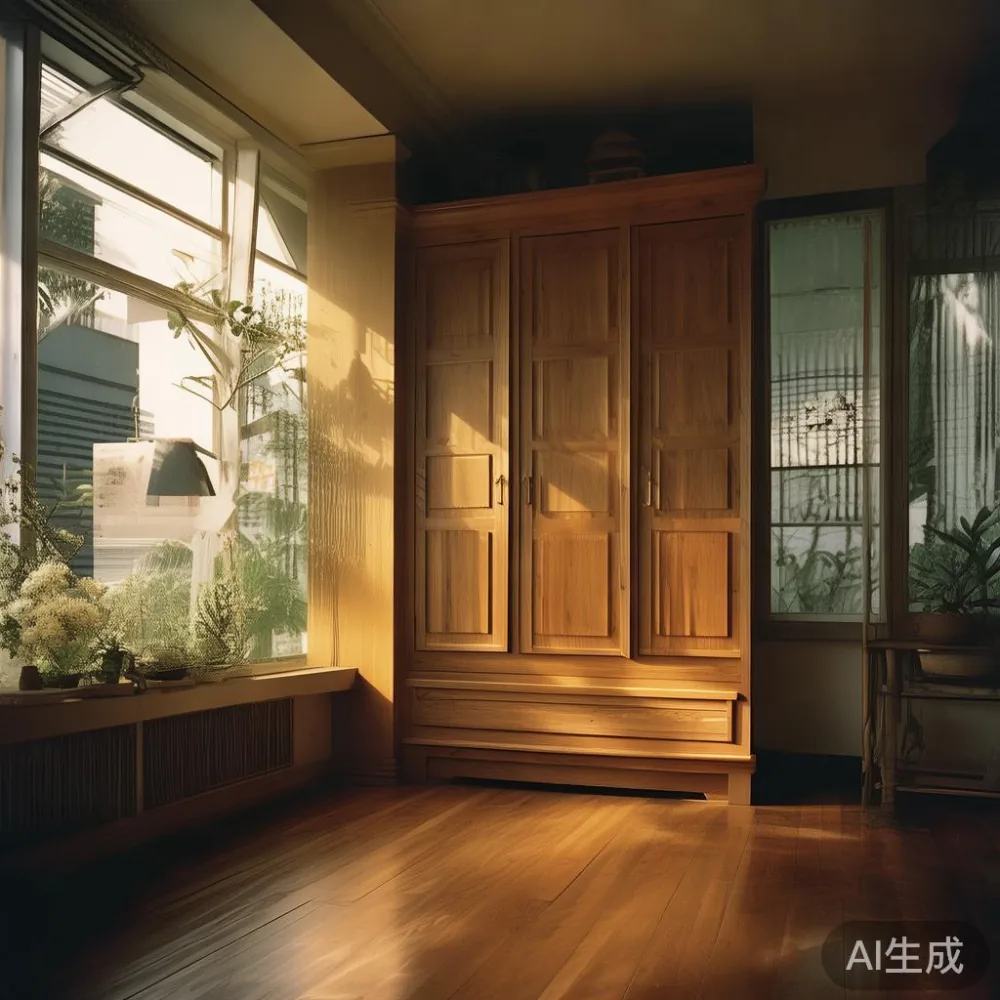
For furniture buyers, humidity is not simply a weather issue. It determines how a solid wood wardrobe is dried, sealed, installed and maintained. It also matters when comparing French light luxury styling with American light luxury proportions, because heavier visual details are less forgiving in compact rooms.
MIDHILL has made solid wood furniture since 2008 and exports to more than 15 countries. Its production experience is relevant in Singapore, where indoor relative humidity can move from roughly 45% to 75% across a day. The figures are practical planning guides, not promises that one product will remain untouched in every home.
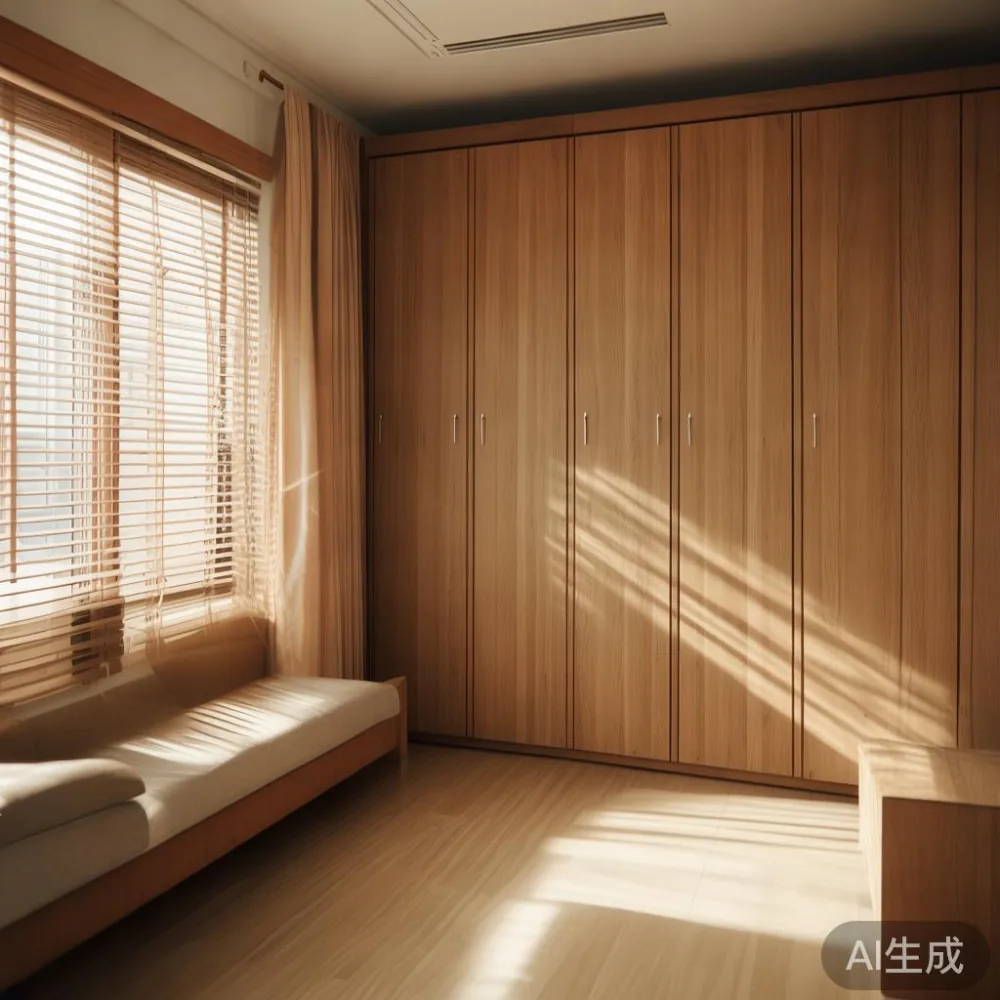
What is the ideal humidity level for a solid wood wardrobe?
A sensible indoor target is about 45% to 55% relative humidity, with ordinary short-term variation expected around that range. Sustained readings above 65% increase the risk of swelling, fungal activity and coating defects. Readings below 35% can cause timber to contract and very fine checks to become visible.
Wood moves because it is hygroscopic: it gains or releases moisture as the surrounding air changes. A 210 cm tall solid wood wardrobe may expand by several millimetres across its width during a humid period. That movement is manageable when the carcass, doors and installation clearances are designed for it. A cabinet forced tightly against a wall or wedged between fixed surfaces has nowhere to move.
Place a calibrated hygrometer near the wardrobe rather than beside a running air conditioner. Check it at about 8 a.m., 3 p.m. and 10 p.m. for 7 days before delivery day. Record readings beside the top, middle and base if the unit stands near a bathroom wall or external corner. A target within the 45% to 55% band is more informative than one isolated reading.
Allow the wardrobe to acclimatise for 5 to 7 days in the intended room. Remove packing film or protective cardboard during that period, but retain any foam blocks specified for transport. Do not position the unit where an air-conditioner outlet blows continuously for 12 or more hours a day.
How does Southeast Asian humidity damage solid wood?
The main damage pathway is repeated movement rather than one dramatic event. During the day, an HDB flat may heat up as exterior walls absorb solar energy. At night, doors and windows can be opened after cooking, showering or hanging laundry. The resulting moisture swings act on every exposed timber surface.
Oven-dried wood can still react in Singapore. A kiln may reduce moisture content to approximately 8% to 12%, depending on the species and factory process. Local air can be much wetter. If a 25 kg solid wood door absorbs moisture and swells, the movement may pull a tight joint apart or put pressure on hinges. Over 10 years, repeated cycles can loosen fasteners and distort door alignment.
High humidity also affects finishes. Water-based coatings generally allow a breathable surface, while some films and lacquers can slow moisture exchange. Neither type should be treated as waterproof. A compromised lacquer edge can trap moisture against the timber, while a cracked coating can allow mould to establish on dirty surfaces.
Mould needs prolonged surface moisture to grow. It can appear within 24 to 72 hours where a wardrobe base meets a damp skirting board, if airflow is poor. Keep at least 8 cm of clearance where practical, clean gaps every 30 days and address condensation at windows or air ducts. White powder that brushes away may be mould residue; stop cleaning with water alone and have the moisture source checked.
Will humidity affect a French light luxury wardrobe?
Yes. French light luxury wardrobes often use fluted panels, layered cornices, satin hardware and pale oak or ash. Those details create a delicate look, but they also create more exposed edges and joints than a plain slab-door cabinet. Precise movement allowances are therefore especially important.
For a 240 cm wall in a Tampines flat, a 225 cm wide wardrobe can leave a 7.5 cm gap on each side. Actual allowances may vary according to the subfloor, skirting and neighbouring units. If the ceiling has a slight fall, a levelling shim may be needed at the taller side. Record the maximum height at 5 points and give the manufacturer those figures rather than relying on the corridor width.
American light luxury wardrobes tend to use broader profiles and stronger visual symmetry. The extra mass can make them stable in appearance, but a 120 kg cabinet still requires correct floor loading and moving planning. Check that the route can accommodate the packed carton: a 235 cm tall wardrobe might arrive in cartons about 238 to 242 cm long, which can exceed a turning angle even when the doorway is wide enough.
Post-modern light luxury styling can work well too, using fewer mouldings with restrained handles. Fewer projecting details can simplify humid-climate care, but the finish, ventilation and movement design still matter. Appearance does not remove the physics of moisture.
Can air conditioning protect a wardrobe?
Air conditioning helps by lowering room humidity and temperature, yet direct cold airflow can dry one side of a cabinet unevenly. If an outlet blows at a door for 8 hours daily, the finish may contract faster than the protected back. Position the wardrobe at least 60 cm away from a direct outlet when possible, and do not use a pedestal fan to aim continuously at its face.
In a Punggol condo, dehumidification may be useful during long periods of high outdoor humidity. In an older Bedok HDB flat, air circulation may matter more. A 30 to 50 L/day portable dehumidifier can help a room, though its rated capacity is measured under different test temperatures and may not reflect actual room performance.
Use extractor fans during cooking and bathing, close windows when outside air is very humid, and dry wet items outside the bedroom. Maintain air-conditioner filters on the maker’s schedule, often every 1 to 3 months in dusty conditions. Keep vents unobstructed because humidity accumulates in stagnant pockets.
Do not wipe a humid wardrobe with an oil-soaked cloth every week. Excess oil can collect dust and darken pale timber. Instead, use a soft dry microfibre cloth, and apply a compatible maintenance product only when the finish is clean and dry.
How should a 10-year structural wardrobe be protected?
A 10-year structural warranty is different from a promise that colour, sheen or dimensions will never change. Timber seasoning, minor surface checking and normal environmental movement must be understood before purchase. Ask the supplier which components are covered, including rails, panels, fasteners and joints, and document the delivery condition.
Inspect the wardrobe after delivery. Photograph the front, sides, top, back and base in daylight. Check door gaps against the maker’s specification, commonly 2 to 3 mm, and confirm that every hinge operates through about 100 to 110 degrees. Do not tighten every hinge aggressively; uneven adjustment can cause edge stress.
Keep cleaning and care predictable. Dust the surface every 7 to 14 days with a dry microfibre cloth. Wipe any spill within 15 minutes, then dry the area. Recheck the room hygrometer at the start and end of each wet season. If humidity stays above 65% for more than 5 days, improve ventilation or use dehumidification.
MIDHILL provides a 10-year structural warranty and lifetime refinishing for covered qualifying products. Confirm the scope before ordering, especially if the wardrobe will be installed in a coastal condo or a room with persistent dampness. A lifetime service promise is most useful when the original condition photographs, purchase record and maintenance history are available.
Which Singapore delivery details matter for a full-height wardrobe?
Measure the route before the delivery date, not after the furniture reaches the void deck. For an HDB flat, check the lift car dimensions, lift door width, landing turns and corridor clearance. A 210 cm lift door may accept a 205 cm tall carton vertically, but a corridor bend can still prevent safe turning.
For a full-height wardrobe, compare the packed unit with the narrowest lift opening and the tightest 90-degree turn. Allow at least 5 cm of working clearance for protection and handling. If the carton cannot pass, ask whether the wardrobe can be delivered in modular sections and assembled inside the bedroom.
Singapore’s GST is normally payable at 9% on taxable furniture purchases shown to consumers, subject to the applicable rules and any registered-status details. Request a clear quotation in SGD. Delivery timing should be agreed in writing; a production lead time of 45 to 75 days may apply to bespoke pieces, while stock models may ship within 7 to 21 days.
For local delivery, confirm whether the quoted service is curbside, room-of-choice or room-of-choice with assembly. A wardrobe often needs 2 trained installers, 15 to 45 minutes of unpacking and 60 to 120 minutes of assembly. Heavy parts can exceed 35 kg each, so a team lift or suitable trolley matters more than simply opening the door.
MIDHILL offers free shipping over US$350 for qualifying orders, but Singapore terms should still be confirmed during checkout. Check the currency, tax treatment, return window and damage procedure. The company’s 14-day return policy is useful for change-of-mind scenarios, but built-in wardrobes, installed kitchens and custom dimensions may have different conditions.
How can small flats use light luxury without making humidity invisible?
Keep the visual mass proportional to the room. In a compact Tampines flat, a 180 cm wide wardrobe with pale finishes can leave useful circulation space, but a 260 cm installation may dominate a 320 cm bedroom wall. Measure the remaining clearance: maintain about 60 cm beside a bed where possible, or at least 45 cm in a carefully planned layout.
Use one main material and one contrasting detail rather than many competing textures. For example, pair an oak carcass with matte-black rails and simple ceramic pulls. This approach supports French light luxury or post-modern light luxury without filling the room with bulky ornament. Keep vents and skirting visible enough to inspect for dampness.
A wardrobe is the natural centre of a bedroom because it is a large, stationary storage surface. Other pieces should support its scale. A slim solid wood bed frame with a low profile can preserve a calm sightline, while a small nightstand gives practical surface area without crowding the passage. Avoid placing a tall nightstand immediately beside a frequently opened wardrobe door.
If a dining table belongs elsewhere in the home, the same moisture rules apply: protect its surface from hot dishes, wet coasters and condensation. A marble table is not a humidity repair product, and a solid wood sofa should be kept away from damp walls. Good furniture decisions should answer the room’s environmental needs, not just its photographs.
What should I ask before buying a wardrobe in Singapore?
Ask for the timber species, moisture treatment, finish type, expected movement, hinge load, rail rating, assembly method and warranty exclusions. A clear supplier should explain how a 210 cm wardrobe responds to a 60% relative-humidity reading instead of implying that solid wood is inert.
Ask whether the back panel is ventilated, whether adjustable feet are included and how the unit is intended to meet uneven HDB floors. Request a drawing with dimensions in cm, including the door swing and 5 to 10 cm installation clearance. For a condo, also identify any sprinkler, gas pipe, electrical outlet or service panel that must remain accessible.
Ask for a written care schedule: dry cleaning, permissible cleaners, humidity targets and inspection intervals. Keep the manual with the receipt for at least 10 years, even if digital records remain available. If damage appears, stop repeated adjustment and send dated photographs showing the room reading with a hygrometer.
For broader product comparisons, phrases such as best Modern light luxury furniture and MIDHILL dining table review can prompt questions about materials and care, but they are not substitutes for local measurements. Likewise, if you are evaluating is Italian light luxury sofa worth it, examine frame warranty, fabric maintenance and delivery logistics. For room planning, how to style light luxury bed in room, Italian light luxury for small living room and how to style Japandi sofa in room are useful starting points, yet the same air and floor measurements still apply.
What is the practical humidity-control routine?
Begin with a week of readings, then repeat the routine every 3 months and at the start of each wet season. Keep the wardrobe between 45% and 55% relative humidity as far as the building permits. If it remains above 65%, close windows during the wettest afternoon period, run ventilation after bathing, and improve air movement around the cabinet.
Leave a 5 to 10 cm installation gap where safe, avoid direct air-conditioner outlets, and keep at least 8 cm beneath or beside the unit if the design allows it. Clean the base and skirting every 30 days. Check hinges, runners and door gaps every 6 months, and photograph any change for the service record.
Solid wood furniture can last for decades in Singapore when it is allowed to move, inspected regularly and protected from standing moisture. A wardrobe should be treated as part of the home’s climate system, not as an isolated decorative object. That measured approach supports long-term use and preserves the refined appearance expected from light-luxury design.