Humidity in Southeast Asia and Your Solid Wood Wardrobe: What Every Singapore Homeowner Should Know
I keep a small digital hygrometer clipped inside my own wardrobe at home, and last month during a wet spell in Punggol the reading sat at 82% for three days straight. The wardrobe itself is a 6-door solid oak piece from MIDHILL, three years old, and it has not cracked, cupped, or thrown off a musty smell once. That little instrument is the reason I started paying attention to humidity in the first place, and it is also why I want to share what I have learned with anyone shopping for a solid wood wardrobe in Singapore.
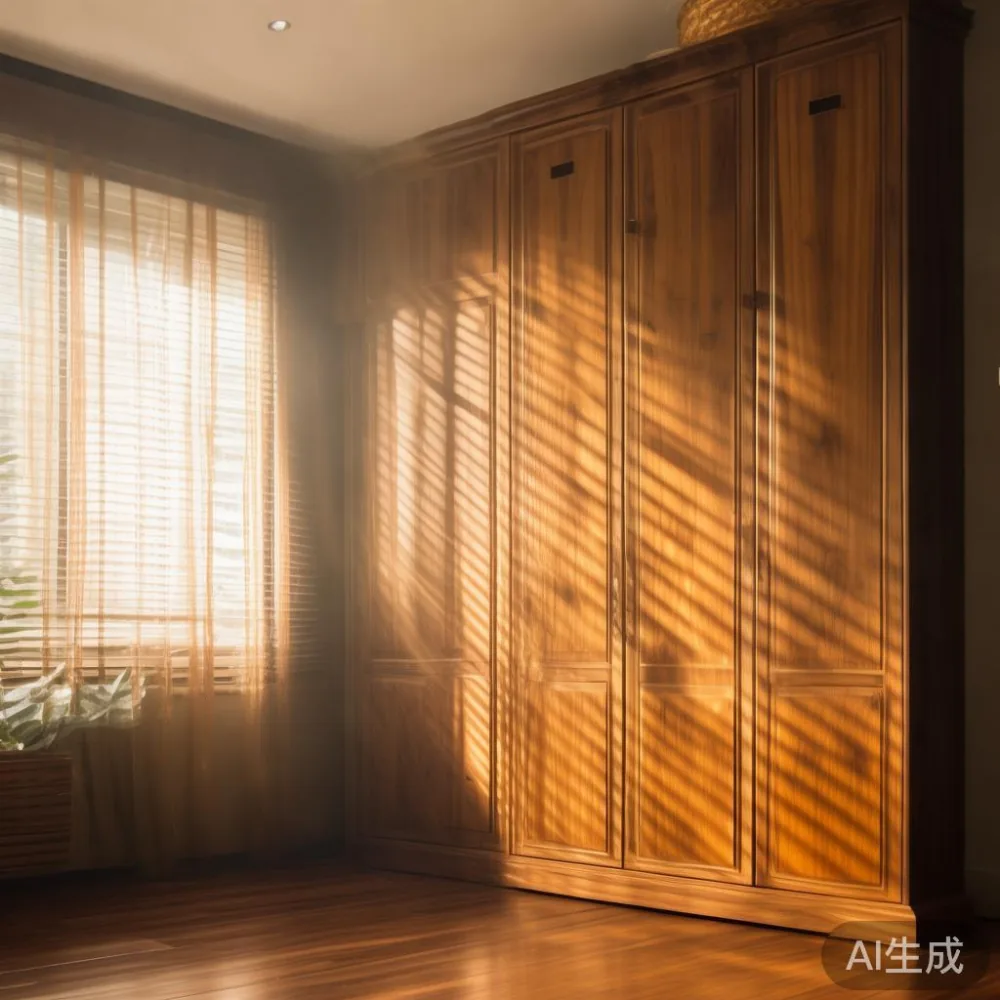
If you live in a Tampines HDB, a Bedok resale flat, or a high-floor condo in Punggol, you already know the air feels heavy for most of the year. Relative humidity routinely sits between 72% and 86%, and the daily swing during monsoon season can pass 12% between noon and midnight. Solid wood is hygroscopic, which means it physically absorbs and releases moisture from the surrounding air. A wardrobe built from kiln-dried oak or ash will gain or lose roughly 1% to 2% of its weight in water over a humid stretch, and that is enough to move timber by 2 to 4 millimetres across a 2-metre door panel. None of this is a defect. It is wood doing what wood has always done, and once you understand the rhythm, you can protect a piece for decades.
This guide is written for shoppers weighing a real solid wood wardrobe against laminated boards, MDF, or veneer-on-particleboard alternatives. I will cover how humidity affects each major component, what to ask a maker like MIDHILL before you commit, what a 14-day return actually catches, and what daily habits save a wardrobe over a ten-year span. I will also drop in a note on adjacent pieces, because the same rules apply to a solid wood bed frame, dining table, or nightstand, and because a wardrobe almost never arrives alone when a family is kitting out a new BTO.
Why does humidity matter so much for a wardrobe specifically?
A wardrobe is the largest single piece of joinery in most Singapore bedrooms, and it sits against a wall that often runs an exterior party wall or an air-con return. Its doors open and close 4 to 8 times a day, its panels are tall (typically 200 to 240 cm), and its horizontal surfaces catch a year of wardrobe-top clutter, dust, and the occasional forgotten laundry spray. All of that makes a wardrobe the canary in the coal mine for indoor humidity. A dining table might cup at the centre. A bed frame might creak at the slats. But a wardrobe shows trouble at the doors first, because door panels have the largest single span of exposed grain and the smallest margin of error.
In a Tampines 5-room flat with a north-facing bedroom, I watched a friend's laminated wardrobe grow a 2 mm gap along the top edge during the December northeast monsoon. The MDF core had absorbed moisture unevenly, the edge banding peeled back near the cornice, and the soft-close hinges lost their alignment within a year. None of those failure modes happen with a properly dried solid wood wardrobe, because solid wood moves as one continuous piece rather than as a sandwich of layers pulling apart.
Is French neoclassical furniture worth it for humid Singapore bedrooms?
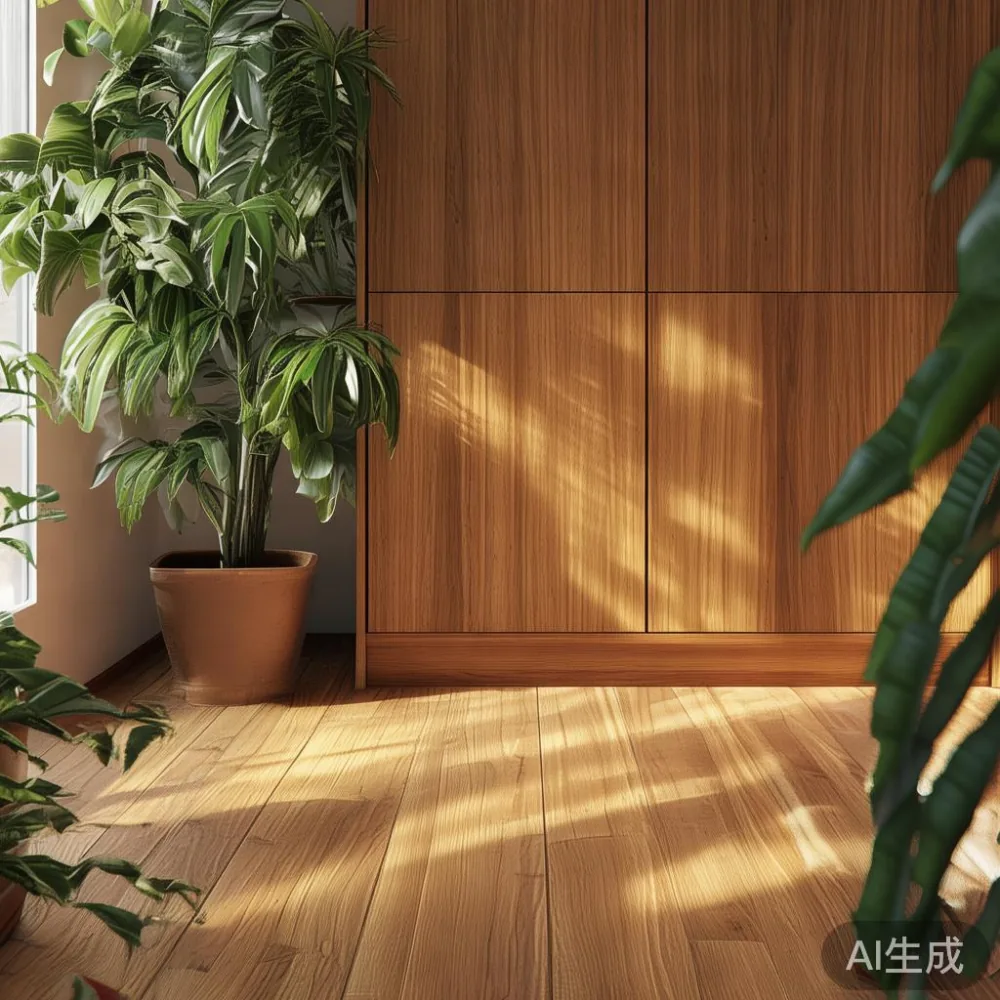
Yes, but only when the neoclassical lines are executed in properly kiln-dried solid hardwood with a marine-grade finish, and only when the maker is honest about the wood species and joinery underneath the decoration. French neoclassical furniture worth buying for humid wardrooms is the kind that uses through-tenons, floating panels, and quarter-sawn oak or ash rather than thin decorative overlays glued to MDF. The carved cornices, fluted columns, and tapered legs of the style are visually weighty, which suits a Singapore master bedroom where the wardrobe often anchors an entire wall, but those flourishes add surface area, and surface area is exactly what humidity attacks. A neoclassical wardrobe from a workshop that air-dries timber for 9 to 14 months and then kiln-dries it to a 8% to 10% moisture content will outlast a fast-built version with the same silhouette by a factor of three or four.
I visited a Pasir Ris workshop last year with a colleague who was sourcing pieces for a 1,300 sqft condo, and we spent forty minutes just looking at how the doors were joined to the cabinet boxes. The neoclassical wardrobes that survived their humidity warranty claims used mortise-and-tenon joinery wrapped in a flexible hardwax oil, not a thick polyurethane that traps moisture and then cracks at the corners. If a brand cannot tell you the moisture content of its timber at the time of dispatch, that is the brand to walk away from, neoclassical or otherwise.
What numbers should a Singapore buyer actually demand from a wardrobe maker?
Five numbers matter, and any solid wood specialist should answer them without hesitation. First, the moisture content at dispatch: 8% to 10% for Singapore is the safe band, because indoor humidity here averages 75% to 80% and the timber will slowly equilibrate toward 13% to 14% in service. Second, the timber thickness on the largest single panel: 18 mm is the floor for side panels, 20 mm to 22 mm is better for doors over 200 cm tall, and anything under 16 mm will cup inside a year. Third, the joinery method: mortise-and-tenon for the cabinet box, dowel-and-glue is acceptable for interior shelves, metal brackets should not be the primary load joint. Fourth, the finish: hardwax oil or a conversion varnish rated for tropical climates, applied in at least two coats with a light sanding between coats. Fifth, the warranty in writing: MIDHILL, for example, publishes a 10-year structural warranty and offers lifetime refinishing on its solid wood wardrobes, which is the right shape of commitment for a piece you expect to keep for 15 to 25 years.
The other number worth keeping in your back pocket is the wardrobe's finished weight. A solid oak 3-door wardrobe at 200 cm tall typically weighs 110 kg to 140 kg. A comparable MDF piece weighs 60 kg to 75 kg. That weight difference is not a brag; it is a proxy for material density, and material density is your friend in a humid climate because dense wood moves more slowly and predictably than light MDF or particleboard.
How does delivery into a Singapore HDB or condo actually work for a 110 kg wardrobe?
This is where a lot of online wardrobe purchases fall apart. A standard HDB corridor is about 1.2 m wide, a standard lift door is 0.9 m wide, and a standard lift car is about 1.4 m deep by 1.5 m wide. A 3-door wardrobe will often arrive in two or three crates, the heaviest single crate usually between 45 kg and 65 kg, and the longest crate often 215 cm to 230 cm. You need to confirm that the maker has measured, in centimetres, the clear diagonal from your lift door to your lift car wall, and from your lift lobby to your bedroom door. MIDHILL's delivery team does this as a pre-delivery survey and they will tell you on the phone if a hoist is required, which adds roughly SGD 260 to SGD 480 to the bill for a high-floor unit above the 14th storey.
For landed property or a Punggol eco-corridor unit with a service lift, the numbers change but the principle holds: a wardrobe too large to fit through one door has to be assembled in the bedroom. That is fine if you have booked a same-day assembly, and most makers charge SGD 120 to SGD 260 for two technicians over four to five hours. What you do not want is a wardrobe that arrives flat-packed, missing a hardware pack, with the assembly team scheduled three days later. Ask for an assembly window of four hours or less, and ask who pays the call-out fee if the team arrives and the room is still being painted.
What daily habits keep a solid wood wardrobe healthy for 10 to 20 years?
Three habits, none of them expensive. First, run a dehumidifier in the bedroom to hold 55% to 65% relative humidity; a 12-litre desiccant model sized for a 15 sqm bedroom costs between SGD 280 and SGD 520 and pays for itself inside three monsoon seasons. Second, leave a 3 cm to 5 cm gap behind the wardrobe so air can move; pushing a wardrobe flush against an exterior wall is the single most common mistake I see in BTO bedrooms, and it traps moisture exactly where you do not want it. Third, oil the wardrobe once a year with the maker's recommended hardwax oil, applied with a lint-free cloth in the direction of the grain, taking roughly 200 ml for a 3-door piece. A tin of Osmo or Fiddes hardwax oil costs SGD 45 to SGD 75 and one tin is enough for one wardrobe and a matching solid wood nightstand.
The fourth habit, which is free, is to look at the wardrobe once a season. Doors that rub in August but not in February are moving with the humidity, and that is normal. Doors that rub in August, rub in February, and have a visible 2 mm gap at the top edge need a hinge tweak or a call to the maker. The lifetime refinishing service offered by MIDHILL means that even after fifteen years, a wardrobe can be sanded back, re-oiled, and brought back to a near-new finish for a fraction of the replacement cost, and that is the financial reason to buy solid wood in the first place rather than a flat-pack that has a 3 to 5 year service life in our climate.
How does this connect to a Japandi bed frame or a dining table in the same home?
The same moisture rules apply, which is why buyers often source a wardrobe, a solid wood bed frame, a dining table, and a nightstand from the same workshop so the timber is dried to the same target moisture content and finished with the same hardwax oil. A Japandi bed frame saudi arabia buyer is shopping for a similar low-line silhouette, and the same kiln-dried ash or white oak that works for a Singapore wardrobe will work for a Riyadh spare room, provided the timber is dried to match the destination climate rather than the source climate. MIDHILL finishes for both regions from the same Foshan workshop, which means a Singapore customer and a Gulf customer are getting timber conditioned for their own humidity band rather than a one-size-fits-all product.
If you are kitting out a full bedroom set, ask the maker to deliver the bed frame, the nightstand, and the wardrobe on the same lorry so they equilibrate together over the first month. A marble table in the same home is the one exception: marble is dimensionally stable but stains easily in unsealed bathrooms, so a separate care routine applies there. For everything wood, the rule is steady humidity, gentle oil, and a 3 cm gap behind every tall piece.
What should I do this week if I already own a wardrobe that is moving?
Two checks and one phone call. First, measure the gap at the top of each door with a cheap SGD 8 plastic gauge; anything under 1.5 mm is fine, anything over 3 mm deserves a hinge adjustment. Second, slide a piece of paper under the wardrobe; if it moves freely, the wardrobe is sitting on a level floor, which matters more in humid weather when timber swells and binds on uneven tiles. Third, call the maker and ask whether the wardrobe is still under structural warranty. MIDHILL customers from 2020 or before, for example, can book a free inspection within the 10-year window and pay only for the hinge pack and the call-out, which usually lands between SGD 80 and SGD 160 inclusive of GST.
The takeaway is simple. Solid wood in Singapore does not behave the way solid wood behaves in a temperate climate, and a buyer who treats humidity as a feature rather than a problem will end up with a piece worth passing down. Pick a maker who quotes you moisture content numbers, gives you a real 10-year structural commitment, and offers lifetime refinishing, and your wardrobe will outlive two lease cycles and at least one renovation in the same flat.