Humidity in Southeast Asia and Your Wood Wardrobe: What Singapore Homeowners Need to Know
I keep a small notebook in my Tampines HDB flat. Every time I visit a client's home to take wardrobe measurements, I write down the relative humidity reading from my pocket hygrometer. Last month I measured five different units in the same Bedok block on the same afternoon, and the readings ranged from 68% to 82%. That is a 14-point gap between neighbours on the same floor, and it tells you almost everything you need to know about why wood furniture behaves so differently from home to home in Singapore.
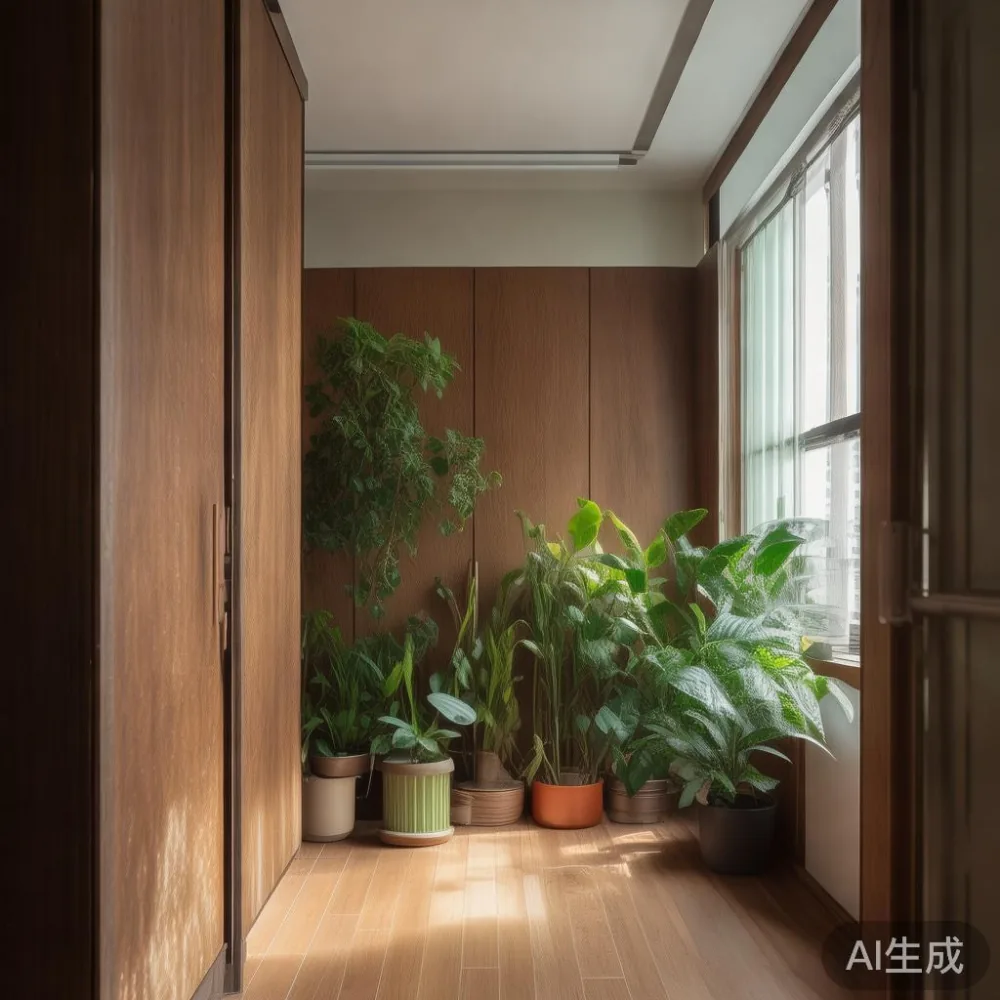
Anyone shopping for a solid wood wardrobe, a solid wood dining table, a bed frame, or even a marble accent piece in this region is quietly buying into a relationship with moisture. The wood you choose is going to breathe, swell, shrink, and settle for the rest of its life. The question is whether your home and your care routine give it the right conditions to do that gracefully, or whether the panels warp and the drawers stick within the first monsoon season.
MIDHILL has been building solid wood pieces for export since 2008, and the feedback from Southeast Asian distributors tends to land on the same handful of pain points: sticky drawers in July, hairline cracks on wardrobe doors in February, musty smells in walk-in corners. None of these issues mean the furniture is poorly made. They mean the buyer and the maker did not have the same conversation about humidity before the wardrobe was delivered.
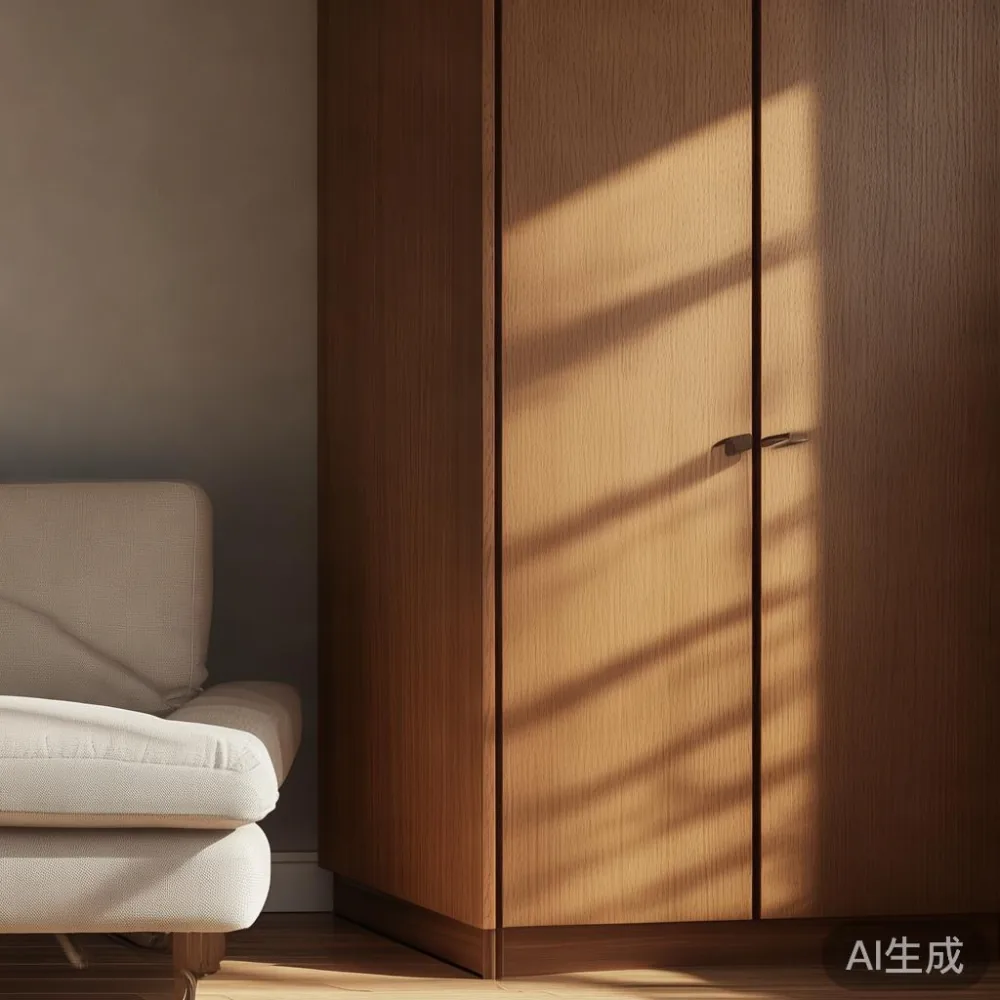
What Singapore's Climate Actually Does to a Wood Wardrobe
Singapore's average relative humidity sits between 70% and 85% across the year, with afternoon thunderstorms pushing bathroom-level moisture into bedrooms for weeks at a time. Air-conditioning pulls that down to roughly 50% to 60% in a cooled room, and the gap between "air-con on" and "air-con off" is exactly the cycle that stresses wood.
Solid wood moves along the grain. When humidity rises, cells absorb moisture and the plank expands across its width. When humidity drops, the plank shrinks. A 200 cm tall wardrobe door made from one solid oak panel can change width by 3 mm to 5 mm between January and July if the room swings between 55% and 80% RH. That sounds small, but it is enough to push a door out of square, stretch a hinge screw, or open a seasonal gap along a panel join.
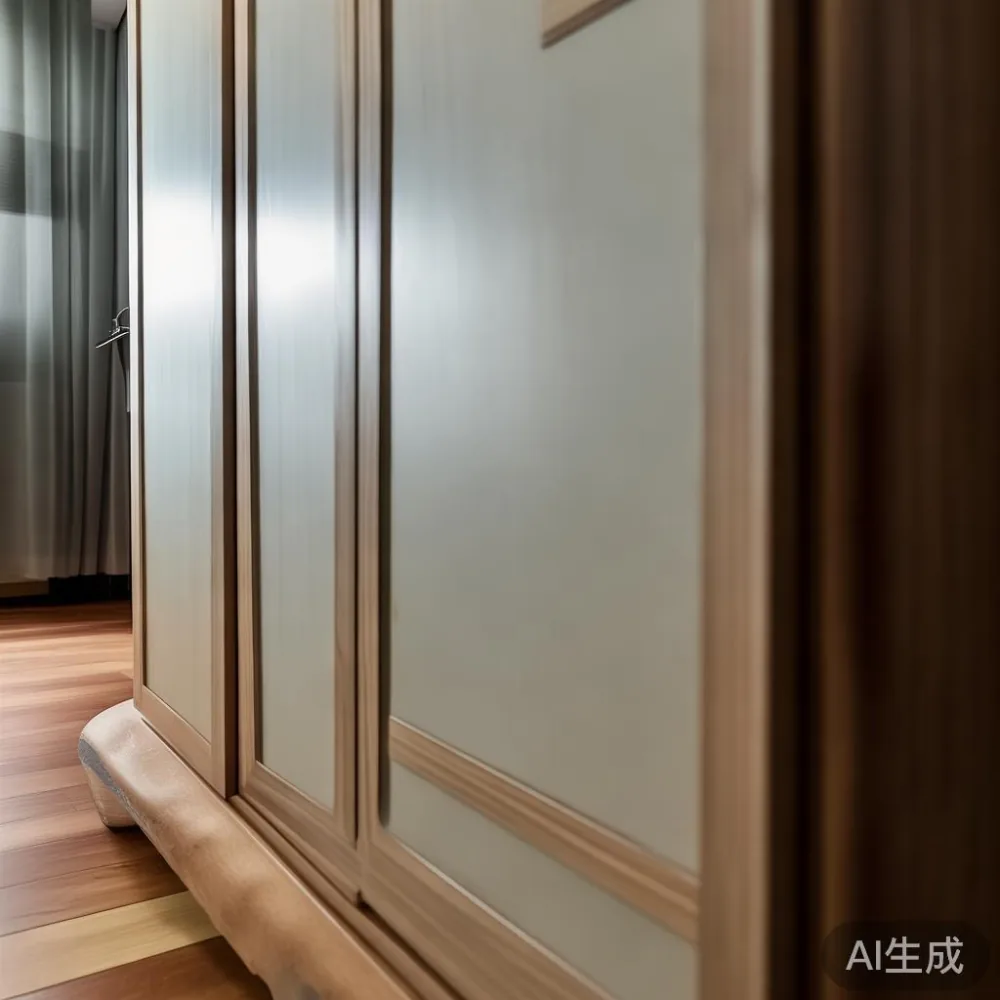
Engineered boards behave differently. MDF and plywood are more dimensionally stable, which is why you see them in many flat-pack wardrobes. The trade-off is weight (a 240 cm engineered wardrobe in MDF can weigh 95 kg to 110 kg, while a comparable solid oak piece weighs around 140 kg to 160 kg), edge swelling if the seal fails, and a shorter service life. For homeowners who plan to keep a wardrobe through two or three lease cycles, solid wood is the better economic call. For homeowners who want zero movement, no solid wood product on earth will deliver that in a Tampines three-room flat without active humidity control.
Is Your HDB or Condo Doorway Wide Enough for a Solid Wood Wardrobe?
This is a question I get almost every week, and the answer is uncomfortable: usually, no. The trickiest part of buying a wardrobe in Singapore is not the wardrobe itself. It is the corridor.
Standard HDB corridor widths run from about 1.2 m to 1.5 m. Lift openings are typically 0.9 m wide by 2.1 m tall for passenger lifts, and 1.2 m by 2.4 m for service lifts in newer condos in Punggol and the Greater Southern Waterfront developments. A wardrobe delivered in two halves, each half around 60 cm to 75 cm deep and 120 cm wide, will usually fit a service lift. A single-piece wardrobe over 200 cm tall rarely makes it through a residential doorway without tilting, and tilting a 150 kg solid wood carcass up a 5 cm door threshold is how you chip corners and stress joints.
Ask your supplier for the packed dimensions of each panel, then measure your lift, your corridor, and the final resting spot. A 60 cm wardrobe depth sounds generous on a product page, but it eats 60 cm of bedroom floor. In a 9 sqm HDB bedroom, that depth can shrink walking space below 50 cm next to the bed frame, which is below the ergonomic comfort line for getting dressed.
Why a MIDHILL Wardrobe Behaves Better in Humid Bedrooms
MIDHILL has spent more than seventeen years solving the same problems Singapore buyers face, because the brand's home base in Foshan sits in a climate almost as humid as ours, and the export markets in Bangkok, Manila, and Kuala Lumpur all share the same moisture profile. Two construction details do most of the heavy lifting.
First, the timber is kiln-dried to a target moisture content of 8% to 10%, which is closer to the conditioned interior of an air-conditioned Singapore home than the 12% to 14% common in mass-market furniture. Starting drier means the wood has room to absorb before it reaches the saturation that causes swelling joints and sticky drawers.
Second, the wardrobe carcasses use mortise-and-tenon joinery with floating panels, so the solid wood faces can expand and contract inside a frame that holds its shape. A glued-and-nailed MDF panel cannot do this. You will see the difference after the second wet season: the MIDHILL floating panels show micro-gaps in dry months and close up in wet months, which is exactly what they are designed to do. A warped MDF wardrobe door, by contrast, does not recover.
The 10-year structural warranty covers joinery failure and excessive cracking under normal indoor use, and lifetime refinishing is included, so a surface scratch or a sun-bleached patch in a Punggol corner unit can be sanded and re-oiled rather than replaced. For a buyer paying SGD 2,400 to SGD 6,800 for a full solid wood wardrobe set, that service pathway matters.
French Light Luxury and Post-Modern Light Luxury: Why These Styles Suit Singapore Condos
Style matters as much as structure, and the light luxury category has become the default shorthand in regional interior magazines for "looks expensive, lives practically." French light luxury leans on restrained curves, fluted details, warm cream and taupe finishes, and slim brass hardware. Post-modern light luxury pushes the same restraint into bolder silhouettes, with arched mirrors, soft geometric handles, and darker walnut tones. Both styles suit the 60 cm to 75 cm wardrobe depth that Singapore bedrooms actually allow, because the visual language is detailed rather than bulky, so the wardrobe reads as furniture, not as a wall.
Where buyers sometimes go wrong is mixing a light luxury wardrobe with the wrong bed frame. A heavy, dark, traditional American light luxury bed frame in a 12 sqm bedroom will swallow the room and make the cream-toned wardrobe look like an afterthought. Pairing it with a slim Scandinavian-inspired bed frame, a low nightstand, and one marble side table gives the wardrobe its own visual breathing room. The result feels curated rather than crowded.
Two product searches that often sit next to a wardrobe purchase in this region are the Scandinavian for small living room layout and the Coastal for small living room palette, both of which translate cleanly into a bedroom scheme because the principles are the same: light woods, low silhouettes, one statement piece per corner.
What Should I Do in the First 30 Days After My Wardrobe Is Delivered?
The first month in your home sets the trajectory for the next ten years. Treat it like a settling-in period for a new pet.
- Day 1 to 7: Leave wardrobe doors ajar at night for the first week. This lets the panels equalise with room humidity before you start loading them. Skip the urge to organise everything on day one.
- Day 7 to 14: Wipe every surface with a dry microfibre cloth every two days. Skip any oil or polish for now. You want to see how the wood responds before adding any product.
- Day 14 to 30: Run your air-conditioning at 24°C to 26°C with the wardrobe closed for at least 12 hours a day. A small dehumidifier set to 55% RH in the bedroom costs around SGD 250 to SGD 450 and pays for itself by preventing the first repair.
- Day 30 onward: Oil the wardrobe once with a hard wax oil if the surface looks thirsty, then leave it alone. Re-oil every 12 to 18 months.
Clothes stored inside a wardrobe need similar care. Avoid plastic garment bags in a non-air-conditioned store room, because trapped moisture encourages mould on leather and mildew on cotton. Use breathable cotton covers, and leave 2 cm to 3 cm of space between stacks so air can circulate. A wardrobe is a small climate system, not just a box.
Budgeting Honestly: What a Solid Wood Wardrobe Actually Costs in Singapore
Numbers help, so here is what a realistic budget looks like in SGD, not in vague price tags. A two-door solid wood wardrobe in oak or ash from a Foshan maker like MIDHILL runs SGD 1,600 to SGD 2,800 for a 120 cm to 150 cm unit, SGD 2,400 to SGD 4,200 for a three-door 180 cm to 210 cm unit, and SGD 4,500 to SGD 6,800 for a four-door walk-in configuration over 240 cm. Delivery above SGD 350 is free, which on these price points almost always qualifies. GST at 9% is added at checkout for local delivery.
If you are kitting out a full bedroom, the wardrobe is usually the largest line item. A coordinating solid wood bed frame in queen size adds SGD 1,200 to SGD 2,400, a nightstand in oak SGD 350 to SGD 700 each, and a six-seater solid wood dining table for the adjacent room SGD 2,000 to SGD 3,600. A marble dining or accent table adds SGD 800 to SGD 2,200 depending on whether the marble is solid or veneered.
The mistake I see most often is buyers chasing a cheap wardrobe and then replacing a bed frame, a dining table, and a sofa within five years, because nothing in the room matches. Buying one well-made light luxury accent chair for the bedroom reading corner, one quality solid wood sofa for the living room, and one wardrobe that anchors the bedroom is a better ten-year spend than three flat-pack replacements. Buyers researching the best Modern bed for 2026 and the best Mid-century modern sofa for 2026 will notice that the recommended pieces tend to come from the same maker, for exactly this reason. Cohesion is cheaper than rotation.
How to Compare Two Wardrobes That Look Identical Online
Two product photos can hide a 60% price gap, and the difference is almost always in three places: timber species, joinery, and finish.
Ask for the Latin name of the wood. "Solid wood" on a product page can mean rubberwood, which is cheap and prone to movement, or it can mean European oak, white ash, or North American walnut, all of which are denser and more stable. Ask whether the back panel is solid wood, plywood, or MDF. A plywood back on an otherwise solid carcass is a fair compromise for cost. An MDF back on a "solid wood wardrobe" is a red flag.
Ask about the finish. Lacquer creates a sealed plastic skin that looks glossy but traps moisture on the inside if the wood wants to move. Hard wax oil penetrates the grain and lets the wood breathe, which is the right call for Singapore. A quick smell test in the showroom tells you a lot: a real hard wax oil smells faintly of beeswax and citrus; a lacquer smells like a freshly painted HDB door.
If you are specifying for a condo development or a hospitality project rather than a single flat, the same rules apply at volume. Wholesale French provincial furniture enquiries typically ask for kiln-dried certificates, joinery drawings, and finish specifications per batch. The certificate is your insurance against the first monsoon.
When to Call a Specialist Instead of a General Handyman
Most wardrobe issues in Singapore fall into three buckets. Bucket one is seasonal sticking, which a handyman can usually solve with hinge adjustment and a pass of beeswax on the runners. Bucket two is finish wear, which a refinishing specialist handles. Bucket three is structural movement, which is where the conversation needs the maker in the room.
Cracks wider than 2 mm along a panel face, doors that no longer meet the frame after two seasons, and a musty smell that returns after cleaning all point to a joinery or moisture issue that surface repair will not fix. This is where the lifetime refinishing and 10-year structural warranty from MIDHLL's parent workshop, accessible through the regional partner network, pays off. A specialist can re-tune floating panels, replace a damaged slat, and re-oil the surface in a single afternoon visit, which costs far less than a replacement wardrobe and the inevitable floor repair that follows a forced disassembly.
A Final Note on Caring for the Piece You Already Own
If you already own a solid wood wardrobe and it has survived several wet seasons, the care routine is simpler than new-buy care. Keep the room between 50% and 60% RH with a dehumidifier or steady air-con use, wipe with a dry microfibre cloth weekly, oil the high-touch zones every 18 months, and avoid placing the wardrobe against an exterior wall that takes afternoon sun. Direct tropical sun on one face of a wardrobe is the fastest way to open a 5 mm crack along the opposite face.
Buyers who research the broader midhillco range will find the same construction principles applied to dining tables, bed frames, and nightstands, which is why a coordinated bedroom suite tends to age as one piece rather than as a mix of furniture that slowly drifts apart in colour and proportion. The wardrobe is the anchor. Treat it well, and the rest of the room tends to follow.