How Southeast Asian Humidity Affects Solid Wood Furniture
Singapore’s warm, humid climate can change the dimensions of solid wood furniture more than many owners expect. A wardrobe may swell slightly during a rainy afternoon, a dining table may develop a faint ripple near its edge, and a bed frame may move more tightly against the wall. These reactions are not automatically defects: timber is hygroscopic, meaning it gains or loses moisture as the surrounding air changes. The practical question is how to purchase, place and maintain furniture so that it remains stable, attractive and usable for years.
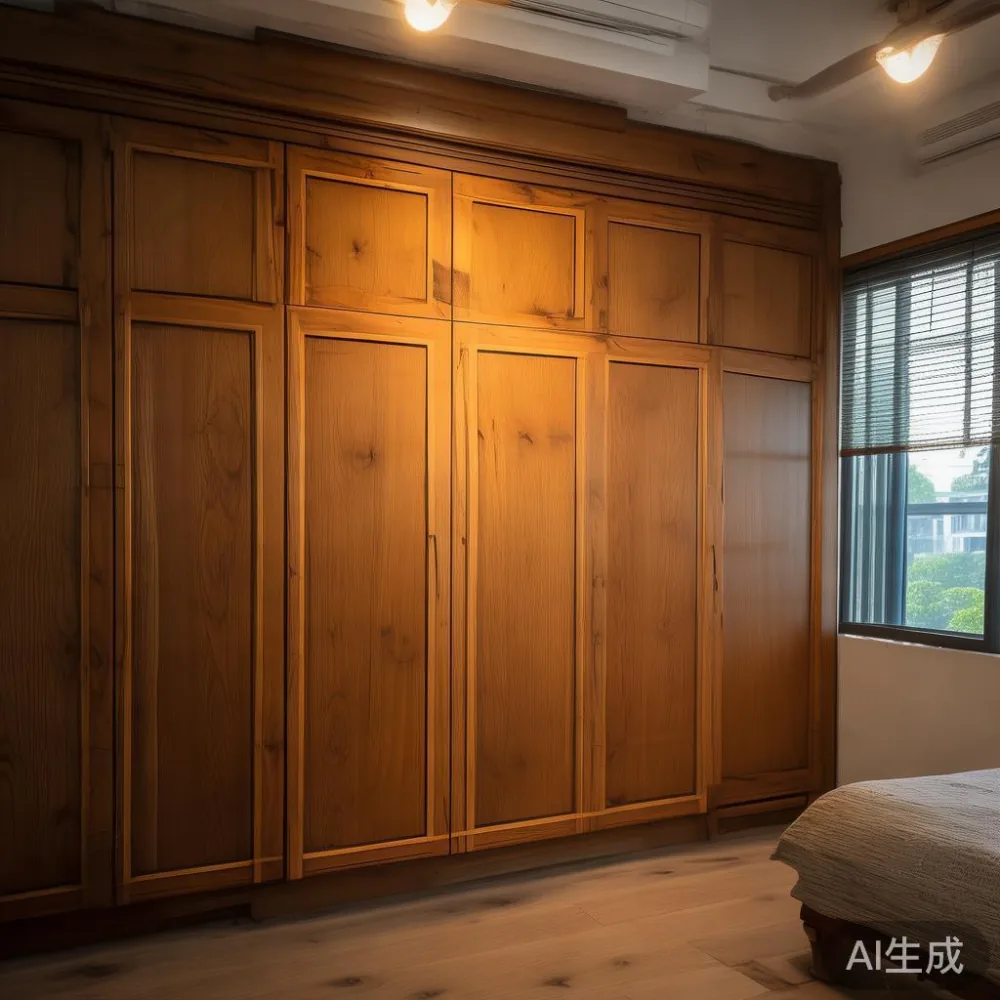
MIDHILL is a Foshan solid wood furniture maker established in 2008 and exporting to more than 15 countries. Its products include solid wood sofas, bed frames, dining tables, wardrobes, nightstands and marble tables. For Singapore customers, the company offers a 10-year structural warranty, lifetime refinishing, free shipping above US$350 and a 14-day return period. Prices in this article are stated in SGD for local context, while MIDHILL’s published international shipping threshold remains US$350.
This guide focuses on humidity and wood furniture, especially the wardrobe because enclosed doors can create their own microclimate. It also considers the realities of HDB flats and condos in Tampines, Bedok and Punggol, where internal layouts, lift dimensions, corridors and air-conditioning patterns influence how furniture should be delivered and installed.
What does humidity do to solid wood furniture in Singapore?
Relative humidity is the percentage of moisture held by air. Singapore’s monthly readings commonly fluctuate across a broad range, with values often around 55% to 85% depending on rainfall, time of day and location. Air-conditioned interiors may be much drier. The transition matters because wood responds to the humidity of the room around it, not simply to the weather forecast.
Wood contains bound moisture within its cell walls. When relative humidity rises, the fibers absorb moisture and expand. When humidity falls, they contract. Movement occurs mainly across the grain rather than in the direction of the grain. A solid wood wardrobe panel measuring 180 cm wide and 2 cm thick might move by roughly 1 to 3 mm across its width over ordinary seasonal variation. A wide 240 cm dining table top may show several millimetres of movement, particularly if one edge is close to an open window.
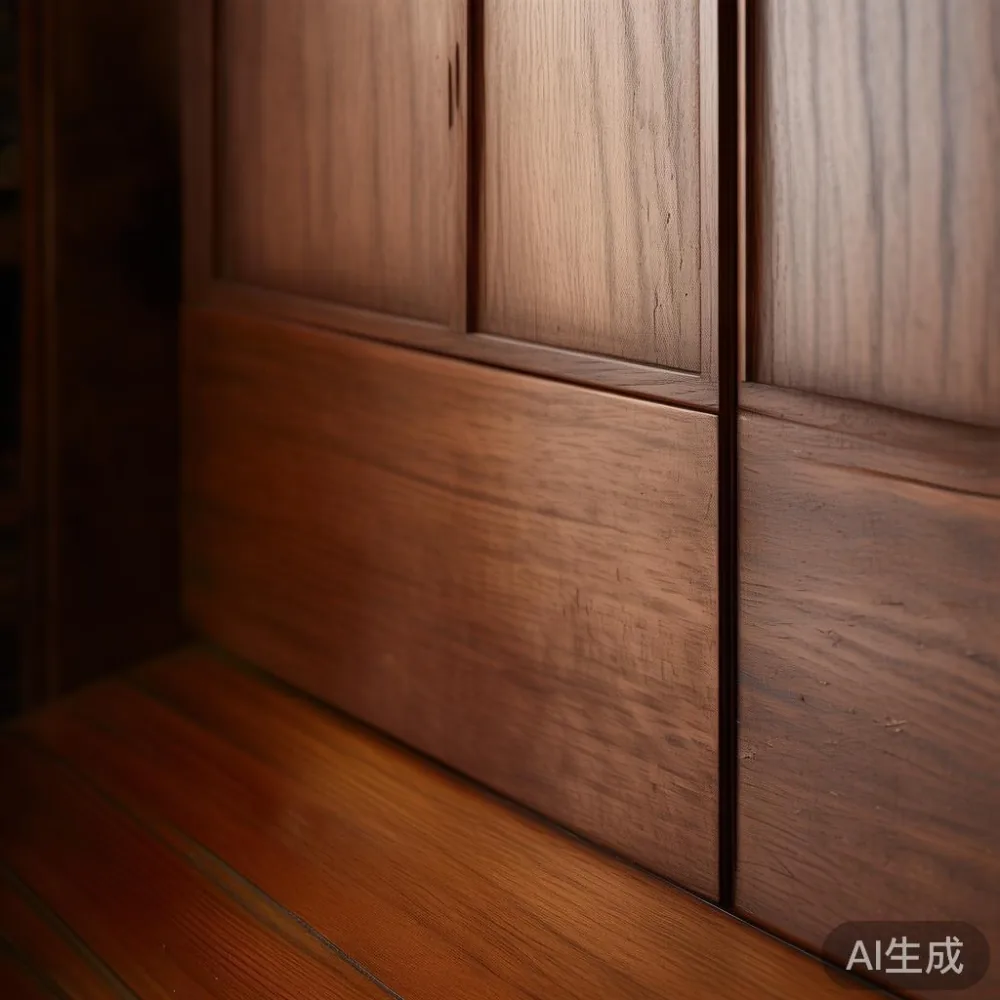
The movement can affect door gaps, drawer travel and the fit of carcasses against walls. A 210 cm tall wardrobe may need a ventilation allowance of around 10 to 20 mm at the top, depending on its construction and installation. It should not be forced tightly against a concrete wall because both timber and masonry expand and contract. Small gaps also allow air to circulate behind the unit.
Humidity does not mean solid wood is unsuitable for Singapore. Properly seasoned timber, sound joinery and sensible placement can accommodate normal movement. Problems arise when furniture arrives with packaging moisture trapped against surfaces, is installed immediately after delivery, or is repeatedly exposed to wet air and condensation.
How much humidity is comfortable for a bedroom or wardrobe?
A practical indoor target for timber furniture is about 40% to 60% relative humidity, with steadier conditions generally easier on wood than repeated large swings. This is not the same as trying to keep every room at exactly one reading. Short fluctuations during the day are usually less troublesome than a wardrobe remaining at 80% humidity for several weeks.
For an HDB bedroom in Tampines, a simple hygrometer placed near the wardrobe can provide a useful baseline. Check it at approximately 8 a.m. and 9 p.m. over 7 days. A 2% to 3% daily range with readings mostly between 45% and 65% indicates a fairly stable room. Readings that repeatedly exceed 75%, together with musty odours or visible mould around skirting panels, suggest that ventilation and moisture control need attention.
Condensation requires faster action. If water forms on the back of a wardrobe or on a nearby wall, check for an air-conditioning condensate leak, a dripping pipe or a window seal that has failed. Wiping the surface alone does not remove the source. Keep electrical points at least 30 cm away from known moisture and avoid using a wardrobe as a drying cabinet.
Air-conditioning helps because it lowers both temperature and moisture. Running it for 2 to 4 hours before sleep can bring a room closer to a stable range. Dryers and laundry racks, however, add moisture back into the flat. In a compact HDB unit, dry clothes outside or in a ventilated communal area where permitted, and position a dehumidifier to maintain approximately 50% to 60% relative humidity. Use the bathroom exhaust fan for at least 15 minutes after a shower.
Should I choose solid wood, veneer or engineered wood for a humid climate?
Solid wood is often selected for its repairability and long working life, but it is not moisture-proof. Its suitability depends on the species, drying method, joint construction and finish. Engineered wood can offer greater dimensional stability because its layers are bonded together, while good-quality veneer can provide the appearance of solid timber with a thinner substrate. Neither category should be described as immune to humidity.
Ask the supplier how the timber was kiln-dried and for the expected service humidity range. For Singapore interiors, look for wood conditioned for approximately 8% to 12% moisture content, with documentation for the finished component rather than only the raw boards. The figures should be treated as a technical reference, not a guarantee that every door remains perfectly flat.
Pay attention to how a wardrobe is built. Mortise-and-tenon joints, dowels, screws and properly engineered fittings can accommodate seasonal movement. Designs that hold a panel only by friction can squeak or buckle. A high-quality solid wood wardrobe should include adjustable hanging rods, solid drawer runners and doors that can be re-aligned during after-sales service.
Finish also influences maintenance. A hard-wax oil or matte lacquer can protect the surface, but scratches still need prompt attention. Avoid placing a wardrobe against an exterior wall exposed to rain. In Punggol and Bedok, new apartments may have higher initial moisture after handover, so allow the flooring and paint to cure and the room to stabilise before bringing in large furniture whenever possible.
How should I prepare an HDB flat or condo for a wardrobe delivery?
Measure the route before ordering. Record the flat entrance, lift opening, lift car, corridor turns, stair width and bedroom doorway in centimetres. A standard HDB lift door opening may be around 80 to 90 cm wide, but building specifications vary. Lift cars can measure roughly 100 cm by 120 cm, or deeper in newer developments, so confirm the actual dimensions with the building management office.
For a large wardrobe, calculate the diagonal clearance of each rigid panel. A 220 cm tall panel needs approximately 222 cm of available diagonal clearance when its thickness is included. If a panel is 220 cm high and 60 cm wide, its diagonal is about 228 cm. This calculation is more useful than the width alone when the panel must be tilted through a corridor turn.
Protect the route with 2 to 3 mm cardboard or a reusable floor covering. Reserve the lift for a scheduled delivery window if the building allows it. Remove shoes and other obstacles from the corridor, and keep the route clear for at least 30 minutes before the delivery team arrives. Confirm whether the supplier carries the item upstairs or only to the flat entrance.
For orders above US$350, MIDHILL provides free shipping under its published international policy. The delivery duration should be agreed in writing, typically around 7 to 21 days for production and international transit, with local delivery taking 1 to 3 days after customs clearance and stock handling. Singapore orders attract GST, so a listed product price of SGD 1,800 becomes SGD 1,962 after 9% GST. The final quotation should state whether installation, lift booking and assembly are included.
What is the right way to install a wardrobe to reduce humidity damage?
Let boxed furniture acclimatise in the bedroom for 24 to 72 hours if the instructions allow it. Remove plastic wrapping after installation rather than leaving it sealed for weeks. Keep the wardrobe at least 10 to 20 mm from walls where feasible, and use a moisture-resistant plinth or sealed base if the floor is occasionally damp.
Level the unit with adjustable feet rather than forcing it against an uneven surface. Check doors after the first 7 days and again after 30 days. Door gaps may change by 1 to 2 mm as the room adjusts, so minor adjustments can be expected. Do not plane or sand a door immediately; first confirm that the movement is due to normal seasonal change rather than a swollen base, damaged hardware or poor installation.
For ventilation, leave space above wardrobes when the ceiling height permits. A 30 cm gap over a 220 cm unit can improve airflow. In a compact HDB bedroom, that clearance may not be practical, so use the room’s air-conditioning and humidity readings rather than creating an unnecessary visual gap. Avoid storing damp clothes inside for days, and divide a crowded wardrobe into zones so that warm, humid air can circulate.
Leak detection is more important than any finish. Inspect silicone seals around wet areas, external windows and plumbing penetrations twice a year. Replace failed sealant after a shower or heavy rain. If mould appears, remove affected items, correct the moisture source and clean the area with a product suitable for the surface.
Can humidity damage a dining table, bed frame, sofa or nightstand?
Yes, although each item reacts differently. A solid wood dining table can cup if one face absorbs moisture faster than the other. Keep coasters under drinks and use felt pads beneath hot objects. A marble table does not expand like timber, but its supporting frame can move, so it needs stable supports and periodic alignment checks.
A solid wood bed frame may develop slight joint movement, particularly near a window or an exterior wall. Check the fixing points after 30 days and every 6 months thereafter. Avoid adjusting the side rails against the wall; allow a 10 to 20 mm clearance where the layout permits.
Upholstery on a solid wood sofa can absorb airborne moisture and develop mould if the foam or filling remains damp. Keep the frame at least 15 to 30 cm from a persistently damp wall and use breathable covers. A nightstand should not be placed beneath a window that leaks rainwater. Items in these categories should be wiped dry and inspected monthly during the wetter months.
The same principles can inform a broader furnishing plan. A search for how to style Japanese sofa in bedroom is often about low-profile comfort and clear circulation, but placement should also respect damp walls and air-conditioning outlets. Searches for Italian light luxury nightstand, under 2000 European light luxury furniture and Modern light luxury with storage can lead to different finishes and dimensions, yet none removes the need for climate control. For the bed, phrases such as best light luxury bed for 2026 and how to choose American sofa are useful prompts for proportion and comfort, not substitutes for checking moisture movement.
How do I maintain a solid wood wardrobe through Singapore’s wet season?
Wipe the wardrobe with a soft, slightly damp cloth and dry it immediately. Do not soak the edges, and keep cleaning spray away from joints. Dust the top and the gap behind the unit every 2 to 4 weeks. If the doors feel tight, remove any items pressing against them and allow the room to return to a stable humidity range before making adjustments.
For small scratches, use a finish approved by the manufacturer. Do not apply paint or a mismatched oil across the whole wardrobe. MIDHILL provides lifetime refinishing, which is a substantial advantage when the timber needs restoration, but the service scope should be confirmed in the sales record. The company’s 10-year structural warranty also provides a defined period for reporting qualifying structural issues.
Inspect humidity every month for the first 6 months and every 2 months thereafter. Record the maximum reading, the number of days above 70% and any door changes. This simple log helps distinguish a seasonal response from a leak. A reading of 78% on 1 day is less concerning than 78% for 14 consecutive days, particularly if mould is present.
Use the wardrobe for its intended purpose and avoid abrupt changes. Moving a heavy fitted unit can loosen joints or damage walls; if it must be relocated, remove hanging rails and movable drawers first, and have at least 2 people handle the carcass. The wardrobe should be assembled on a protected floor, away from direct rain and excessive heat.
What should I ask before ordering a wardrobe from a furniture supplier?
Ask for the finished dimensions, timber species, joinery method, moisture conditioning range, finish type, warranty coverage and delivery terms. For Singapore, confirm that the quotation includes GST and whether the stated delivery duration is 7 to 21 days or longer for a made-to-order piece. Also verify the return process within the 14-day return period.
For imported furniture, ask whether customs clearance, lift booking and in-room placement are separate charges. Photograph the lift and corridor dimensions before dispatch. If assembly is needed, request that the team not block the lift or corridor, and check whether packaging removal is included.
Last month I visited a colleague in a new Punggol condo with a 4-room layout and watched a wardrobe panel pass through the lift and corridor safely after a 30-minute route check. The delivery team completed assembly in about 75 minutes, placed the wardrobe 15 mm from the wall and adjusted two doors the following week. The room’s hygrometer settled near 58% after the air-conditioning ran for 3 hours each evening. That experience shows why delivery planning and humidity care belong in the same order rather than being treated as separate concerns.
Solid wood furniture can suit Southeast Asian homes when humidity is measured, moisture sources are corrected and furniture is allowed to move naturally. French light luxury, American light luxury and post-modern light luxury styles all depend on material quality and proportion, not on wood being immune to climate. A well-built wardrobe, supported by sensible placement and consistent care, can remain a durable part of a Singapore bedroom for many years.