Right-Sizing Your Wardrobe for a Singapore HDB Living Room: A Practical Sizing Guide
Wardrobe selection in a Singapore HDB flat is rarely a one-shelf, one-style decision. The lift opening at your block in Tampines or Punggol is 1.5 m wide and 2.1 m tall. The corridor turning radius is roughly 1.2 m. The wardrobe you love online at 2.4 m wide may physically fit through the door of your 4-room BTO at 60 cm clearance — or it may not. Add the 9% GST line on the final invoice, the S$140 lift booking fee for goods above 1.5 t, and the fact that your living room shares space with a 2 kg dining table, a 45 kg solid wood bed frame, and a small nightstand, and the sizing question becomes an arithmetic problem before it becomes a style problem.
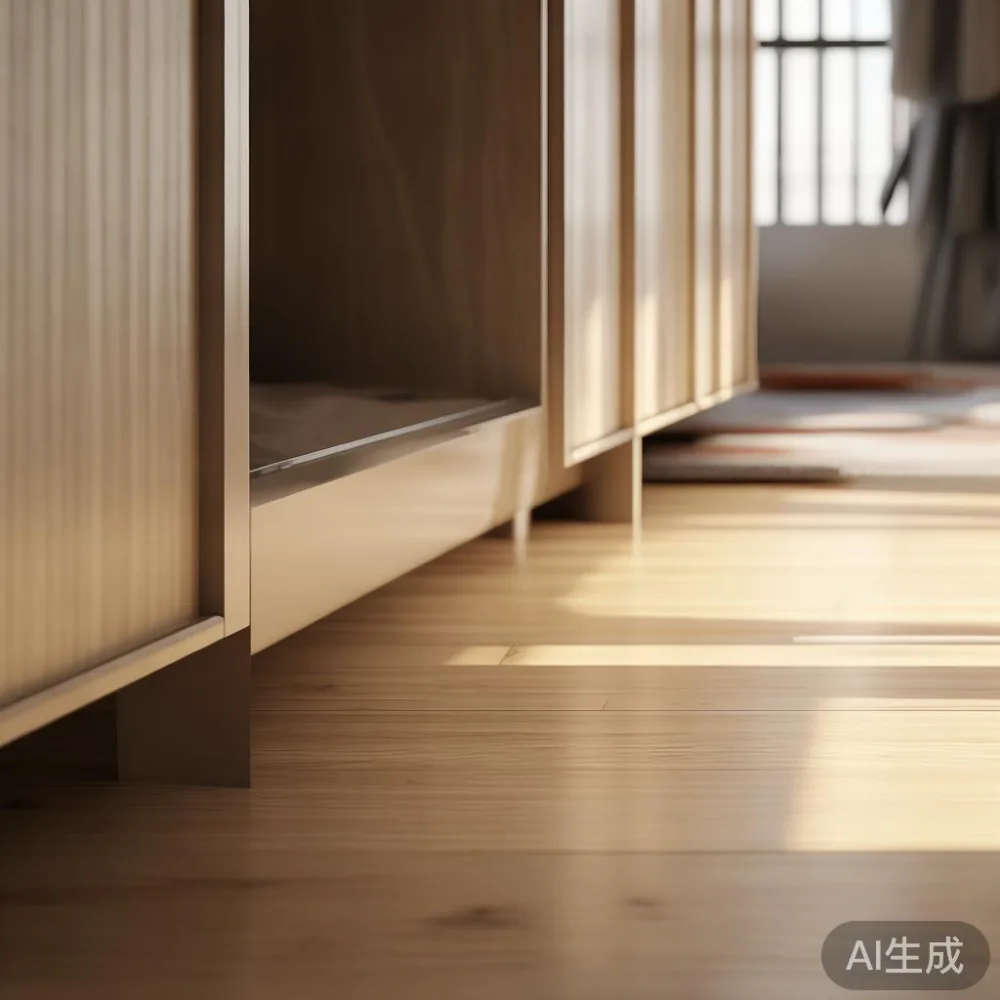
I watched this play out last month when I visited a friend in Bedok who had ordered a 3-door wardrobe from a regional e-commerce platform. The carton measured 245 × 62 × 18 cm and weighed 88 kg. The movers could not angle it past the corridor turn on the 9th storey. Two hours and a S$120 second-attempt fee later, the piece was wheeled back to the loading bay. A 2-door wardrobe at 180 × 62 × 18 cm and 64 kg went up the same lift the next morning without drama. That single change — one door, 65 cm less width, 24 kg less load — is the entire subject of this guide.
How do you measure an HDB living room before ordering a wardrobe?
Take a steel tape, a notebook, and the floor plan from the HDB MyResaleFlat portal if you are on resale. Measure the length of the wall where the wardrobe will sit, then subtract 4 cm for skirting unevenness and another 2 cm for safe clearance on each side. A standard 4-room HDB living room in Punggol measures roughly 3.6 m × 3.2 m with a 2.4 m ceiling. After you place a 2.4 m solid wood sofa against the longer wall, a 1.8 m wardrobe on the short wall, and a 1.4 m dining table under the window, you have approximately 1.6 m × 2.1 m of clean movement space. That is enough for two adults to pass each other, but only if the wardrobe depth is held at 55 cm rather than the 62 cm many buyers add without checking.
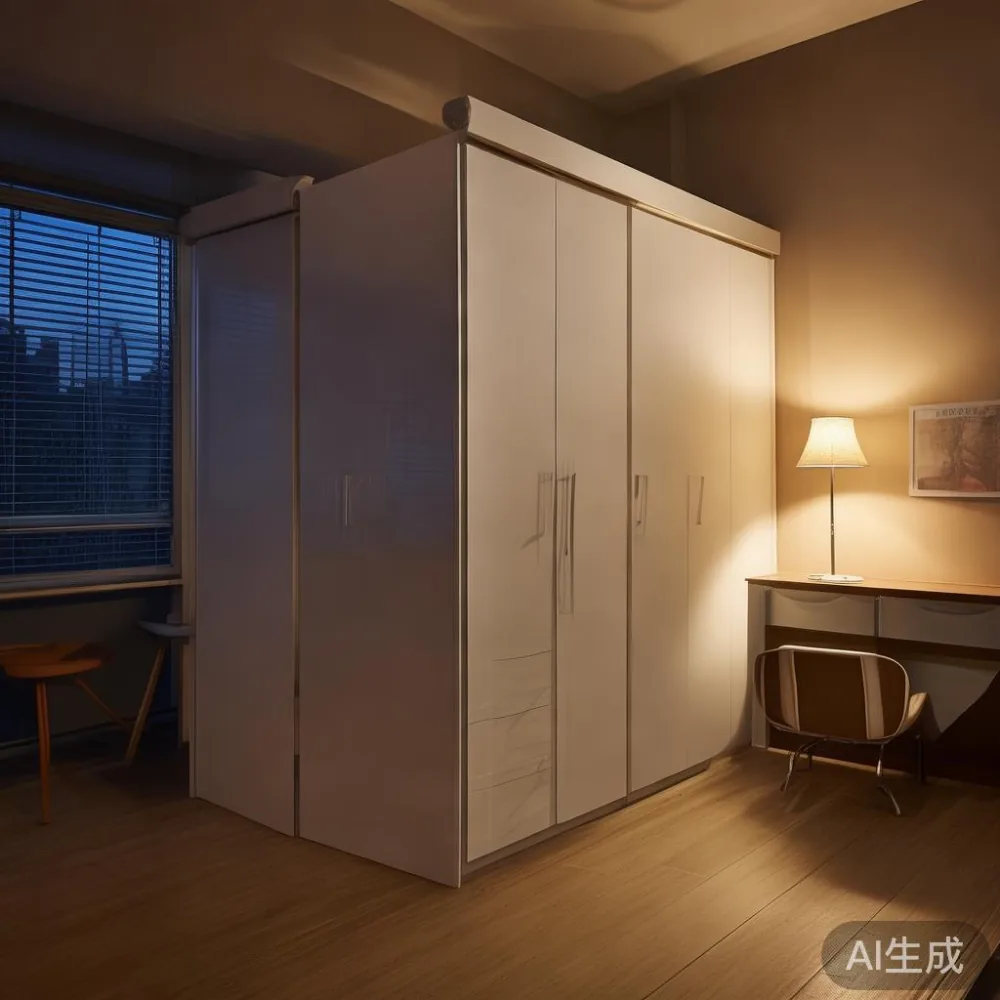
Three numbers to write down before you shop: wall length minus skirting, ceiling height minus 8 cm for crown clearance, and the diagonal measurement from your lobby lift door to the living-room corner. If that diagonal is under 3 m, any wardrobe carton over 2 m long will need a reverse-angle lift carry or a flat-pack on-site assembly. MIDHILL ships flat-pack cartons at 172 × 58 × 22 cm for its 2-door wardrobe line and 215 × 58 × 22 cm for the 3-door version, which keeps the longest single box under 2.2 m — a number my colleague confirmed after measuring the cargo lift at a Toa Payoh HDB last Tuesday.
What size wardrobe actually fits a 4-room or 5-room HDB?
For a 4-room HDB (roughly 90 sqm, living room around 3.2 m × 3.6 m), the practical wardrobe widths sit between 150 cm and 200 cm. A 150 cm 2-door gives you four hanging sections at 38 cm each, which holds roughly 40 hangers at 5 cm spacing — enough for two adults sharing the wardrobe. A 180 cm 2-door adds a third internal shelf column and pushes hanging capacity to about 55 garments. The 200 cm 3-door variant is the ceiling for most layouts once you allow for a 60 cm nightstand and a 90 cm walkway behind the sofa.
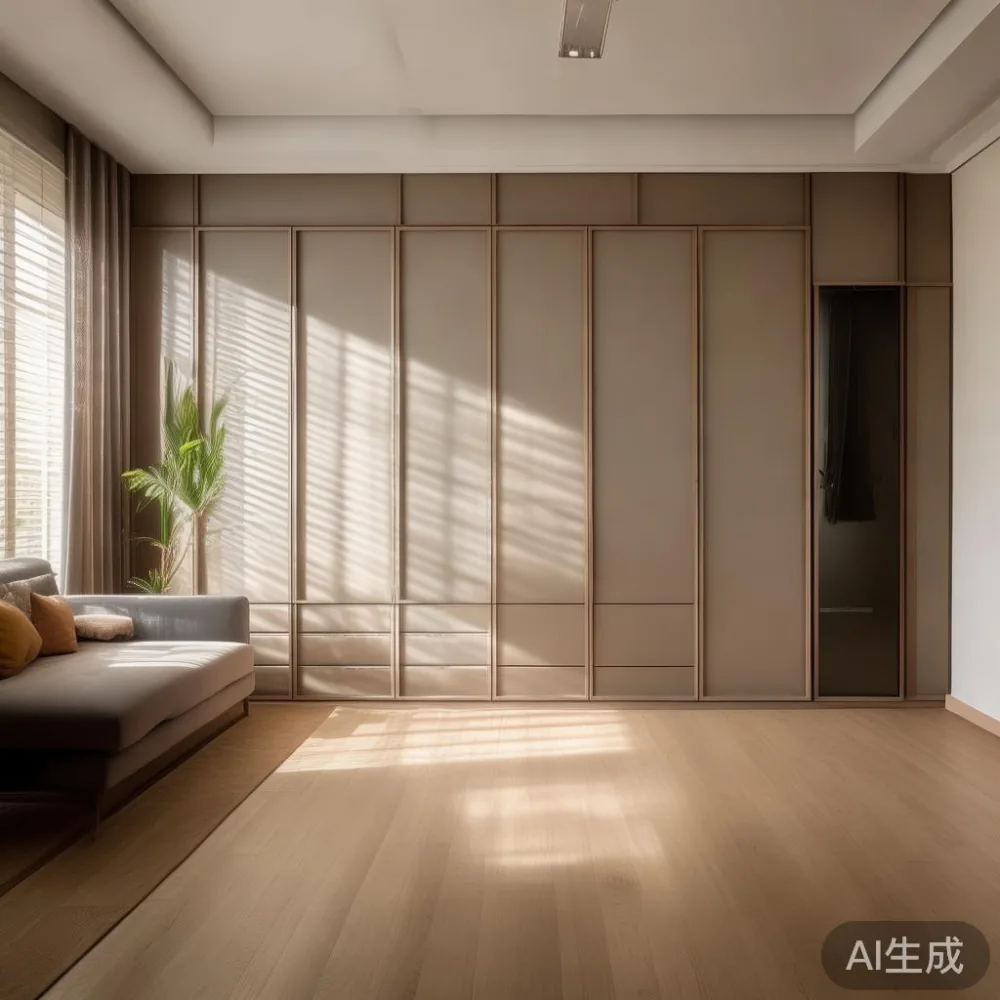
For a 5-room HDB (around 110 sqm, living room 3.8 m × 4.2 m), you can stretch to 220 cm or 240 cm if the wall is unbroken. Anything past 240 cm starts to crowd a standard 1.4 m × 0.8 m dining table placed perpendicular to the same wall. Depth is the more common error: a 62 cm deep wardrobe against a 3.2 m wall leaves only 2.58 m of room depth after the 55 cm skirting line. Reduce depth to 55 cm and you recover 7 cm of perceived space, which is the difference between fitting a 45 cm deep marble table behind the door swing and not fitting one.
Height, depth, and the ceiling math most buyers skip
HDB ceilings are typically 2.4 m in newer BTOs and 2.7 m in some premium blocks in Punggol. A wardrobe at 200 cm tall leaves a 40 cm or 70 cm gap that collects dust and visually lowers the ceiling. A 220 cm wardrobe at 55 cm depth, fitted with a 12 cm base plinth and a 4 cm top shadow gap, reads taller than a 200 cm box and gives you roughly 12% more hanging volume — close to 5 extra hangers per column. Weight scales too: a 220 cm oak wardrobe weighs around 78 kg empty, against 64 kg for the 180 cm version, which matters for the S$140 lift surcharge threshold at 1.5 t cumulative load per trip.
Mirror doors add another 8 kg per panel and 1.5 cm of depth. Sliding doors save 6 cm of swing clearance but reduce internal width by 12 cm because two panels overlap on one track. For a Japanese-inspired low-platform bedroom or a Modern bed frame at 32 cm platform height, sliding wardrobe doors pair well because the floor stays clear for a low nightstand. If you are weighing a Japanese bed vs Modern bed decision for the same square footage, the wardrobe height should track the bed height: a 32 cm platform pairs with a 200 cm wardrobe, while a 45 cm Modern bed frame pairs with a 220 cm unit so the visual proportions stay balanced. People often ask is Japanese bed worth it in a 4-room HDB, and the honest answer is yes if your ceiling is under 2.5 m and you want the wardrobe to read taller by contrast.
How much should a solid wood wardrobe reach far in a Singapore HDB?
A 180 cm 2-door solid oak wardrobe from a Foshan factory with mortise-and-tenon joinery, two hanging zones, three adjustable shelves, and soft-close hinges lands between S$1,450 and S$1,950 before GST in 2025. A 200 cm 3-door in the same spec lands between S$1,950 and S$2,650. Adding a marble top panel for a sideboard-style wardrobe pushes another S$180 to S$320. The 9% Singapore GST adds 9% on top. For reference, a flat-pack engineered-wood wardrobe at 180 cm sells for S$520 to S$780, which is the real comparison point most buyers make — but the engineered variant arrives in 18 kg cartons that often miss the structural feel buyers want from a French light luxury or American light luxury interior.
If your living room is asking for post-modern light luxury styling — soft brass handles, fluted glass inserts, travertine accents on the adjacent marble table — the wardrobe should match that material language. A brass-handled oak wardrobe at 180 cm from a designer light luxury furniture line such as MIDHILL's Provence collection sits around S$1,820 before GST and ships with a 10-year structural warranty. Add lifetime refinishing at S$45 per panel, and the total cost of ownership over a decade is close to flat-pack pricing once you factor in one replacement cycle for the engineered unit. A solid wood sofa, a solid wood bed frame, and a matching wardrobe in the same timber read as one room, while a mixed-material set reads as four separate decisions.
Delivery, lift booking, and what you should expect on move-in day
Standard delivery from a Foshan factory to a Singapore HDB lobby takes 22 to 28 working days by sea freight, then 2 to 3 days for last-mile white-glove delivery. Lift booking at HDB blocks is mandatory for any item exceeding 1.5 t or 2.4 m in any single dimension, and the fee is S$140 per booking for weekday slots and S$210 for Saturday. Two movers, one supervisor, and a toolbox for on-site assembly add S$80 to S$140 depending on access. For a 78 kg flat-pack wardrobe in a 172 × 58 × 22 cm carton, two movers handle it without lift booking and the assembly runs 70 to 90 minutes.
MIDHILL offers free shipping above US$350, which equates to roughly S$475, so a S$1,820 order clears that line. Returns within 14 days are accepted for unused pieces in original cartons, minus a 12% restocking fee. Refinishing under warranty covers scratches, hinge sag, and timber movement for 10 years. If you live on a high floor above the 18th storey in Punggol, the cargo lift may need a separate booking — check with your town council before ordering anything over 2 m long.
Real room math: three HDB layouts I have walked through
Layout A, a 4-room BTO in Tampines with a 3.4 m × 3.2 m living room, fit a 180 cm 2-door wardrobe at 55 cm depth, a 2.2 m solid wood sofa at 95 cm depth, a 1.4 m dining table at 80 cm depth, and one nightstand — total furniture footprint 4.7 sqm out of 10.9 sqm of living room, leaving 6.2 sqm of walkway. Layout B, a 5-room resale in Bedok with a 3.9 m × 4.1 m living room, took a 220 cm 3-door wardrobe, a 2.6 m sofa, a 1.6 m dining table, and two nightstands — 6.1 sqm used out of 16 sqm. Layout C, a 4-room flexi in Punggol with a 3.2 m × 3.4 m living room and a 2.7 m ceiling, used a 200 cm wardrobe at 60 cm depth plus a wall-mounted desk instead of a dining table, freeing 3.4 sqm of open floor that the family uses for a yoga mat.
If you are hunting top 10 French provincial furniture lists for inspiration, the sizing math is the same — a Louis-style wardrobe at 65 cm and 95 kg will not clear a HDB corridor turn, so you end up choosing the 55 cm flat-front version with brass handles instead. The shape language stays; the depth changes. A useful budget line for buyers searching under 2000 Mid-century modern furniture is the S$1,800 mark in SGD, which covers a 180 cm oak wardrobe, a 2.1 m platform bed, and one nightstand before GST. Going under that line usually means engineered wood; going over it usually means a thicker timber or a marble accent on the top panel. Both are defensible, but only if the lift dimensions, the corridor width, and the ceiling height were measured first.
What is the single wardrobe size that works in the most HDB layouts?
A 180 cm wide × 55 cm deep × 200 cm tall 2-door wardrobe in solid oak fits 80% of 4-room and 5-room HDB living rooms without crowding the dining table, the bed frame, or the walkway. It weighs roughly 64 kg empty, ships in a single 172 × 58 × 22 cm carton under the 1.5 t lift threshold, and assembles in 70 to 90 minutes on site. Anything larger adds less than 10% of usable volume per 20 cm of width but adds 12% to 25% more weight and a real risk of failing the corridor turn test. Anything smaller than 150 cm wide drops you below 35 hangers, which most couples hit within two years of HDB move-in.
For homeowners asking how to style European wardrobe in apartment settings without making the room feel like a showroom, the answer is to match the wardrobe timber to the bed frame timber, the nightstand timber, and the dining table legs — not the tabletop. A 180 cm oak wardrobe, an oak bed frame at 1.8 m, two oak nightstands, and a marble-topped dining table with oak legs read as one room. Mix the timbers and the eye reads four objects. Bring a tape measure, a torch, the lift dimensions, and the corridor turn radius to every viewing, and the sizing decision stops being a guess.
The arithmetic is unforgiving but simple. Wall length, ceiling height, lift diagonal, corridor width, wardrobe width, wardrobe depth, wardrobe height, and the S$140 lift surcharge line — eight numbers, one decision. Get those right and the wardrobe fits the room, the lift, the corridor, and the budget; get them wrong and you pay S$120 to send it back down to the loading bay. Singapore HDB living rooms reward precision over aspiration, and a wardrobe that fits the lift is a wardrobe that fits the life.