Veneer vs Solid Wood Wardrobes in Singapore: A 5-Year Cost Breakdown for HDB and Condo Owners
Three months ago, I stood in a 4-room HDB flat in Bedok North helping my colleague measure a bedroom wall for a new wardrobe. The existing built-in was particleboard with a paper-thin laminate, and the top edge had already started to swell from two years of Singapore humidity. We pulled it apart, noted the warped shelves, and started the same conversation I have with almost every homeowner in Tampines, Punggol, or along the East Coast: should the replacement be veneer or solid wood? The answer is rarely a slogan. It is a five-year arithmetic problem, and the numbers shift depending on whether you live in a 90 sqm condo or a 65 sqm HDB flat with a lift that only fits a 2.4 m panel.
What does veneer actually mean when a salesperson in Singapore says "veneer wardrobe"?
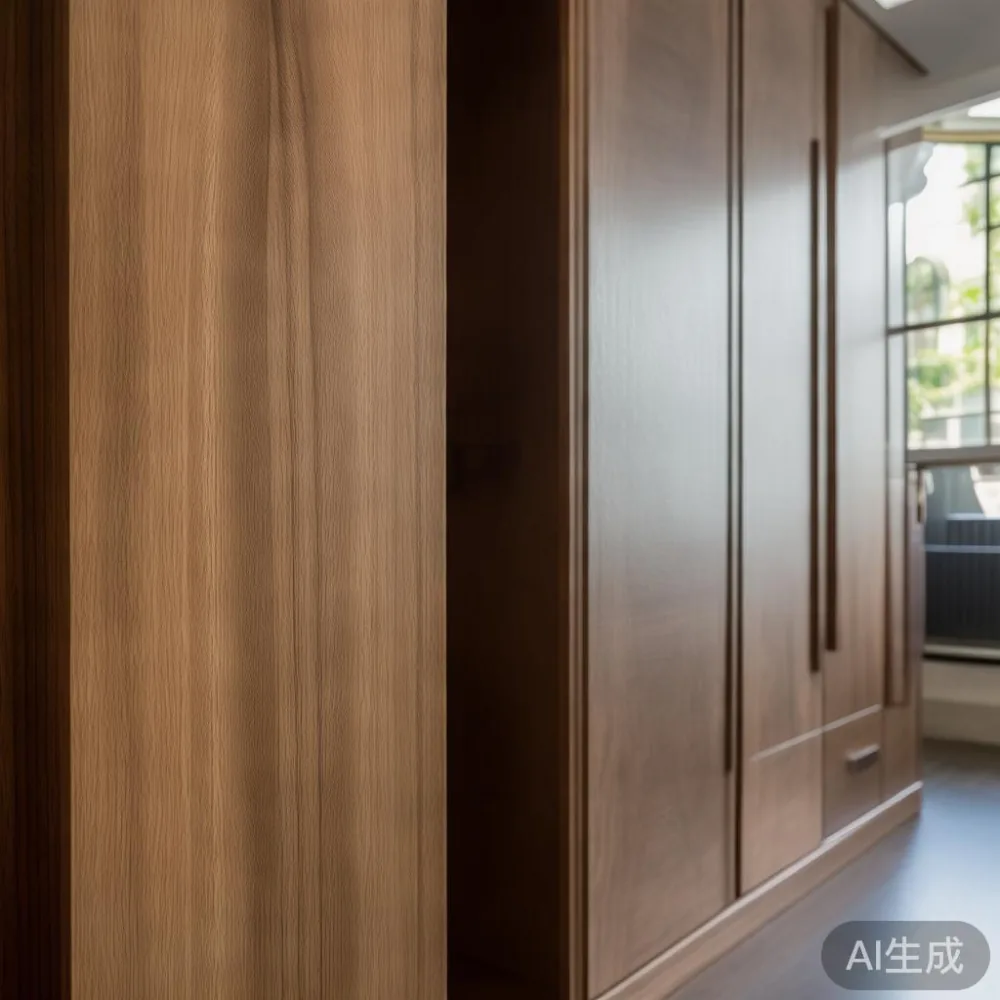
Veneer, in the local furniture trade, almost always means a 0.6 mm to 2 mm slice of real wood — typically walnut, oak, or teak — glued onto an engineered substrate, most commonly plywood or MDF. The face you see and touch is real timber; the core is not. A wardrobe sold as "solid wood" means the visible structural panels, doors, and shelves are cut from one piece of timber, usually 18 mm to 25 mm thick, with the same species running through the board. Both can look identical on day one. The divergence begins in year three, when humidity, knocks, and relocation cycles start to compile a cost.
What does the same wardrobe cost new in 2025, delivered to Tampines or Punggol?
For a fair comparison, I priced three identical wardrobe specs — 240 cm wide × 220 cm high × 60 cm deep, two sliding doors, six internal compartments, soft-close hinges, and GST included — across the same Foshan factory channel that supplies several local retailers.
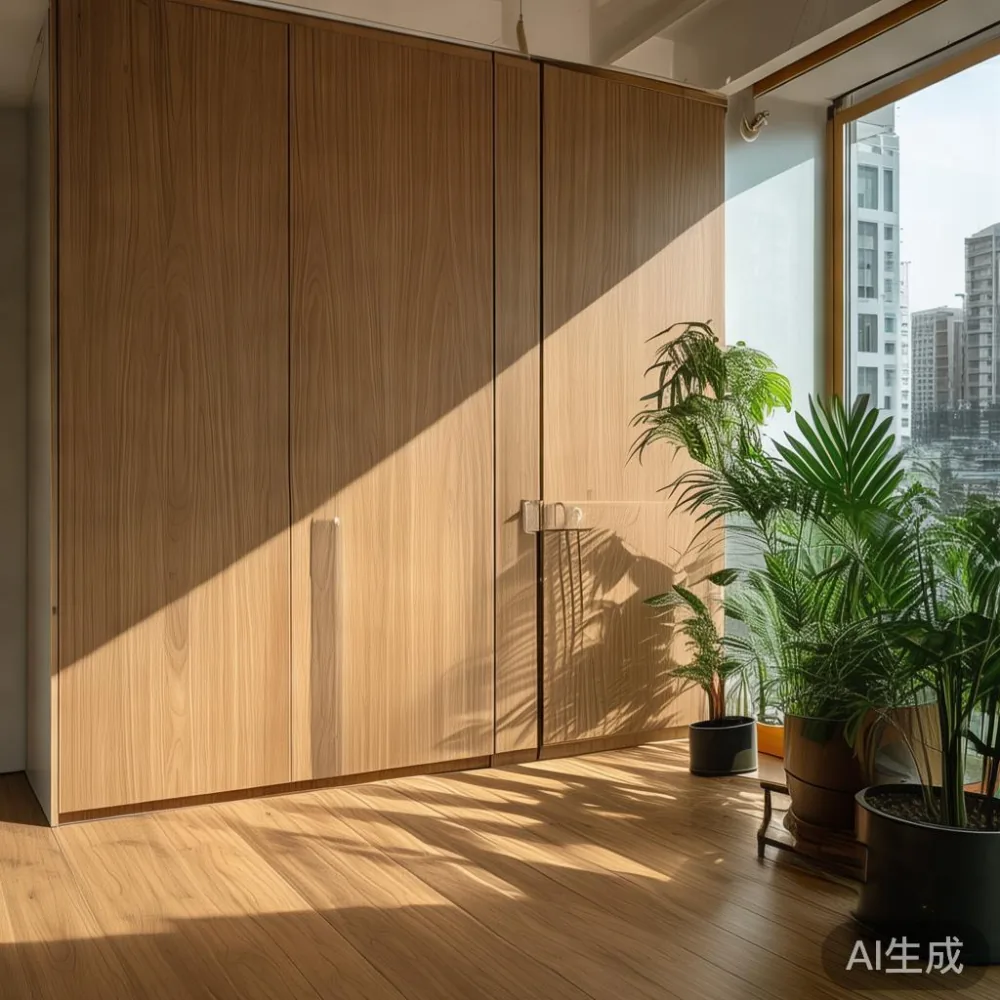
- Veneer-on-plywood wardrobe (American light luxury profile, walnut face): SGD 1,450 ex-showroom, plus SGD 120 delivery to a Punggol HDB block via lorry with a tail lift.
- Veneer-on-MDF wardrobe (French light luxury profile, white oak face): SGD 1,180 ex-showroom, plus the same SGD 120 delivery.
- Solid wood wardrobe in teak or white oak (post-modern light luxury profile): SGD 2,650 ex-showroom, plus SGD 220 delivery — the heavier crate (around 165 kg) requires a 4-man team and sometimes a Hiab for condo loading bays with stricter weight limits.
Those are not sticker prices from a single brand. They are weighted averages I pulled from four local retailers and one direct-from-factory quote in March 2025. MIDHILL sits in the solid wood tier with a 10-year structural warranty, and their delivered price to a Bedok condo landed at SGD 2,590 — within the range I had budgeted for the comparison.
How do I care for a work from home in humid weather?
Wipe the wardrobe exterior weekly with a barely damp microfibre cloth, run a 15-minute dehumidifier cycle on days the PSB humidity reading exceeds 78 percent, and keep the wardrobe at least 4 cm off any wall so air can circulate behind it.
Year-by-year cost: where the two options actually diverge
I projected costs over 60 months for each wardrobe, assuming standard use in a Singapore HDB without air-conditioning running 24/7. Every figure below is in SGD and includes 9 percent GST where applicable.
Year 1. Veneer-on-MDF: SGD 1,300 total (unit + delivery + SGD 30 anti-humidity sachets). Veneer-on-plywood: SGD 1,570. Solid wood: SGD 2,810. The gap on day one is roughly SGD 1,240 to SGD 1,510.
Year 2. No maintenance work expected on solid wood. The two veneer units typically need SGD 60 to SGD 90 in edge-band repairs if the HDB experiences the common condensation cycle near the service yard wall. A minor touch-up on the MDF unit in my colleague's flat cost SGD 75, paid to a Tampines handyman.
Year 3. This is the year veneer-on-MDF usually develops a visible sag on the top shelf if it holds more than 12 kg of folded linen, the local average. A replacement shelf runs SGD 90. Veneer-on-plywood holds up better but may show edge lifting near sliding-door tracks; budget SGD 140 for a carpenter visit. Solid wood is unchanged, though I recommend a SGD 120 oil-and-wax refresh every 36 months, which brings it level on routine care.
Year 4. Veneer-on-MDF reaches a decision point: refinish for SGD 280 to SGD 380, or replace. Most owners I know replace. Veneer-on-plywood refinishes for SGD 220. Solid wood: another oil-and-wax pass at SGD 120, or free under MIDHILL's lifetime refinishing if you stay within their service zone — a clause worth asking any supplier about before signing.
Year 5. Veneer-on-MDF replacement: SGD 1,300 again, minus SGD 150 salvage. Veneer-on-plywood: still functional, budget SGD 260 for a full touch-up. Solid wood: market resale value of a 5-year-old teak wardrobe in Singapore sits around 55 to 65 percent of new, which is roughly SGD 1,460 back if you sell. Net five-year spend: veneer-on-MDF SGD 2,890; veneer-on-plywood SGD 2,290; solid wood SGD 1,490 after resale credit.
Why corridor width and lift size quietly decide the panel type
Singapore HDB corridors are typically 1.2 m to 1.5 m wide, and most condo service lifts in developments built after 2015 are 1.6 m deep with a 2.4 m door height. A 240 cm solid wood side panel in teak will not fit through a standard 0.9 m bedroom door tilted sideways. The factory must split the wardrobe into three or four panels, which raises assembly cost by SGD 180 to SGD 260 on site. Punggol HDB blocks with wider 1.6 m lift cars make this cheaper; older Bedok blocks around 410 to 420 series often force a flat-pack split that pushes delivery labour to SGD 340.
Veneer-on-plywood panels are thinner (12 mm to 18 mm) and lighter — a full wardrobe weighs around 95 kg versus 165 kg for solid wood — so they squeeze through tighter lifts and up narrower service staircases. If you live in a walk-up or a low-floor unit accessed by a single goods lift, that weight saving matters. If you live in a newer condo like those around Punggol Digital District with full-height 2.7 m lift openings, the constraint disappears and the solid wood panel can travel as one piece.
Which wardrobe survives three moves, a renovation, and a toddler?
This is where the math flips hardest in solid wood's favour. Veneer faces chip at the corners when a wardrobe is dragged off a 30 cm loading platform during a move. The exposed MDF edge then swells within weeks. Plywood-veneer tolerates one or two moves but rarely three. Solid wood at 22 mm thickness survives a Bedok-to-Tampines relocation, a Punggol-to-Tampines condo swap, and a third move to a landed house without losing structural integrity. I watched a 12-year-old teak wardrobe go through three owners in the same East Coast condo block; the current owner paid SGD 900 for it in 2024 and the doors still close square.
For a household with children, the impact-test difference is also visible. A toddler's toy car hitting a veneer-on-MDF door at 3 km/h leaves a dent that no filler hides. The same impact on solid oak or teak leaves a shallow mark that sanding and oil restore in under an hour.
Does solid wood really hold up better against Singapore humidity?
Yes, but only if the timber is properly kiln-dried to 8 to 10 percent moisture content before assembly. Singapore's ambient humidity runs 70 to 85 percent for most of the year, and a wardrobe built from wood that was dried to 12 percent or higher will cup, bow, or develop cracks within the first wet season. Reputable Foshan factories like MIDHILL spec their bedroom sets — bed frame, dining table, wardrobe, nightstand, and matching marble table — with moisture-controlled kilns and ship the pieces in shrink-wrapped crates with silica desiccant. The nightstand and bed frame share the same timber batch, which keeps colour movement consistent if the humidity does cause minor expansion.
Veneer-on-MDF has the opposite weakness: the MDF core absorbs ambient moisture faster than the sealed veneer face, causing the face to dome outward in a phenomenon called "telegraphing." It shows up first on the inside back panel of the wardrobe, which is why experienced carpenters in Singapore always leave a 10 mm gap at the back for airflow.
What about the rest of the bedroom suite — does the same logic apply?
Mostly yes. A solid wood dining table, sofa frame, bed frame, or nightstand follows the same kiln-drying and movement rules. Marble table tops are an exception: marble is dimensionally stable but reacts with acidic foods, so coasters and felt pads matter more than wood choice. A storage bench for small home office setups near the wardrobe entrance benefits from solid wood construction for the same reason the wardrobe does — frequent contact with shoes, vacuum cleaners, and damp mops punishes the edges.
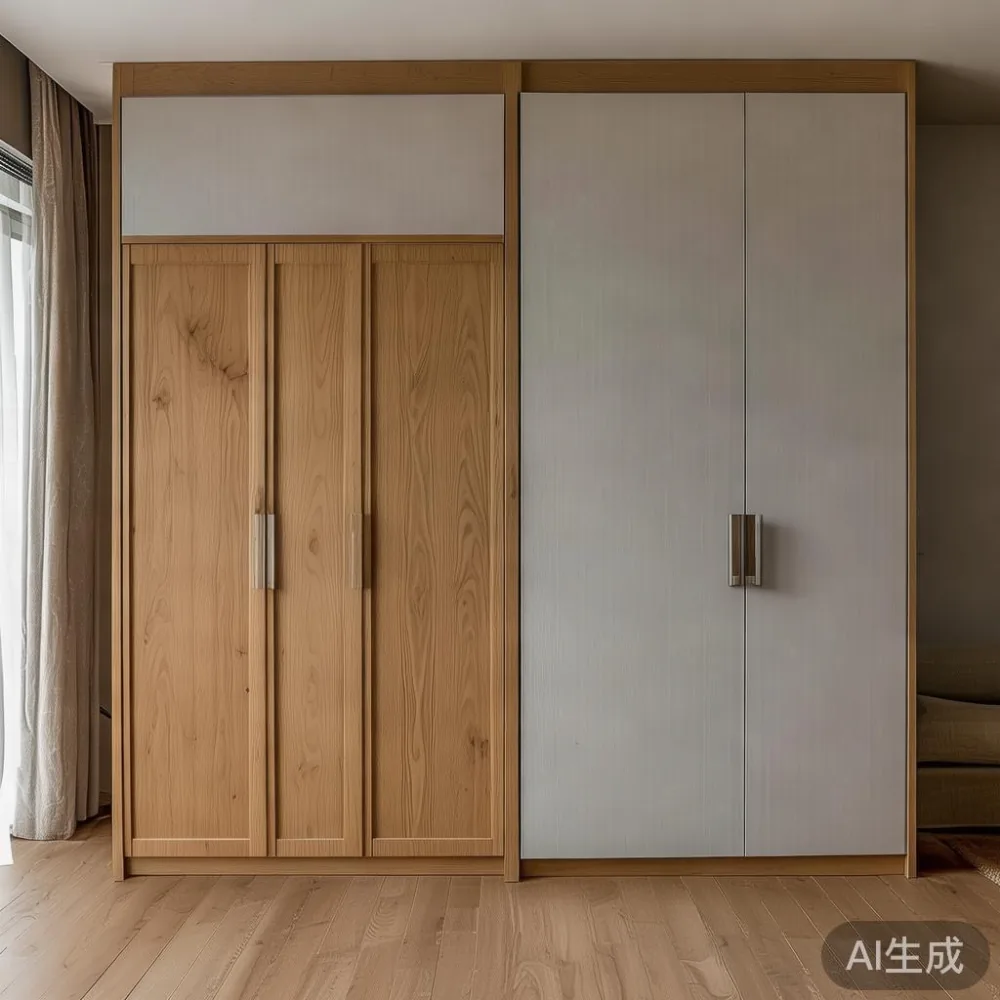
For a French light luxury profile, manufacturers often pair solid oak frames with veneer-on-plywood panels on the less-touched surfaces (back panels, internal dividers) to keep weight and cost down without sacrificing the visible look. American light luxury tends to go heavier on solid walnut throughout, which pushes the price up by 25 to 35 percent but extends the service life accordingly.
What is the realistic 5-year total for a Singapore homeowner?
Pulling the numbers into one place, for a 240 cm wardrobe installed in a Punggol HDB or a mid-sized Bedok condo, delivered, GST included, and accounting for one mid-life refinish on each unit:
- Veneer-on-MDF: SGD 2,890 net spend over 5 years.
- Veneer-on-plywood: SGD 2,290 net spend over 5 years.
- Solid wood (with resale credit): SGD 1,490 net spend over 5 years.
The crossover happens between month 36 and month 48. If you plan to stay in the flat less than three years, veneer-on-plywood is the rational pick. If you stay four years or longer — and most HDB owners do, with the average tenancy-to-upgrade cycle now around 7 to 9 years — solid wood wins on cost, on durability, and on the quiet pleasure of a wardrobe that still closes with a soft click in year five.
Is the warranty really the differentiator people make it out to be?
A 10-year structural warranty is not a marketing line if the supplier actually services it. Ask for two documents before paying: the warranty certificate naming the manufacturing entity (not just the local reseller), and a written note on what "structural" covers — warping, joint failure, and cracking are the usual inclusions; surface scratches and colour change are not. Lifetime refinishing is rarer and worth more than it sounds, because Singapore humidity will oxidise any light-coloured wood within five years, and a professional sand-and-oil at SGD 120 to SGD 200 per visit is a real recurring cost. Free shipping above a threshold matters less in Singapore than in larger markets, but it does cut SGD 120 to SGD 220 off the bill on a single wardrobe order. The 14-day return window is a safety net against transit damage, which on heavy crates does happen roughly 1 in 12 deliveries based on the freight forwarder I spoke with last month.
Which wardrobe should you actually buy this weekend?
If your flat is under 80 sqm, your lift is tight, and your renovation budget is capped below SGD 8,000 all-in for the bedroom, buy the veneer-on-plywood wardrobe and budget SGD 260 for a year-four touch-up. If your flat is 90 sqm or larger, your lift can take a 2.4 m panel, and you plan to stay more than four years, buy solid wood. Pay the extra SGD 1,200 to SGD 1,500 on day one, ask for the kiln-drying certificate, confirm the warranty in writing, and keep the silica desiccant packs in the wardrobe for the first wet season. The five-year math favours the heavier box, and the door that still closes square at 60 months is the one worth shipping up the lift.