Solid Wood vs Veneer Wardrobes in Singapore: An Honest 5-Year Cost Breakdown
Last month I visited a friend's new 4-room HDB flat in Punggol, and the very first thing she complained about was the wardrobe. The previous owners had installed a particleboard-with-veneer slider about four years earlier, and the door panels were already swelling at the bottom edge from the corridor-side humidity. She paid around S$1,180 for it, including installation. I thought about my own wardrobe, built from solid wood in 2020, and reached for a notebook. What followed was a five-year cost comparison between veneer and solid wood, calculated specifically for Singapore HDB and condo bedrooms, with HDB lift and corridor widths in mind, GST included, and the kind of small but real expenses that no brochure ever mentions.
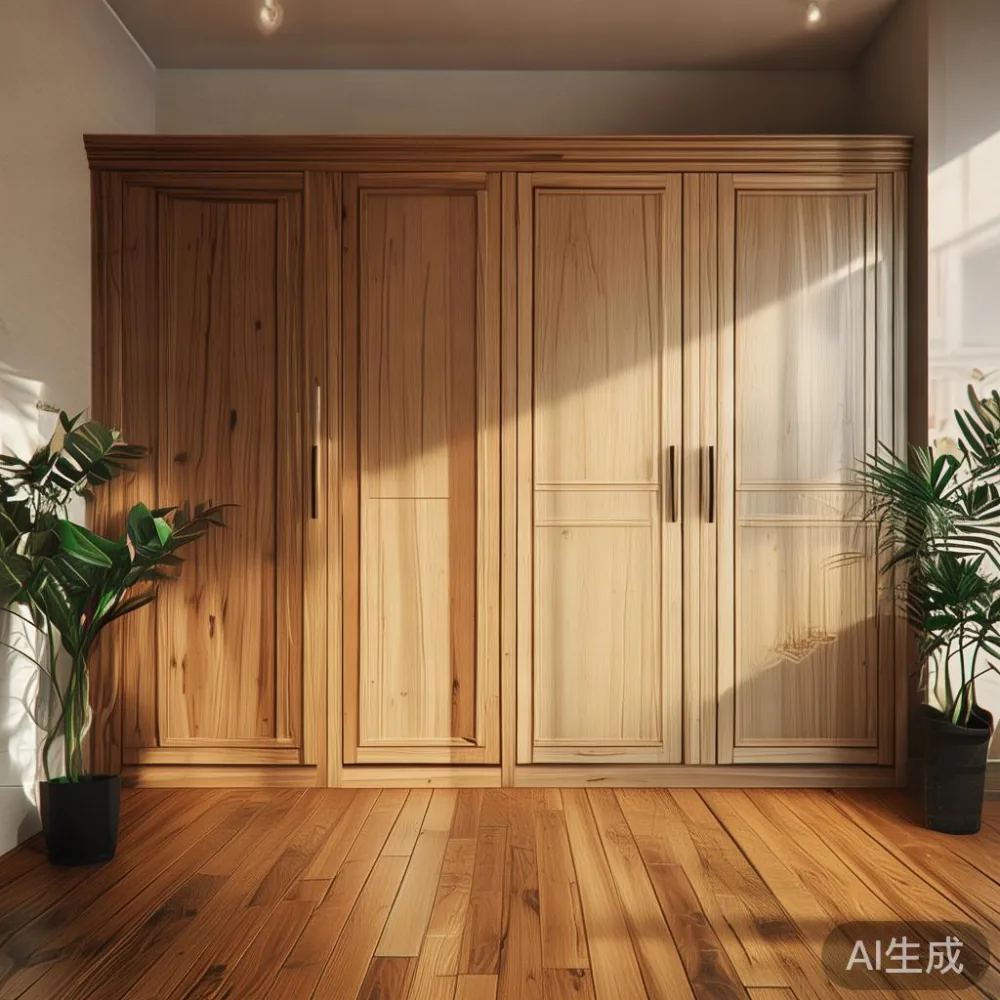
What does a wardrobe actually cost over five years in Singapore?
The honest answer: a wardrobe is not a single purchase, it is a slow drip of money over time. A veneer slider from a local carpentry shop in Bedok typically costs S$1,100 to S$1,600 for a standard 2.4 m run, while a comparable solid wood wardrobe from a Foshan-built brand like MIDHILL, shipped flat-packed and delivered to Tampines, lands between S$2,400 and S$3,200 with free shipping over US$350 and the 14-day return window. On day one, solid wood is roughly 1.6 to 2.0 times more expensive. The real question is what happens in year three, year four, and year five — and that is where the gap usually shrinks, or disappears entirely.
The real numbers: year-by-year cost of a veneer wardrobe
Let us use a 2.4 m sliding wardrobe in a Tampines HDB as the baseline. The carcass is 16 mm melamine-faced particleboard, the sliding doors are MDF with a teak-look veneer, and the runner system is a local brand such as
The first year looks painless. You spend S$1,300 on the unit and S$180 on installation, plus S$55 for a 3 m delivery because the corridor at the lift landing is a little tight. Year two is usually quiet. You notice a faint musty smell in the monsoon months, so you buy a 500 g silica dehumidifier tin for S$12 and a small box of dehumidifier beads for S$18. Year three is when costs start appearing. The bottom edge of one door panels starts to swell by about 3 mm from repeated exposure to humid corridor air pushed in by the aircon compressor cycle. You call the carpenter back. The patch-and-sand job costs S$220. Year four, the same panel needs a full replacement because the swelling has cracked the veneer face. You pay S$380 for one new door plus another S$60 for the runner to be re-aligned, since the warped door has bent the track. By year five, two of the four rollers have failed, and the wardrobe is functional but ugly. Your running total sits at roughly S$2,225, and the unit has roughly four to six more years of cosmetic decline before a full replacement is needed.
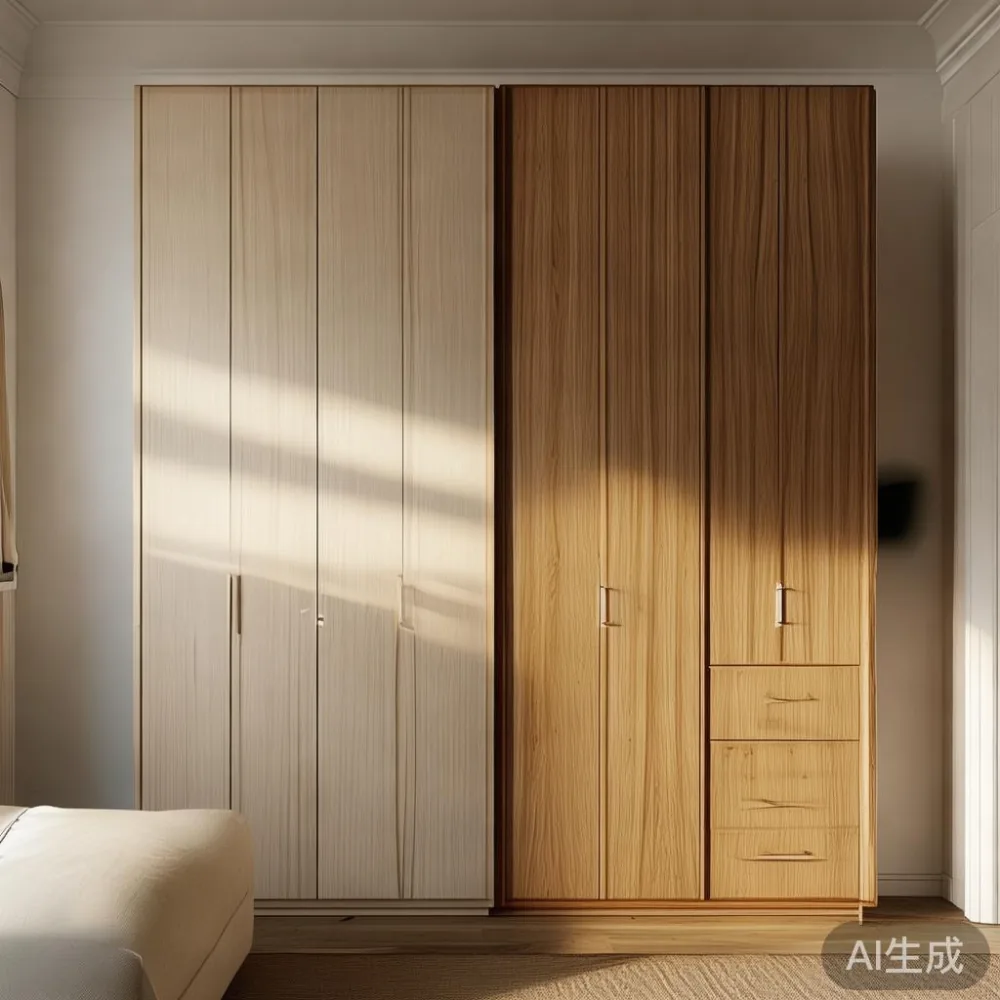
The real numbers: what a solid wood wardrobe actually costs over five years
Now the same 2.4 m run, this time using oak or ash solid wood, sourced from an established Foshan workshop such as MIDHILL, exported to Singapore for more than a decade. Free shipping over US$350 keeps delivery at zero for Tampines, Bedok, and Punggol addresses, and the 14-day return policy covers the small risk of a transit scratch. The unit price is around S$2,800, with installation between S$120 and S$200 depending on whether the crew needs to work through a 1.2 m-wide corridor bend — a quick measurement to take before ordering. Year one also includes a 200 ml tin of osmo wax oil for S$45 if you want to keep the grain hydrated against the air-conditioned dryness. Year two has zero maintenance. Year three, you wipe down the runners with a drop of silicone spray (S$8). Year four, nothing. Year five, you may lightly buff out one surface scratch with a soft cloth and a walnut meat, the same trick cabinetmakers use, costing you literally zero. The lifetime refinishing offer, often included on the warranty card for the lifetime of ownership, would cover a professional re-sand and re-oil if the surface ever looked tired, and the 10-year structural warranty covers the carcass joints, the drawer slides, and the hinges. After five years your total spend is about S$2,973 to S$3,053. The wardrobe still looks like the day it was delivered. The resale value to a new flat owner is also non-trivial, often 35 to 45 percent of original price on Carousell or via direct sale.
The 5-year cost gap between veneer and solid wood
Doing the math honestly, a veneer wardrobe runs about S$2,225 across five years and a solid wood wardrobe runs about S$3,000, a difference of roughly S$775 over sixty months, or about S$13 per month. That is the price of two plates of chicken rice at the Tampines Round Market. For a piece of furniture you touch multiple times every day, that is a remarkably small premium for a wardrobe that will still look honest in year twelve. And because the lifetime refinishing service can be invoked once or twice across a 20-year ownership window, the per-year cost of solid wood drops further with time, while veneer costs keep reappearing as humidity keeps working on the panels.
How do I care for a dining chairs in humid weather?
Wipe them down weekly with a barely damp microfiber cloth, keep them at least 15 cm from any open window during the December and January monsoon, and apply a thin coat of hard wax oil once every six months — this single habit protects both dining chairs and the matching solid wood dining table, bed frame, nightstand, wardrobe, and even an adjacent French provincial TV console in the same room. The principle is identical for any hardwood surface, and it takes less than ten minutes per item per session.
Does the HDB lift size actually matter when choosing a wardrobe?
Yes, a lot, and most buyers I speak to underestimate it. Standard HDB passenger lifts in blocks built after 2010 measure about 1.1 m wide by 1.4 m deep, with a sliding door opening of roughly 0.9 m. A flat-packed solid wood wardrobe from a brand like MIDHILL is normally shipped in boxes measuring 180 cm long by 45 cm wide by 25 cm tall. Four of those boxes fit cleanly across the lift floor, leaving room for two people to stand. A fully assembled veneer slider from a local carpenter, on the other hand, often arrives as one 2.4 m panel that simply will not fit. Carpenters solve this by disassembling on site, which is fine, but it does add 60 to 90 minutes of billable labour. Older lifts in blocks such as those along Bedok Reservoir measure closer to 0.95 m wide, and a 180 cm long box is the practical upper limit. Always measure the lift depth at your block before committing to an order. The 1.4 m measurement is the number that catches people out — boxes longer than that need to come in at a slight angle, which is doable but slow.
Why does the corridor width change the price of installation?
Because narrow corridors force the crew to remove door frames first. A typical Punggol or Sengkang BTO corridor at the lift landing measures 1.5 m clear, which is comfortable. The internal corridor between your front door and the bedroom in many 4-room flats bends through 1.2 to 1.3 m, and an assembled 2.4 m panel will not clear it. A good installation team will pre-cut, pass through, and re-attach on site, charging an extra S$80 to S$150 for the extra hour of work. Flat-packed solid wood panels, by contrast, come in manageable 180 cm sections that even a single strong installer can carry around tight corners. Over five years, if you ever need to dismantle the wardrobe for a move — which HDB upgraders do roughly every six to nine years on average in Singapore — the flat-pack format saves you another S$200 to S$400 in dismantling and reinstallation fees. That single practical detail closes a meaningful chunk of the price gap on its own.
Light luxury, post-modern light luxury, and the question of feel
Beyond the ledger, there is the question of how the wardrobe feels in your bedroom every morning. French light luxury pieces lean toward softer curves, light oak tones, and slim brass-coloured handles; American light luxury sits closer to darker walnut, square profiles, and matte black hardware; post-modern light luxury tends to play with two-tone grain and a slightly raised plinth line. A solid oak wardrobe can be finished in any of these three styles because the substrate is the same — the wood itself just takes the colour and the sheen honestly. Veneer cannot do this convincingly past year three, because once the surface starts to peel at the corners, the illusion collapses and the underlying MDF or particleboard shows through. Walking through a Punggol flat last week, I opened a three-year-old veneer slider and saw the tell-tale grey edge of raw MDF along the top corner where the homeowner had banged a suitcase against it. The repair would have been S$150 plus two days without access to that section of wardrobe. With solid wood, a light sanding and a dab of wax — about S$0.50 of materials and fifteen minutes of time — would have made it disappear.
Is the GST adjustment still worth factoring in for furniture in 2026?
At the current 9 percent GST rate, a S$1,300 veneer wardrobe carries S$117 of GST, and a S$2,800 solid wood wardrobe carries S$252 of GST. That is a S$135 difference on the day of purchase. It is a real number, and pretending otherwise would distort the comparison. Anyone arguing that the solid wood premium is too large should also note that the GST on the future repair bills (S$220 plus S$380 plus S$60 for the veneer unit) would themselves amount to S$59 over five years, narrowing the gap further. Over a ten-year window, the lifetime refinishing service alone usually pays back the GST difference entirely.
What about resale value and end-of-life disposal?
Veneer wardrobes built from particleboard and MDF are notoriously difficult to recycle in Singapore because the wood fibres are bonded with urea-formaldehyde resins. They typically end up in the bulky refuse stream during HDB move-outs, where the disposal cost is S$30 to S$80 per pick-up depending on the block. A solid wood wardrobe, however, can usually be resold on Carousell for S$700 to S$1,200 after five to seven years, or donated to charities such as The Food Bank Singapore's furnishing partners for a tax-deductible receipt. Even offloading it for free to a colleague offsets the dismantling cost. It is one more quiet way the ledger swings back toward the more durable option.
A short checklist before you commit to either option
Measure your lift depth and your internal corridor width before paying any deposit. Decide whether a flat-pack or assembled format suits your move-out horizon. Ask whether the seller offers a 10-year structural warranty on the carcass and a lifetime refinishing service on the surfaces — a clear yes from a Foshan exporter with fifteen-plus years of international shipping is a strong signal. Inspect a real sample under bright corridor light for the corner joinery, especially the underside of any horizontal panel where humidity collects first. And finally, look at the runners and the drawer slides — soft-close on metal runners adds roughly S$120 to the order but pays for itself within the first three years of daily use.
The honest verdict after one bedroom, five years, and a Punggol site visit
For a Singapore HDB or condo bedroom used by a family for at least six to ten years, the solid wood wardrobe costs about S$13 more per month than a veneer alternative and gives back most of that difference at resale, in maintenance time saved, and in the simple pleasure of opening a wardrobe that still feels solid in the morning. A solid wood sofa in the living room lasts thirty years, a solid wood bed frame quietly holds a mattress for twenty-five, a dining table becomes the gathering point for a decade of Sunday lunches, and the wardrobe — that most private piece of furniture — should be built to the same quiet standard. If the budget allows, the more durable choice is also the more honest one, and the monthly gap is small enough to fit inside a hawker-centre dinner.