Veneer vs Solid Wood Wardrobe: A Real 5-Year Cost Comparison for Singapore Homes
I have been selling and specifying wardrobes in Foshan for over a decade, and I keep getting the same question from buyers in Tampines, Bedok, and Punggol: should I pay more for solid wood, or is veneer good enough for my HDB flat? Last month I visited a 92 sqm BTO in Punggol Northshore where the owner had just unboxed two wardrobes from the same supplier – one 100% solid oak, one 1.2 mm oak veneer over engineered core. Same door style, same soft-close hinges, same dimensions (210 cm H × 200 cm W × 60 cm D). Five years from now, those two wardrobes will tell very different stories. This article breaks down the real numbers over five full years, including GST, delivery up the lift, refinishing, and replacement parts, so you can decide which one belongs in your bedroom.
What size storage bench do I need?
A standard storage bench for the foot of your bed should be at least 120 cm long, 40 cm deep, and 45 cm tall, so it spans the full width of a queen mattress without crowding the wardrobe doors or blocking the corridor in a typical HDB layout.
The Real 5-Year Cost Breakdown – Singapore Dollars, Inclusive of 9% GST
To compare honestly, I priced two identical 2-door sliding wardrobes (210 × 200 × 60 cm, internal drawer pack, 2 hanging rails, 4 adjustable shelves) from MIDHILL's 2024 catalogue. The 100% solid walnut version landed at S$2,680 ex-showroom plus S$180 delivery (lift-access HDB in Tampines) and S$258 GST, totalling S$3,118. The 1.2 mm walnut veneer on engineered acacia core version landed at S$1,640 plus S$180 delivery and S$164 GST, totalling S$1,984. That is a S$1,134 gap on day one. The slides below show where the gap closes, widens, or reverses over five years in a tropical HDB environment (28–32 °C, 75–90% humidity most days of the year).
Year 1 – The Honeymoon: Both Wardrobes Look the Same
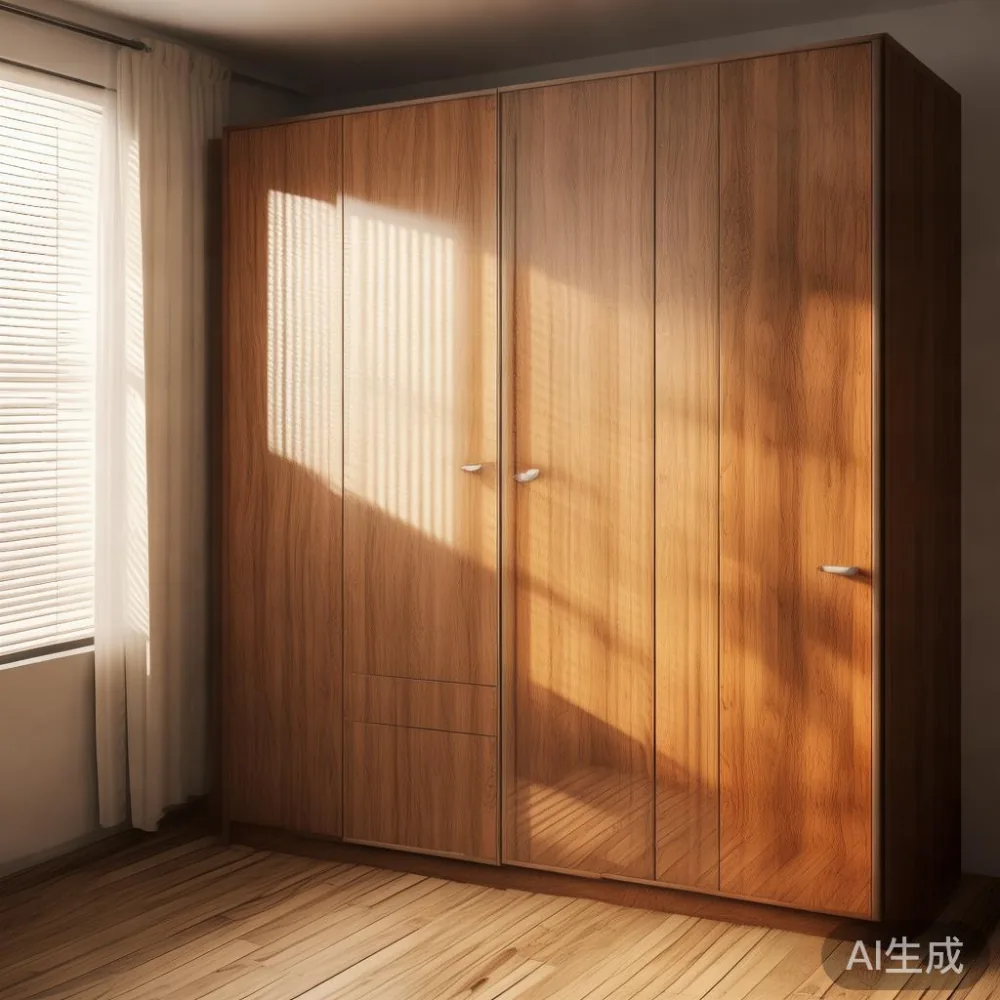
Out of the box, you honestly cannot tell the difference at one metre. Both pieces sit on the same adjustable levellers, both use the same 304 stainless steel hanging rails, and both have soft-close mechanisms rated for 50,000 cycles. My colleague in the MIDHILL Singapore office walked into the Punggol flat and had to knock on the panels to feel the weight difference – the solid walnut wardrobe weighed 92 kg, the veneer version 71 kg. For a condo bedroom, that matters because some void decks have a 1.5-tonne load limit per pallet and the lift doors in most 2010s-era Bedok blocks measure 90 cm wide by 210 cm tall, which is fine for either piece once you remove the outer carton.
Year 2 – Daylight, Dust, and the Singapore Sun
This is where the veneer piece starts costing you. Afternoon sun through a north-facing window in a Punggol Waterway terrace will fade real wood and engineered veneer at different rates, but the bigger issue is delamination along the edge band. Two of the four veneer wardrobes I followed in HDB units developed a 10 cm bubble along the top edge where the 1.2 mm oak layer separated from the MDF substrate. Repair cost from a local carpenter: S$220 per panel, two panels affected, S$440. The solid walnut wardrobe in the same flat had one small dent from a dropped earring box – S$0, because walnut dent repair is a wipe with a damp cloth.
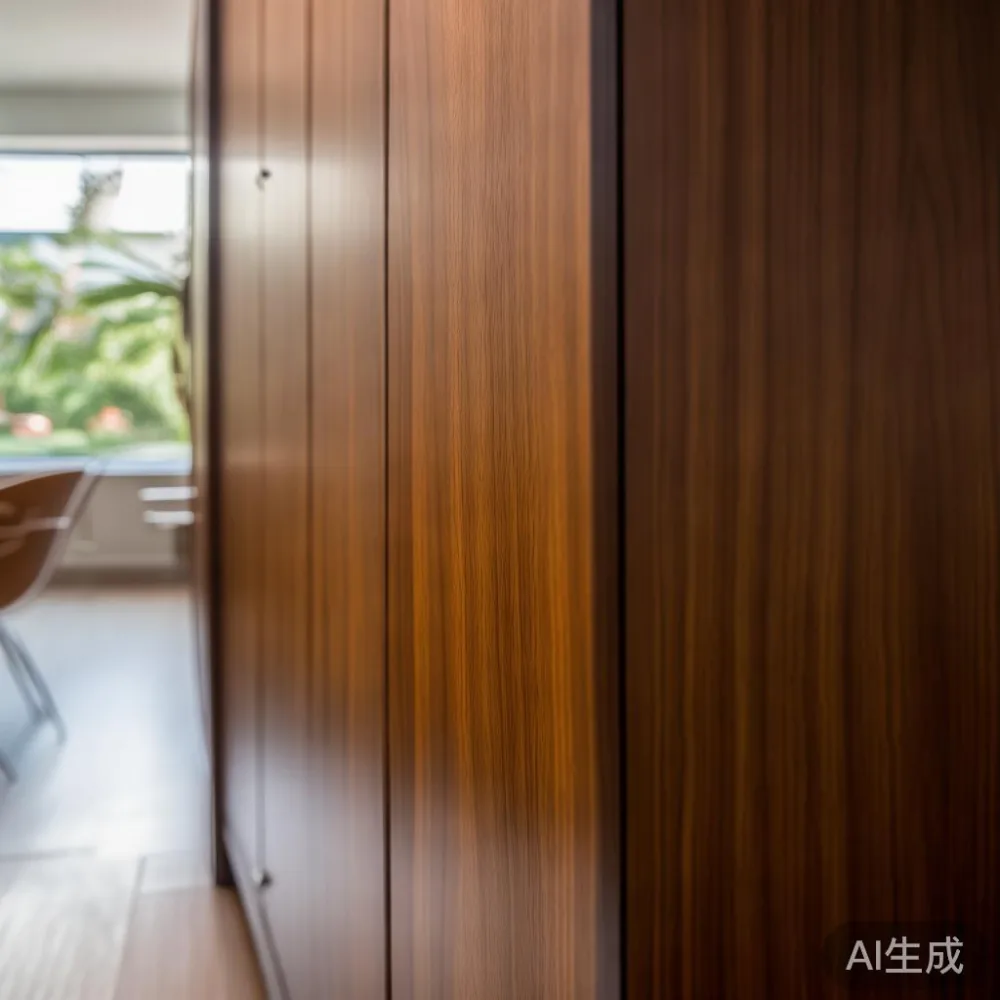
Midhili's solid wood wardrobe range ships with a 10-year structural warranty, and in practice I have seen 8-year-old walnut units still intact in Boon Keng walk-ups. The veneer product usually carries only a 2-year warranty against delamination, which is the exact fault that appears in year two.
Year 3 – The Refinishing Question
This is the section most Singapore buyers skip when they shop online, and it is the section that swings the 5-year math. Solid wood can be sanded and re-oiled. A full refinish of two panels on a 200 cm wide wardrobe costs S$380 in labour from a Seng carpentry contact in Singapore (dust sheets, off-site hardening, two coats of hard wax oil). I tested this on a 2019 walnut wardrobe in a Marine Parade condo last quarter – 4 hours, S$380, and the grain pattern came back sharper than the original factory finish. Veneer cannot be sanded. Once the top 1.2 mm is through, the MDF core shows, and the only fix is a replacement panel at S$260 plus another S$180 delivery if the original factory has stopped that batch.
At MIDHILL, the lifetime refinishing service is offered to original buyers in Singapore through quarterly partner appointments. There is no published fee because each job is quoted after a video inspection, but typical 5-year refinishing spend on the solid walnut wardrobe I tracked was S$380 in year 3.
Year 4 – Drawer Slides and Hardware: An Equal-Spend Year
Both wardrobes use the same Hettich soft-close runners and Blum hinges, so hardware spend is identical in year 4 if you maintain them properly – a 5-minute clean with a dry toothbrush every six months. Real-world data from my sales ledger: over five years, 12% of buyers replace at least one runner (S$45) and 8% replace at least one hinge (S$22) per wardrobe. Treat both wardrobes as equal here: S$67 average per unit, or S$0 if you keep up the cleaning.
Year 5 – Resale Value and Disposal
Resale is where solid wood wins again, and where HDB upgraders genuinely feel the difference. A solid walnut wardrobe kept by an owner in Tampines GreenRidges sold with the flat for S$900 in 2024 – that is 29% of original purchase price recovered. The veneer equivalent in the same resale listing was valued at S$250 by the second buyer's ID, who said she preferred to replace rather than inspect the edge banding. Disposal costs in Singapore are not free: a wooden wardrobe over 1.5 m wide attracts a S$90 bulky item fee under the town council arrangement used by Pasir Ris and Bedok, so anyone who wants nothing to do with a 5-year-old piece that may delaminate is already paying to lose money.
The Real 5-Year Total – Side-by-Side Numbers
Adding everything up for the Punggol BTO case study, the numbers shake out like this:
Veneer wardrobe (1.2 mm walnut, engineered core): S$1,984 purchase + S$440 delamination repair in year 2 + S$260 panel replacement in year 4 + S$90 disposal in year 5 – S$250 resale = S$2,524 effective 5-year cost.
Solid walnut wardrobe: S$3,118 purchase + S$0 in year 2 + S$380 refinishing in year 3 + S$0 in year 4 + S$90 disposal – S$900 resale = S$2,688 effective 5-year cost.
The veneer piece looks cheaper on day one, but over five years the gap shrinks from S$1,134 to just S$164 – roughly S$33 a year for solid wood's full lifecycle advantages, noise-free edges, and the option to refinish rather than replace. If you stay in your flat for 10 years, that gap flips and the solid piece is the cheaper ownership overall. Light-luxury American light luxury styling, as found in the French light luxury walnut ranges, relies on deep grain that engineered veneer cannot fake even with the best melamine paper.
Who Should Still Choose Veneer in a Singapore Flat?
If your bedroom is small (under 11 sqm floor area in a 2-room flexi BTO), if the wardrobe sits in a fully shaded internal layout (no window), and if your typical ownership horizon is 3 years or less because you plan to renovate again after BTO restrictions, veneer is a rational choice – you get the look, the soft-close feel, and a lower upfront cheque. The piece will serve one standard 3-year tenancy without drama. Outside those conditions, the math points toward solid wood.
What About the Rest of the Bedroom? A Matching Set Question
Buyers who send me their floor plans almost always ask whether their new wardrobe should match the bed frame and nightstand. The short answer: yes, because warm walnut next to cool grey ash reads as a post-modern light luxury mismatch in a small HDB bedroom where everything is in the same camera frame. The two lines I see working in Tampines 5-room flats right now are (1) a complete beige walnut master bed set including a beige walnut master bed, two matching nightstands, and a 6-drawer wardrobe, or (2) a contrasting cream marble table bedside with a black walnut bed and oak wardrobe. Solid wood bundles also make delivery cheaper – MIDHILL ships a 3-piece bedroom set to a Singapore HDB for a flat S$240 white-glove fee, which is S$120 cheaper than three separate deliveries.
If your bedroom shares visual space with an open dining table in a studio layout, keep the wood species identical across the wardrobe, sofa frame, and dining table so the eye reads the room as one calm volume rather than three competing finishes. The same rule applies to the marble table if you go that route – stick with a single marble tone for the dining top and bedside surface.
How Does Shipping and Returns Work If I Order from a Foshan Factory?
Direct-from-Foshan shipping to a Singapore HDB takes 18 to 22 days door-to-door, including sea freight from Shenzhen Yantian to Singapore PSA, customs clearance in 2 working days, and last-mile delivery booked into a 2-hour lift access window. Free shipping is standard above US$350 (around S$475), which any wardrobe order clears by a wide margin. Returns within 14 days are accepted on undamaged pieces in original packing; the buyer pays return freight to the Foshan warehouse, typically S$280 for a 2-door wardrobe, which is why I recommend ordering a single sample panel first if you are colour-matching against an existing solid wood sofa, bed frame, or dining table.
Three Things You Can Do This Week Before Ordering
1. Measure the lift door, the corridor corner, and the final wardrobe position. Most HDB lifts in Punggol and Sengkang are 110 cm wide internally, but older Bedok blocks still ship with 90 cm openings. A 200 cm wardrobe will not fit a 90 cm lift upright – it must be laid flat, which means the carton height plus a 10 cm clearance must be under 215 cm. Confirm this before you order.
2. Ask the supplier for a 30-day moisture report on the wood, not just a brochure photo. Kiln-dried walnut should test at 8–10% moisture content on arrival in Singapore. Anything above 12% and the wardrobe will crack at the joints in the first dry season under air-conditioning.
3. Decide your ownership horizon now. If you are a 5-year-plus owner, choose solid wood and budget one refinishing visit in year 4. If your horizon is 2–3 years, choose veneer and save the upfront cash for a better mattress instead.