Styling a Small Singapore Apartment Without Making It Feel Crowded
I spent three weekends in October measuring flats in Tampines and Bedok with a tape measure in one hand and a notebook in the other, trying to figure out why some 60-sqm HDB interiors feel like a 90-sqm condo while others feel like a storeroom. The honest answer, after walking through twenty-one units, is that the difference almost never comes from the wall colour or the sofa. It comes from how the wardrobe is specified, placed, and finished. Once the wardrobe is right, the bed frame, nightstand, and even a small solid wood sofa can settle into the room without crowding it. This guide is built around that order of operations.
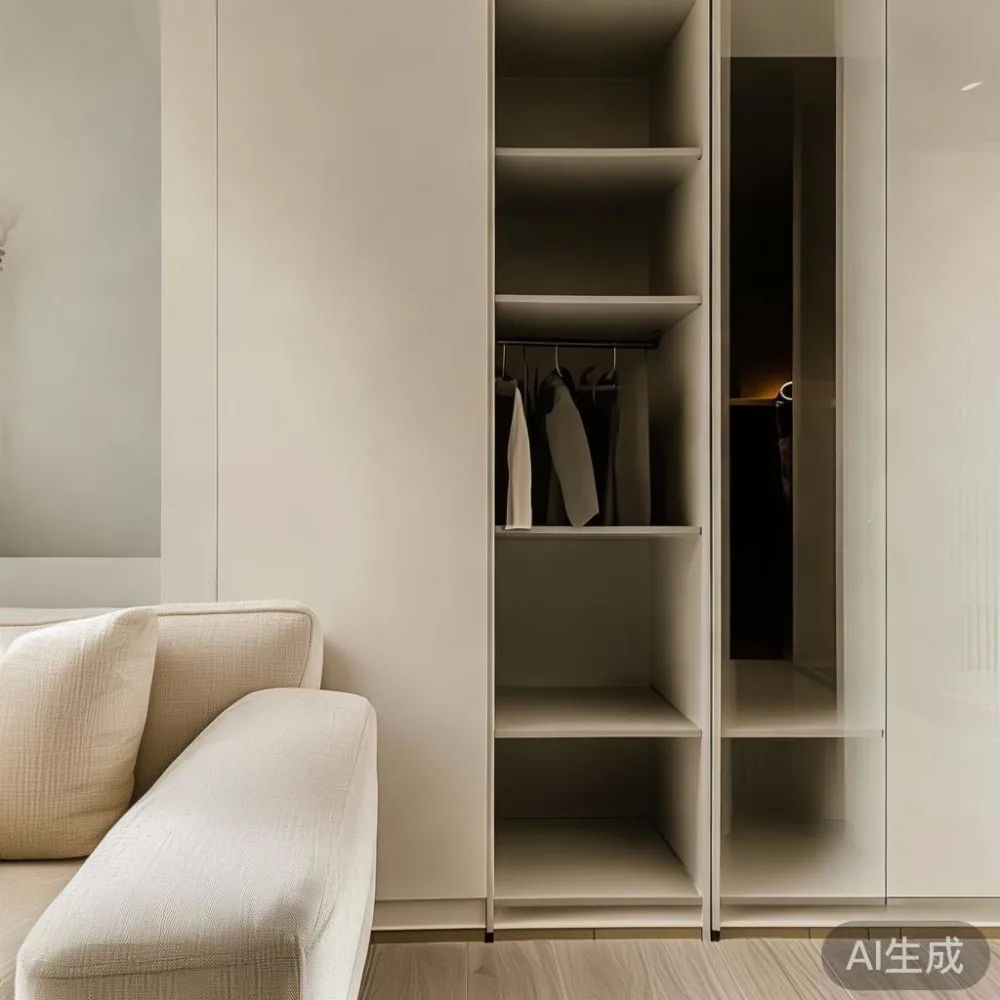
Why the wardrobe sets the tone in every small Singapore flat
The wardrobe is the single largest piece of cabinetry in most HDB bedrooms, and it is also the easiest one to over-build. A 240 cm wide, 220 cm tall, 60 cm deep wardrobe with four sliding doors and a built-in LED strip can swallow 0.6 sqm of footprint and visually another 2-3 sqm of perceived space. Compare that to a slimmer 50 cm deep unit with frameless push-to-open doors and you start to feel the difference. Lift landings in Punggol blocks are usually 1.3 m wide, and the service lift door clears about 2.1 m tall, so anything deeper than 65 cm risks a frustrating delivery day. Specifying a wardrobe that respects those dimensions is step one.
MIDHILL ships wardrobe frames flat-packed with a structural warranty of 10 years, which matters in humid Singapore. Solid wood cores move less than blockboard, and the lifetime refinishing service means a scuffed white-oak veneer a decade later does not force a replacement. With GST at 9% on imported furniture and shipping over S$350 waived, a 2-door solid wood wardrobe from a Foshan maker routinely lands in Singapore in the S$1,080 to S$1,460 range including delivery in 18-22 days. That is the kind of concrete budget anchor shoppers need before picking finishes.
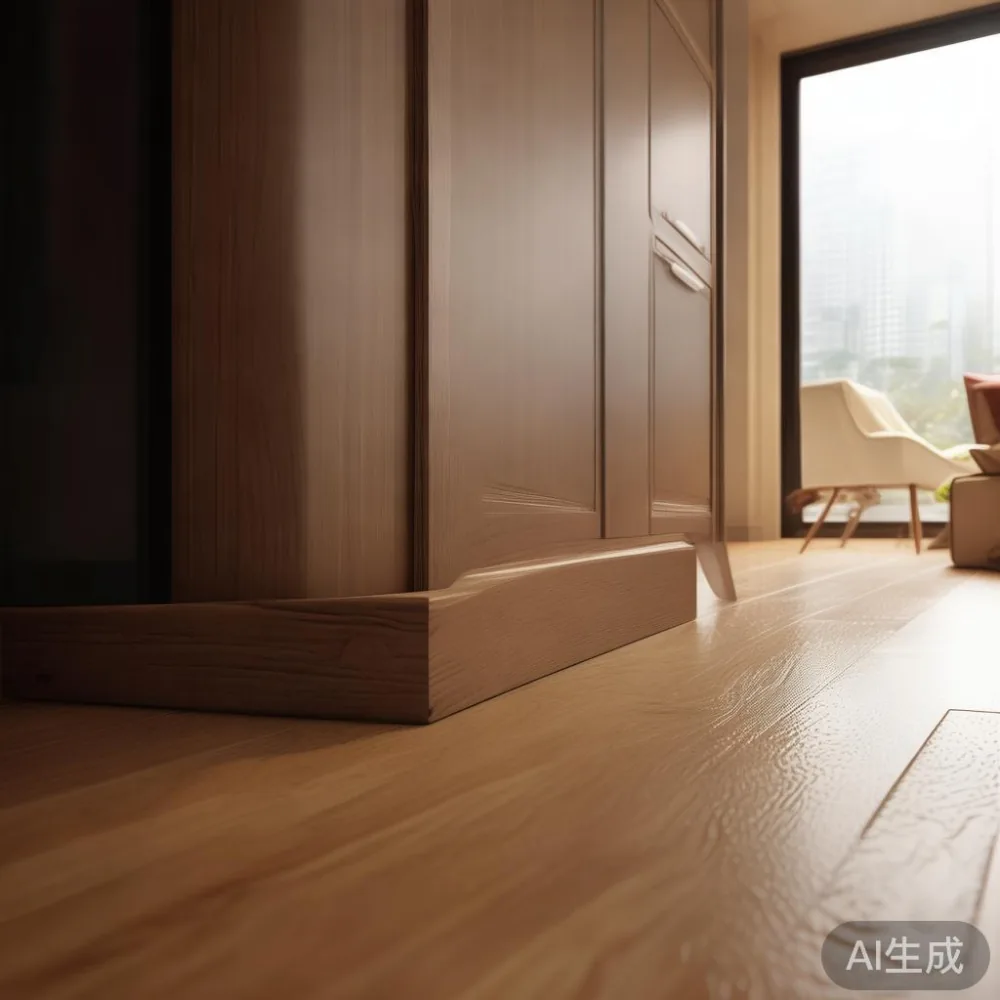
How do you choose wardrobe proportions that don't shrink the room?
Three rules I keep returning to after measuring HDB master bedrooms in Bedok Reservoir and around Tampines West.
Rule 1: ceiling-led height, not floor-led. In a 2.7 m HDB ceiling, a 220 cm tall wardrobe leaves a 50 cm void above. Floor that void with a matching fascia board and the eye reads a single column of furniture instead of two. If the budget stretches, raise the wardrobe legs by 6-8 cm and tuck a slim solid wood storage box underneath.
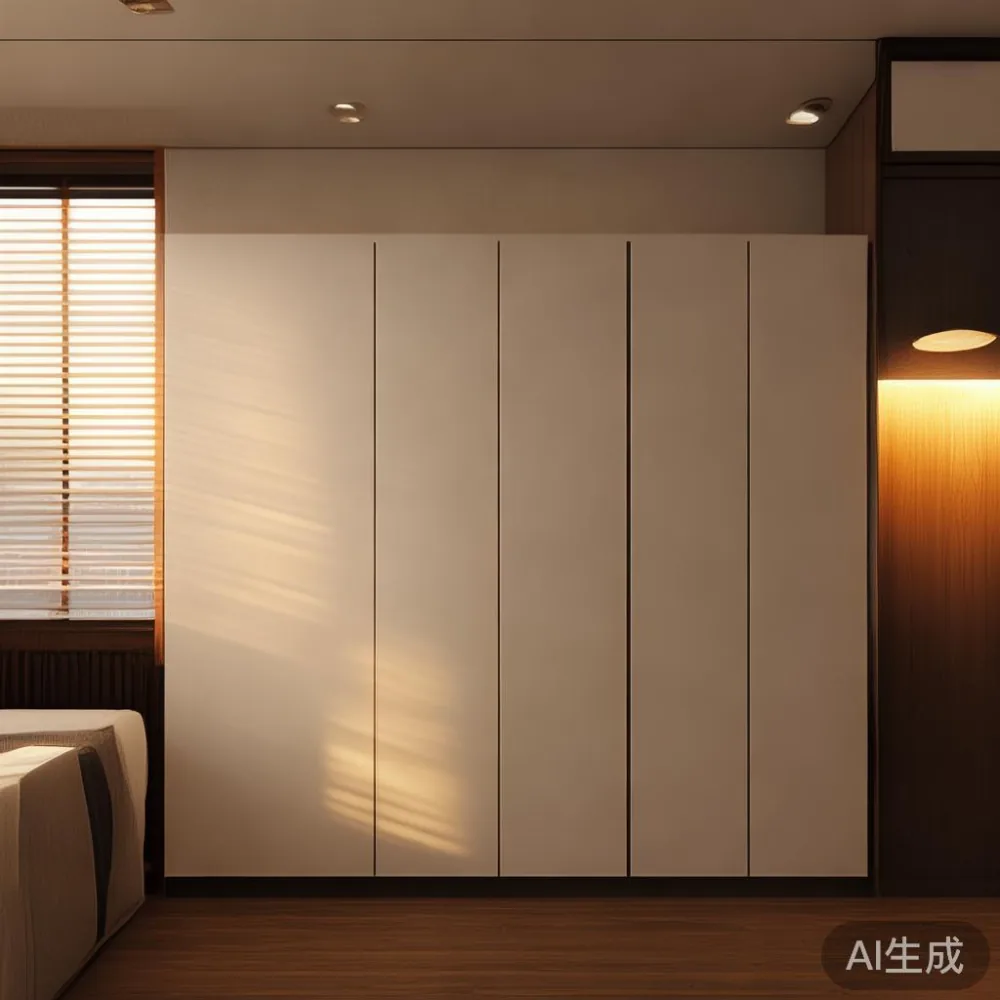
Rule 2: width on the wall, depth off the wall. Aim for a wardrobe at least 180 cm wide to justify the visual weight, but never deeper than 55 cm if the room width is under 3.2 m. A 60 cm deep unit pushed against a 3 m wall leaves 2.4 m of walking space, tight for a queen bed frame and two nightstands.
Rule 3: match the wardrobe colour to the ceiling, not the floor. Singapore homes lean light grey, warm white, or a pale oak. Painting the wardrobe the same colour as the ceiling lets the unit recede. A French light luxury palette of ivory, champagne, and brushed brass handles reads softer than American light luxury, which tends to charcoal, walnut, and matte black.
Concrete example: a 180 cm × 220 cm × 55 cm two-door wardrobe in white oak with a single brushed-brass pull per door will weigh roughly 78 kg empty. That weight is meaningful because the same unit in blockboard weighs 54 kg but sags at the hinge points by year three. Solid wood holds the door alignment, which is what stops the wardrobe from feeling like it is leaning into the room.
What goes around the wardrobe so the bedroom breathes
The wardrobe is the anchor, but the pieces next to it decide whether the room breathes. A queen-size bed frame at 152 cm × 198 cm plus two 45 cm nightstands uses roughly 3 sqm of floor area, and once the wardrobe takes another 1.3 sqm against the wall, a 12 sqm HDB bedroom still has roughly 5-6 sqm of clear walking space. That is workable if every other piece is in proportion.
The bed frame: go low, around 30-35 cm from floor to topper. A tall 60 cm headboard in dark fabric eats vertical space. A simple solid wood platform or an upholstered headboard no taller than 90 cm lets the wall above carry one piece of art instead of competing with a fabric panel. The bed frame should also have legs of at least 12 cm so you can see floor underneath, a trick interior stylists use to make a small bedroom feel larger.
The nightstand: a 40 cm wide nightstand is the practical minimum for a phone, a glass, and a book. A round nightstand reads lighter than a square one because the corners do not draw the eye. Choose a piece in the same wood tone as the wardrobe so the eye groups them.
The lighting: bedroom lighting in compact flats is almost always ceiling-mounted, so a single 50 cm flush mount in opal glass at 3,000 K is enough. Skip the floor lamp if ceiling height is below 2.8 m. A pair of 25 cm wall-mounted swing-arm lights beside the bed frame removes the need for any bedside lamp at all.
For buyers who want the French provincial look, the consistent advice from local stylists is to keep one item in the room slightly more decorative than the rest, such as a curved-leg nightstand or a marble top side table, then let the wardrobe stay calm. French for small living room and bedroom rules overlap here: restraint is what reads as luxury, not quantity.
Can the dining area share the same calm?
Yes, and this is where most Singapore households over-buy. A dining table is the second-largest object in an open-plan HDB living-dining layout, and the wrong table will empty the room of comfort. A 120 cm round marble table seats four and leaves no sharp corners to walk around. A rectangular 140 cm × 80 cm solid wood dining table seats four comfortably and six in a pinch. Either choice, with chairs pushed in, occupies about 1.2-1.5 sqm of real estate.
A common mistake is pairing a heavy wood dining table with a heavy fabric solid wood sofa. The room then carries 80 kg of visual mass before the rug is down. A lighter table in white oak paired with a slim-arm sofa keeps both pieces reading as furniture, not obstacles. If you are drawn to marble, a sintered-stone top at 12 mm thickness on a slender steel base weighs roughly 38 kg for a 140 cm round, which is half the weight of a comparable solid marble piece and far easier to ferry through a 1.0 m wide service lift corridor in older Punggol blocks.
Budget note: a 140 cm × 80 cm white oak solid wood dining table in post-modern light luxury style (soft edges, no carving, tapered legs) sits in the S$1,250 to S$1,850 range from Foshan factories including MIDHILL's collection, delivered in 20-26 days to Singapore. Chairs add roughly S$120 to S$220 each depending on upholstery.
How do you keep costs sane while still chasing the light-luxury feel?
Cheap light luxury furniture is a phrase that gets searched often, and the trick is knowing where cheap actually saves money and where it costs you. The honest breakdown for a starter bedroom-set package in Singapore:
● Wardrobe 180 cm: S$1,080 – S$1,460
● Queen bed frame solid wood: S$820 – S$1,180
● Two nightstands: S$220 – S$320 each
● Optional slim dressing table 100 cm: S$380 – S$520
Total package, landed in a Tampines or Bedok unit, GST included: roughly S$2,820 to S$3,800. That is lower than a single European brand's wardrobe alone, and the structural warranty runs 10 years. Free shipping kicks in once the order clears S$350, which a wardrobe always does, so the only variable is the lift access on delivery day.
One local buyer I spoke with last month ordered a French-provincial-style bedroom set through a Singapore reseller that acts as a proxy for Foshan Lingzhan and similar factories in the district. She paid S$3,150 all-in for a 200 cm wardrobe, a queen bed frame, and two nightstands, and delivery from Foshan to her Punggol unit took 19 days door-to-door. She confirmed the wardrobe was knocked-down flat-pack, which allowed the lift move without awkward tilting. That kind of logistics is the practical backbone of light-luxury pricing in Singapore.
If you want a few pieces for the living area as well, keep the living room to one feature instead of three. Pick the solid wood sofa as the anchor, the marble top coffee table as the accent, and skip the sideboard in a small flat. A French sofa gallery photos search will show you that the best-looking sets in tight rooms are usually 210 cm wide, three-seater, with a 78 cm seat depth and 18 cm arm height, not the chunky 240 cm family sofa.
What should you measure before clicking buy?
Five numbers, taken with the furniture on order and a tape measure in hand.
1. Corridour width to the bedroom door, including any 90-degree turns. Singapore HDB corridor turn-radii are tight, so anything wider than 60 cm deep by 220 cm tall needs flat-pack or two-piece delivery.
2. Lift door height and depth, including the service lift if the cargo lift is occupied. A non-flat-packed 240 cm wardrobe will not fit.
3. Ceiling height after skirting boards. Pocket doors for wardrobes need an additional 3 cm of head clearance beyond the wardrobe height.
4. Floor-to-floor window cill if your wardrobe is going under a window. Anything above 80 cm is fine; anything below needs a lowered wardrobe at 195 cm tall.
5. Bedroom door swing or slide clearance. A 70 cm door that opens inward eats the wall where the wardrobe was meant to go.
Once those numbers are in hand, a wardrobe under 220 cm tall by 55 cm deep will fit almost every 3- and 4-room HDB unit built since 1995 in Tampines, Bedok, and Punggol, and every resale condo in those towns above 75 sqm. The wardrobe decision drives the rest, and the rest of the room steps quietly behind it.
Bringing it together: a small flat that reads bigger than it is
Walk back through the rooms you measured in your head. The wardrobe is 55 cm deep, white-oak or ivory, with a single soft-close pull per door. The queen bed frame sits 30 cm off the floor on warm walnut legs, headboard no higher than 90 cm. The two round nightstands match the wardrobe timber. The living area carries one solid wood sofa, one round marble coffee table, and the dining table in light oak, chairs tucked in. Nothing is fighting for attention because each piece is in proportion to the others.
The room will still measure the same on paper, but the eye will read it as more spacious because every line is calm and every proportion respects its neighbour. That is the American light luxury principle in practice: fewer pieces, deeper materials, more breathing room. Compared with the French provincial approach of curved legs, warmer linens, and a touch of moulding, the American style leans plainer, but both work in a 60 sqm flat if the wardrobe sets the tone. For a buyer choosing between a French bed vs Modern bed, the practical choice in a small HDB is whichever headboard profile matches the wardrobe ceiling line.
Two final points worth mentioning. Ask your supplier which wardrobe range pairs with the bedside tables and bed frame in the same timber batch. Bought together, the colour match is exact. Bought separately, expect a 5-10% shade variance even within the same supplier. And finally, if you are browsing for inspiration, a curated top 10 French provincial furniture list on a quality blog is a better reference than scrolling thousands of listings, because the pictures are usually shot in small rooms by people who understand the constraints you are working with. Modern light luxury for bedroom reads similarly on the page, and once you have measured your doors and lifts, the rest is mostly proportion, patience, and choosing a warranty that lasts.