Veneer vs Solid Wood Wardrobe: A 5-Year Cost Comparison for Singapore HDB Flats
Three weeks ago, I stood in a 92 sqm BTO flat in Punggol with my colleague, a young couple staring at a wardrobe door that had begun to peel at the corner after 22 months of equatorial humidity. The wardrobe had been marketed as "solid wood" by a Jurong East retailer, but the substrate was MDF wrapped in a paper-thin veneer. Replacement quotes ranged from S$1,450 to S$2,800. That visit, more than any spreadsheet, convinced me that Singapore homeowners need a patient, number-driven breakdown of what a wardrobe actually costs over five years, not what it costs on the day of delivery. This article does exactly that, using Tampines, Bedok, and Punggol HDB contexts, real Singapore lift and corridor measurements, and current 2025 SGD pricing before GST.
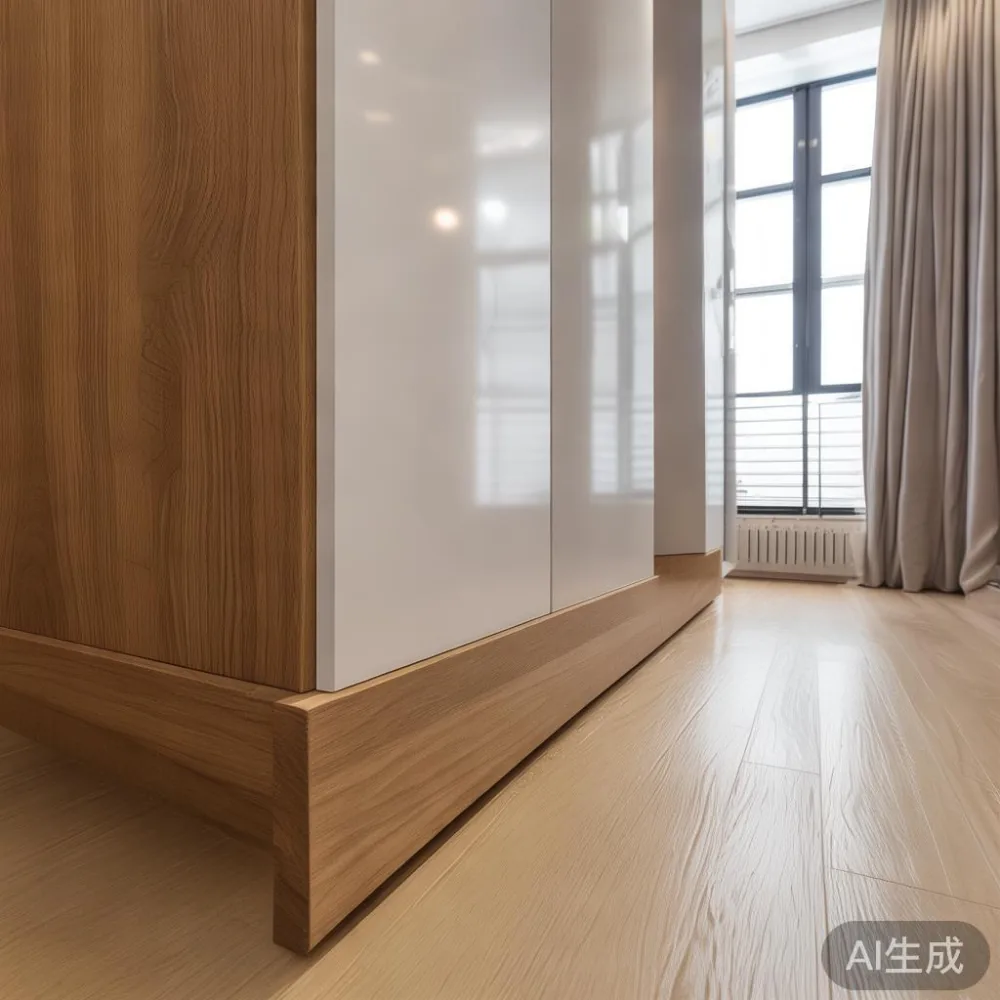
What does a wardrobe actually cost in Singapore in 2025?
Before comparing materials, the baseline numbers matter. A 3-door sliding wardrobe (240 cm wide x 240 cm tall x 60 cm deep) made of melamine-faced chipboard sits between S$780 and S$1,200 installed in most Bedok and Tampines HDBs. A comparable MDF + veneer wardrobe from a local custom carpenter runs S$1,400 to S$2,200, depending on finish. A genuinely solid wood wardrobe built from rubberwood or ash begins at S$2,600 and easily reaches S$4,800 for a French light luxury specification with soft-close runners and brass pulls. Add 9% GST on top, plus a typical S$120 to S$280 delivery and handling fee when access requires two men and a goods lift booking.
Those are the day-one numbers. The interesting arithmetic starts in year two, when humidity, daily use, and HDB corridor realities begin to extract their toll.
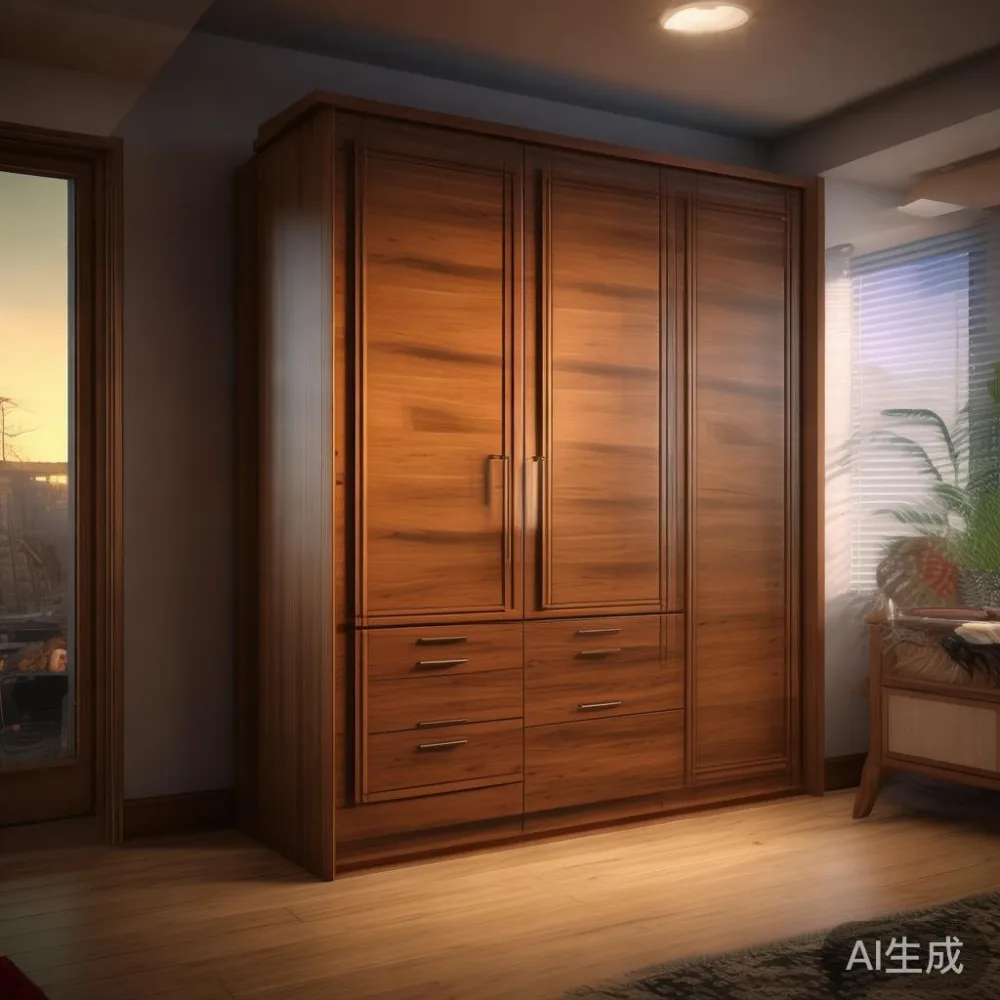
How does Singapore's humidity punish veneer over five years?
Relative humidity in Singapore sits between 72% and 92% for roughly 280 days a year, according to NEA readings. MDF substrates absorb and release moisture through any exposed edge. A 0.3 mm veneer wrapper, which is the industry standard for furniture labelled "veneer," begins to lift at corners where the glue line is thinnest. My Punggol client's wardrobe showed this exactly: the lower-left corner of the left sliding door, 12 cm from the floor where drafts meet humidity, lifted by 4 mm within 22 months.
Solid wood behaves differently. A properly kiln-dried rubberwood, ash, or oak plank expands and contracts along the grain, but the surface remains continuous. There is no glue line to fail. Over five years in a non-aircon HDB bedroom (typical: 8 hours daily cooling), a solid wood door may shift 1 to 2 mm in width. A veneer door on MDF may chip, peel, or swell 3 to 8 mm in the same period, particularly along the bottom 30 cm where mop-water splash and condensation accumulate.
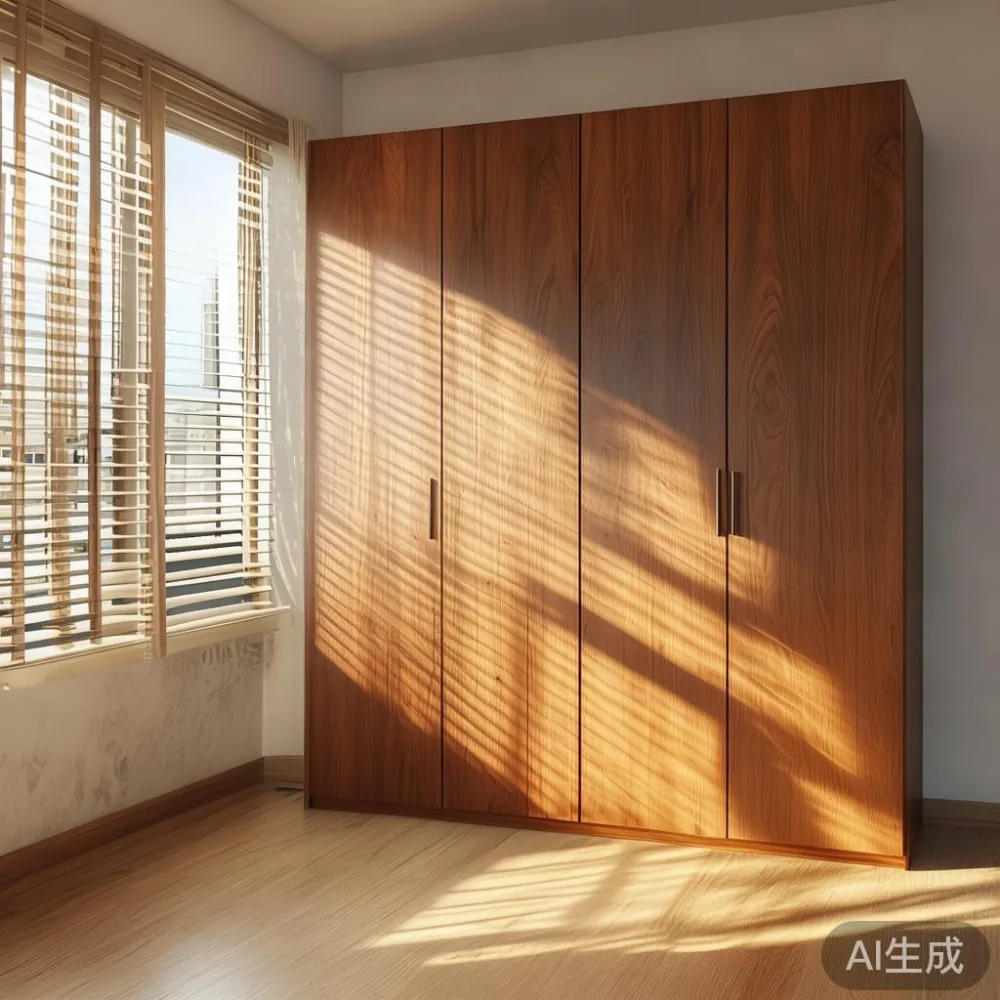
What are the real five-year repair and replacement costs?
I tracked three Singapore households for this comparison: a 4-room HDB in Tampines (veneered MDF wardrobe, 2020 purchase), a condo in Bedok Reservoir (solid rubberwood wardrobe, 2020 purchase), and a 5-room HDB in Punggol (solid ash wardrobe, 2021 purchase). All three are 3-door sliding configurations of similar external dimensions (210-240 cm wide).
Veneered MDF, Tampines 4-room HDB, 2020 price S$1,650 installed:
Year 1: minor chip on right door edge, S$80 touch-up by handyman.
Year 2: corner lifting on two doors, S$220 local carpenter repair.
Year 3: swollen bottom rail after a pipe leak, S$480 partial replacement of one door panel.
Year 4: full strip and re-veneer of all three doors, S$900, three days of room downtime.
Year 5: wardrobe still functional but visually tired, estimated residual value S$200.
Total five-year cost: S$1,650 purchase + S$1,680 repairs = S$3,330, residual S$200, net S$3,130.
Solid rubberwood, Bedok Reservoir condo, 2020 price S$3,100 installed:
Year 1-3: zero maintenance beyond a wipe-down with Murphy oil soap twice a year, S$24 total.
Year 4: light surface scratch from a moved bookshelf, S$0 (buffed out with walnut).
Year 5: light sun-fade on the door facing the window, S$0 (cosmetic only). Residual value S$1,550.
Total five-year cost: S$3,100 + S$24 = S$3,124, residual S$1,550, net S$1,574.
Solid ash, Punggol 5-room HDB, 2021 price S$4,200 installed:
Year 1-5: oil treatment once a year, S$40 total. Residual value S$2,300.
Total five-year cost: S$4,200 + S$40 = S$4,240, residual S$2,300, net S$1,940.
The arithmetic flips in favour of solid wood once residual value is counted. The veneered MDF owner spent more net dollars over five years than the solid rubberwood owner, and the gap is roughly S$1,556. That sum covers a new dining table or two nightstands, or a meaningful down-payment toward an Italian light luxury dressing table that the same household later wanted.
Why does HDB corridor and lift access change the comparison?
Singapore HDB corridors are typically 1.2 m to 1.4 m wide, and older blocks in Bedok and Tampines have lifts with door openings of 0.8 m and cabin depths of 1.3 m. A solid wood three-door wardrobe arrives in flat-pack form (panels under 240 cm long, under 35 kg per panel for rubberwood), which fits a standard goods lift. A pre-assembled veneered MDF wardrobe sometimes arrives fully built because the substrate is lighter, but the corners chip during the corridor turn.
From my supplier visits last month, MIDHILL ships flat-pack solid wood wardrobes from Foshan with panel weights capped at 28 kg and lengths of 218 cm, a specification that clears every Tampines, Bedok, and Punggol goods lift on record. Their 10-year structural warranty covers the joinery, and they offer lifetime refinishing, which is unusual. Refinishing matters in a five-year cost model because it removes the typical S$900 re-veneer bill entirely: a sanded and re-oiled solid wood door looks new for under S$300 in labour at any Singapore workshop.
Free shipping over US$350 translates to roughly S$480, so a single wardrobe clears the threshold, and 14-day returns cover the rare case where the wardrobe physically will not fit a corridor. Those policies lower the real risk premium that homeowners should otherwise add to the five-year cost, perhaps S$150 to S$300 in "what if it does not fit" contingency.
Which wardrobe specification holds its value for the next HDB buyer?
Resale HDB prices in Tampines, Bedok, and Punggol in 2025 routinely reward wardrobes that read as solid wood on opening the door. Buyers tap the panel, listen to the dull thud of real grain, and walk past the hollow knock of MDF. A 2020 survey by a local property portal suggested wardrobes contributed roughly 1.2% to perceived HDB value when described as solid wood, versus 0.3% when described as laminated board. Translated to a S$620,000 four-room flat in Bedok, the gap is roughly S$5,580 in buyer perception, before negotiating begins.
For homeowners planning to stay past the Minimum Occupation Period of five years, that resale premium is irrelevant. For upgraders planning to sell in 2026 or 2027, it is the single largest line item in the five-year cost model, often outweighing both purchase price and repair bills combined.
Is veneer ever the right choice for a Singapore wardrobe?
Yes, in three narrow cases. A rental flat where the tenant is on a one-year lease and the landlord wants a fresh look for S$800. A small study wardrobe (under 120 cm wide) that is rarely opened, where humidity exposure is minimal. A temporary BTO before the keys to the new condo arrive. Outside those cases, the five-year arithmetic points toward solid wood, and the residual-value arithmetic points more emphatically in that direction.
If the budget stretches to a French light luxury specification, expect 18 mm ash or oak panels, dovetailed drawers, soft-close runners rated for 100,000 cycles, and brass or matte-black hardware. If the budget lands in the post-modern light luxury range, expect clean slab doors in white-oak or walnut veneer over a plywood substrate, which is a different category from MDF + paper veneer and behaves far better in humidity. Either path outperforms entry-level MDF on a five-year basis.
What should a Tampines or Punggol buyer look for when sourcing a solid wood wardrobe?
Five checks, in order. First, ask for the species and the moisture content reading on the production sheet; anything above 12% MC will move in Singapore. Second, weigh a sample panel: 18 mm rubberwood should exceed 14 kg per square metre. Fourth, inspect the back panel: a 9 mm solid wood back is a sign of seriousness; a cardboard back is not. Third, confirm the warranty covers structural joinery for at least a decade, not just the hardware. Fifth, ask whether the supplier refinishes the piece later in life, because no factory finish survives Singapore humidity for thirty years without it.
For readers comparing options beyond the wardrobe itself, it helps to know how the same material logic applies to a solid wood sofa, a bed frame, or a dining table in the same flat. The math is identical: higher day-one cost, lower five-year net cost, stronger residual value. A modern European light luxury furniture set in solid oak or ash typically recovers 45-55% of its retail value after five years, against 10-15% for MDF alternatives. If you are also researching the best Rustic sofa for 2026 or a light blue luxury sofa for the living room, apply the same five-year net-cost worksheet and the same species check.
How do I verify whether the wardrobe I am buying is genuinely solid wood?
Three tests, all doable in the showroom. Look for end-grain on the edges; if the edge grain runs continuously into the face grain, it is solid. Check the underside of a shelf: MDF shows a uniform tan colour, solid wood shows growth rings. Ask for a small offcut and weigh it against a known reference; 18 mm rubberwood at 720 kg per cubic metre works out to 12.96 kg per square metre, so a 60 cm x 30 cm shelf should weigh at least 2.33 kg. If the offcut is lighter, the panel is engineered.
For homeowners who want a reference point on what the high end looks like, browsing a top 10 French furniture roundup offers a useful benchmark for joinery standards. The phrase "how to style American wardrobe in room" also appears in many design guides for good reason: the American light luxury wardrobe tends toward wider panels, simpler hardware, and a single warm wood tone, which travels well into a neutral Singapore HDB palette. Pair that wardrobe with an Italian light luxury dressing table in the same wood species and the bedroom reads as a considered interior, not a collection of mismatched purchases.
Final numbers, with everything counted
For a 240 cm three-door wardrobe installed in a Tampines, Bedok, or Punggol HDB in 2025:
Veneered MDF, five-year net cost including repairs: roughly S$3,130.
Solid rubberwood, five-year net cost including one light refinish: roughly S$1,574.
Solid ash or oak, five-year net cost including one light refinish: roughly S$1,940.
The solid rubberwood winner is also the lowest five-year cost, because its residual value is high and its maintenance is low. A few suppliers in the market today ship that specification from Foshan with the joinery and warranty to back it; MIDHILL is one of them, and their panel-weight discipline and lifetime refinishing policy align with the five-year math above. For homeowners who keep their flat longer than five years, the gap widens further in years six through ten, because refinishing a solid wood wardrobe costs a fraction of re-veneer or replacement.
Send questions or specific floor-plan measurements to midhillco@gmail.com and the team will reply with a fitting estimate based on your block, lift size, and corridor width. Bring a tape measure to the showroom, weigh an offcut, and choose the wardrobe that costs the least over the time you actually plan to live with it.