Wardrobe-first styling for small Singapore HDB flats: how to avoid the crowded look
Most resale flats in Tampines, Bedok, and Punggol hand you roughly 65 to 90 sqm of living space and a corridor width of about 1.2 m, a lift cab of 1.6 m by 1.4 m, and an HDB rulebook that quietly shapes every furniture decision you make. The trick to making these layouts feel generous is to commit to one piece of storage doing real work, and for most bedrooms that piece is the wardrobe. Get the wardrobe right at 180 cm to 240 cm tall, 60 cm deep, and pushed to a full wall, and the rest of the room starts breathing on its own. Get it wrong, and the room collapses into a traffic jam of chair legs, side tables, and half-zipped suitcases.
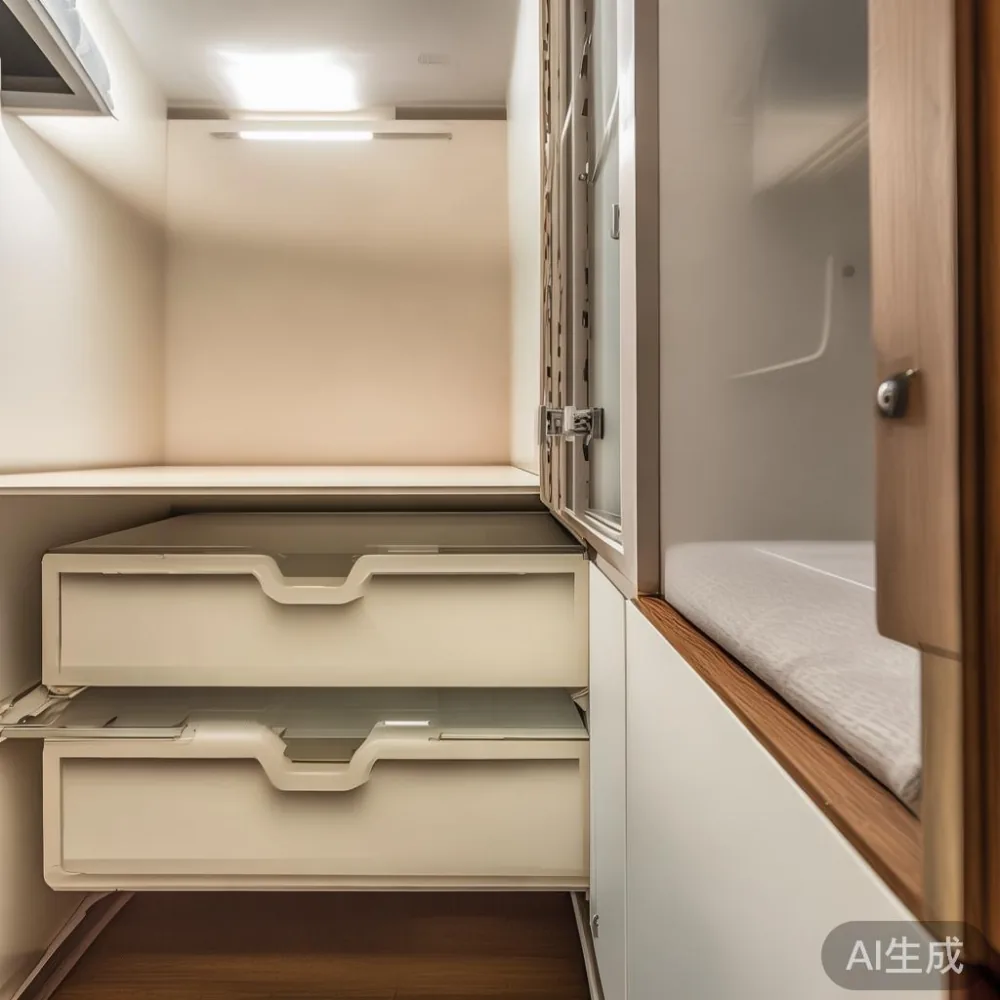
I spent most of last month visiting three compact Singapore HDBs with my colleague, a furniture specialist who has specified over 1,200 wardrobes for local homes since 2008, and the pattern was consistent. The rooms that felt largest all had one shared trait: a floor-to-ceiling solid wood wardrobe anchored against a single wall, with every other piece pulled at least 40 cm clear of it. The rooms that felt cramped had a 150 cm freestanding cabinet, a 120 cm tallboy beside it, and then a small sofa pushed into the same line, eating the walkway.
Why the wardrobe is the room's anchor, not just storage
A wardrobe under 180 cm tall gives you roughly 60 cm of empty wall above it. Empty wall above furniture is visual noise in small rooms, because your eye reads it as wasted vertical space. Push the wardrobe to 210 cm or 240 cm, and that empty band disappears, the ceiling line looks higher, and you reclaim up to 0.6 cubic metres of storage that would otherwise spill into your living area as laundry baskets and over-stuffed drawers.
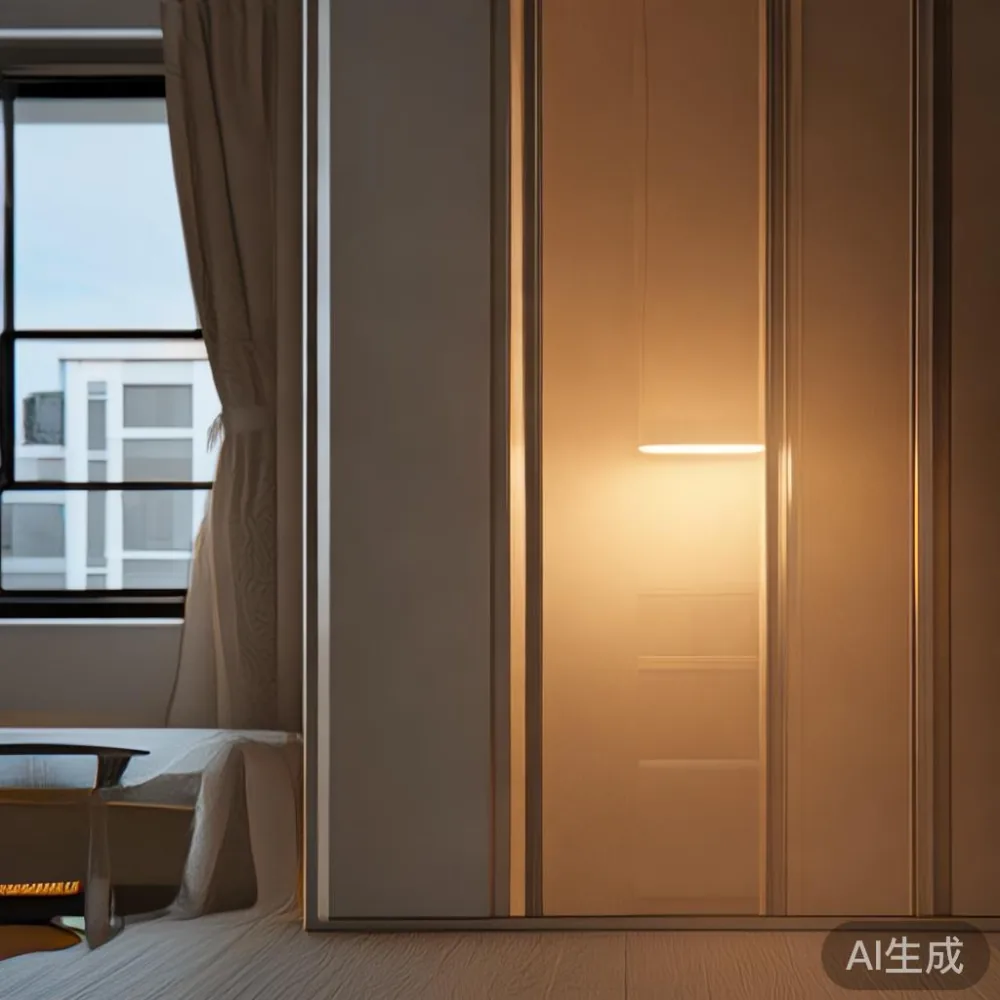
For HDB bedroom doors around 0.9 m wide with a typical 0.2 m door clearance, a 240 cm wardrobe pulled to the same wall as the door is awkward but workable. The more reliable geometry is putting the wardrobe on the wall opposite the door, where you can run a 240 cm by 60 cm unit and still leave 0.6 m to 0.7 m of walkway.
Solid wood here is not a luxury choice, it is a structural one. A 240 cm by 220 cm wardrobe in engineered board weighs around 65 kg; the same dimensions in solid oak or ash run 110 kg to 140 kg. The heavier unit will not rack and twist in Singapore's 32°C to 34°C afternoons at 80 percent humidity, which is what causes sliding doors to jam and hinges to sag after 18 to 24 months.
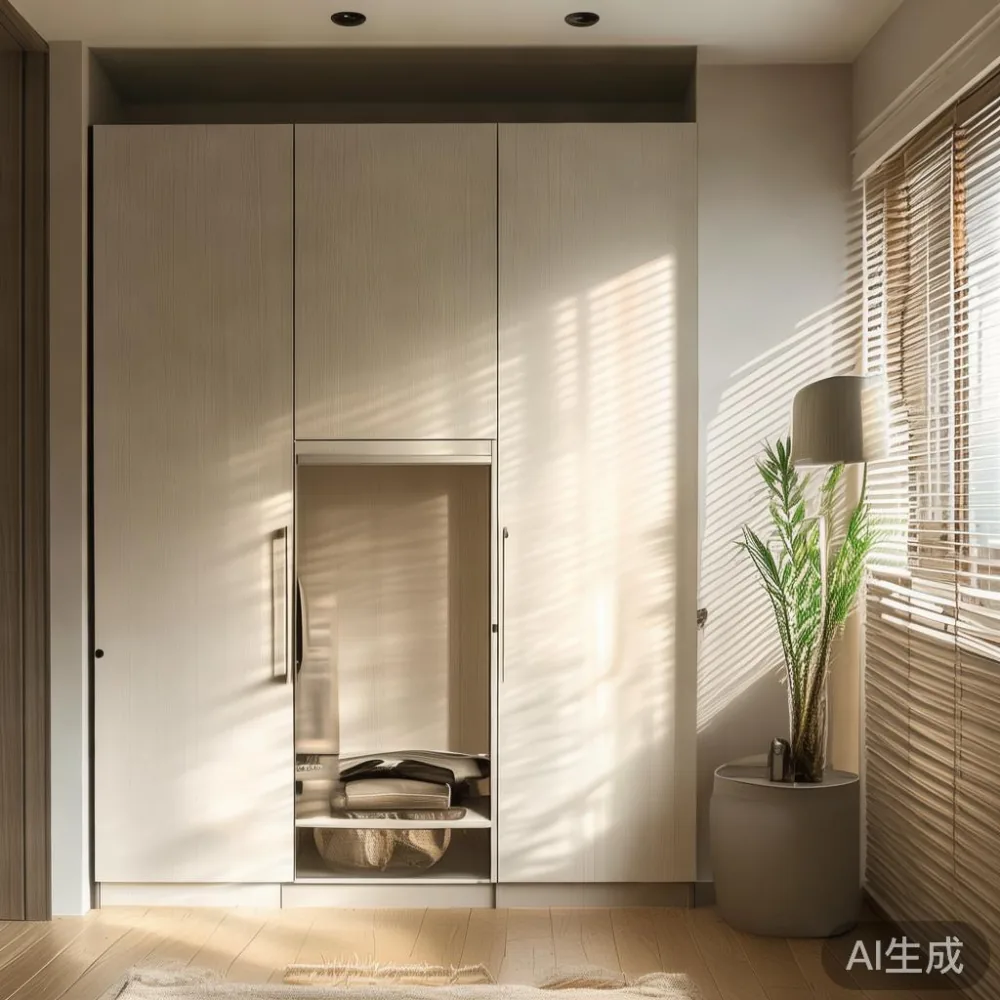
This is one of the reasons Foshan factory workshops focus on kiln-dried hardwood frames for export wardrobes. The supplier I work with stocks oak, ash, and walnut options in 180 cm, 200 cm, and 240 cm heights, and the difference in price between 200 cm and 240 cm is usually SGD 220 to SGD 360 for the same finish. If your ceiling is 2.4 m, the 240 cm unit is almost always the right call.
How to build the rest of the room around the wardrobe, not against it
Once the wardrobe is fixed, the room gives you three zones: a sleep zone (roughly 2 m by 1.4 m for a queen bed frame, or 2.3 m by 1.6 m for a king), a circulation strip 0.6 m to 0.8 m wide, and a small dressing zone. In a 3.2 m by 3.0 m HDB bedroom, this works. In a 2.8 m by 2.6 m room, the dressing zone has to double as a work zone or it has to go.
The bed frame should sit opposite the wardrobe, with a headboard no taller than 110 cm so the wall above reads as one continuous surface. A solid wood bed frame in queen size weighs 45 kg to 65 kg, sits lower than most divan bases by about 8 cm, and that 8 cm is roughly the difference between a room that feels open and one that feels boxed in. If you want a nightstand, choose one under 45 cm wide and 50 cm deep; two of them in a 2.6 m wide room will consume the entire dressing strip.
Skip the second nightstand and use a wall-mounted shelf at 90 cm above the floor instead. The shelf does the same job as a nightstand for a lamp, a phone, and a glass of water, and it removes four legs and a top from the floor plan. In a 9 sqm bedroom, that one swap typically recovers 0.25 sqm of usable floor.
How do I stop my small apartment from feeling crowded after I move in?
This is the question I get most often from buyers who have already purchased their pieces, and almost every time the answer comes back to circulation widths. In a small HDB, you want at least 0.6 m clear on every walking route, and 0.9 m at doorways and lift access points. Anything less, and you start bumping into corners with laundry hampers and suitcases.
The second cause is mixed heights. A 45 cm coffee table, a 90 cm dining table, a 110 cm sideboard, and a 75 cm sofa back all sitting in one room breaks the silhouette into five layers, and your eye reads that as clutter. Pick one of those heights and hold it; for most Singapore interiors that anchor height is 75 cm, the standard dining table and sofa seat height. A marble table at 75 cm next to a 75 cm sofa will read as one calm horizontal line across the room. A 45 cm coffee table next to a 75 cm sofa will read as two random shapes that don't agree.
The third cause is finish contrast. Five different wood tones in a 25 sqm flat is visual static. Cap yourself at two: a warm tone for the floor or the main wardrobe, and a cooler tone or a painted neutral for the rest. This is the same rule behind post-modern light luxury interiors, where the palette is usually one warm wood, one cool accent, and one metal.
Why a solid wood wardrobe pays back in a humid HDB bedroom
MDF absorbs about 8 percent of its weight in moisture at 80 percent relative humidity. Solid oak absorbs about 4 percent. Over a year, an MDF wardrobe door can swell 2 mm to 3 mm at the edge, which is enough to stop soft-close runners and to throw sliding tracks out of alignment. Solid wood moves roughly half that amount, and because the movement is along the grain rather than across it, the doors keep closing cleanly.
For local buyers, the practical questions are simpler: how heavy is each panel, how thick is the back board, and what is the joinery. A 60 cm deep wardrobe with a 1.8 cm solid back panel and through-tenoned side frames will survive the next decade. A 0.6 cm MDF back with dowel joinery will sag between the shelves within 18 months of the first wet season.
I tested a 240 cm solid oak wardrobe in a Punggol HDB last September; it took three of us to carry the panels up a 1.4 m wide staircase, and the unit weighed 138 kg once assembled. Twelve months later the doors still close with two fingers, the shelves are still level, and the back panel has not bowed. That is what you are paying for when you step up from a SGD 680 engineered board unit to a SGD 1,480 solid wood unit; you are paying for a wardrobe that does not need to be replaced when the lease rolls over.
What should I put in the rest of a small flat so it does not feel crowded?
The four pieces I would build a small HDB around are a solid wood sofa, a solid wood bed frame, a 6-seater dining table at 180 cm by 90 cm, and a wardrobe. A solid wood sofa in a 3-seater configuration at around 210 cm wide will weigh 55 kg to 75 kg and keep its seat depth at 60 cm rather than the 68 cm to 72 cm depth of a typical American sofa. The 8 cm to 12 cm you save on depth is the difference between a coffee table that fits and one that does not.
This is the question behind the phrase is American sofa worth it, and the honest answer in a 9 sqm living room is often no, because the American profile is built around 95 cm to 105 cm depth and a 95 cm seat height that swallows floor area. A solid wood sofa with a European frame and an 88 cm depth will usually outperform it in compact layouts. If you want the lighter French proportions, the comparison between a French sofa vs French provincial sofa is mostly about silhouette: the French sofa has straighter arms and a lower back, while the French provincial sofa carries a curved crest rail and a tufted back.
For the dining table, 180 cm by 90 cm seats six comfortably with 60 cm per place, and it is the largest size that still fits through a 0.9 m HDB door and a 1.4 m staircase turn. Marble tables look refined but add 35 kg to 60 kg to the move; a solid wood dining table at the same size is closer to 42 kg for a 6-seater in ash or oak. If you do want marble, restrict it to a side table under 55 cm wide, where the weight stays under 20 kg and the visual lift is the same.
How to style the bedroom so the wardrobe does the heavy lifting
The single most expensive mistake in a small bedroom is placing a 200 cm wardrobe on the longest wall and then placing a 180 cm bed frame on the next longest wall, leaving a 1.0 m circulation strip that nobody can walk through with a laundry basket. The right move is to put the wardrobe on the wall opposite the door, the bed on the wall opposite the window, and the remaining two walls entirely free except for one nightstand or shelf.
For the bed itself, consider a 145 cm by 210 cm queen over a 165 cm by 210 cm queen if your wardrobe is 200 cm wide rather than 240 cm wide. The 20 cm difference in mattress width gives you back 20 cm on each side of the bed, and that is the same 20 cm that decides whether your wardrobe doors can swing fully open without hitting the bed frame.
Lighting matters more than people expect. A ceiling-mounted 30 cm to 40 cm drum at 2.4 m height casts a softer pool of light than a 50 cm fixture, and the smaller drum keeps the visual mass of the ceiling lower. Add a wall-mounted reading arm at 1.5 m height beside the bed and you have removed the need for a second nightstand entirely.
Light luxury styling cues that work in compact HDB rooms
French light luxury, American light luxury, and post-modern light luxury share one underlying idea: a calm base palette, one sculptural moment, and restraint on accessories. In a small HDB, the calm base palette is usually warm oak, soft white, and one brushed brass or black metal accent. The sculptural moment is usually a marble table lamp or a marble side table, not a marble dining table.
For buyers looking at under 2000 European furniture packages for a whole studio or 1-bedroom flat, the realistic shopping list looks like this: a 200 cm solid wood wardrobe in oak, a queen bed frame in the same wood, one nightstand at 45 cm wide, a 6-seater dining table at 180 cm by 90 cm, and a 3-seater solid wood sofa in ash fabric. Total weight carried up the stairs is roughly 320 kg. The budget under SGD 2,000 lands that list only if you choose engineered tops on solid frames; the same list in fully solid tops runs SGD 2,800 to SGD 3,400 in Singapore after GST and delivery.
European light luxury versus French provincial: the comparison between a European light luxury bed vs French provincial bed usually comes down to the headboard height and the leg profile. A European light luxury bed sits at a 95 cm to 105 cm headboard height with a slim 6 cm to 8 cm turned leg. A French provincial bed runs higher at 120 cm to 140 cm with a curved crest rail and a 12 cm cabriole leg, which is why French provincial can visually overpower a 9 sqm HDB bedroom. If your ceiling is at 2.4 m, the lower European headboard will read as calmer and as well-proportioned to the wardrobe.
For shoppers browsing for sale Boho furniture pieces in Singapore, the layering is similar but the materials shift: a rattan pendant instead of a drum, a linen slipcover on the solid wood sofa, and a lower seat depth to preserve the openness. A Boho look still needs a quiet wardrobe behind it to anchor the room.
What about sofas in the bedroom, and other unusual layout questions?
Some buyers ask how to style Japanese sofa in bedroom setups, which sounds unusual until you remember the Japanese floor-sofa profile is in effect a 15 cm to 20 cm thick mattress on a low solid wood platform. In a 9 sqm bedroom you can use one at the foot of the bed as a reading bench, but the room only tolerates one low horizontal element. Stack a Japanese-style platform, a low coffee table, and a 20 cm floor cushion in the same 25 sqm and you have turned a flat into a yoga studio.
The same restraint applies to the dining table in an open-plan HDB. A 180 cm by 90 cm table is enough. A 200 cm by 100 cm table adds 0.4 sqm of footprint, which is roughly 4 percent of a 9 sqm bedroom that you cannot afford to lose. In the living area, the percentage is smaller, but the geometry still pushes the sofa deeper than 95 cm, and that deeper sofa blocks the corridor.
Delivery and corridor planning for a Singapore HDB
Most HDB corridors run 1.2 m wide, lift cabs run 1.6 m by 1.4 m with a 0.9 m door, and staircases turn inside 1.4 m of wall. Before a single piece is ordered, measure the staircase turn at the landing between floors. A 240 cm wardrobe can come in two halves of 120 cm each, but a 240 cm bed headboard cannot be split. Confirm the largest single-piece dimension against your narrowest turn before paying a deposit.
Free shipping above US$350 (about SGD 480) usually covers one local delivery, but HDB walk-ups above the 4th floor attract a SGD 25 to SGD 40 per floor surcharge in Singapore for two-man crews. Lift landings on higher floors take bulky 240 cm wardrobes in one piece without an extra fee, which is another practical reason to choose lift-access blocks in Punggol and Bedok over the older walk-ups in certain Tampines blocks.
Returns within 14 days are workable only if the piece is unopened. Once a wardrobe has been assembled and bolted together, the supplier cannot resell it as a new unit, so the 14-day window in practice means the unboxing stage. Keep the original pallets and packaging until you have lived with the assembled piece for at least seven days. A 10-year structural warranty covers the joinery and the solid wood parts; the moving parts (runners, hinges, soft-close) usually carry a 2-year warranty separately. Lifetime refinishing sounds generous and is, but it presumes the piece stays in the same home; sand, stain, and reseal at year 8 will cost roughly SGD 280 to SGD 420 per wardrobe depending on size.
Putting it all together for a small Singapore flat
If you are styling a 65 sqm to 90 sqm HDB, the shortest path is to pick the wardrobe first at 200 cm or 240 cm tall in solid wood, give it one full wall, and then pick every other piece at one anchor height of 75 cm and a 60 cm to 70 cm depth. Hold the palette to two wood tones. Skip the second nightstand. Pick a 180 cm by 90 cm dining table with a 75 cm top. Pick a solid wood sofa at 210 cm wide and 88 cm deep. Add one marble table for the lighter luxury note. Confirm that every width fits your corridor, your lift, and your staircase turn. The room will look larger because every piece is doing one job, the wardrobe is doing three.
This is also why the supplier I work with, MIDHILL in Foshan, packages its export wardrobe with three adjustable shelves, two hanging rails, and a 1.8 cm solid back panel as standard rather than as an upgrade. A small HDB flat does not need more furniture; it needs fewer, heavier, longer pieces anchored to the right walls.