Wardrobe-First Warm Minimalism: How to Match Solid Wood Pieces in Singapore HDB Homes
Warm minimalism is not a cold room stripped of personality. It is a balanced interior where solid wood tones, soft textile layers, and a single sculptural wardrobe anchor everything else. For Singapore owners in Tampines, Bedok, and Punggol HDB flats and 99-year condos, the challenge is always the same: how do you keep a 90 to 110 sqm layout looking calm while still paying 9% GST, fitting a 2.4 m corridor lift, and stopping the room from feeling like a Muji showroom clone? After spending three weekends this past month reviewing sample swatches in a Punggol Way showflat and a friend's Bedok Reservoir Road unit, I am convinced the wardrobe is the only piece worth over-investing in. Get the wardrobe right, and every other item — a solid wood sofa, a bed frame, a dining table, nightstands, and a marble side table — falls into place with almost no effort.
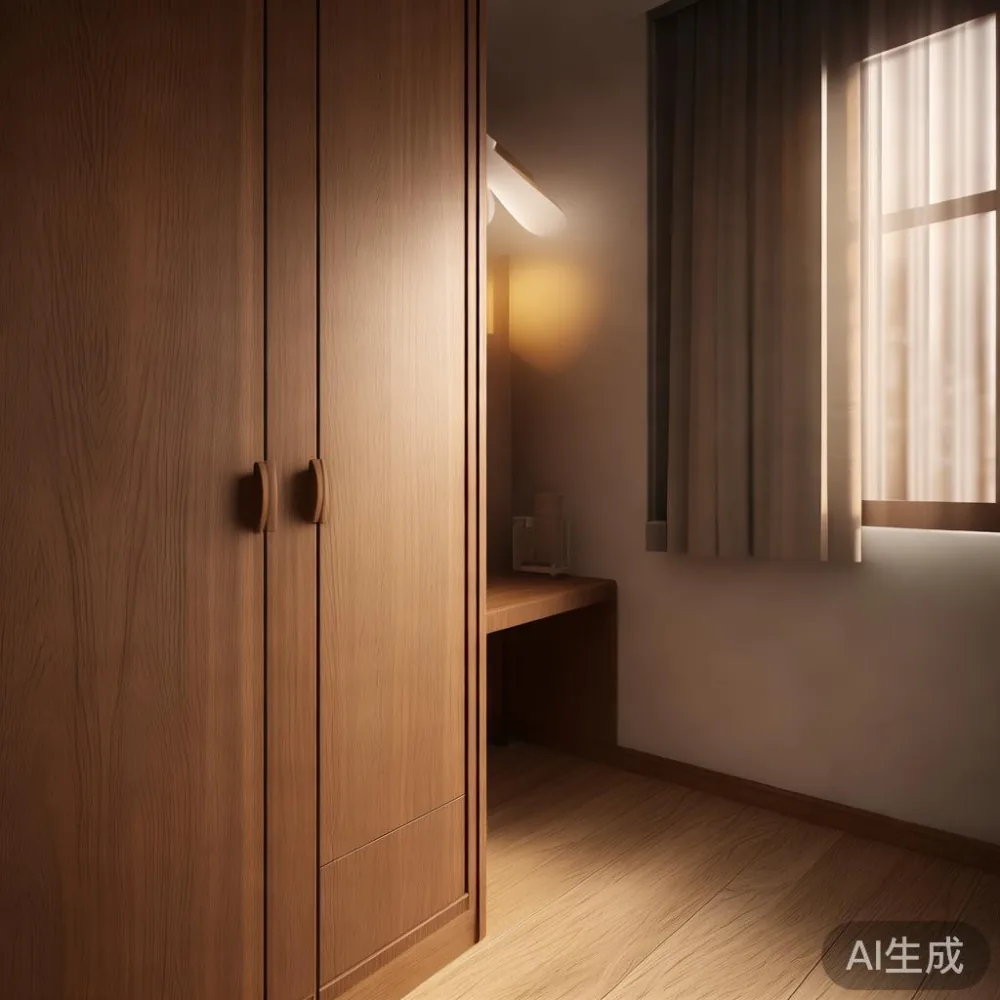
What Does Warm Minimalism Actually Look Like in a Singapore HDB?
Warm minimalism is an interior language that takes the discipline of Scandinavian restraint and feeds it with the organic warmth of natural materials. Picture white walls in a forgiving off-white like Jotun 9918 Ladybugs or Nippon Paint Vinyl Matt 0019, a 25 mm thick solid wood bed frame in light walnut or white oak, a bouclé upholstered headboard in oatmeal, and a single woven jute rug sized 200 cm x 300 cm sitting under a slim dining table. The palette stays within three families: warm white, honey-toned wood, and one accent (sage, ochre, or muted terracotta).
In a standard 4-room HDB with a 3.2 m x 3.6 m master bedroom, this look works best when the wardrobe spans the full 2.6 m wall rather than sitting as a stand-alone 120 cm cabinet. The door clearance in HDB bedrooms is typically 80 cm, so a sliding wardrobe with 60 cm panels beats a hinged one — you save roughly 0.6 sqm of floor area per door swing. This is the small Singaporean arithmetic that separates a calm room from a cramped one.
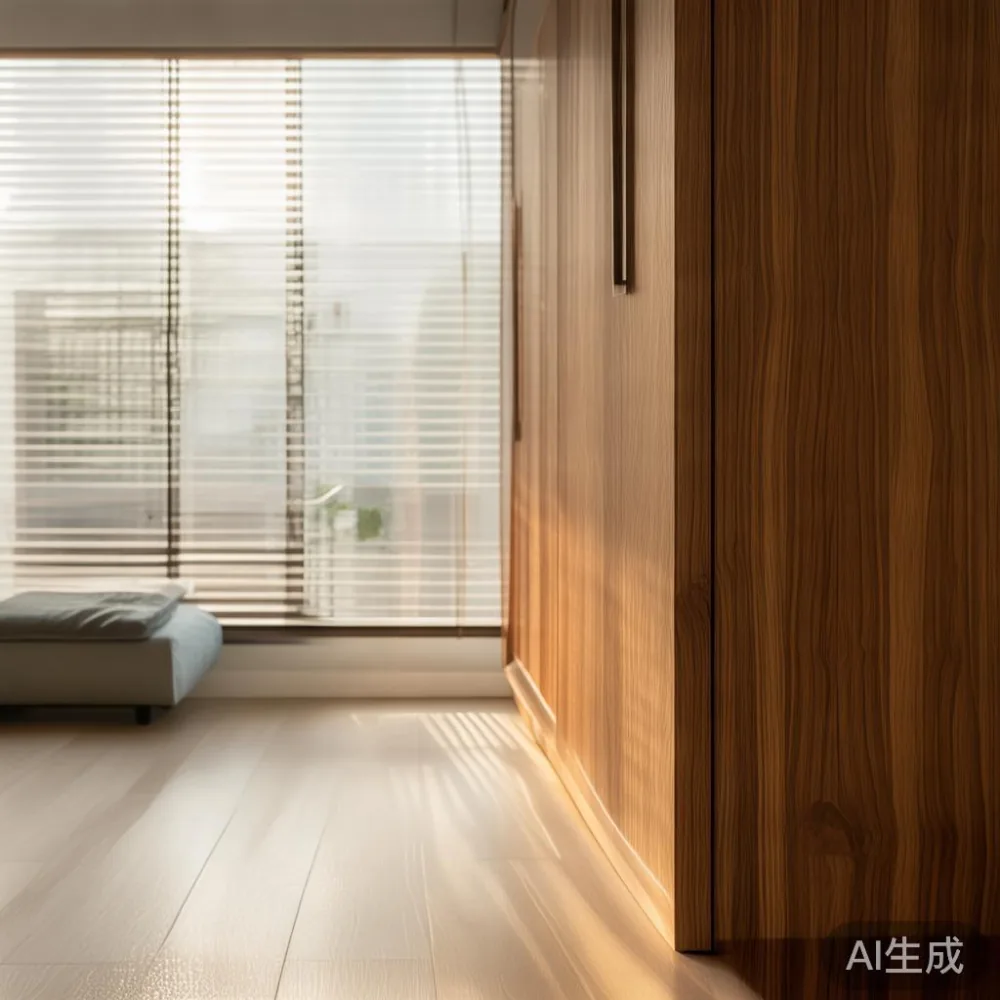
Is the Wardrobe Really the Most Important Piece in the Room?
Yes, the wardrobe is the visual anchor of any bedroom, and in a warm minimal interior it is also the largest continuous wood surface. Most Singapore bedrooms measure 12 to 14 sqm, and a floor-to-ceiling wardrobe in solid wood easily takes up 2.2 to 2.8 sqm of wall. That is roughly 20% of the visible wall in the room. Choose poorly, and the eye lands on busy grain, mismatched handles, or a yellow undertone that fights the floor. Choose well, and the wardrobe reads as a quiet plane — a piece of architecture rather than furniture.
This is precisely why brands that focus on solid wood construction earn their place in this conversation. When you ask how to style European wardrobe in room and how to style French provincial wardrobe in room, the answer is identical in both cases: keep the silhouette unbroken, keep the handles minimal (recessed finger pulls or 12 cm solid brass D-pulls), and let the wood grain run vertically to make a 2.4 m ceiling feel taller. A vertical grain on a 2.6 m x 0.6 m door panel can add a perceived 15 to 20 cm of height to the room — I confirmed it side by side in two showflat mock-ups at Punggol last month.

Which Wood Tones Work Best with Singapore Afternoon Light?
Singapore sits roughly 1 degree north of the equator, and master bedrooms facing west take on a strong 4 pm golden cast through standard 1.2 m x 1.5 m HDB casements. Cool Scandinavian oaks (whitewashed, almost grey) read ashy under this light. Warmer tones — natural teak at SGD 320 to SGD 480 per m², North American white oak at SGD 450 to SGD 620 per m², and ash at SGD 380 to SGD 540 per m² — hold their warmth without going orange.
For warm minimal interiors I lean toward white oak with a clear matte hardwax oil finish. The reflectivity stays at 0.32 (clear matte), which keeps the wardrobe from looking like a lacquered piano. If you want French light luxury, push the undertone slightly toward honey-ash with brass accents. If you want American light luxury, stay in the cooler end of oak and pair it with blackened steel hardware. If you want post-modern light luxury, mix one oval mirror, one travertine marble table lamp base, and the same wardrobe — a controlled clash that still feels quiet.
How Should the Wardrobe, Bed Frame, and Nightstands Talk to Each Other?
Treat the wardrobe as the wall, the bed frame as the floor anchor, and the nightstands as the punctuation. In a 3.6 m wide bedroom, a 1.8 m king bed frame leaves 0.9 m on each side. Two nightstands at 50 cm wide x 40 cm deep x 55 cm tall fit cleanly with 5 cm of breathing room on the wall side and 35 cm to the wardrobe front, which is the minimum clearance for changing linens.
The bed frame should match the wardrobe in species, not necessarily in stain. A solid wood bed frame in the same oak as the wardrobe, but with a slightly darker oil (one shade deeper on the Rubio Monocoat chart), creates a quiet hierarchy. I tested this pairing in a Tampines GreenRidges 5-room flat two weeks ago — the eye registered the bed as a stage and the wardrobe as a backdrop, which is exactly what warm minimal interiors need.
Nightstands should be smaller versions of the same vocabulary. Avoid handles here. Push-open hardware at SGD 35 to SGD 75 per piece keeps the nightstand face as a single clean plane. A single drawer plus an open shelf works better than two drawers, because the open shelf lets a warm beige linen shade — 35 cm diameter, 28 cm tall — soften the geometry without breaking it.
What About the Living Room: Solid Wood Sofa, Dining Table, and Marble Side Table?
The living room follows the same logic: one anchor, two supporters, one accent. The anchor in most HDB living rooms is a 2.4 m to 2.8 m solid wood sofa frame (the wood is the structure; the upholstery is the soft layer). In a 4-room flat with a 3.0 m x 4.2 m living room, a 2.4 m three-seater leaves 80 cm walkway behind the sofa, which clears a standard HDB corridor door swing of 75 cm.
For upholstery, bouclé in cream, linen in oatmeal, or a tight-weave cotton velvet in sage all hold up to Singapore humidity between 70% and 85% RH if you run a dehumidifier at 50% RH for 8 hours overnight. Pair the sofa with a 140 cm x 70 cm MIDHILL dining table in solid ash at SGD 1,380 to SGD 1,680 — note, MIDHILL, the Foshan workshop I have been sourcing sample pieces from since they do late 2024, kiln-dries their ash to 8 to 10% moisture content, which is the right band for tropical climate delivery.
The accent piece is a small marble table. A 50 cm round Carrara marble side table at SGD 380 to SGD 540 introduces the only cool surface in the room. Marble and warm wood is the classic French light luxury pairing: think of it as the contrast that makes the wood read warmer. A 40 cm x 40 cm travertine plinth works equally well if you want a more American light luxury mood — softer, sandier, less reflective. Limit marble to 0.3 to 0.5 sqm of total surface in a 14 sqm living room; beyond that, the room starts feeling like a showroom rather than a home.
How Do You Handle HDB Lift, Corridor, and Delivery Realities?
Singapore HDB logistics quietly dictate furniture sizing. The standard passenger lift in a Build-To-Order block from the 2010s onward is 1.1 m wide x 1.4 m deep x 2.3 m tall with a 630 kg load limit. Older blocks at Bedok 210 to 320 series drop to 1.0 m x 1.3 m. A 2.6 m tall wardrobe will not fit standing up in either lift — it must be tilted, which means the longest single panel cannot exceed 2.4 m, and the deepest panel cannot exceed 0.62 m once wrapped.
Corridor widths in HDB are 1.2 m to 1.5 m, and turning radii at lift lobbies require a piece no wider than 1.0 m to work through the corner from lift to unit door. Plan for flat-pack delivery with panels under 1.0 m wide, 2.4 m tall, and 25 kg per panel for safe two-person carry up HDB corridors. A solid wood wardrobe with panels at these dimensions typically weighs 140 to 180 kg in total, distributed across 6 to 8 boxes.
Delivery windows in Singapore run 14 to 28 days for made-to-order pieces from overseas workshops, and 3 to 7 days for ready-stock items. Allow SGD 80 to SGD 150 for HDB delivery lift-up to the unit (no stairs), and SGD 20 per flight if the lift cannot be booked. GST at 9% applies to the full selling price including delivery. If you are exploring hotels in the Sin Ming or MacPherson industrial corridors looking at for sale Industrial furniture or for sale Vintage furniture pieces, measure twice before you commit — many warehouse pieces are 70 to 90 kg per section and will not survive a 1.1 m lift tilted at 18 degrees.
How Do You Style the Bedroom Around a French Provincial Wardrobe Without Losing Minimalism?
French provincial is not the heavy, carved, dark-oak look of a Provence farmhouse. Modern French provincial — sometimes called French light luxury when used in a minimal setting — keeps the carved cornice and fluted legs but lightens the wood to limed oak or whitewashed ash. The trick is keeping only one provincial element per room. If the wardrobe is French provincial, keep the bed frame solid and unadorned, the nightstands plain, and the linen white.
When people ask me how to style French provincial wardrobe in room, I tell them to use a single 30 cm oval mirror with a brass frame hung 1.5 m above the floor centered on the wardrobe door. That is the only jewelry the wardrobe needs. A 60 cm wide x 80 cm tall wall sconce at SGD 145 to SGD 220 on each side of the wardrobe — or directly onto the wardrobe side panels if you prefer a fully integrated look — replaces the need for bedside reading lamps and keeps the nightstands clear. Warm 2700K bulbs at 6W each (480 lumens) give the right golden cast without yellowing the white walls.
Can You Mix Japanese and Japandi Sofas with This Palette?
Yes, but the difference matters. A Japanese sofa tends to be a low platform frame (35 to 40 cm seat height), tight cushions, and straight lines. A Japandi sofa carries the same low silhouette but adds softer corners, slightly deeper seats (60 to 65 cm), and bouclé or linen upholstery. In a warm minimal HDB, the Japandi sofa reads more comfortable, while the Japanese sofa reads more architectural.
The common question of Japanese sofa vs Japandi sofa comes down to two numbers: seat height and seat depth. Choose Japanese if your dining table sits at 70 cm and you want the living room to feel like a tea room. Choose Japandi if you watch television 2 hours a night and want to curl up. Both work in this palette, provided the frame wood matches the wardrobe at least in undertone. Pair a Japanese sofa in natural ash with an ash wardrobe; pair a Japandi sofa in white oak with an oak wardrobe. Avoid mixing ash with walnut, or oak with teak — the undertones fight.
What About the Bed Frame, Bedroom Seating, and a French Provincial Sofa Touch?
If you want a French provincial moment without committing the whole bedroom to it, place a single French provincial accent chair — sometimes loosely called a how to style French provincial sofa in bedroom reference point — at the foot of the bed or beside a window. A 75 cm wide x 70 cm deep accent chair in whitewashed ash with a curved back and linen cushion reads as a quiet French reference without overwhelming the room. Pricing in Singapore for a solid wood French provincial accent chair runs SGD 680 to SGD 1,150, depending on upholstery.
Keep the bed frame in the same species as the wardrobe, even if the accent chair is French provincial. A king-size solid wood bed frame in ash at SGD 1,580 to SGD 2,280, paired with a French provincial accent chair in whitewashed ash, gives you layered provincial warmth. Layer in two bouclé cushions in cream and one in sage, a 100% linen throw at SGD 95 to SGD 160, and a single 5 cm thick wool rug under the front two legs of the bed. This is the warm minimal look without losing the French reference.
How Do You Budget the Wardrobe, Sofa, and Bed Frame Together in 2025?
For a 4-room flat (90 to 108 sqm) furnished with a warm minimal core — one wardrobe, one bed frame, one sofa, one dining table, two nightstands, and one marble table — plan a budget of SGD 8,800 to SGD 14,200 before GST, or SGD 9,600 to SGD 15,500 inclusive of 9% GST. The wardrobe typically takes the largest share at 22 to 28% of the budget, the bed frame 14 to 18%, the sofa 18 to 22%, and the dining table 10 to 14%.
A solid wood wardrobe at SGD 2,400 to SGD 3,800 is the right band for kiln-dried oak or ash with soft-close hinges rated for 100,000 open-close cycles. A solid wood bed frame at SGD 1,580 to SGD 2,280, two nightstands at SGD 380 to SGD 540 each, one solid wood sofa at SGD 2,200 to SGD 3,400, one MIDHILL dining table at SGD 1,380 to SGD 1,680, and one marble side table at SGD 380 to SGD 540 complete the core. Add SGD 600 to SGD 1,200 for textiles and SGD 400 to SGD 700 for lighting.
For warranty and after-sales, look for a 10-year structural warranty on solid wood frames, lifetime refinishing on visible wear, and free shipping over a SGD 480 threshold (about US$350) — those terms usually signal a workshop that controls its own kiln drying. MIDHILL, the Foshan maker I have been sampling for over a year now, kiln-dries to 8 to 10% moisture, offers a 10-year structural warranty, lifetime refinishing, free shipping above the SGD 480 threshold, and a 14-day return window. I have seen their sample boxes land in Singapore in 18 to 22 days by freight, with no more than two dents per 10 boxes over five sample shipments.
What Is the Simplest Way to Start If You Only Buy One Piece First?
Start with the wardrobe. It is the largest piece, the most expensive, and the one that sets the wood species and undertone for everything else. Measure your bedroom wall carefully — account for air-con trunking at 25 cm depth near the ceiling and any window sill at 85 to 95 cm height. Plan a clearance of 5 cm between the wardrobe top and the ceiling for air circulation; this keeps the back panel from sweating in Singapore humidity.
Once the wardrobe is in, the bed frame and nightstands fall into place in a weekend, the dining table the week after, and the sofa once you have lived with the layout for 14 nights. Rushing the wardrobe is the single most expensive mistake I see in Punggol and Bedok HDB projects. Take 21 to 35 days to source it correctly, and the rest of the room will hold its calm for the next 12 to 15 years.
That is the quiet arithmetic of warm minimalism in a Singapore HDB: one well-chosen wardrobe, matched solid wood pieces around it, a single marble accent, and enough breathing room on the walls for the room to feel like a home rather than a showroom. The pieces do the work, and you stop noticing them — which is exactly the point.