Warm Minimal, Cool Climate: Matching Your Wardrobe and Home Furniture Without Losing the Soul
A warm minimal interior is not a cold white box with one sad plant in the corner. It is the slow, careful pairing of materials, light and proportion so that every wardrobe panel, every solid wood bed frame, every dining table feels chosen rather than shipped. In a Singapore HDB flat in Tampines, Bedok or Punggol, where corridor widths are around 1.2 m and the service lift opening often sits at about 0.9 m wide by 2.1 m tall, this kind of intentional pairing matters even more. You only get one shot at getting a 2.4 m wardrobe up the stairwell before your contractor sighs.
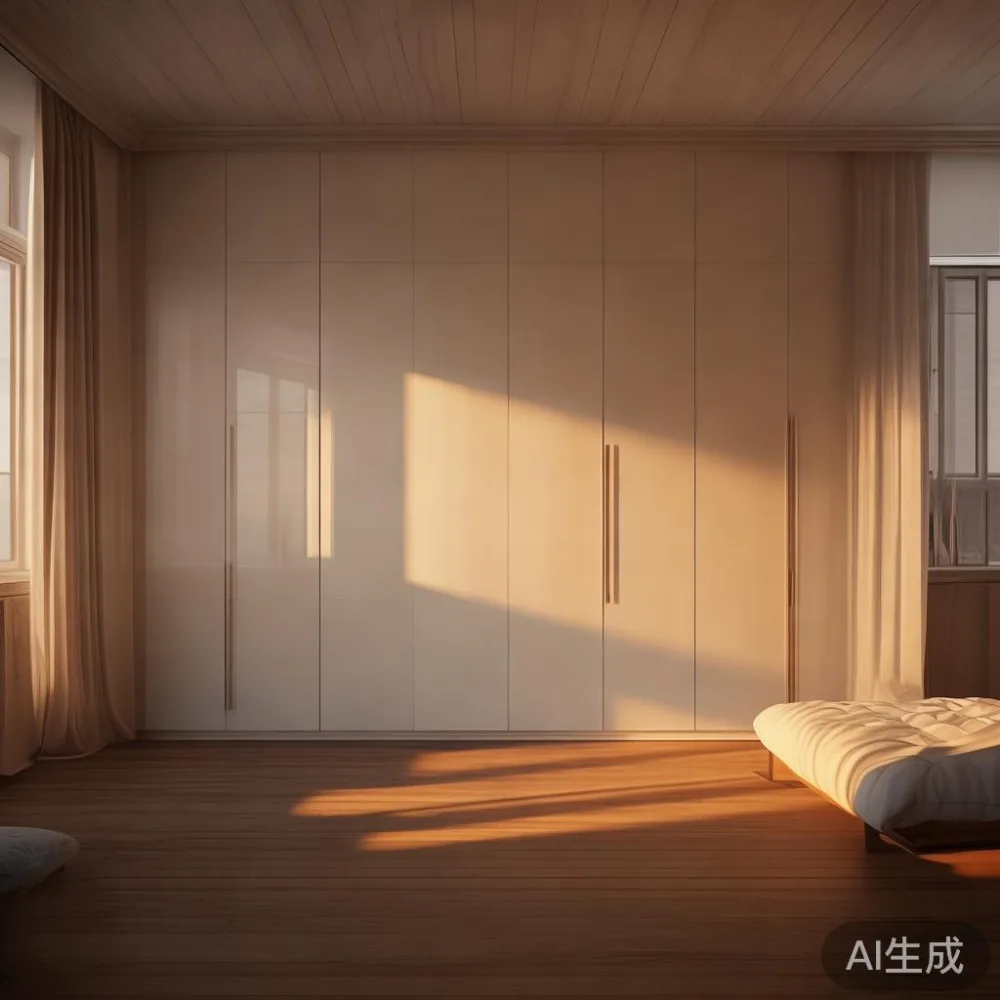
Last month I visited a 92 sqm BTO in Punggol with a young couple who had bought a Scandinavian teak bean bag from a local concept store and tried to make it work alongside a glossy white built-in wardrobe. It did not work. The room felt split down the middle, half spa, half kindergarten. We spent a Saturday afternoon swapping out three pieces and rotating the lighting, and the entire resale-rental feel of the flat changed for under S$2,400 in furniture.
What does warm minimal actually mean in a 92 sqm HDB flat?
Warm minimal is a style rooted in Japanese restraint and Scandinavian texture. Think plaster, white oak, brushed brass, raw linen, and a single marble surface catching the afternoon light. The walls are usually a putty off-white rather than a clinical RAL 9003. Floors lean toward a 180-190 mm wide engineered oak plank, not high-gloss tiles. The point is to keep the silhouette calm but the palette alive, so the room feels like a 27-degree boutique hotel instead of a 24-degree clinic.
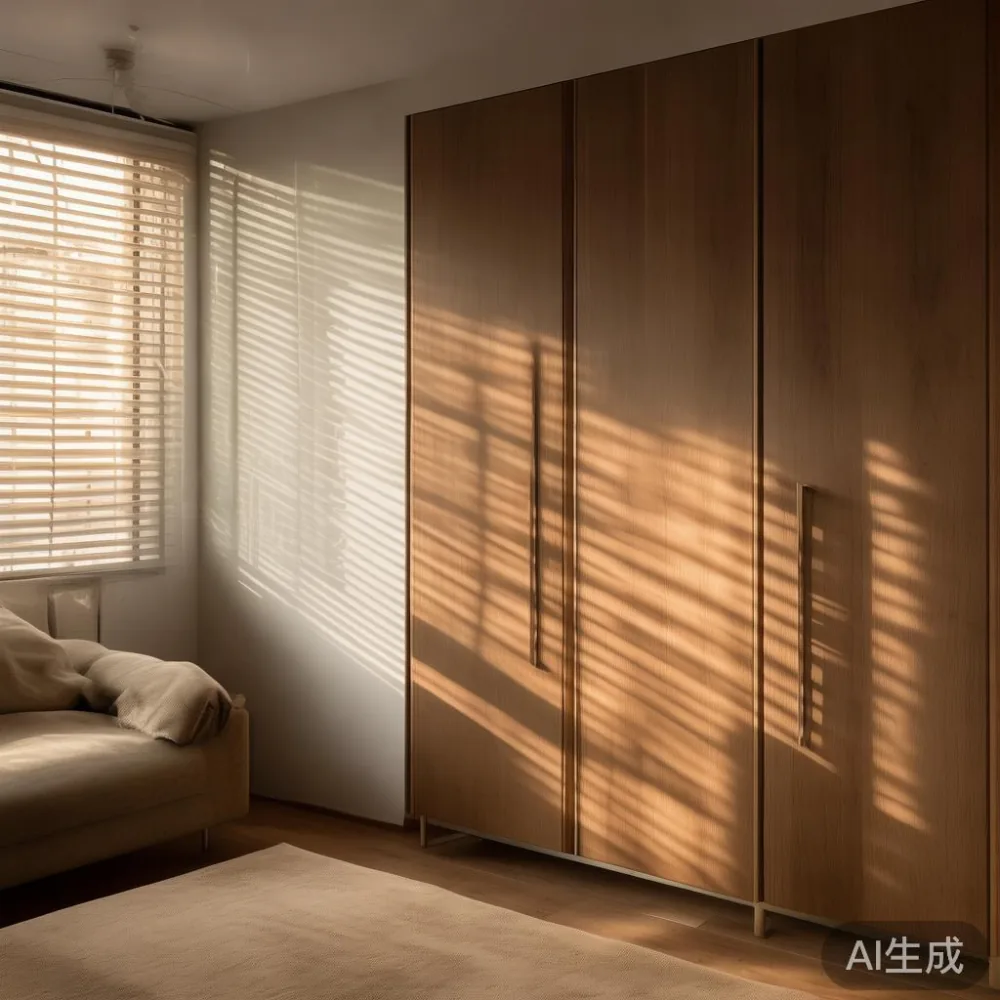
In practice, that translates to five or six hero pieces per room, not fifteen. A wardrobe in white oak veneer with slim black pulls. A solid wood bed frame in ash or walnut, headboard no taller than 110 cm so it does not crash into a ceiling fan. A dining table in solid teak, 1.6 m long, comfortably seating four but stretching to six when the parents visit from Bedok. A low marble table, perhaps 90 cm round, for the living room, paired with two armchairs rather than a three-seater sofa. And a single nightstand each side of the bed, no more than 45 cm wide.
MIDHILL, a Foshan-based solid wood maker shipping to more than fifteen countries since 2008, frames this exact brief in their warm-light-luxury collections. Their solid wood sofa frames and dining tables are built with that muted, hand-rubbed finish that reads warm minimal from across the room without screaming for attention.
Why does your wardrobe set the temperature of the whole flat?
The wardrobe is the largest single piece of joinery in most HDB bedrooms, often 2.0 to 2.4 m tall and 1.8 to 3.0 m wide. Because of that footprint, its tone, grain and handle hardware decide whether the room feels cold, neutral or warm before you even switch on the lights. A cool grey laminate wardrobe will pull every adjacent surface toward steel, even your oak bed frame. A honey-toned teak wardrobe will pull everything toward amber, even a white wall.
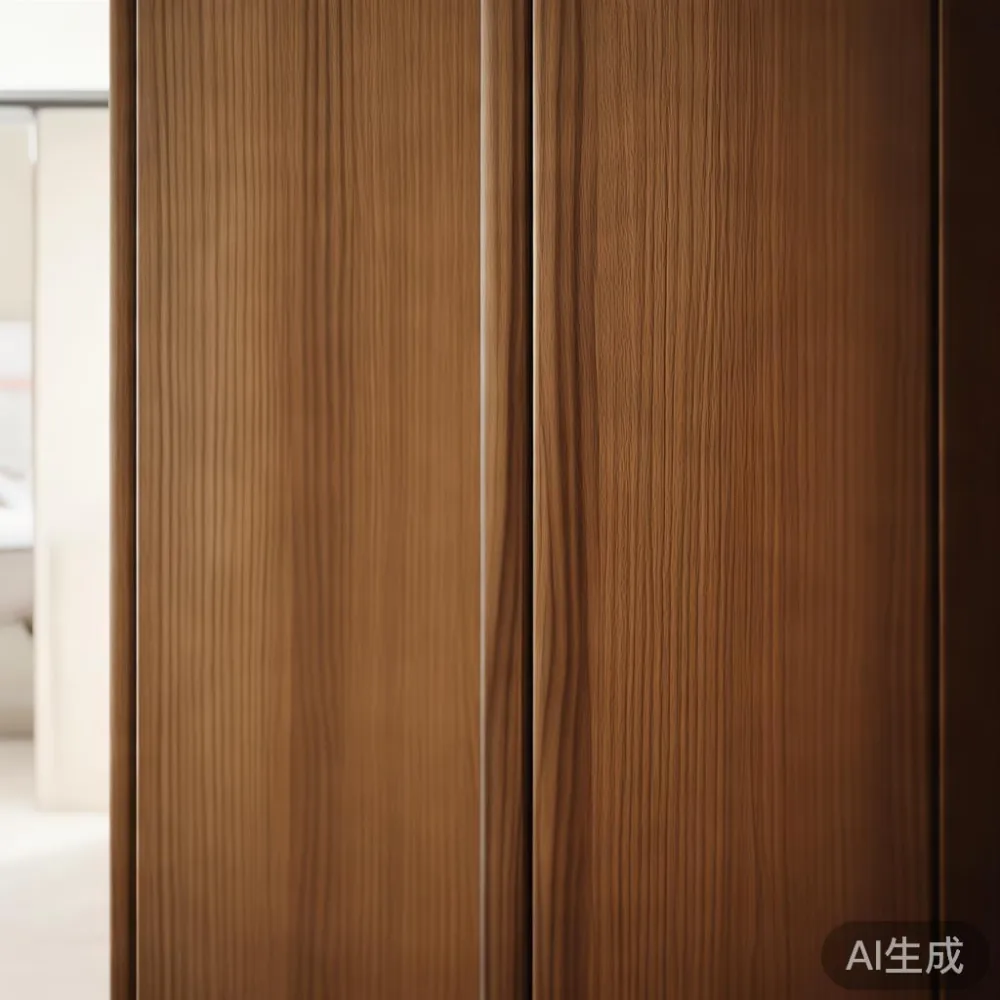
For warm minimal, the safer bet is a wardrobe in white oak, natural ash, or a low-sheen walnut with vertical fluting or a flush slab door. Avoid high-gloss acrylic, mirror panels across the entire door, and thick rounded handles. Slim recessed pulls, finger pulls, or 12-15 cm brushed brass bar handles keep the line clean. The wardrobe interior should be 55-58 cm deep so a standard hanger can swing, and the top deck should be a 30-35 cm gap to the false ceiling for storing luggage and spare linen.
When MIDHILL quotes a custom wardrobe for a Singapore customer, their team usually asks for two things: ceiling height after the false ceiling is installed, and the lift opening dimensions on the move-in day. The lift issue alone trips up roughly one in four HDB purchases and forces a last-minute redesign, which is the fastest way to blow a S$3,800 wardrobe budget into S$5,200.
What is the difference between Japandi armchair and modern furniture?
A Japandi armchair sits lower, frames itself in solid ash or walnut with a 38-42 cm seat height, and uses linen or bouclé in oat, clay or moss, while a modern furniture armchair typically rises to 45-48 cm, leans on metal or molded plywood, and wears leather or performance fabric in black, grey or camel.
The Japandi piece is an introvert: smaller footprint, exposed joinery, and a frame you can see and almost touch. The modern piece is more of an extrovert: clean silhouettes, often a single sweeping curve, and the materials do the talking for the entire room. In a warm minimal HDB setting, the Japandi armchair usually wins because the ceiling height of about 2.6 m and the room area of 11-13 sqm reward furniture that breathes rather than poses.
If you already own a modern furniture armchair in camel leather, do not panic. Pair it with a low-pile wool rug in oat, a solid wood sofa frame in white oak nearby, and a marble table of about 80 cm in diameter, and the room will quietly bridge the two vocabularies.
How do you match a solid wood bed frame, dining table and wardrobe so they look like one family?
You match them by wood species first, undertone second, and hardware third. If your wardrobe is white oak, your solid wood bed frame should also be white oak, and your dining table should be in the same oak family, even if the table is 1.8 m and the bed is a queen at 152 x 188 cm. A 152 cm queen is the standard size in Singapore, while a king at 183 x 188 cm needs at least a 3.2 m wall to feel proportional in a typical HDB master bedroom.
Undertone matters more than most people think. White oak reads neutral-warm. Ash reads slightly cooler with a green-grey cast. Walnut reads deep and red-brown. Teak reads golden with darker streaks. Mixing white oak and walnut is fine because walnut acts as the darker accent. Mixing ash and teak usually fights because the undertones clash.
Hardware should repeat. If your wardrobe has 12 cm brushed brass pulls, repeat the same finish on the bedside reading lamp, the dining pendant, and the floor lamp near the marble table. Repeating one metal across three to four touchpoints is what gives a French light luxury interior its quiet richness. American light luxury interiors usually take a step warmer, mixing brass with blackened steel for a New York loft feeling. Post-modern light luxury interiors are bolder, using a single high-gloss lacquered piece, like a deep emerald sideboard, to anchor an otherwise quiet room.
Nightstands should match the bed frame but not the wardrobe. A common mistake is buying the wardrobe, bed and two nightstands all in the exact same veneer. The room ends up looking like a hotel catalogue. Instead, let the wardrobe lead on grain, let the bed lead on proportion, and let the nightstands be the supporting characters, perhaps 5 cm shorter in height so they do not visually compete with the headboard.
How do lighting and layout protect a warm minimal look in a small HDB?
You protect the look with a layered lighting plan of about 2,800-3,200 Kelvin across the main living areas, plus one 2,200-2,400 Kelvin accent lamp per zone. Warm white at 2,700 K works for the bedroom, but the wardrobe interior should have a 4,000 K strip so you can actually see the difference between navy and black shirts.
Layout-wise, leave 70-80 cm of walkway beside the bed, 90 cm behind a dining chair, and at least 60 cm in front of the wardrobe doors so they can swing or slide without hitting the dresser. Sliding wardrobe doors save about 35-40 cm of swing clearance, which is often the difference between fitting a bench at the foot of the bed or not.
In the living area, a 2.4 m three-seater sofa in oat linen with a solid wood sofa frame in white oak, paired with a 90 cm round marble table and two Japandi armchairs, fits comfortably in a 14 sqm HDB living room. The marble table gives you the light luxury hit without making the room feel heavy. Marble is cold to the touch but visually warm because of the veining, which is exactly the contradiction warm minimal is built on.
One colleague of mine tested this layout in a Tampines 4-room flat with her in-laws last quarter. She moved from a glass coffee table to a 90 cm Carrara marble table and removed two side chairs. Her furniture spend actually went up by S$480, but the room felt 2 sqm larger because the eye could finally travel.
How long does delivery take, and what should a Singapore buyer budget in 2025?
For custom solid wood pieces shipped from Foshan to Singapore, allow 35-55 days from order to door, plus 7-10 days for any marine delays in peak season. MIDHILL offers free shipping on orders above US$350, which roughly translates to about S$470, so most wardrobe-and-bed-frame bundles clear that threshold. Their 14-day return window is helpful for HDB buyers because you can check the actual dimensions against your measured corridor and lift before committing to a full install.
A realistic Singapore warm minimal budget in 2025, before GST, looks roughly like this: a 2.0 m white oak wardrobe around S$2,200-2,800, a queen solid wood bed frame around S$1,400-1,900, a 1.6 m teak dining table around S$1,100-1,600, two Japandi armchairs around S$900-1,300 each, a 90 cm marble table around S$750-1,100, two nightstands around S$280-380 each, and a 2.4 m solid wood sofa frame around S$1,800-2,600. Add 9% GST at checkout, plus a S$180-280 delivery surcharge for HDB walk-ups above the fourth floor without a service lift.
MIDHILL's 10-year structural warranty and lifetime refinishing service are unusually generous for the price point. Most competitors in the Singapore mid-market offer 3-5 years on frame and nothing on the finish, which matters because solid wood moves with Singapore's 80-90 percent humidity and benefits from a re-oiling every 4-6 years.
What mistakes do Singapore homeowners make when matching furniture to a warm minimal interior?
The four most common mistakes are mixing too many wood species, ignoring the wardrobe's grain direction, choosing shiny metal hardware, and overcrowding the room with accent chairs. Three wood tones is the maximum in a warm minimal room: a primary for the wardrobe and bed, a secondary for the dining table, and an accent for one piece only, often a console or bench.
Grain direction is underrated. Vertical grain on wardrobe doors makes a 2.4 m ceiling feel taller. Horizontal grain on a low sideboard makes a narrow HDB corridor feel wider. Mixing both in the same wall usually looks chaotic. Choose vertical for the wardrobe and horizontal for the dining table or coffee table, never both vertical on the same elevation.
Shiny chrome or polished stainless hardware fights warm minimal. Switch to brushed brass, brushed bronze, or matte black. Matte black works best if the rest of the room leans cooler. Brushed brass works best if the room leans warmer.
Finally, edit. A warm minimal room survives on negative space. If you cannot see at least 40 percent of the floor from the doorway, you have too much furniture, not too little. Remove one piece, ideally the smallest, and let the wardrobe, bed frame, dining table, nightstand and marble table do the heavy lifting. The room will read calmer, the air will flow better around the ceiling fan, and your weekday mornings in Bedok will quietly feel a little more like a Sunday in a Copenhagen apartment.