How Southeast Asian Humidity Affects Your Solid Wood Wardrobe (and What to Do About It)
I still remember the first time I walked into a Punggol HDB resale flat last October with my colleague. The owner had bought a glossy dark-walnut wardrobe from a local shop two years earlier for about SGD 1,450, and the doors no longer closed flush. The top panel had cupped, the side panels had bowed outward by roughly 4 mm, and a faint musty smell drifted out when we opened the left door. His dehumidifier was running 12 hours a day. None of it had prevented the movement. That single afternoon convinced me that humidity is not a side note for furniture buyers in Singapore, Johor Bahru, or Manila — it is the main character of the story.
Why does a Singapore HDB flat punish a solid wood wardrobe so quickly?
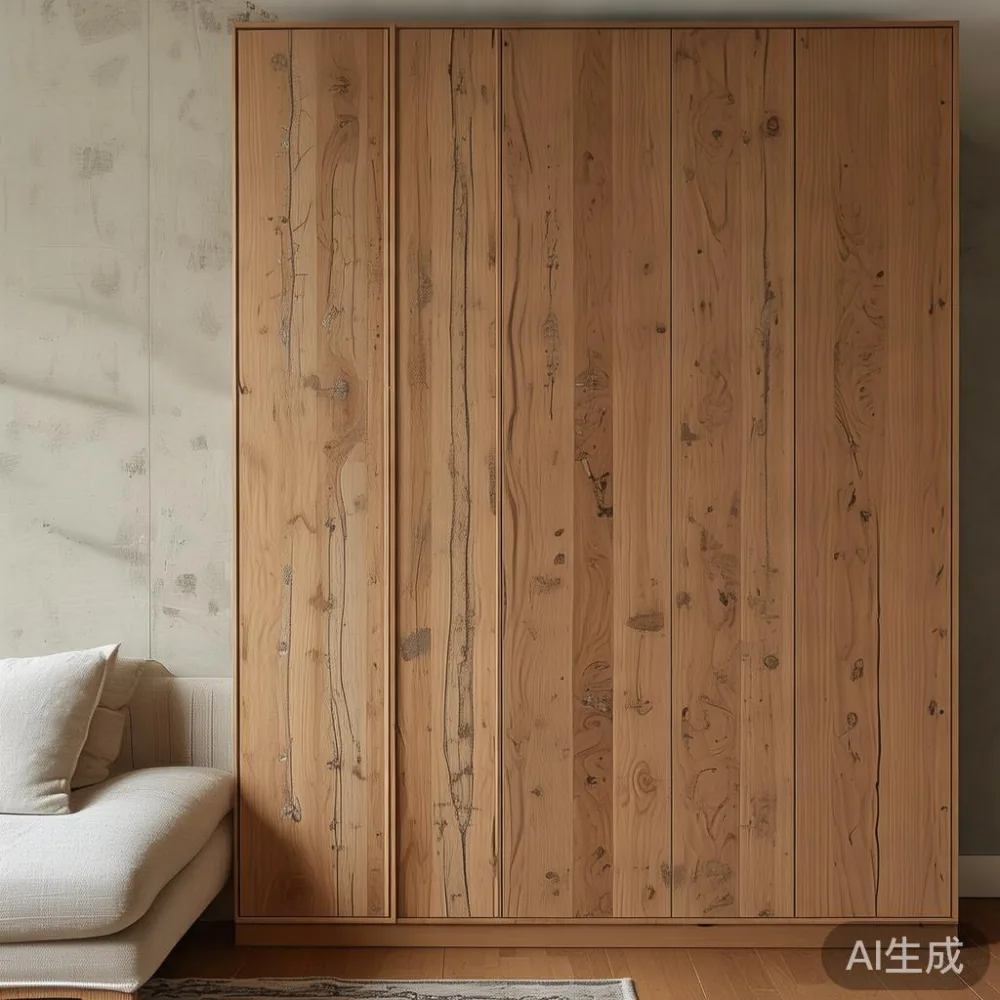
A solid wood wardrobe is a living object. The cell walls of oak, ash, walnut, or rubberwood absorb and release water vapour with every change in the surrounding air. In Tampines, Bedok, and Punggol, indoor relative humidity (RH) typically sits between 70% and 85% for most of the year, and peaks above 90% during the December monsoon surge and the September squalls. Engineered boards hide this movement behind a melamine skin; solid wood shows it openly. A 210 cm tall, 180 cm wide three-door wardrobe built from 22 mm thick solid ash can gain or lose 1.5 to 2.5 cm of width across a single season if it is poorly dried, poorly designed, or placed against a poorly ventilated wall. That is not a defect. It is wood doing what wood has always done.
What does "French light luxury" mean for a wardrobe in a 4-room HDB?
French light luxury is shorthand for restrained, proportion-driven pieces: fluted panels, soft-close hinges, brushed brass pulls, and a muted palette of oak, ash, or walnut rather than loud high-gloss lacquer. In a 92 sqm HDB flat, a 200 cm tall French-style wardrobe in white-oak veneer with a single fluted glass panel and a 6 cm brass-toned handle reads as quietly expensive without overwhelming the room. American light luxury sits at the other end of the scale: thicker proportions, chunkier legs, oiled walnut, and matte black hardware. Post-modern light luxury is the playful middle ground — curved corners, asymmetric handles, and warm tones inspired by Milan in the 1970s. All three schools share one rule: the wood must be properly dried, and the wardrobe must breathe.
What is the difference between French armchair and modern furniture?
A French armchair is built around a sculpted hardwood frame, traditionally beech or walnut, with hand-tied webbing, a down-and-foam seat, and a single upholstered shell that visually floats on cabriole or tapered legs; modern furniture is engineered around flat planes, powder-coated steel or solid birch frames, and high-resilience foam wrapped in tight fabric or leather, prioritizing geometric clarity over carved silhouette. In a Singapore context, the French armchair is the easy chair you place beside a reading lamp, while a modern armchair is the workhorse you place beside a desk. Both styles matter to a buyer assembling a room, and both are exposed to the same 78% average RH that a Tampines bedroom sees in March.
How does humidity actually damage a wardrobe over 12 months?
There are five damage patterns I see repeatedly in Singapore, and the costs are surprisingly concrete. (1) Cupping on the top panel: the edges curl upward by 2 to 5 mm when the bottom face absorbs more moisture than the top. (2) Bowing on the side panels: long-grain compression can push a 220 cm side outward by 3 to 6 mm, which is enough to stop the doors from latching. (3) Door misalignment: hinges shift, gaps appear at the top, and the soft-close cylinder no longer cushions the last 3 cm of travel. (4) Drawer swelling: solid wood drawer boxes can jam inside their runners, and a 1 mm swell on each side becomes a 2 mm total bind. (5) Mould and musty odour: a wardrobe pushed against an unventilated HDB wall in a corner unit in Bedok Reservoir can develop surface mould within six to nine months if RH stays above 80%. A professional refinishing pass runs SGD 280 to SGD 460 per wardrobe; replacing a cupped top panel runs SGD 320 to SGD 550; a hinge-and-runner realignment with new soft-close dampers runs SGD 95 to SGD 180. None of these are catastrophic, but they are avoidable.
How wide are HDB lift and corridor openings, and does the wardrobe even fit?
This is the question almost no one asks until the delivery team is at the ground floor. Standard HDB passenger lifts measure about 1.1 m wide by 1.4 m deep with a 2.1 m door height, and the corridor turning radius into a flat is often 1.2 m. A 200 cm tall, 180 cm wide three-door wardrobe will not go through a 1.1 m lift unless it is delivered unassembled in flat-pack boxes, which is why a reputable supplier should be asked to confirm the flat-pack dimensions in centimetres before purchase. A typical MIDHILL flat-pack for a 180 cm wardrobe is four cartons, each measuring roughly 195 x 55 x 18 cm and weighing between 22 kg and 34 kg, totalling about 110 kg. That is well within any HDB lift load rating and light enough for two delivery staff to hand-carry down a corridor without scraping the walls.
What should I look for on a spec sheet before I buy a solid wood wardrobe?
Three numbers matter more than the brand name. First, the moisture content at the time of manufacture: kiln-dried solid wood should be between 8% and 12% MC for tropical climates, and the supplier should be able to show you a reading from a pin meter. Second, the panel construction: look for 18 mm to 22 mm thick stiles and rails, with a centre panel that is allowed to float inside a 2 mm to 3 mm groove so it can expand and contract without splitting. Third, the finish: a closed-pore conversion varnish or a hardwax oil will resist moisture exchange better than an open-pore wax, and a 3-coat spray-and-sand finish is the industry norm for light-luxury pieces. As a point of reference, MIDHILL kiln-dries its oak, ash, and walnut to a 10% target MC, uses 20 mm stiles on its standard 200 cm wardrobes, and applies a three-coat Italian conversion varnish, which is why the company's pieces survive the trip from the Foshan workshop to a Punggol bedroom with a 10-year structural warranty behind them.
Can I keep a solid wood wardrobe next to a HDB service yard or kitchen door?
No, not without a buffer. A service yard door, especially in a corner unit facing the afternoon sun, creates a microclimate that swings from 55% RH to 92% RH within a single afternoon shower. Place a wardrobe at least 60 cm away from any external door, and avoid the wall directly behind a refrigerator or dishwasher, where the compressor radiates heat and dries one face of the wardrobe while the opposite face stays at room humidity. The result is uneven moisture, which is the single biggest cause of the cupping I described earlier.
How much should a decent solid wood wardrobe actually cost in Singapore?
As of early 2026, a 180 cm wide, 200 cm tall, three-door wardrobe in solid ash or rubberwood from a local atelier in Singapore retails from SGD 1,800 to SGD 2,600, and from a direct-from-workshop brand in the SGD 1,400 to SGD 1,900 range once shipping, GST, and lift-delivery are included. A 200 cm wide four-door version in solid walnut or white oak typically lands between SGD 2,800 and SGD 4,200. Engineered-board wardrobes with a thin wood veneer are 35% to 50% cheaper, but they cannot be sanded and refinished the way a solid wood panel can, which matters when the inevitable monsoon dent or scratch appears five years in. A solid wood bed frame in the same workshop typically adds SGD 900 to SGD 1,600, a dining table for four runs SGD 1,100 to SGD 2,400, a marble-topped coffee table sits at SGD 750 to SGD 1,650, and a bedside nightstand is usually bundled at SGD 320 to SGD 520 per pair. These prices include 9% GST and standard lift-level delivery, but exclude disposal of your old piece.
What about delivery, warranty, and returns for a wardrobe in Singapore?
A few specifics worth pinning down before you click pay. (1) Free shipping threshold: most cross-border furniture brands wave the delivery fee above US$350, which at the current 1.34 SGD/USD rate is roughly SGD 470, and that covers lift-level delivery to any HDB block in Singapore. (2) Lead time: a Foshan-built wardrobe typically takes 18 to 28 working days from order to doorstep, plus 3 to 5 days for customs clearance and the local last-mile courier. (3) Structural warranty: a 10-year structural warranty on frames, joinery, and drawer boxes is the benchmark to expect from a serious workshop. (4) Surface refinishing: lifetime or 20-year refinishing on solid wood panels is a meaningful perk, because a sand-and-restyle in Singapore costs SGD 280 to SGD 460 and a buyer who uses it twice over 15 years has effectively recovered 20% of the purchase price. (5) Returns: a 14-day return window is standard, but only a handful of brands honour it on a piece of furniture that has already been assembled; most will only accept flat-pack returns, so keep the cartons for two weeks even if you love the wardrobe. (6) Installation: a 180 cm wardrobe takes two trained installers about 90 to 120 minutes to assemble on site, including levelling the base, anchoring it to a 5 cm HDB plasterboard wall, and fitting the soft-close hinges.
Is a light-luxury solid wood wardrobe worth the SGD 1,400 to SGD 2,600 price in a HDB?
If you intend to stay in the flat for at least seven years, the math usually favours a solid wood piece. Divide the purchase price by the warranty period, then compare to the realistic lifetime of an engineered-board alternative. A SGD 1,650 wardrobe with a 10-year structural warranty works out to about SGD 165 per year, and that figure drops to SGD 110 per year if the wardrobe holds up for the full 15 years a well-built solid wood frame can reach. A SGD 950 engineered-board wardrobe that needs a hinge realignment at year three (SGD 95) and a panel replacement at year six (SGD 320) ends up at roughly SGD 137 per year over a 10-year life, and you still have a pressed-chipboard carcass at the end of it. The annualised cost is close, but the daily experience is not: a properly dried solid oak wardrobe in a Tampines bedroom, paired with a matching solid wood bed frame, a marble-topped nightstand, and a fluted glass detail on the centre door, simply feels calmer under the hand than a foil-wrapped panel ever does. That is the quiet argument for French light luxury, and it is the reason MIDHILL has spent the last 17 years refining how its wardrobes, sofas, and dining tables are dried, joined, and finished before they leave the Foshan workshop.
How should I care for my wardrobe during the December monsoon surge?
Three habits go a long way. Run a dehumidifier set to 55% RH in the bedroom for 8 to 10 hours a day during the December to February wet phase; budget about SGD 12 to SGD 18 per month on the electricity. Leave a 5 cm gap behind the wardrobe against the HDB wall so air can circulate, and avoid pushing the unit into a recessed niche with no rear ventilation. Wipe the exterior every fortnight with a barely damp microfibre cloth, then follow with a dry cloth, and apply a thin coat of hardwax oil once a year along the grain. None of this takes more than 20 minutes a month, and it is the difference between a wardrobe that bows in year two and one that still closes flush in year ten. A solid wood wardrobe is not a low-effort object, but in a Tampines, Bedok, or Punggol HDB, the small effort is what keeps the fluted brass handle feeling solid, the doors closing with that soft sigh of a well-damped hinge, and the wood looking quietly expensive for the next decade and beyond.