How Southeast Asian Humidity Affects Solid Wood Furniture
Singapore’s warm, humid climate can change the dimensions, joints and surface finish of solid wood furniture. For households in HDB flats and private condos across Tampines, Bedok and Punggol, the issue is not simply whether the air feels damp. It is how long furniture remains close to 70–80% relative humidity, how often air-conditioning cycles on, and whether pieces are placed beside sliding doors, windows or exterior walls.
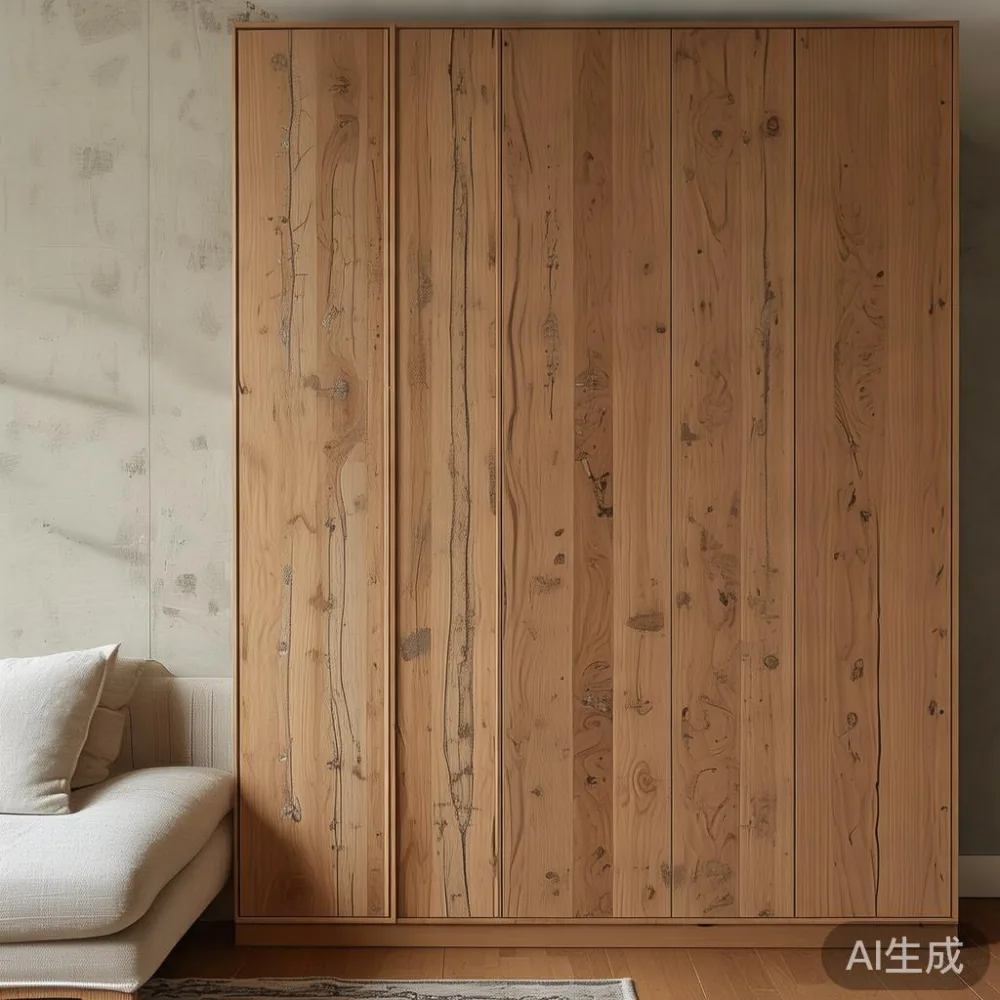
A well-made wardrobe should accommodate normal seasonal movement rather than pretending that wood never responds to moisture. At the same time, humidity control, correct sizing and suitable finishes determine whether that movement remains controlled. The following guide explains the practical effects, measurements and precautions that matter in Singapore.
Why does humidity affect solid wood in Singapore?
Wood is hygroscopic: it absorbs moisture when surrounding humidity rises and releases it when humidity falls. Changes in moisture content can cause swelling, shrinking, cupping and small joint movements. Southeast Asian conditions can be demanding because daytime relative humidity often sits near 70–80%, while an air-conditioned bedroom may fall to 40–60% at night.
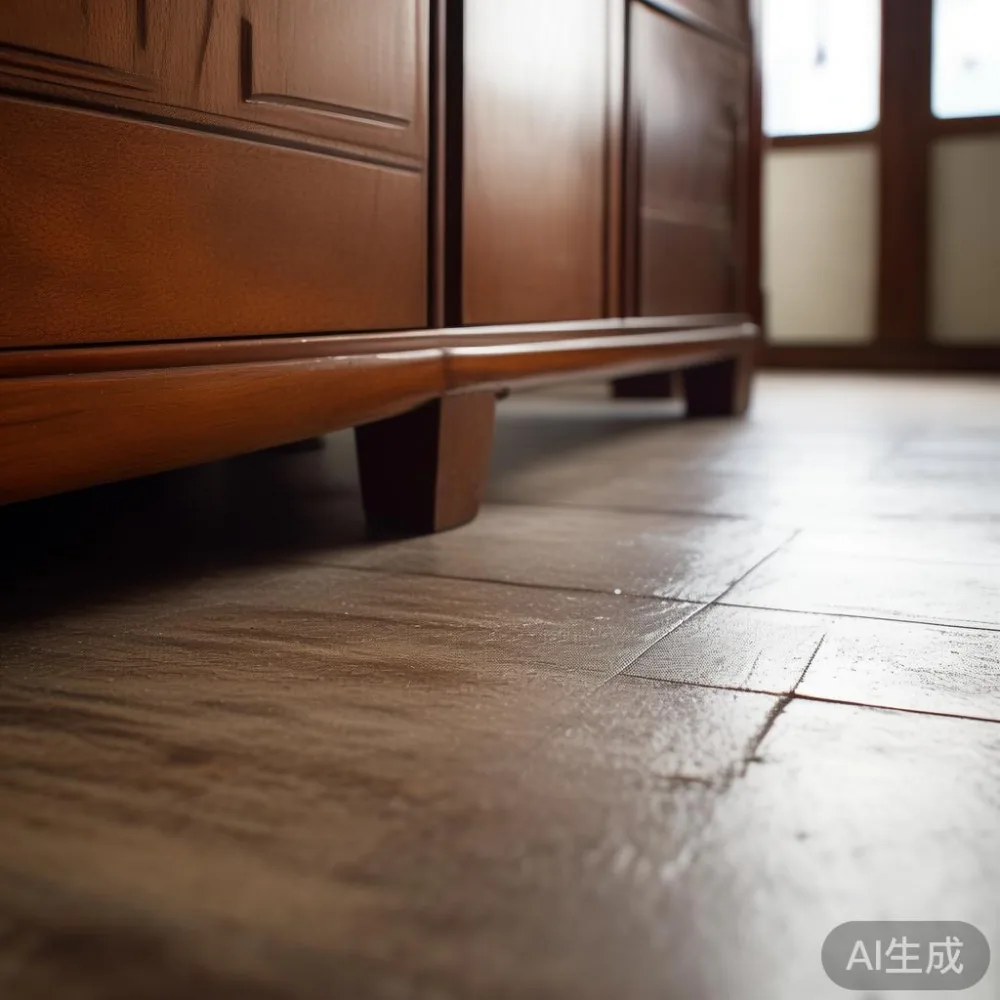
Temperature also matters. Warm, humid air and cooler air-conditioned rooms create repeated cycles, particularly between morning and night. A wardrobe beside a bedroom window can experience greater variation than one placed against an internal wall. Outdoor relative humidity alone is not a precise forecast for the cabinet, but it provides a useful warning to measure the actual room.
Put a hygrometer beside the wardrobe, not directly against it, and record readings at about 8 a.m. and 10 p.m. for 7 days. Readings from 45–60% are a practical indoor target for many solid wood pieces in Singapore. Short excursions are less concerning than several weeks above roughly 65%. Below 35%, static electricity and excessive dryness can also affect wood and leather-adjacent storage areas.
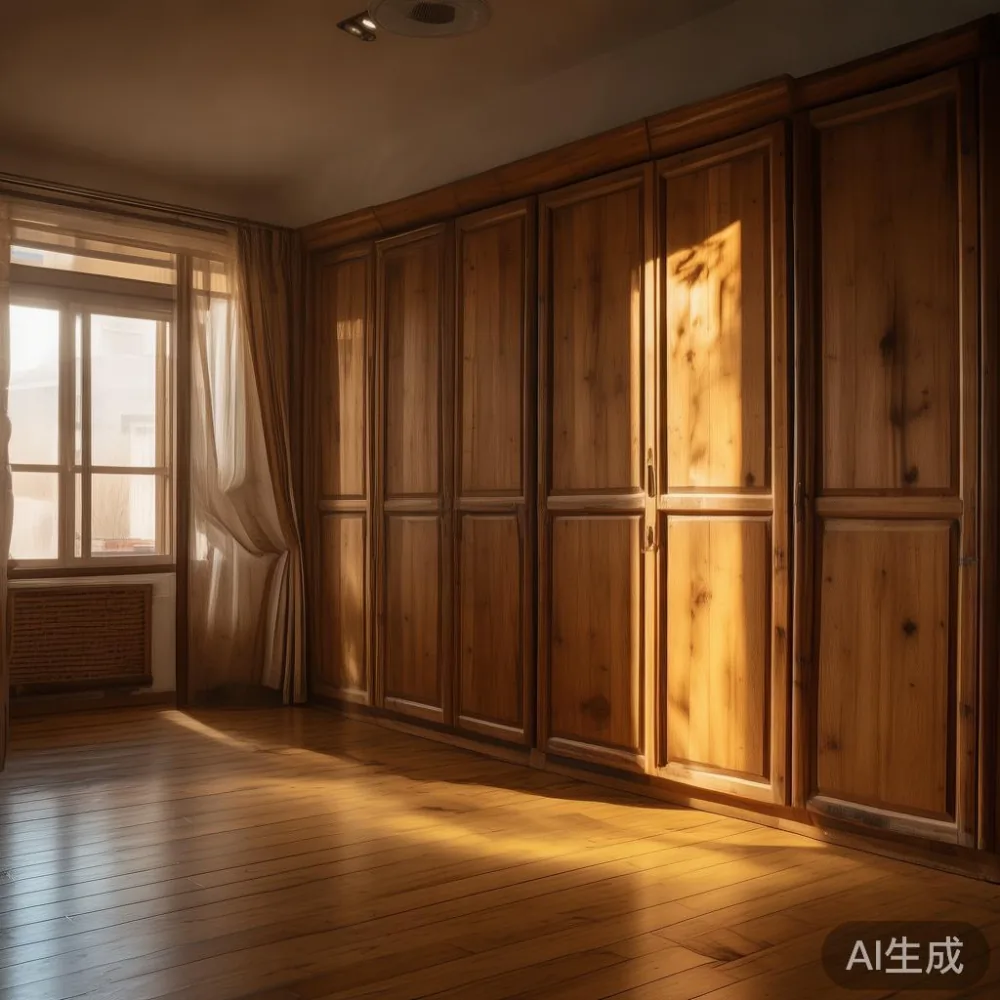
Which woods and wardrobe constructions handle humidity better?
Solid wood is not one uniform material. Dense species such as teak and iroko have lower movement than many softer hardwoods, but species alone does not guarantee stability. Board selection, cut, thickness, grain orientation, kiln treatment, joinery and finish all influence performance.
A stable wardrobe uses straight-grained boards with restrained thickness changes, moisture-equilibrated components and joints designed to move appropriately. Avoid very wide single panels unless the maker has documented their construction. For example, a 220 cm wide wardrobe door may benefit from engineered restraints or a framed solid wood design, while a narrower 60 cm door can be more manageable. Drawer bottoms should sit in grooves or be designed to expand without binding against the cabinet sides.
Oak, ash and similar visually popular woods remain usable in Singapore when selected and finished properly. Teak’s natural oil content gives it useful moisture resistance, although oiling should supplement rather than replace a sound finish. Ask for the species, board dimensions, moisture treatment, finish system and expected care instructions. “Solid wood” by itself is not enough technical information.
Finish slows moisture exchange; it does not make wood moisture-proof. A well-applied factory finish is preferable to a thick, brittle coating that can check as boards move. Inspect for fine cracks, dull patches, sticky areas or door gaps. Fresh paint or varnish on MDF may create a different repair challenge because the surface and core are not the same material.
Can a Singapore wardrobe survive lift and corridor restrictions?
Yes, if it is designed around the actual delivery route. HDB and condo approaches vary, so measure the lift door, lift car, turning spaces, corridor, staircase, parking route and apartment threshold before ordering. A common lift car may offer roughly 90–110 cm of usable width and 120–210 cm of usable depth, but shared lifts and replacement units can impose tighter limits.
Measure the narrowest fixed point and keep a safety allowance of about 5–10 cm. Fully hinged double doors may become difficult to rotate through a 90 cm lift landing. Flat-pack knock-down construction can reduce shipping volume, while modular wardrobe sections can be carried separately. A 60–80 cm wide carcass is often easier to handle than a 120 cm rigid unit, but every component must still fit through the route.
Protection matters too. Wrap corners, brace doors, use stretch film without trapping excessive moisture and check the package on arrival. Heavy wardrobes should have at least 2–4 people handled appropriately, depending on total weight and lifting equipment. Do not plan to pivot a 70 kg cabinet by one person in a confined corridor.
Singapore buyers should include GST in comparisons. If a listed price is SGD 2,400 plus SGD 120 for delivery, the total before any optional care product is SGD 2,520. MIDHILL’s stated delivery terms, return period and structural warranty should be confirmed against the specific order rather than assumed to cover every physical situation.
What should I do before placing a wardrobe beside a window?
Measure the wall and floor rather than estimating from a floor plan. Leave around 8–12 cm behind a freestanding wardrobe when a ventilated gap is appropriate, although tight built-in installations need a different moisture strategy. Keep doors, skirting boards, sockets and nearby furniture in view.
Blinds and curtains reduce direct airflow and solar exposure. Curtains should not touch wet wardrobe panels, and condenser water from a nearby window should be wiped away promptly. Keep radiators, humidifiers, kettles and clothes-drying racks away from the storage area. If a bathroom-adjacent wall is cool and poorly ventilated, compare temperature and humidity readings on both sides of the wardrobe.
Do not install packaging film permanently as a “moisture seal.” It can trap condensation if moisture is already present. Protective feet or suitable spacers should be stable, water-resistant and able to carry the expected load. For tall storage, wall anchoring may be prudent, subject to the wall system and manufacturer’s instructions.
Air-conditioning helps when the system actually dehumidifies, but a thermostat set to 24°C does not guarantee 55% relative humidity. A dehumidifier may be useful during prolonged wet periods; a common domestic model might maintain 50–55% RH in a closed bedroom while consuming roughly 200–500 watts, depending on capacity and conditions. Place it so that air can circulate around the wardrobe rather than directly blasting one side.
How can I stop humidity from ruining a wardrobe finish?
Use a sensible routine rather than reacting to one cloudy afternoon. Check the hygrometer weekly during especially wet periods, wipe standing water promptly and inspect the back, sides, toe-kick and drawer interiors. Look for changes in door gaps, sticking drawers, soft patches or surface haze.
Maintain ventilation without exposing wood to repeated wet airflow. In a HDB flat near a frequently opened external door, use a lobby or porch mat and keep wet umbrellas in a separate tray. In Bedok or Tampines homes with large glazed openings, close blinds before rain arrives and avoid placing a wardrobe directly under a known leak path. In Punggol rooms near external corridors, leave enough separation for air movement if the floor and wall conditions permit.
Cleaning should be gentle: a soft cloth lightly dampened with water and mild pH-neutral soap is usually safer than soaking a solid wood surface. Dry it immediately. Avoid silicone furniture sprays, ammonia cleaners and abrasive pads. Do not sand a finished surface aggressively without knowing its coating; the repair can look more uneven than the original appearance.
For customers comparing home schemes, a material palette can connect the wardrobe to a solid wood sofa, bed frame, dining table, nightstand or marble table. Style labels are helpful only when tied to dimensions and function. A French light luxury direction might use pale tones and restrained profiles, American light luxury might emphasize generous proportions and upholstery, while post-modern light luxury can mix storage with cleaner lines. Searches such as light blue luxury sofa, Nordic for dining room, or Mid-century modern for office can clarify a look, but a wood moisture specification should guide the wardrobe decision.
Is a solid wood wardrobe better than MDF or plywood for humid rooms?
Neither material is automatically superior in every installation. Solid wood offers repairable edges, visible grain and a long working life when movement is managed. MDF can provide flat panels and economical painted finishes, while good plywood may perform well when its edges are sealed and its design accounts for moisture. Poorly sealed sheet goods can swell at cut edges and sink joints.
Ask the supplier what lies beneath the finish, how edges are sealed and how many years of structural coverage apply. A maker established in 2008 with export experience can provide useful information, but warranty wording should still be read carefully. A 10-year structural warranty does not mean every finish, hinge or seasonal movement is excluded from maintenance questions.
Buyers sometimes compare an American bed vs Nordic bed or search for the best Modern light luxury furniture. Those phrases describe design and purchasing options, not climate performance. For a wardrobe, I would prioritise a documented moisture strategy, sensible panel dimensions and a finish suited to a 45–60% RH target over a fashionable label. A wardrobe should fit the bedroom’s air, wall and route before it fits a catalogue image.
How do I make a delivery and care plan that lasts for years?
Allow a realistic planning window. A Singapore delivery may be arranged within 3–14 days after confirmation, depending on stock, production, access and scheduled transport; custom pieces can take longer. Confirm whether the quoted amount includes GST, lift booking, assembly, anchoring and any remote-area charge. Free shipping thresholds should be checked against the order total, especially when adding a nightstand or other accessory.
Before delivery day, photograph the route and finished room, protect the floor, remove obstacles and reserve parking space where possible. On arrival, inspect packaging, corners, doors and fixings before signing. Measure the completed wardrobe if it was supplied flat-packed. Keep instruction sheets, finish details and spare hardware in one folder for at least 10 years, then review them before refinishing.
For long-term care, inspect humidity at 3-month intervals and after major weather changes. A small percentage movement is normal; persistent gaps, binding or mould-like spots deserve attention. Do not apply oil or wax over an unknown finish without testing an inconspicuous area. If refinishing is planned, let a specialist assess moisture content first. Repeated wet-dry cycles can be more damaging than a careful sanding and recoating process.
Humidity does not make solid wood furniture unusable in Southeast Asia. It does require deliberate choices: stable species, controlled board dimensions, sealed edges, suitable joinery, measured room conditions and realistic delivery planning. For Singapore households, those choices matter whether the wardrobe is selected for a compact Tampines HDB bedroom, a Punggol condo room or a larger private apartment. The right wardrobe is not simply one with a beautiful finish; it is one that can age with the climate, your room and your routines.