How Southeast Asian Humidity Affects Solid Wood Wardrobes
Singapore’s warm, humid climate can make a solid wood wardrobe feel like a precision instrument that needs thoughtful care. Wood naturally exchanges moisture with the surrounding air, so changes in relative humidity can cause expansion, contraction, joint movement, and surface marks. In an HDB flat in Tampines or a compact condominium in Bedok, that effect becomes easier to understand once wardrobe measurements are compared with corridor, lift, and room clearances. MIDHILL designs wardrobes for real homes and real climate conditions, with a 10-year structural warranty and lifetime refinishing support.
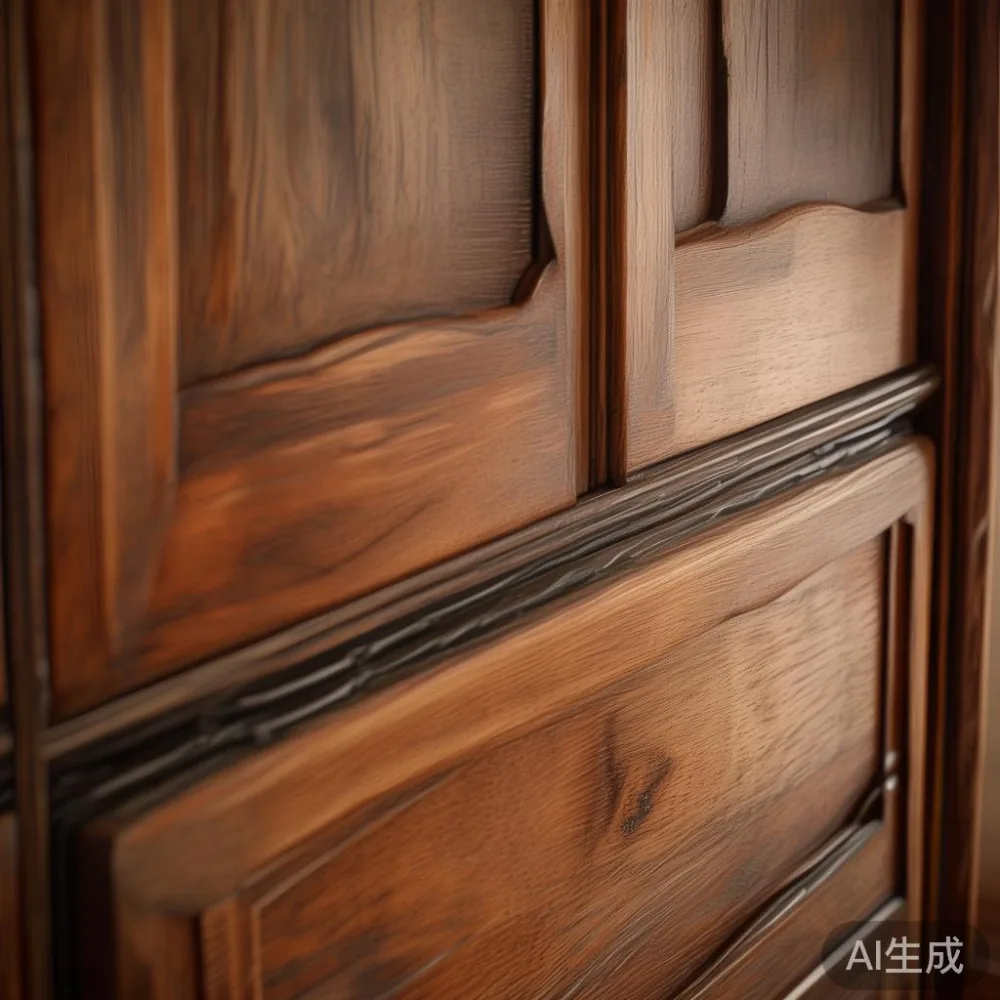
This guide explains how humidity affects wood furniture, why local construction details matter, and how Singapore residents can preserve the appearance and stability of a wardrobe. It also considers the wider setting of solid wood sofa, bed frame, dining table, nightstand, and marble table purchases, because every large piece must survive the same monsoon-driven indoor environment.
How much humidity is normal in Singapore?
Singapore’s daily relative humidity commonly ranges from about 65% to 85%, with heavier moisture during the monsoon periods and lower readings on some dry afternoons. A comfortable indoor target is generally around 40% to 60%, although no home in the tropics stays at one exact number throughout the year. Air-conditioned bedrooms may fall below 50%, while kitchens, bathrooms, and laundry areas can rise above 80%.
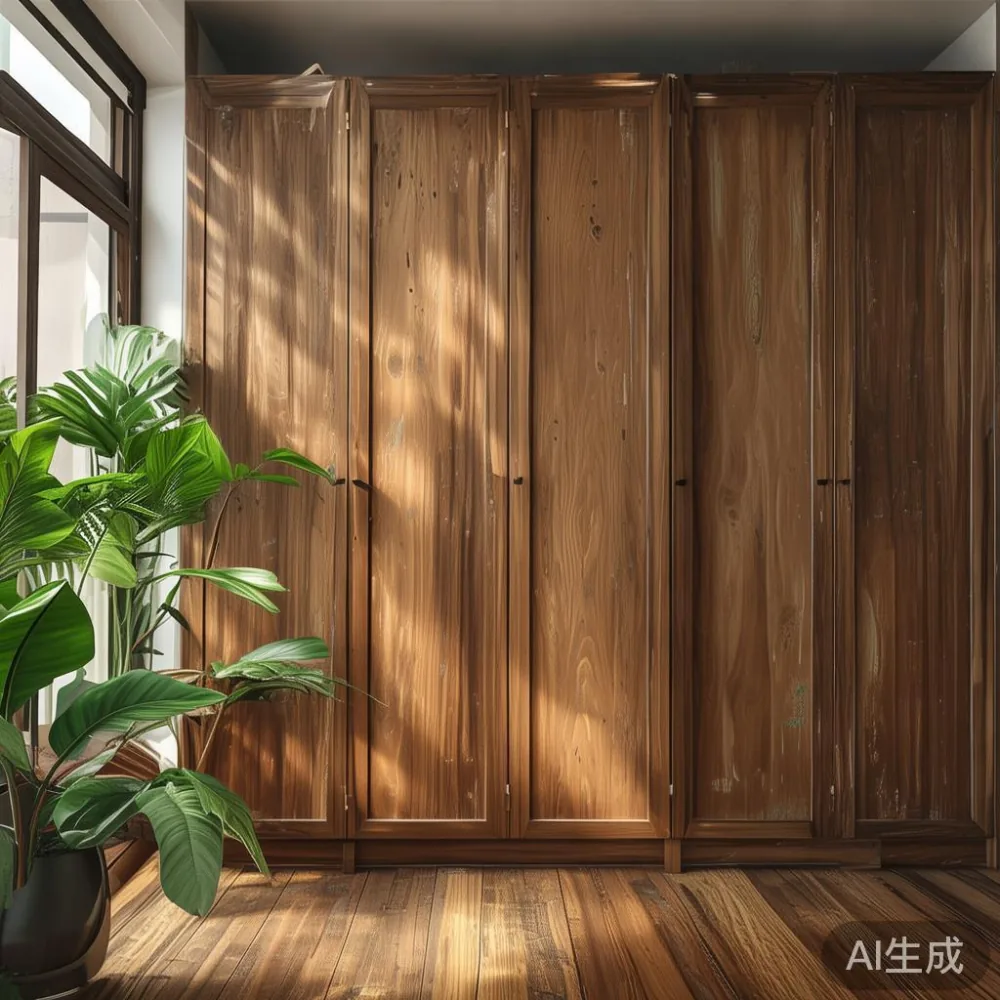
For solid wood, the important relationship is not simply “wet air equals damage.” Wood gradually adjusts to its environment, and moderate movement is natural. Problems become more likely when humidity swings quickly, wood has not been properly seasoned, a wardrobe is pushed against a damp wall, or door panels are fitted with no allowance for seasonal movement.
At 30°C and 75% relative humidity, some solid wood species reach an equilibrium moisture content above 18%. Under drier air at 45% relative humidity, the same material may settle near 8% to 10%. The moisture difference can produce measurable dimensional change across the grain. That is why a wardrobe made from solid timber should be inspected for movement rather than judged by whether it remains perfectly still.
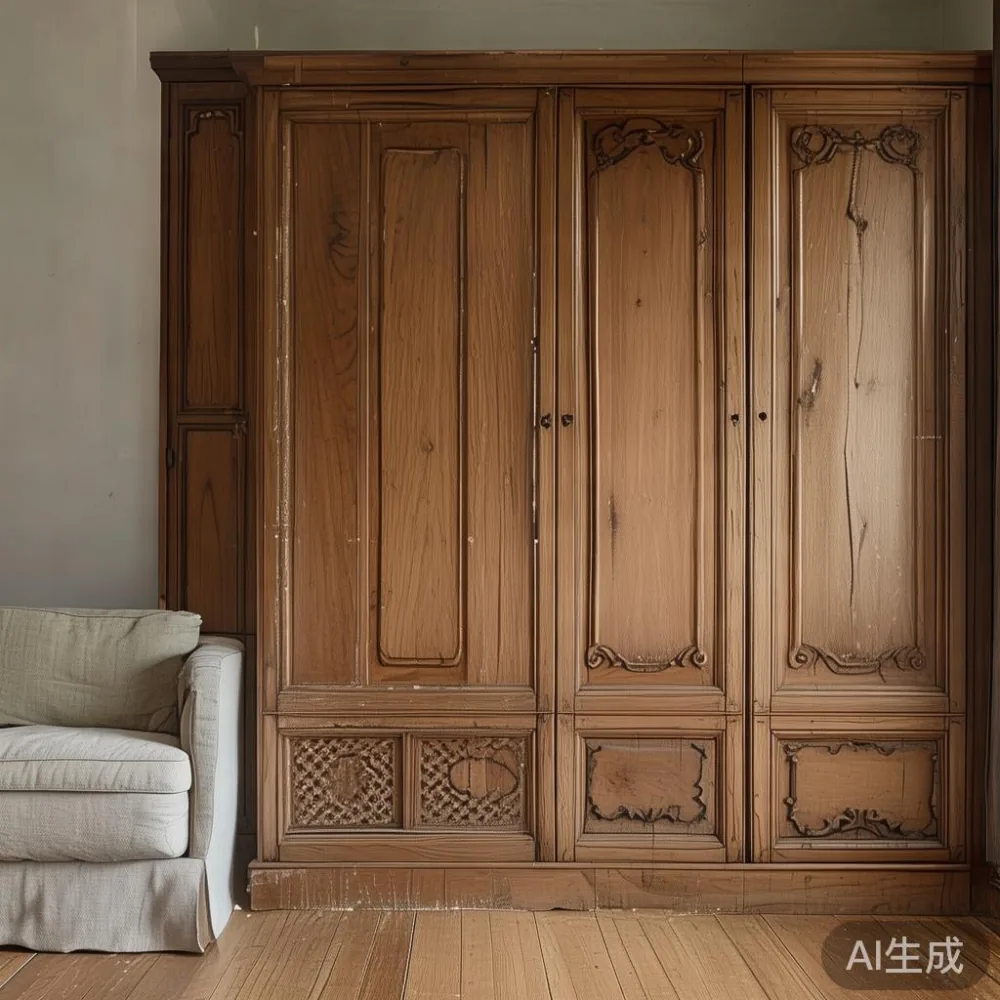
Last month I visited a client’s three-bedroom HDB flat in Punggol to inspect a 6-year-old solid wood wardrobe. The timber was stable, but the rear panel had a faint 2 mm bow because the unit had been installed beside a shared laundry wall. After the room was aired and the wardrobe was pulled 4 cm away from the wall, the panel gradually returned closer to its original plane. The visit confirmed that airflow and installation conditions can matter as much as the wood species itself.
What does humidity do to a solid wood wardrobe?
A wardrobe can show three main forms of humidity-related movement. The first is swelling: boards absorb moisture, expand across the grain, and become slightly harder to open. The second is shrinkage: prolonged dry air pulls moisture from the wood, potentially opening a hairline gap between panels or stressing a tight joint. The third is distortion: uneven exposure causes one side of a board to move differently from the other.
Doors need particular attention. A 210 cm tall solid oak door may expand or contract by several millimetres across its width as humidity changes. High-quality cabinetry allows for this movement while retaining a close visual fit. The same principle applies to the 180 cm wide wardrobes commonly requested for Singapore bedrooms: the carcass should remain stable, while doors and drawers need small, controlled clearances.
Surface finishes also respond differently. A water-based finish may become slightly hazier if moisture reaches it too quickly, while an oil or wax finish can look dull in persistently humid conditions. Lacquered, hard-wax-oiled, and finely sanded finishes each need a maintenance routine suited to the finish, not a generic “wood cleaner.”
Engineered panels are not automatically safer in a tropical climate. Their thin veneers, adhesives, and layered construction can respond differently from solid timber, and edge banding may loosen if moisture enters repeatedly. Solid wood is often preferred for long-term repairability because a damaged rail, stile, or drawer front can be refinished rather than replaced with a matching board.
Can I install a wardrobe next to an HDB or condo wall?
Yes, but the wall should be checked before delivery and installation. Concrete walls are generally stable, yet external walls in Bedok, Tampines, and Punggol can experience condensation or temperature changes. A sensible installation gap of 3 cm to 5 cm behind a freestanding wardrobe improves ventilation and makes inspection easier. Leave more space if the unit sits beside a bathroom, balcony, or laundry drying area.
Measure the route before ordering. A typical HDB lift interior may be around 90 cm wide and 140 cm deep, although individual blocks vary. Corridors may narrow to 100 cm or less around corners. A boxed wardrobe should have its longest and widest dimensions checked against the lift entrance, landing, corridor turns, and doorway—not merely the bedroom opening.
This matters for every large furniture purchase. A solid wood sofa may fit through the lift diagonally but damage a corridor handrail if packed rigidly. A bed frame delivered in 2 sections can simplify access. A dining table may need its top separated from the base, while a nightstand is usually easier to move. A marble table demands even more caution because its top can weigh 70 kg to 150 kg depending on size and material.
MIDHILL can help plan delivery measurements before a wardrobe leaves Foshan. Once the Singapore delivery date and access details are confirmed, the local logistics team can advise on the appropriate configuration. Packaging, carrying distance, floor level, and the number of porters should all be recorded. A delivery that works for a 150 cm unit may not work for a 240 cm unit.
Should Singapore homeowners use a dehumidifier for a wardrobe?
A dehumidifier is useful in a consistently damp room, but it should not create rapid daily swings. Keeping relative humidity near 50% to 60% supports steadier timber performance. Many modern dehumidifiers can hold a room around 50%, while portable models may manage one wardrobe zone more economically. Check the device’s rated control range, tank capacity, and power consumption rather than relying on a vague “dry” setting.
For HDB flats, a room dehumidifier placed near the wardrobe works better than a small unit hidden inside a tightly packed closet. The latter may reduce humidity slightly but also restrict the circulation required to keep panels dry. If a wardrobe has built-in drawers and no rear ventilation, leave adequate gaps between items and wipe unexpected condensation from the interior floor.
Air-conditioning alone is not always a complete moisture-control strategy. It lowers temperature and often lowers humidity, but doors and windows can reintroduce moisture during showers and cooking. A hygrometer placed at wardrobe height provides a more useful reading than one near the ceiling or beside a dehumidifier outlet. Record a morning and evening reading for 7 days before making major adjustments.
Singapore’s GST-inclusive pricing should also be confirmed in writing. Furniture above SGD 400 in a local retail setting may require GST under Singapore tax rules, but delivery location, installation, and specific transactions can alter the calculation. A clear quote in SGD should identify the wardrobe, finish, dimensions, delivery days, and any stair or lift surcharge.
Which wood and finish suit Singapore humidity?
Wood choice influences the rate of moisture movement, but construction quality is equally important. Teak is well known for its dimensional stability and oily character. Oak, ash, and other commonly used hardwoods can perform well when properly kiln-dried, joined, and finished. Walnut offers a darker American light luxury tone, while pale oak and ash can support a French light luxury bedroom more easily.
Ask for the expected moisture range of the wardrobe rather than a vague claim that the timber is “fully dried.” The answer should connect to the service climate, with appropriate joinery and controlled finishing. Look for stable frame construction, doors that are easy to adjust, and surfaces that can be maintained without removing the whole finish.
Finish selection should match the room. Satin hard wax oil creates a tactile, repairable surface, but it requires more attentive wiping than a tougher film finish. Matte lacquer suits a post-modern light luxury wardrobe and is convenient in a busy family home. Deep-toned finishes may show fingerprints, while lighter finishes can reveal dust and pale water marks sooner.
There is also a question of appearance. European light luxury for office collections may be inspired by restrained joinery and balanced proportions, but an office wardrobe still has to cope with air-conditioning and occasional damp entryways. Italian light luxury for apartment projects often calls for slim profiles and warm materials; European light luxury for office interiors may favour cleaner lines. The climate requirement does not disappear because the styling is refined.
If a broader search is underway, phrases such as for sale American furniture may surface solid oak dining tables, bed frames, and sideboards, but verify moisture specifications and local service support. Searches for top 10 Coastal furniture may point toward pale woods and relaxed forms, yet “coastal” should describe the design rather than imply that any timber is moisture-proof.
How should I care for a wardrobe during the monsoon?
Begin with airflow and distance. Keep the wardrobe 3 cm to 5 cm from the wall where practical, and do not block the top or rear with boxes. Leave at least 5 cm above the unit if the ceiling is close, allowing warm air to circulate. Use a hygrometer and aim for approximately 45% to 60% relative humidity. Avoid moving between an air-conditioned room and a humid corridor several times a day.
Clean gently. A soft cloth lightly dampened with clean water is usually enough for a lacquered surface. Wipe along the grain and dry immediately. For an oil-finished wardrobe, follow the finish manufacturer’s maintenance interval, which may be every 6 to 12 months depending on exposure. Avoid silicone-heavy sprays, abrasive pads, and excess water around hinges and joints.
Check doors every 3 months during humid months. A hinge may need a 1 mm to 2 mm adjustment if seasonal movement has changed the gap. Tighten screws only to the manufacturer’s intended tension; over-tightening can restrict natural movement and damage the joint. Do not plane or sand a swollen door immediately. Allow the humidity to settle, then make a small adjustment.
For scratches, identify the finish before applying a repair product. Some marks can be treated with a wax touch-up pencil; others may need a local re-oil or professional refinishing. MIDHILL offers lifetime refinishing, which is particularly relevant when the finish eventually needs attention after years of tropical use.
Will a solid wood wardrobe remain practical in a compact Singapore bedroom?
It can, provided the design follows the room rather than a catalogue image. A 150 cm wide wardrobe may suit a compact Bedok studio or HDB bedroom, while a 180 cm to 240 cm unit can work in a larger Tampines flat if door clearance and walkway space are preserved. Allow at least 60 cm in front of wardrobe doors when they open, and more if the room contains a dressing chair.
Door thickness, drawer extension, and lift geometry are part of the design. A hinged door needs a clear swing; a sliding option removes the swing requirement but may need different internal spacing and hardware. In narrow rooms, a fitted wardrobe can use the full wall length, though built-in cavity dimensions and site tolerances become important. An 8 mm to 12 mm measurement variation can affect a tight installation.
For a coordinated home, match the wardrobe’s finish with the bed frame and nightstand, but avoid making every large surface visually identical. A solid wood sofa in warm beige, a pale oak bed frame, and a dark dining table can create contrast while sharing compatible timber tones. A marble table can add cool texture to the bedroom or living area, although it should not be placed in a continuously damp corner.
One customer asked whether an imported Japanese bed was suitable for a humid Singapore room. In other words, is Japanese bed worth it as a product choice? The answer depends on timber, finish, ventilation, and warranty—not nationality. A well-built solid wood bed frame with stable joinery can perform satisfactorily when treated with the same moisture discipline as a wardrobe.
The same logic applies when asking how to style European wardrobe in bedroom. Start with proportion, storage, and light. Pale finishes can make a compact room feel open; darker walnut-style finishes can create a more American light luxury mood. French light luxury often favours quiet joinery and muted textiles, while post-modern light luxury can pair a plain wardrobe with distinctive handles, lighting, or a marble table.
What should I check before a humid-climate wardrobe delivery?
Use a short checklist covering timber, dimensions, access, climate, and service. Confirm the wardrobe’s species or timber specification, finish type, expected moisture range, and warranty. Record the finished width, height, depth, door swing, and weight. Add the lift-door width, lift depth, lift height, corridor turns, and staircase measurements to the access plan.
Confirm the delivery window in days and whether the quoted SGD amount includes GST, carrying, assembly, and placement. For purchases above US$350, MIDHILL’s free shipping offer can simplify the international cost, but local GST, taxes, access charges, and return terms should still be reviewed carefully. Singapore’s 14-day return policy gives buyers time to check the delivered piece, subject to the stated conditions for custom or used goods.
After delivery, inspect the wardrobe before accepting it. Look for cracks, loose joints, finish marks, and moisture-related distortion. Let the unit acclimatise in the bedroom for 24 to 72 hours before loading it heavily, particularly if it has travelled from a cooler climate. If the garment rail is fitted, check that doors open and close without forcing. Photograph the condition for your records.
Wood furniture is not sealed against Singapore’s climate forever. It is a natural material that benefits from stable indoor conditions and occasional care. With sensible installation, humidity management, and access planning, a solid wood wardrobe can remain structurally sound and visually refined for many years. That is the practical goal of light-luxury furniture: not perfection frozen in a showroom, but enduring quality that works with a humid home.