Impact of Humidity on Solid Wood Wardrobes in Southeast Asia
Singapore’s warm, humid climate can change the dimensions, joints and appearance of solid wood furniture, especially inside a wardrobe. Outdoor relative humidity may sit between 75% and 90% during wet periods, while an air-conditioned HDB flat can be much drier at about 40% to 55%. A wardrobe that is comfortable beside an east-facing window in Tampines may behave differently in a Bedok bedroom after rain. Understanding moisture movement helps a homeowner in Punggol, Singapore, choose suitable timber, protect the finish and maintain a European light luxury for apartment interior without treating a 2.4 m tall cabinet as if it were immune to weather.
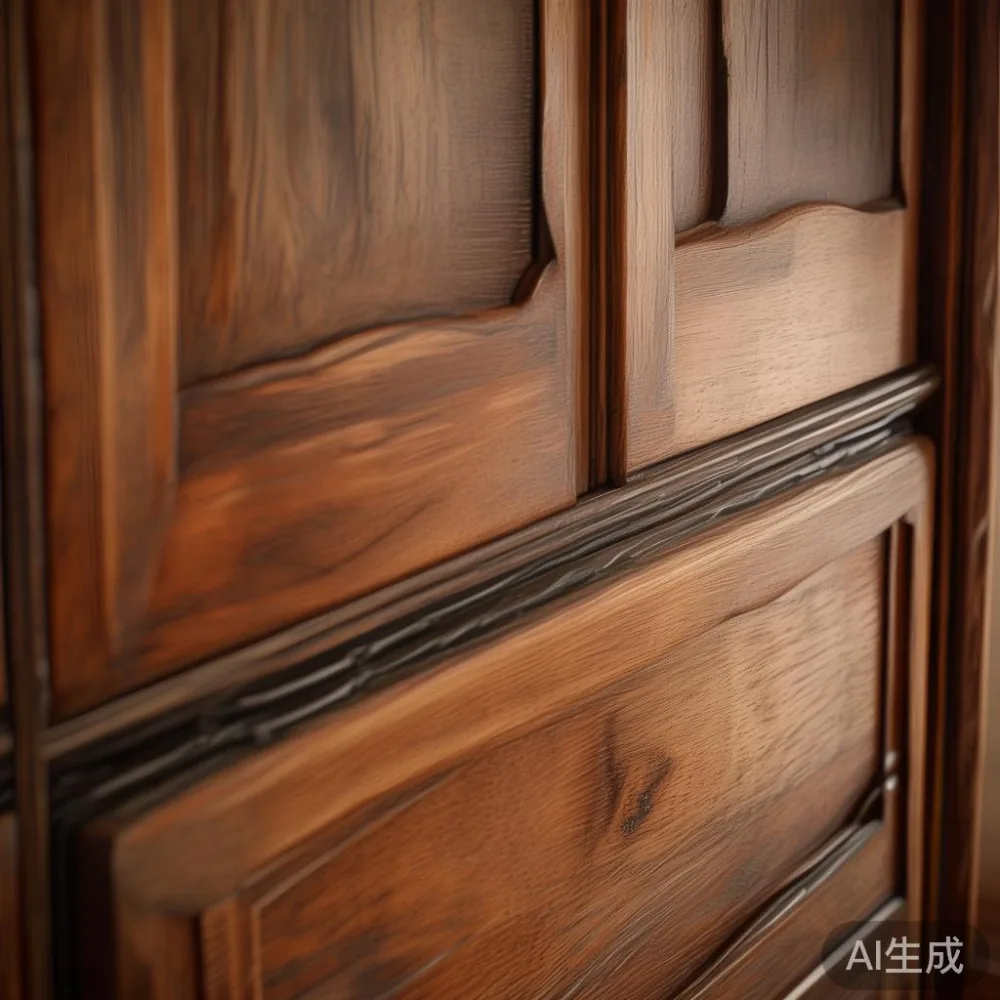
Wood does not simply “like” or “dislike” humidity. Its moisture content responds to the surrounding air, and the response depends on species, board width, veneer thickness, joinery, finish and the rate of change. Slow seasonal movement can be manageable. A rapid shift caused by an air-conditioner switching on, a corridor airing out or persistent damp near a window can produce checking, swelling or a door that no longer closes evenly.
At MIDHILL, practical furniture design takes these variables seriously. The company has manufactured solid wood furniture since 2008, exports to more than 15 countries, provides a 10-year structural warranty and offers lifetime refinishing. Those commitments are relevant to humid markets because care instructions and finish renewal matter as much as the original appearance. Delivery in Singapore should also be planned around lift access: a 2.2 m wide lift and a 1.2 m wide corridor, for example, leave less tolerance for packaging a large wardrobe.
What is the ideal humidity level for a solid wood wardrobe?
A useful target is approximately 45% to 60% relative humidity, with modest movement over time. That range supports stable timber movement and reduces the risk of repeated expansion and contraction. It does not require buying a dehumidifier for every home; it means avoiding abrupt changes and noticing signs of stress.
Use a digital hygrometer costing about SGD 25 to SGD 60 rather than guessing from condensation on a window. Place it near the wardrobe for 7 days, recording readings in the morning and at night. A reading of 72% at 8 a.m. and 47% at 9 p.m. indicates a large daily swing. A bedroom that remains between 48% and 58% is preferable for a solid wood wardrobe, although occupied rooms inevitably vary.
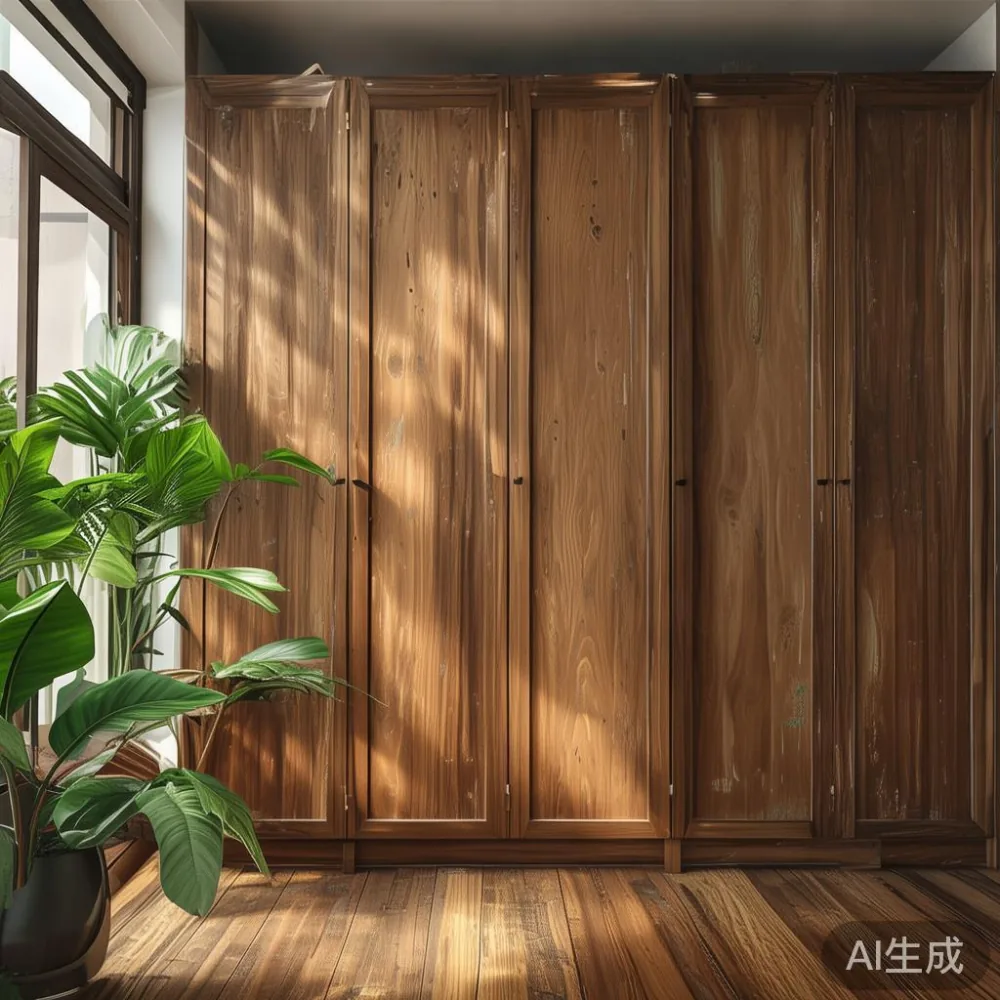
The wardrobe should stand about 10 cm to 15 cm away from a cold exterior wall and 20 cm or more from a window if possible. Leave at least 5 cm behind the carcass when ventilation is available, and avoid direct contact with tiled floors. In an HDB flat, a built-in installation is stable, but the maker should still measure the final opening because walls are not always square.
A 180 cm to 220 cm tall wardrobe is common in a Singapore bedroom, while a larger 240 cm unit may suit a condo with a 2.3 m ceiling. The taller the board, the more moisture movement can be visible at the top, bottom or stile. For this reason, a solid wood design should use a stable construction, sound fasteners and a finish appropriate to indoor use.
Why does Southeast Asian humidity make wood move?
Humidity enters and leaves wood gradually. Above roughly 70% relative humidity, many timbers take on more moisture and swell across the grain. A 180 cm door might widen by several millimetres through its height. Below about 40%, the same door can shrink enough to create a narrow gap or a rubbing edge. The change is physical, so pretending that a thicker lacquer can eliminate every seasonal adjustment would be misleading.
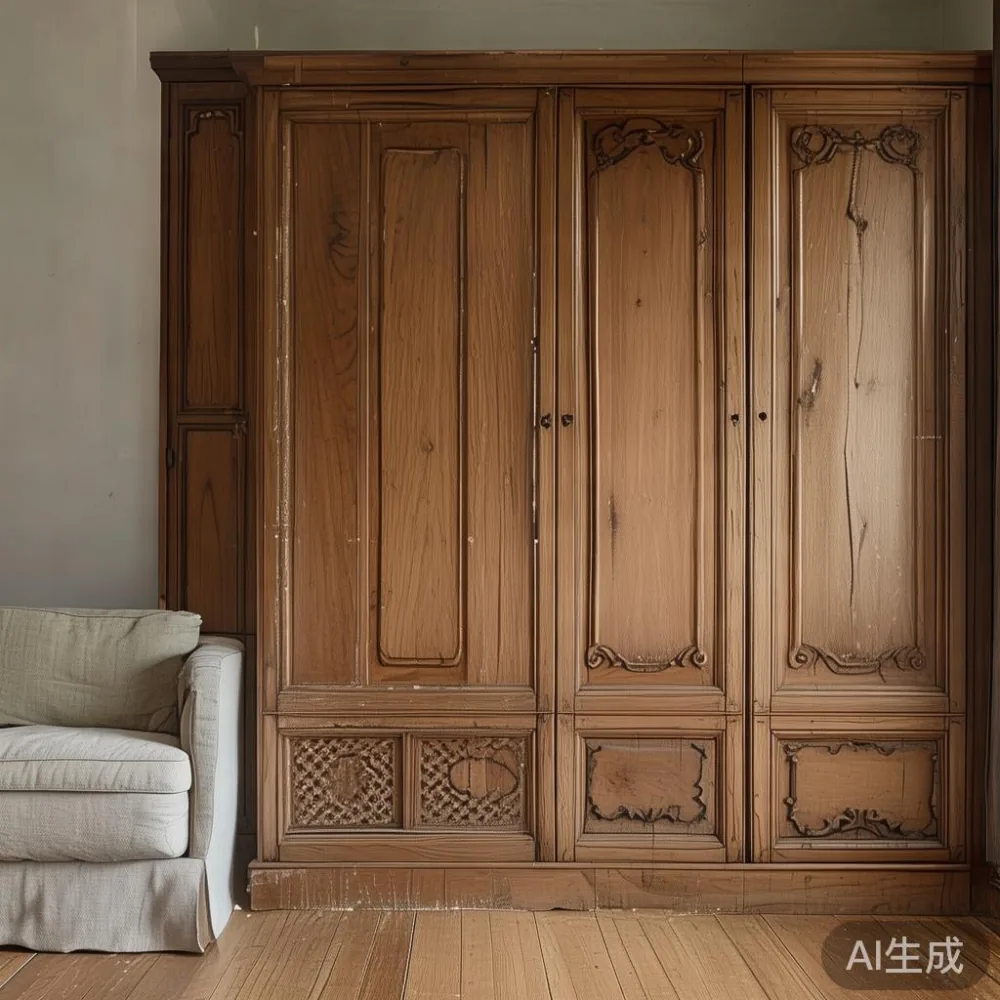
Different species respond differently. Teak, oak and other stable hardwoods are often selected for furniture, but “stable” does not mean motionless. A 25 mm solid wood board may show more dimensional movement than a well-engineered panel with a thin hardwood layer. Veneered construction can reduce movement, although it changes the product description: a wardrobe labelled as solid wood should not be passed off as engineered board.
Singapore’s location also matters. Coastal air carries salt and moisture, while monsoon periods raise nighttime humidity. Air-conditioning lowers moisture quickly; opening windows after a downpour raises it again. In a Tampines HDB flat, that cycle can occur several times a day. In a Punggol condo facing a landscaped void, outdoor air may remain damp for longer. The furniture should therefore be conditioned to the room rather than installed immediately after delivery during a wet week.
Give a newly delivered wardrobe 7 to 14 days to acclimatise before making fine adjustments. During that period, keep it away from direct airflow and wipe off condensation promptly. A simple door check every 2 weeks can reveal early movement: if the gap at the latch side grows by more than about 2 mm, inspect the hinges, levelling feet and wall clearance.
Which furniture finishes handle humidity well?
A factory-applied hardwax oil, matte lacquer or satin lacquer can protect indoor wood when it is maintained. Hardwax oil leaves the grain visible and may need reapplication around years 3 to 5, depending on use. Lacquer creates a more uniform surface and is easier to wipe, but a deep scratch may expose the timber. Ask for the exact finish name, maintenance schedule and repair method before accepting delivery.
For a wardrobe, choose a finish that can be renewed locally. A clear matte coat in a warm neutral tone can complement European light luxury for apartment styling, but the underlying construction remains more important than the colour. Keep pale finishes from being placed beside a persistent damp corner unless water is wiped away within minutes.
Light finishes also show dirt and oily fingerprints. A wardrobe near a Bedok master bedroom entrance may need a soft cloth, mild pH-neutral cleaner and a dry microfibre towel. Avoid silicone sprays, furniture polish containing heavy wax and ordinary bathroom cleaners. Test any product on a 5 cm square hidden panel and wait 24 hours before using it across a door.
French light luxury often favours pale oak, cream tones and restrained hardware, while American light luxury may use broader grain and a more substantial profile. Post-modern light luxury can combine vertical fluting, narrow shadows and clean lines. Each style can suit humid Singapore interiors, but none removes the need for careful ventilation. A 1.8 m wide solid wood wardrobe with satin hardware and matte doors may suit a 3 m bedroom wall; a 2.4 m unit needs a room width of at least 3.6 m after allowing 60 cm for circulation.
Is European wardrobe worth it for an HDB bedroom?
That depends on the timber, construction, dimensions, delivery route and after-sales support. The question “is European wardrobe worth it” is often framed around appearance, but the practical answer includes how it behaves in a Singapore home. A European wardrobe with solid wood doors, adjustable shelves and repairable hardware can be worthwhile when it fits the space and the humidity has been considered. An oversized imported unit that cannot pass through the lift or requires permanent wall alteration may be less practical.
For a Tampines HDB flat, measure the bedroom door, corridor turns and lift opening. A lift car measuring 1.5 m by 1.1 m may accept a flat-packed wardrobe panel, while a fully assembled 2.1 m tall carcass may not turn safely around a corner. Leave 3 cm to 5 cm of clearance around packaging. A delivery quotation should state whether the crew carries the package upstairs, assembles it and removes the carton; these separate services can change the final cost.
Check whether GST is included. A wardrobe priced at SGD 2,400 before GST becomes SGD 2,472 at the current 3% rate, excluding delivery or installation. A narrower but properly sized option may use the room more efficiently than a wider unit that reduces circulation to 55 cm. Do not confuse imported design with imported timber: verify the species, finish, dimensions and warranty in writing.
For local service, MIDHILL’s 10-year structural warranty and lifetime refinishing are useful reference points when comparing quotations. Confirm that the warranty covers joints and structural components rather than accidental water damage, and ask what evidence is required for a claim. Photograph the delivery condition with a ruler beside any existing mark, and record the room humidity on the same day.
How should a wardrobe be installed near windows and air-conditioners?
Begin with the window. Direct rain can raise surface moisture even when the room is air-conditioned, so keep the wardrobe at least 30 cm from a window if space allows. Curtains help reduce solar heat but can trap humidity if they touch the floor. Use a hygrometer on the wardrobe side of the curtain for 3 days before ordering a fixed installation.
Next, inspect the air-conditioner. Cold air lowers relative humidity quickly, particularly when the door louvre points toward the wardrobe. A bedroom kept at 26°C can still fall below 45% near the return vent. Set the unit’s fan speed to auto initially, use the sleep function only after monitoring the room, and avoid placing the wardrobe directly beneath a vent.
Check the floor with a moisture meter if the unit stands near a service riser or external wall. Readings below roughly 8% are usually reassuring for many timber installations, although the meter should be calibrated. If a reading is higher, ask a professional to investigate rather than sealing the wardrobe tightly against a damp surface.
For a movable wardrobe, use 2 to 4 adjustable levelling feet. A 120 kg wardrobe with six shelves may need a level bearing surface; uneven floors can twist the carcass and pull one door out of plane. Lock or mark the casters after positioning them. For an installed wardrobe, confirm that the wall is plumb within about 3 mm over 2 m and allow the manufacturer to set the final gaps.
What does humidity do to a bed frame, nightstand and dining table?
Humidity affects the whole bedroom, not only the wardrobe. A solid wood bed frame may develop a faint gap where the headboard meets the side rail after drying. Check the joints every 3 months and avoid pushing the bed into a cold corner. A nightstand with a marble table top needs a separate check: marble is dimensionally stable compared with wood, but its stone slab, adhesive and support frame still require care from standing water.
A dining table experiences larger surface-area changes than a narrow cabinet. A 220 cm solid wood dining table can expand across its width by a few millimetres during a damp week, especially if one side is near an open sliding door. Use a coaster with a diameter of at least 8 cm, wipe spills within 2 minutes and maintain 45% to 60% room humidity where practical. When comparing light luxury for dining room designs, place timber near the centre of the room rather than directly against a glass façade.
Italian light luxury for bedroom themes often pair pale timber with linen, bronze or stone details. Those materials can look refined in a 90 m² condo, but a linen headboard and a marble table are not moisture-proof. Let a damp fabric dry fully and use a tray beneath plants. A solid wood sofa in a living area should be kept away from wet umbrellas and air-conditioner vents; the frame may survive, while the cover or cushion can stain more quickly.
This is also a useful comparison when someone asks about a light luxury bed vs Mid-century modern bed: the distinction is mainly profile, proportion and visual language, not humidity resistance. Ask the supplier for the same timber, finish and connection details regardless of the style label. A solid wood sofa, bed frame, dining table, wardrobe and nightstand can share a coordinated finish, but each needs its own cleaning routine.
How can Singapore homeowners maintain solid wood furniture?
Create a simple 10-minute routine. Once a week, check the hygrometer and wipe the wardrobe top, door edges and handles with a dry cloth. Once a month, inspect the bottom 10 cm of the carcass for mould, especially in a ground-floor Bedok unit or near a balcony. Use ventilation when the outdoor humidity is lower than the indoor reading, and run a dehumidifier or air-conditioner when the room stays above 60% for 24 hours.
Do not place wet clothing directly inside a wardrobe for 12 hours. Allow damp laundry to dry in a ventilated area first. Store wool, cotton and paper in sealed or ventilated boxes appropriate to their material, and leave 5 cm of space around the wardrobe’s back where possible. Keep plants on a tray and move them if leaves repeatedly touch the wood.
For small surface marks, use a soft block and the finish supplier’s recommended repair product. Test it on the hidden edge for 24 hours. Do not sand a 1-year-old lacquered door aggressively; a professional refinishing service can restore the surface with far less damage. MIDHILL’s lifetime refinishing policy should be read with its stated conditions, because finish type and normal wear affect coverage.
Before the next rainy season, inspect hinges, screws and door gaps. A loose hinge may look like a humidity problem, so level the carcass before changing hardware. Record the wardrobe height at the top and bottom, the latch gap and the room humidity. Repeat the record every 30 days; the trend is more informative than one isolated reading.
Last month I visited a Singapore condo bedroom after a 3-day rainstorm and saw why local adaptation matters. A newly installed 210 cm solid wood wardrobe stood 25 cm from a west-facing window, while the air-conditioner was set to 23°C. A hygrometer beside the unit read 43%, and the upper door edge had opened a visible 2 mm gap. After the team stopped directing cold air at the wardrobe, moved it 20 cm farther from the window and allowed 10 days of gradual adjustment, the gap returned to within the maker’s specified 1 mm tolerance. The timber had not warped permanently; the issue was an unusually rapid moisture change.
For a delivery, calculate the full route before confirming. GST, lift booking, corridor turning and assembly should appear as separate line items. A wardrobe of 180 kg may need two installers and 45 to 90 minutes for assembly, while a flat-packed 95 kg unit may take 30 to 60 minutes. Check the doorstep width, remove trip hazards and keep at least 1 m of corridor clearance where building rules require it. Free shipping over US$350 may apply under the published order conditions, but the Singapore team should confirm the local charge in SGD before purchase.
A Singapore wardrobe should be measured, conditioned and maintained like part of the room’s climate-control system. Stable indoor humidity, sensible placement and repairable finishes will protect both appearance and structure for years. For a wider product reference, visit www.midhill.co and compare dimensions, timber, finish terms and delivery arrangements directly.