How to Match a Wardrobe and Living Pieces to a Warm Minimal Interior: A Singapore HDB Guide
I moved into a 1,012 sq ft resale HDB flat in Tampines last August, and the corridor outside my unit measured just 1.2 m wide. The lift opening was 0.9 m. Anything wider than that simply could not enter, and I learned this the hard way when a friend's imported European cabinet arrived, refused to clear the lift door, and went straight back to the warehouse. That experience reshaped how I match furniture to a warm minimal interior, especially when the site is a Singapore HDB flat or a compact unit in Punggol or Bedok. Warm minimalism is not sparse Scandinavian white. It is oak tones, soft putty walls, linen drapes, and pieces that read calm but feel grounded. The hardest part is usually the wardrobe, because it occupies the largest single footprint in a bedroom and sets the rhythm for every other piece you bring in.
What does "warm minimal" actually mean in a 1,000 sq ft HDB flat?
Warm minimalism is a finish story before it is a styling thing. You are working with materials that carry warmth into a small room without adding visual noise. Think solid wood, brushed brass, unglazed ceramic, raw linen, and one quiet stone moment. Cool minimalism reads as white walls, grey oak and black metal. Warm minimalism reads as honey oak, soft cream, muted clay and a single marble surface. In a Tampines four-room flat with 2.7 m ceilings, I painted three walls in Jotun Pure Colour 1624 (a putty tone) and left the wall behind the wardrobe in Putty 1182. The whole room felt calmer within a day, and I had not bought anything yet. The palette sets the wardrobe, then the bed frame, then everything else.
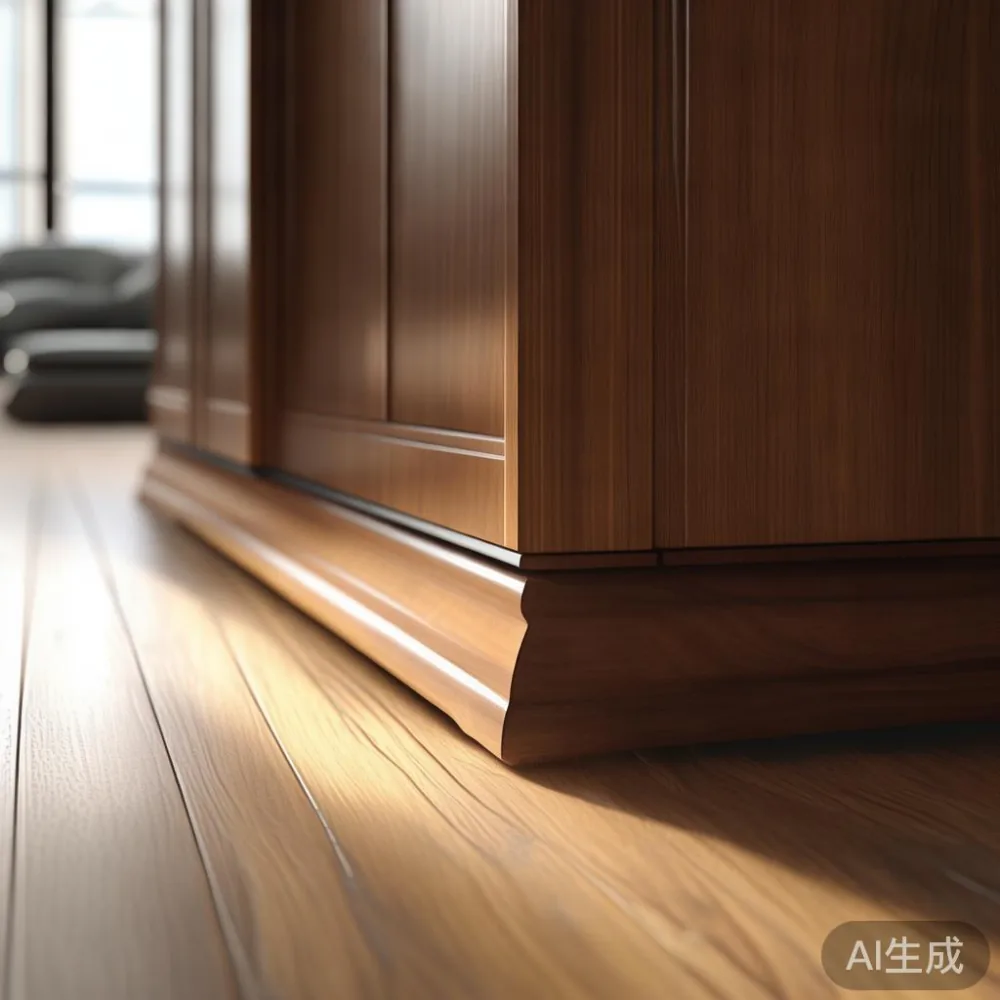
For the wardrobe, a warm minimal look usually means flat oak veneer, recessed finger pulls, no visible handles, and either full-height doors or two sliding panels. Glossy white laminate fights warm minimal, so does high-contrast black metal framing. Pickled oak, light grey oak, and cold ash all push the room back into cool minimal. What you want is a wood tone between 6 and 9 on the warm-cool scale. Solid white oak, ash with a honey stain, or warm walnut all work. If you order a custom wardrobe from MIDHILL in Foshan, you can request a warm oak or warm ash finish at around S$2,400 to S$3,800 for a 2.4 m run, and the same piece in a cold grey oak usually costs almost the same, so the choice is purely aesthetic.
How do I size a wardrobe for a Singapore HDB bedroom without blocking the corridor?
Measure first, buy second. I keep a small list pinned in my phone:
1. Bedroom door width (most HDB doors are 0.9 m).
2. Lift door width (1.0 m for passenger lifts in most blocks built after 2010, 0.9 m for older blocks in Bedok).
3. Corridor width (1.2 m to 1.5 m common).
4. Floor-to-ceiling height (2.6 m older, 2.7 m newer, 3.0 m in some Punggol BTOs).
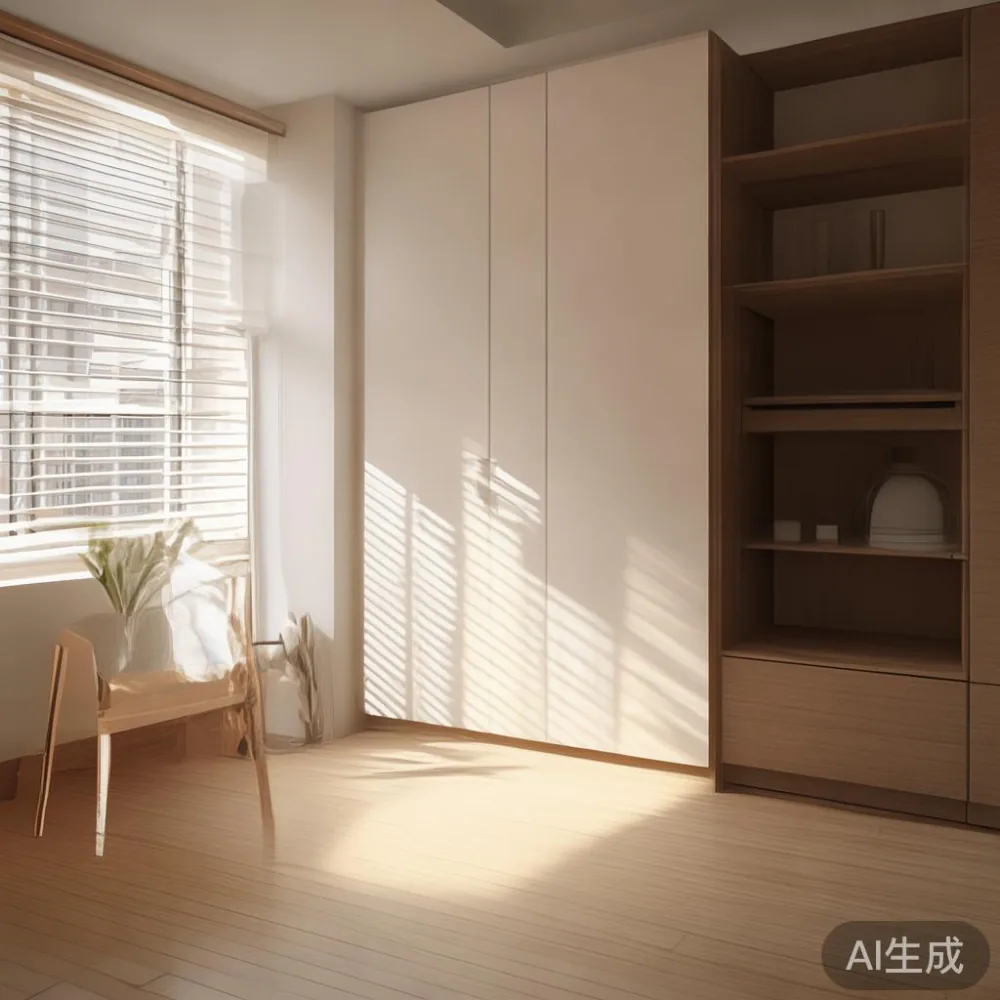
If a wardrobe arrives flat-packed in cartons wider than 0.85 m, it will not clear the lift. If it arrives pre-assembled above 0.9 m wide, it will not enter the lift at all. MIDHILL ships its solid wood wardrobes flat-packed in reinforced cartons, with the largest single panel capped at 0.82 m so it clears both corridor turns and lift openings in Tampines and Punggol. For a standard 4-room HDB master bedroom of about 13 sq m, a 2.0 m to 2.4 m wide wardrobe with 2.4 m height is enough for two adults, given the usual 2-door configuration. Adding a sliding door version saves another 0.6 m of swing clearance, which matters when your bed frame sits only 0.7 m away from the wardrobe wall.
Which wood tones pair best with a warm minimal wardrobe in Singapore light?
Singapore light is bright, slightly cool at noon from the harsh equatorial sun, and very warm at sunset. That daily swing matters more than people think. A wood tone that looks perfect at the showroom in Foshan can read muddy at home under a 4000K LED. I tested three samples taped to the wardrobe wall for a week: warm white oak, natural ash, and a slightly pinkish beech. Warm white oak won because it held its tone across the day. The beech went a touch orange at 7 pm when the west-facing window caught the evening light. Natural ash drifted a little grey under the noon glare. White oak, by contrast, looked warm at 9 am, neutral at noon, and golden at 7 pm, which is exactly what warm minimal wants.
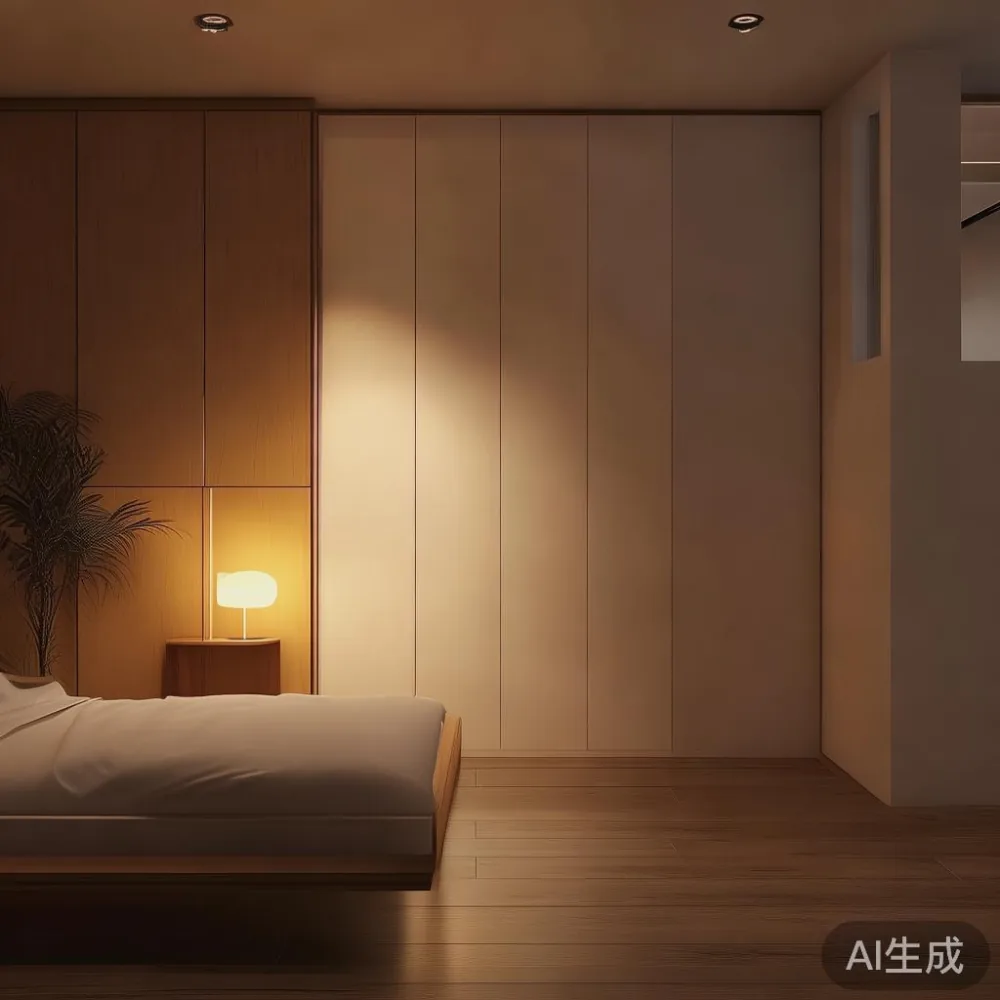
For the rest of the room, I matched the wardrobe to a MIDHILL solid wood bed frame in the same white oak finish, around S$1,650 for a king-size, then chose brushed brass handles and a soft putty linen headboard. The bed frame sits low at 28 cm from the floor, so the eye reads the room as wider than it is. I added a marble side table on one side (a small 45 cm round, around S$520 from a Bedok boutique), which gives the single stone moment that warm minimal needs. On the other side, a solid wood nightstand at 48 cm deep by 42 cm wide keeps the room balanced.
How do I care for a sectional sofa in humid weather?
A sectional sofa in Singapore humidity needs a fixed weekly routine, not occasional attention, and the answer is short: vacuum the crevices every Sunday, run a dehumidifier to 50 percent RH, and rotate the cushions every fortnight so the foam dries evenly and the cover does not sag on one side. In Singapore, RH sits between 70 and 85 percent most of the year, which is higher than the 40 to 60 percent most upholstery foams are rated for. Without active care, a sectional will develop a faint musty note within four to six months, even a brand-new one.
For a MIDHILL sectional sofa with solid wood frame and removable linen-blend covers, my routine looks like this: Sunday vacuum with a crevice tool for ten minutes, cushions flipped and rotated, covers zipped off and washed once a quarter at 30 degrees. I keep a 12-litre Meaco dehumidifier running in the living room from 11 pm to 7 am, drawing about 2.4 kWh per night, which costs roughly S$0.55 per night at the current regulated tariff of S$0.2328 per kWh before GST, or S$0.2514 with the 9 percent GST. Monthly dehumidifier cost sits near S$16.50, which is small against the cost of replacing a moulded foam core. I also pull the sectional 10 cm away from the wall once a month so the back panel can breathe. My colleague in Punggol skipped this step and saw black mildew spots on the back panel by month seven. The fabric recovered after a sun-and-brush treatment, but the lesson stuck.
What dining table size and dining table clear my floor space in a 1,000 sq ft flat?
The dining table is the second largest piece in the home after the wardrobe, and it has to share the floor plan with a work-from-home desk, which most HDB households now need. For a four-room flat with a combined living and dining area of about 18 sq m, a 1.4 m solid wood dining table seats four without crowding. A 1.6 m seats six. A 1.8 m seats eight but eats around 2.6 sq m of floor space, which is heavy. My own flat runs a 1.4 m MIDHILL dining table in warm white oak, around S$1,280, with a marble table lamp base on the console behind it as a quiet warm-cool bridge between the wood and the white walls.
Clearance rule of thumb: leave 90 cm behind every dining chair, 70 cm as the absolute minimum. With a 1.4 m table and four chairs, you need 1.4 m + 0.9 m + 0.9 m = 3.2 m of depth. If your dining area is shorter, drop to a 1.2 m table or a 1.4 m with one bench side, which cuts the back clearance to 0.5 m because benches slide under. Lift clearance is also real: a 1.4 m table top usually arrives in one carton around 1.45 m long, which clears a 1.0 m lift door on its side. A 1.8 m top will not fit through a 0.9 m door even sideways, so it must come in two halves. Confirm the carton size before you order, and ask whether assembly is on-site or at the warehouse.
How should a work-from-home desk fit into a warm minimal wardrobe wall?
The wardrobe wall is the natural place for a work-from-home desk in a small HDB flat, since the bedroom already has the calmest light. The trick is to keep the desk material the same as the wardrobe, so the wall reads as one calm plane rather than two. A 120 cm x 60 cm solid wood top in warm white oak, around S$680, paired with the same white oak wardrobe at S$3,200 for the 2.4 m run, gives you a continuous look across 3.6 m of wall for under S$4,000 in furniture. Add a small cable cutout at the back, a slim brass desk lamp, and a linen-covered pinboard, and the work corner disappears into the bedroom when you close the wardrobe sliding doors.
Work from home price reality in Singapore right now: a custom built-in desk from a local ID firm starts around S$2,800, often more. A standalone solid wood desk from a regional maker costs S$600 to S$1,200 and gives you more flexibility if you move. Last month I visited a friend in Punggol who had installed a 1.4 m custom desk across his wardrobe wall. It looked beautiful, but the joinery meant he could not dismantle it when his rental lease ended, and he had to leave it behind. A standalone wardrobe plus standalone desk gives you freedom to take both pieces with you, and both can fit inside a single lorry for delivery, which usually runs S$80 to S$120 for HDB delivery within the same estate.
How do I plan delivery, GST, and warranty before I click order?
Three numbers matter most for an overseas solid wood order into Singapore: landed price after 9 percent GST, delivery lead time, and warranty structure. A warm white oak wardrobe from MIDHILL at S$3,200 lands at about S$3,488 after GST. Delivery from Foshan to a Singapore HDB door runs 18 to 28 days by sea, which is slower than local ID lead times of 4 to 6 weeks for custom but faster than most bespoke Western European makers at 10 to 14 weeks. MIDHILL offers a 10-year structural warranty on its solid wood frames, which covers joints, rails, and wood failure, and lifetime refinishing on wardrobe doors and bed frames, meaning you can send the panels back for a re-sand and re-oil every 7 to 10 years for around S$180 per wardrobe door. Free shipping kicks in over US$350, which most wardrobes, dining tables, and bed frames clear easily.
Returns are 14 days from delivery, and the piece must be unused and in original cartons. That is a real safety net, but in practice returns on solid wood freight are awkward because the return shipping back to Foshan can cost S$300 to S$500. I keep a checklist before I order: lift door width, corridor width, ceiling height, total carton dimensions, weight per carton (a solid oak wardrobe can weigh 180 kg to 260 kg across four cartons, so you need a lift rated for at least 400 kg for two cartons at a time), and a photo of the corridor turn. With that list in hand, an HDB delivery almost always goes smoothly on the first try.
Which lighting finishes pull the whole warm minimal room together?
Lighting is the silent third material in any warm minimal room, after wood and stone. Two finish rules: pick brushed brass or aged brass, not polished chrome or matte black, and pick 2700K to 3000K bulbs, not 4000K cool white. In my Tampines flat, I run four light sources: a 3000K flush ceiling at 24 W for general light, a 2700K brass floor lamp by the wardrobe, a 2700K marble table lamp on the dining console, and a 2700K LED strip inside the wardrobe triggered by a door sensor. The wardrobe strip costs S$45 and uses about 1.2 W per metre, which is negligible on the bill. Together the four sources create layers that let a small HDB room feel like a French light luxury flat in the 6th arrondissement or an American light luxury loft in SoHo, depending on the art and accessories you add. Post-modern light luxury cues come through in the wardrobe handles: oversized flat pulls in brushed brass, 28 cm long, which read more art-piece than pure photo treatment.
What is the fastest way to make the whole flat feel intentional rather than collected?
Three quiet moves, repeated across the flat. First, match the wood tone of the wardrobe, bed frame, dining table, and desk. Second, repeat one metal finish in three to five places, for example brushed brass on wardrobe pulls, brass lamp bases, brass door handles, and a brass picture rail. Third, repeat one stone moment, either a small marble side table, a marble dining lamp, or a marble tray on the console. When those three rules are followed, the room reads warm minimal even if the pieces came from three different suppliers and three different countries. MIDHILL covers most of the wood pieces you need, from the wardrobe and bed frame to the dining table and nightstand, in a single warm white oak or warm ash finish, which makes the matching work easier than mixing brands with different stains. A Punggol client of mine ran the same oak finish across a 2.4 m wardrobe, a king bed frame, a 1.4 m dining table, and two nightstands, and her flat read as one quiet, warm room within a week of delivery, even with a young child and a work desk in the corner.
If you start with the wardrobe, measure the lift, match the wood tone across the bedroom, layer the brass and marble accents, and plan the GST and delivery before you order, a warm minimal HDB interior is a realistic 30 to 45 day project rather than a six-month renovation. The pieces are calm, the joins are quiet, and the room does the work for you.