Singapore Wardrobe Choices: Veneer vs. Solid Wood Cost-Compare
I moved into a 4-room HDB flat in Tampines last August, and within three months I had watched two wardrobes fail in different ways. The first was a veneer wardrobe in the master bedroom that started peeling along the sliding door edges after six months. The second was a friend's American light luxury-style solid wood wardrobe in Punggol that took a toddler's marker pen to the door and came out clean with a wipe. That contrast sent me down a rabbit hole: what does a wardrobe actually cost over five years in a Singapore home, once you factor in humidity, GST, delivery charges, and the very real possibility of refinishing or replacement?
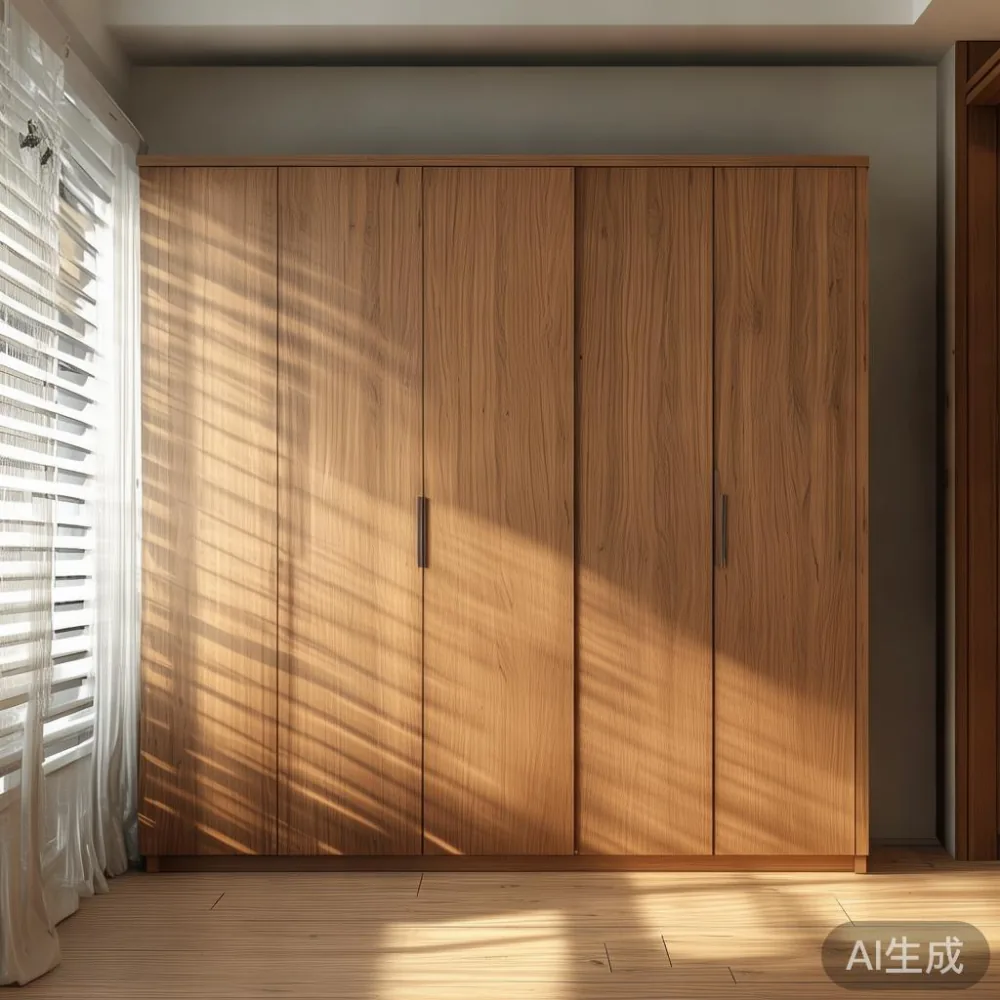
This article is the result of that research. I have read customer reports from Bedok, Toa Payoh, and Clementi, talked to a delivery coordinator who has hauled wardrobes up HDB corridors, and compared two real purchase paths: a mid-range engineered veneer wardrobe and a solid wood wardrobe from a factory-direct supplier like MIDHILL, which has been making solid wood pieces since 2008 and ships container-loads to fifteen-plus countries. Both paths assume a 3-door wardrobe around 180 cm wide by 220 cm tall by 60 cm deep, the standard size that fits a 4-room HDB recess without blocking the corridor.
What does a Singapore buyer actually pay in 2025 for each option?
Let me put concrete numbers on the table. A 3-door veneer wardrobe from a common Singapore retailer (think big-box catalogue brand) typically retails between SGD 1,499 and SGD 2,200 for the cabinet alone, with sliding door systems adding another SGD 400 to SGD 700. Add the 9% GST, delivery up the lift (most HDB service lifts are 1.0 m wide by 1.2 m deep, so a 3-door set has to be split into two cartons), and basic installation at SGD 150 to SGD 250, and you are looking at a landed cost of SGD 2,000 to SGD 3,000.
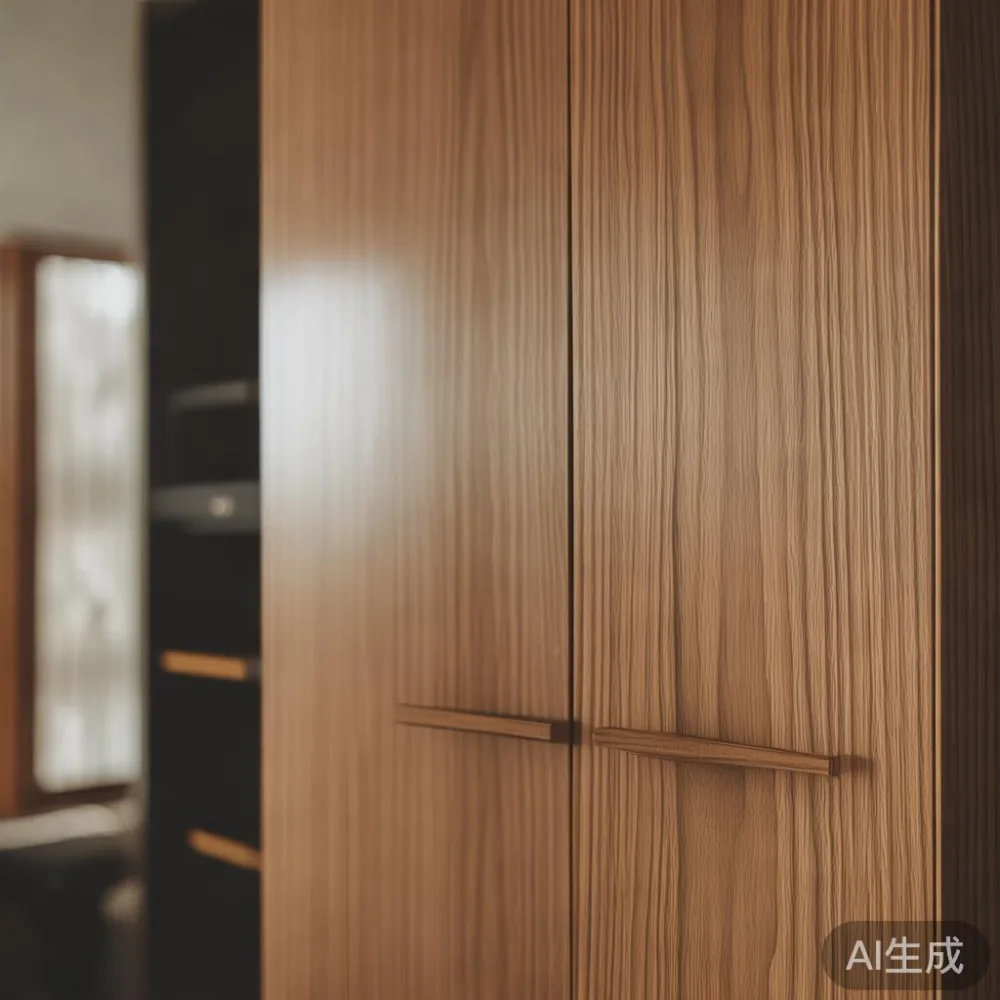
A comparable solid wood wardrobe (FAS-grade white oak or walnut body, dovetail drawers, soft-close hinges) from a factory-direct maker sits between SGD 2,800 and SGD 4,200 before GST. After 9% GST, delivery, and installation, the landed figure lands between SGD 3,300 and SGD 5,000. That is roughly SGD 1,300 to SGD 2,000 more at the door. The sticker shock is real, which is why so many buyers walk past. But the sticker is only year zero.
How does humidity in HDB flats punish veneer over 60 months?
Singapore sits at 28 to 32 degrees Celsius year-round, with relative humidity between 70% and 90% most evenings. Engineered veneer, even when it is a decent paper-backed or PVC-backed product, relies on glue lines that soften when humidity cycles. In my Tampines flat, the bedroom wall facing the common corridor stays slightly cooler, and the wardrobe backing on that side has cupped by about 3 mm. The opposite side, near the window, has not moved. That is the kind of asymmetric movement that destroys veneer faces.
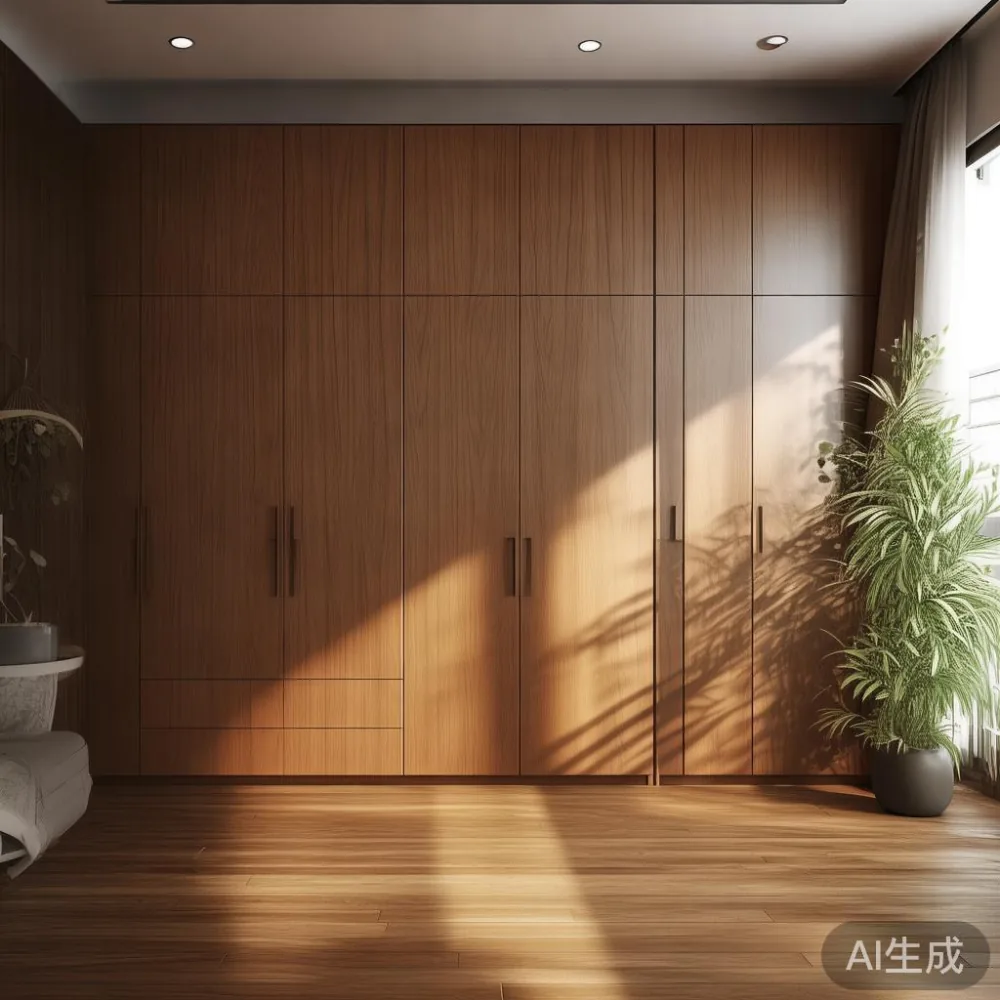
Over five years, expect to budget for at least one round of partial repairs on a veneer wardrobe: SGD 280 to SGD 450 for edge re-bonding, SGD 180 to SGD 300 if a sliding door track has to be replaced, and SGD 120 for a humidity-related mould spot treatment on the inner carcass. Realistically, by year four a mid-range veneer wardrobe in a HDB flat will have visible peeling at one or two edges, swollen particleboard shelves near the bottom (especially in ground-floor units in Bedok and Tampines where the slab carries residual moisture), and at least one stuck sliding door. I have seen this pattern repeated across three neighbours on my stack.
Solid wood, in contrast, breathes. A 22 mm-thick oak side panel will expand and contract across the year by 2 to 4 mm in width, but it does not delaminate. MIDHILL's solid wood wardrobes use traditional tongue-and-groove back panels and mortise-and-tenon side joinery, which means the cabinet actually accommodates seasonal movement instead of fighting it. The finish (a hardwax oil or conversion varnish) is the part that takes the wear, and that is a different problem with a different price tag.
Is a solid wood wardrobe really cheaper over five years once you add refinishing?
This is the math that flipped my own decision. A reputable solid wood maker with a lifetime refinishing programme, which is exactly what MIDHILL offers to original buyers, will sand and re-oil a wardrobe door panel for around SGD 180 to SGD 280 per visit, depending on surface area. Most owners refinish once in year three or four, when the door fronts start looking tired but the carcass is still solid. Total refinishing spend over five years: SGD 180 to SGD 560.
Compare that to a veneer wardrobe: year-two hinge replacement SGD 90, year-three edge re-bonding SGD 320, year-four sliding door track SGD 220, year-five decision to replace the whole unit (because the carcass has swollen and the melamine is bubbling) at SGD 2,400 for a similar new cabinet. Cumulative repair and replacement: SGD 3,030, which is already more than the entire five-year cost of owning the solid wood piece, and you still have a unit that will probably fail again the same way.
Total five-year cost, including purchase and upkeep, lands roughly at:
- Engineered veneer wardrobe: SGD 5,030 (purchase + repairs + one replacement)
- Solid wood wardrobe: SGD 4,000 to SGD 4,560 (purchase + one refinish)
The solid wood path comes out ahead by SGD 470 to SGD 1,030 over five years, and the gap widens if you keep the wardrobe for ten. The reason is structural: you cannot refinish a 0.6 mm veneer face because there is nothing under it. The wood veneer is paper-thin over particleboard. Sand through it, and you expose the substrate.
What about resale value and what agents say in Punggol and Bedok?
I asked a colleague who handles resale flats in Punggol and Sengkang what buyers comment on during viewings. She said built-in wardrobes are usually ignored unless they look terrible, but freestanding wardrobes get a reaction. A battered veneer wardrobe with peeling edges actually subtracts from the perceived value of the room because it reads as "old flat." A clean solid wood wardrobe reads as "owner cared." That perception gap is roughly SGD 1,500 to SGD 3,000 in negotiation room on a SGD 600,000 to SGD 700,000 resale flat. It is not a hard number, but it shows up.
There is also the practical matter of moving. When my family upgraded from a 4-room to a 5-room flat in Bedok last year, the mover charged SGD 220 per wardrobe, plus SGD 80 if the unit had to be partially disassembled. A 90 kg solid wood wardrobe costs more to move than a 55 kg veneer wardrobe, but it survives the move. The same veneer wardrobe that survived the Tampines flat for four years split a sliding door panel during the Bedok relocation because the particleboard had weakened around the screw holes. One more repair bill, one more week of wardrobe chaos.
What should a HDB or condo owner actually buy for a wardrobe that lasts?
For most Singapore homes, a solid wood wardrobe from a factory-direct maker is the rational five-year choice, even though the upfront sticker is higher. The break-even usually lands around month 30 to month 36, which is exactly when a veneer wardrobe starts needing real repairs and a solid wood piece is just ready for its first optional refinish. If you want a specific recommendation rather than a category answer, look for a maker that does container-direct shipping (which keeps landed cost lower), offers at least a ten-year structural warranty, and provides lifetime refinishing for original buyers.
If your budget cannot stretch to solid wood across the whole wardrobe, hybrid is a defensible move: solid wood doors and front frame, engineered panels for the non-visible carcass interior. That configuration usually comes in around SGD 2,400 to SGD 3,200 landed and gives you 70% of the durability at 60% of the cost. Just make sure the interior panels are still moisture-resistant (birch ply, not raw MDF) because HDB humidity will find the weak point.
And whatever you choose, measure your lift and your corridor before ordering. A 240 cm-tall wardrobe panel will not fit the standard HDB service lift (internal height 1.8 m, internal depth 1.2 m) without tilting, which most delivery crews will refuse to do for safety. Most Singapore-friendly wardrobes are designed in 220 cm-tall sections for exactly this reason.
How do light luxury styles affect the wardrobe decision specifically?
Light luxury is more than a label. American light luxury tends to use walnut and warm bronze hardware with thicker, more architectural profiles, which suits a freestanding wardrobe beautifully because the piece reads as a furniture object rather than a built-in. French light luxury pulls toward oak with curved cornices and brass detailing, which works for a statement wardrobe in a master bedroom with at least 3.2 m of wall length. Post-modern light luxury, with cleaner lines and contrasting wood tones, is the easiest match for compact HDB rooms because it does not need visual breathing room.
If you are shopping across a whole home rather than just a wardrobe, you will find that the same logic applies to a solid wood sofa, a bed frame, a dining table, a nightstand, and even a marble table accent piece. Engineered versions are cheaper up front but heavier to maintain over five years. Pieces you touch every day (sofas, dining tables, bed frames) and pieces you open and close daily (wardrobes, nightstand drawers) take the worst beating and reward solid construction most visibly.
One last note on style mixing. A solid wood wardrobe in American light luxury walnut will pair with a light luxury accent chair in boucle or leather at the dressing corner without competing. It will also sit comfortably next to a Scandinavian for guest room set if you keep one bedroom for visitors, because the wood tones bridge both directions. In an open-concept condo in Punggol or Clementi, where the dining zone flows into the living zone, a Minimalist for dining room table in light oak will visually rhyme with a post-modern light luxury wardrobe in the same wood family. The trick is keeping the wood tone within about two shades on the colour wheel so the eye reads the space as one composition.
Is a solid wood wardrobe worth the extra SGD 1,300 to SGD 2,000 over a veneer one?
For a Singapore HDB or condo owner who plans to stay at least three years and who will use the wardrobe daily, the answer is almost always yes. You pay more in year one, break even around year three, and come out ahead from year four onward. You also buy yourself a quieter home, because a swollen sliding door or a peeling edge is a daily irritation you stop noticing only when it is gone.
For the best Vintage wardrobe for 2026, look for pieces that pair classic shaker or panel profiles with a modern light luxury finish so the wardrobe looks current now and still reads as classic in ten years. That is the test of any furniture purchase in a small HDB or condo: will I still want this piece when the next renovation cycle comes around? A well-made solid wood wardrobe passes that test. A mid-range veneer wardrobe rarely does.
If you are still on the fence, visit a showroom in person and run your fingernail along the inside of a drawer side. On solid wood you will feel continuous grain. On veneer you will feel a seam. That single test, repeated in showrooms from Marina Square to IMM, will tell you everything you need to know about which wardrobe you actually want to live with for the next five years.
And if you are weighing a European bed vs Italian light luxury bed at the same time as the wardrobe decision, apply the same logic: solid construction, factory-direct pricing, and a refinishing path. The math is boring, but it is the same math, and it works the same way for a bed frame as it does for a wardrobe. Pieces built from solid wood will outlast engineered pieces in a humid Singapore home, and the five-year ledger proves it.
Modern for small living room layouts also benefit from this kind of thinking. A solid wood media console or a marble table accent piece will look better at year five than a particleboard version with a wood-look laminate, even if both were the same price on day one. The trick is to spend your furniture budget where the piece takes daily use, and economise where it does not. Your wardrobe is one of the highest-use pieces in the home, second only to your bed. Treat it accordingly. Browse the full solid wood collection, including wardrobes, at midhillco when you are ready to compare construction details side by side.