Buying the Perfect Sofa: Key Inspections
A sofa that looks impressive in a showroom can become impractical the moment it reaches a Singapore HDB flat. Its delivery passage may be too narrow, its lift may be too shallow, and its proportions may swallow the living room. Since you cannot sit on the piece before it arrives, the purchase decision must begin with measurements, access routes and a clear return policy—not colour or styling alone.

This guide explains how to assess a solid wood sofa before ordering, using local examples from Tampines, Bedok and Punggol condos. It also considers where a sofa sits within a coordinated home containing a bed frame, dining table, wardrobe and nightstand, with marble accents used sparingly. The goal is practical light luxury: French light luxury, American light luxury and post-modern light luxury can all work in compact urban interiors, provided scale comes before decoration.
Why does sofa access matter so much in a Singapore home?
Measure the complete route from the lift entrance to the living room, not merely the sofa’s width. A sofa may fit through the HDB flat door when turned on its side, yet the corridor can make that impossible. Record the narrowest corridor width, the lift door opening, the lift car dimensions and every 90-degree turn.

For common condo access points, a lift doorway around 90 cm wide and a lift car around 140 cm deep may accept a modular sofa, but these figures are not guarantees. The sofa’s packed dimensions may include feet, detachable arms or protective packaging. A larger unit might require the service lift, staircase or removal of a balcony railing. Property-management rules can also impose restricted moving hours, commonly limited to weekdays or specific weekend slots.
Leave a practical margin of at least 10 cm at tight points, and ask the supplier for a dimensioned delivery diagram. A photograph of a doorway does not show whether the item can pivot through it. Clear corridors beforehand, protect corners with padded boards and reserve one parking bay for the lorry. If the unit is likely to be difficult, confirm in writing that the seller will reassess access and arrange a suitable delivery method.
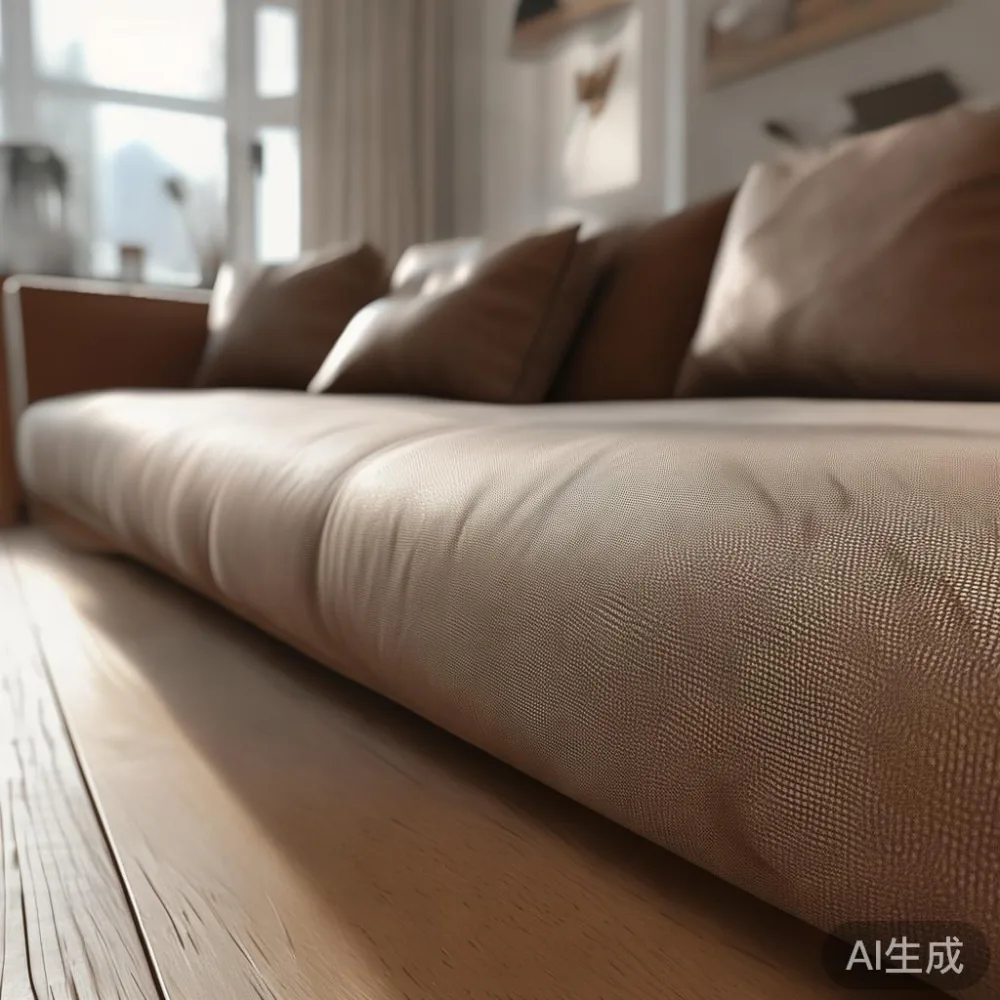
Last month I visited a Bedok resale condo with a colleague to photograph an awkward route for a client. The main lift measured 110 cm at its narrowest, and a fixed fire-rated door reduced the usable opening further. The client had already chosen a sofa with a 108 cm body. It could technically enter sideways, but the rounded arm and 12 cm legs prevented a clean turn. The delivery crew tested it twice, then removed one set of legs and protected the door frame. The sofa fitted, but only after the route was measured properly.
What dimensions should you check before ordering a sofa?
Begin with the room, not the catalogue. Note the longest wall, the position of the television or air-conditioner, radiators, windows and doors. Allow 75–90 cm as a useful walking path behind a sofa and around its front. If a dining table occupies the same space, maintain at least 90 cm between the sofa seat edge and the table edge so daily movement remains comfortable.
Check the sofa’s external width, depth and height, then compare these with the delivery package. Seat height usually falls between 40 and 48 cm, while seat depth commonly ranges from 50 to 60 cm for ordinary residential use. A deeper seat may look generous but can force shorter users to slide forward. If elderly family members use the sofa, target approximately 43–46 cm seat height and firm support rather than an excessively soft cushion.
Look for a frame that is genuinely solid wood or clearly labelled as engineered wood, plywood or metal, with the distinction stated in the specification. Solid wood sofa terminology can refer only to the frame while the visible arms, feet or side panels use another material. Request details about the primary timber species, joinery, finish and load rating. A sensible residential load rating is at least 100 kg per seat for normal use, with 120 kg preferable for a frequently used family seat.
For material planning, ask whether matching solid wood pieces are made to the same finish: a bed frame can establish the bedroom palette, a dining table can connect with the living room, and a nightstand can repeat the timber tone. A marble table may add contrast, but its weight should be considered separately. A marble top measuring 120 × 60 cm and 20 mm thick weighs roughly 40–50 kg, so it needs correct lifting and secure installation.
Is French sofa worth it for a compact HDB living room?
The question “is French sofa worth it” is worth asking for proportion, not for a nationality label. French-inspired seating often uses curved arms, tapered legs, elegant profiles and pale upholstery. Those details can create a refined impression in a modest flat, but a visually heavy piece may make a 3 × 4 m room feel crowded.
Choose a French-inspired solid wood sofa with a width around 180–200 cm, a depth no greater than 90 cm and legs that allow visual space beneath the frame. Light upholstery in oatmeal, warm grey or muted beige reflects more daylight than dark charcoal. The result can support a French light luxury direction without filling the entire wall.
American light luxury has a different language: deeper seating, relaxed cushions, broader proportions and a more casual mood. It may work if the room has at least 5–6 m² of usable floor area and the sofa does not obstruct a 90 cm circulation route. Post-modern light luxury can be more restrained, combining clean geometry with one deliberate material contrast, such as solid oak against a marble table or matte textile against a darker frame.
How should you judge comfort if you cannot sit on it before delivery?
Ask for a showroom trial, a physical sample, or a written comfort specification. Seat density, foam type, cushion construction and suspension should be listed. For everyday family use, high-resilience foam around 35–40 kg/m³ with a resilient fibre wrap can offer a firmer surface than very soft foam. Pocket springs may improve comfort, but the frame and suspension still determine whether the sofa feels supported.
Test several body types if possible. A 178 cm person may fit a 55 cm-deep seat, whereas a taller user may prefer 58–60 cm. Children and older adults may need easier entry, so avoid an overly deep frame with a low front edge. Check whether removable covers can be washed, whether the cushions are reversible and whether loose scatter cushions are included in the package measurements.
Request fabric composition in percentages. A tightly woven synthetic blend may resist spills and suit a family home better than delicate untreated linen. Check colour under the room’s evening lighting as well as natural daylight. Ask for a return arrangement involving actual use rather than a warehouse inspection alone. A 14-day return period gives the buyer time to assess comfort, but read the conditions regarding assembly, packaging, delivery and original condition.
This is particularly important when researching how to choose Japanese sofa. Japanese-inspired designs favour low profiles, clean lines and efficient footprints, but “low” does not automatically mean comfortable or easy to move. Confirm seat height, lumbar support, cushion recovery and door clearance. A compact 160–180 cm frame may suit a Punggol studio, while a 200 cm model can still work if the circulation plan remains sound.
Will a solid wood sofa fit the style of a small Singapore bedroom?
Keep the scale consistent. A bedroom with a 140 cm bed frame generally needs a nightstand no wider than 40–45 cm. Leave approximately 60 cm beside the bed for movement and curtain access, and keep the nightstand surface around 50–60 cm high for common bedside use. If the bedroom includes a wardrobe with doors that project 55–65 cm, account for that projection when placing the bed and nightstand.
The phrase “is Japandi bed worth it” often appears in conversations about calm, space-saving interiors. A Japandi bed frame can suit a HDB bedroom when its footprint is controlled and the timber tone is light. A queen-size frame commonly measures about 150 × 200 cm, but larger upholstered or framed versions can exceed 160 × 210 cm. Measure the mattress size and the room’s usable floor area separately.
For a coordinated wardrobe, align the sofa’s wood finish with the bed frame and dining table, but do not force every object into identical colours. A light oak wardrobe can sit comfortably beside a warmer walnut nightstand. Marble surfaces add permanence; a wardrobe with full-height mirrored panels can make a compact bedroom feel wider, though fingerprints and cleaning should be considered.
Searching “European bed vs Italian light luxury bed” can narrow the visual priorities. European-style frames often emphasise restrained joinery and balanced proportions, while Italian light luxury tends to use expressive details, sculptural forms or richer finishes. Neither determines practicality. Check slat spacing, centre support, floor clearance, headboard thickness and delivery access. A heavy frame may weigh 70–120 kg and require two people or a professional mover.
What should the sales agreement say about delivery, warranty and returns?
Require written confirmation of the sofa’s dimensions, material composition, finish, colour, cushion specifications, frame construction, delivery charge and installation method. The contract should state whether legs are detachable, whether cushions compress for transport, and which components are included. For a made-to-order piece, describe the production timeline and the point at which the order becomes non-returnable.
Singapore’s GST may add 9% to the displayed product price, while delivery to a specific address may carry a separate fee. Compare the final payable amount, not only the item price. If the order qualifies for free shipping over US$350, that threshold applies to the seller’s stated calculation; confirm whether it refers to the product subtotal before or after GST and whether remote-area surcharges apply. Keep the invoice and written specifications.
MIDHILL provides a 10-year structural warranty and lifetime refinishing for qualifying products, with the precise coverage confirmed in the order documentation. Free shipping over US$350 and a 14-day return policy can reduce purchasing risk, but access problems, special hoisting and assembly may be treated differently. Ask whether a failed delivery caused by insufficient space is refundable and who bears the return transport cost.
Delivery timing matters as well. A standard lead time may be 30–45 days, while custom upholstery or bespoke timber can require 45–75 days. The promised day should account for the lift booking, traffic and the receiving officer’s availability in an HDB block. Confirm the target delivery window and the number of delivery attempts included.
How much clearance is needed around the sofa and other furniture?
Sketch the room to scale. A simple paper exercise can prevent an expensive mistake. Mark the lift route and every room turn in the same drawing. Then use the following minimum guides: about 75–90 cm in front of a sofa for walking, 90–105 cm between a dining table and nearby seating, and 60 cm beside a bed for access.
For Nordic for small living room planning, focus on compact dimensions and visual breathing room rather than matching every piece to one catalogue. A 170–190 cm sofa may be sufficient for a family of three if the room is narrow. Consider a two-seat plus one modular layout, provided each module can pass through the lift independently. This also allows the owner to rearrange the seating later.
Open shelving should not hover directly over a frequently used sofa seat; leave at least 25–30 cm above the backrest to avoid head contact. Table clearance can vary, so follow the furniture supplier’s instructions. For a dining table, allow at least 75 cm of pull-out space per place and 90–120 cm around the perimeter where chairs must move. A round dining table often improves circulation because corners project less, though it needs adequate distance from walls.
Storage should be reachable without leaning over the sofa. A wardrobe with hinged doors needs roughly 90 cm of standing space when open; sliding doors reduce the projection but occupy more front width. If the sofa is near a balcony door, check the door swing and ensure the curtain can clear the frame.
What are the warning signs that a showroom sofa is not right?
Be cautious when the seller cannot provide dimensions, when “solid wood” appears without explaining which components are timber, or when the photograph hides the packed width. Other warning signs include an unrealistically short delivery promise, no written warranty, a return period with unclear usage conditions, and a low frame without any stated seat-height or load information.
Check the finish for movement joints, exposed screws, uneven gaps and sharp edges. Solid wood expands and contracts with humidity, so a restrained finish and sound joinery matter more than a perfect factory appearance. Inspect the sofa under side light, looking for veneer lifting, corner stress marks or misaligned arms. A frame with visible mortise-and-tenon or dowelled joints can provide useful construction information, but confirm the manufacturing method rather than assuming from appearance alone.
Watch the scale of the display. Showroom rooms often look generous because furniture is spread widely and lit for photography. The question “Mid-century modern for office” leads to another useful check: a lounge area for a home office needs a firm seat, supportive back and correct desk clearance. Avoid a low, deep sofa that encourages slouching if it will be used for reading or working.
Finally, compare care requirements. Ask for the cleaning code for upholstery, wood-finish maintenance instructions and protection recommendations for marble table surfaces. A solid wood sofa should have its finish inspected every 12–24 months, while fitted covers and removable cushions make family use more manageable. If the room is visited by children or pets, use a washable cover and a durable, tightly woven fabric.
What should you confirm on the day of delivery?
Be present when the sofa arrives. Compare the model, fabric colour, finish and accessories with the invoice. Photograph the packaging and the item before assembly. Check for transit marks, loose joints, torn seams, dents and missing feet. Allow the cushions to recover for several hours or, depending on the material, 24–48 hours before making a final comfort judgement.
Test the seat with your normal posture, not merely by pressing briefly. Check that the frame does not creak unexpectedly, that cushions sit evenly and that the back supports the lumbar area. Confirm the return deadline and document any delivery damage in writing. If the piece must be returned, photograph all sides, retain the packaging where required and use the agreed carrier.
A disciplined pre-purchase process turns a sofa from a visual gamble into a practical fit. Measure twice: once for the room and once for the entire access route. Compare the delivered dimensions with the packed dimensions. Read the structural warranty, refinishing terms and return conditions, then budget for GST and any lift or access charges. A well-proportioned solid wood sofa can bring lasting comfort and a light-luxury mood to a Singapore home without demanding an unnecessarily large footprint.