Small HDB, Big Calm: Styling a Compact Singapore Home Around a Statement Wardrobe
I spent the second weekend of last month in a friend's 68 sqm three-room flat in Bedok, watching her unpack a 240 cm tall light luxury wardrobe into a 1.2 m wide lift landing. The hoist brought it up in one piece, the corridor tilted at a careful 45-degree angle, and two days later her living room read completely differently. The point of this piece is not that one piece of furniture can fix a small flat, but that the right wardrobe, sourced and styled with Singapore's lift widths, corridor clearances, and HDB door frames in mind, can carry a surprising amount of design weight in a home where every square metre costs roughly S$12,000 to S$14,000 in recent BTO prices.
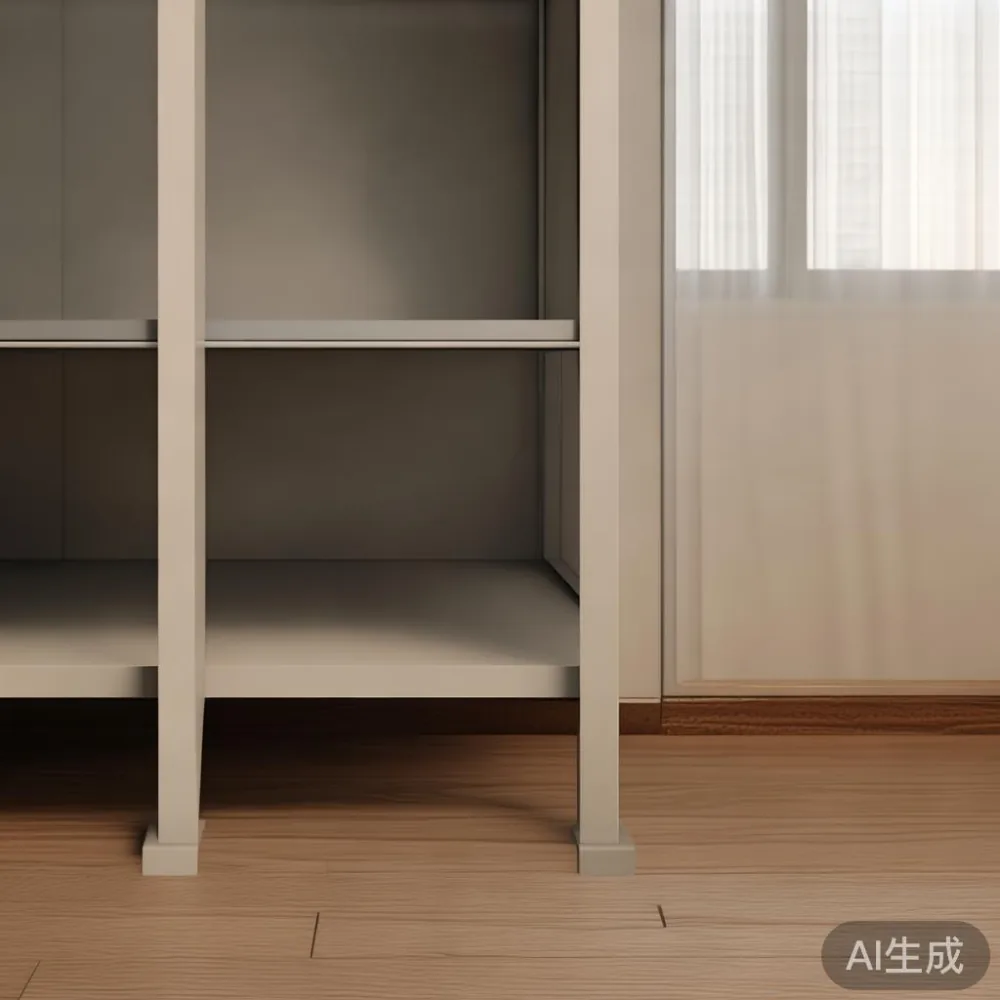
Why a wardrobe does the heavy lifting in a small HDB or condo
In a typical 4-room BTO of around 90 sqm, the master bedroom is often 11 to 13 sqm. Once you account for a queen bed (roughly 152 cm by 188 cm), two nightstand units at 45 cm wide each, and a 60 cm walkway along one side, you are left with about 180 cm of usable wall for storage. That is the entire storage budget of the room, and it is also why the wardrobe you pick has to do more than hang shirts.
A wardrobe in this context functions as a wall, a mirror, a display surface, and a quiet focal point. Treat it like one. Pick a height that lands within 5 cm of your 2.55 m HDB ceiling so the eye does not notice the gap. Pick a depth of 55 cm to 58 cm rather than the standard 60 cm to preserve 8 cm of clearance from the door arc. And pick a colour that either disappears into the wall paint (warm white, greige, or a Farrow-style dead salmon) or reads as a deliberate piece of furniture, not a beige apology squeezed between two walls. Solid wood wardrobe frames in oak or ash tend to age better than MDF laminates in Singapore's 28 to 32 degrees Celsius afternoon heat and 80 percent humidity.
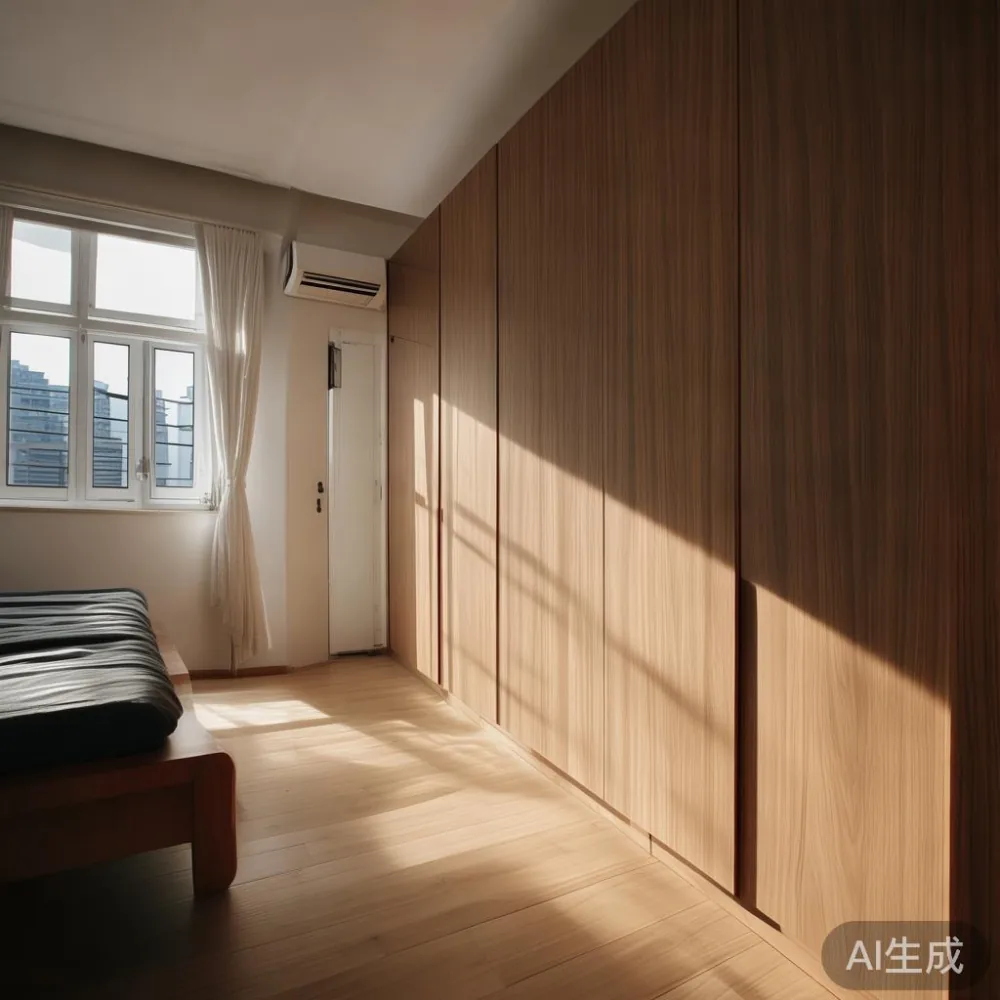
How do you style a compact bedroom so it feels calm instead of crowded?
Three rules, all of them unglamorous and all of them effective. First, pick one tall element, one horizontal element, and one curved or soft element per room. The tall element is normally your wardrobe, around 220 to 240 cm. The horizontal element is a solid wood bed frame at 30 to 40 cm platform height. The soft element is a fabric headboard, a linen curtain, or a round mirror. Two of anything reads as clutter; three reads as composed.
Second, leave at least 60 cm of clear floor in the direct line between the wardrobe door and the bed. Measure from the door handle, not the hinge. In a Punggol EC I visited in March, the owners had a beautiful 260 cm American light luxury wardrobe and could barely open the top drawer of their nightstand because clearance had collapsed to 28 cm. We moved the bed 12 cm toward the window and the drawer worked again.
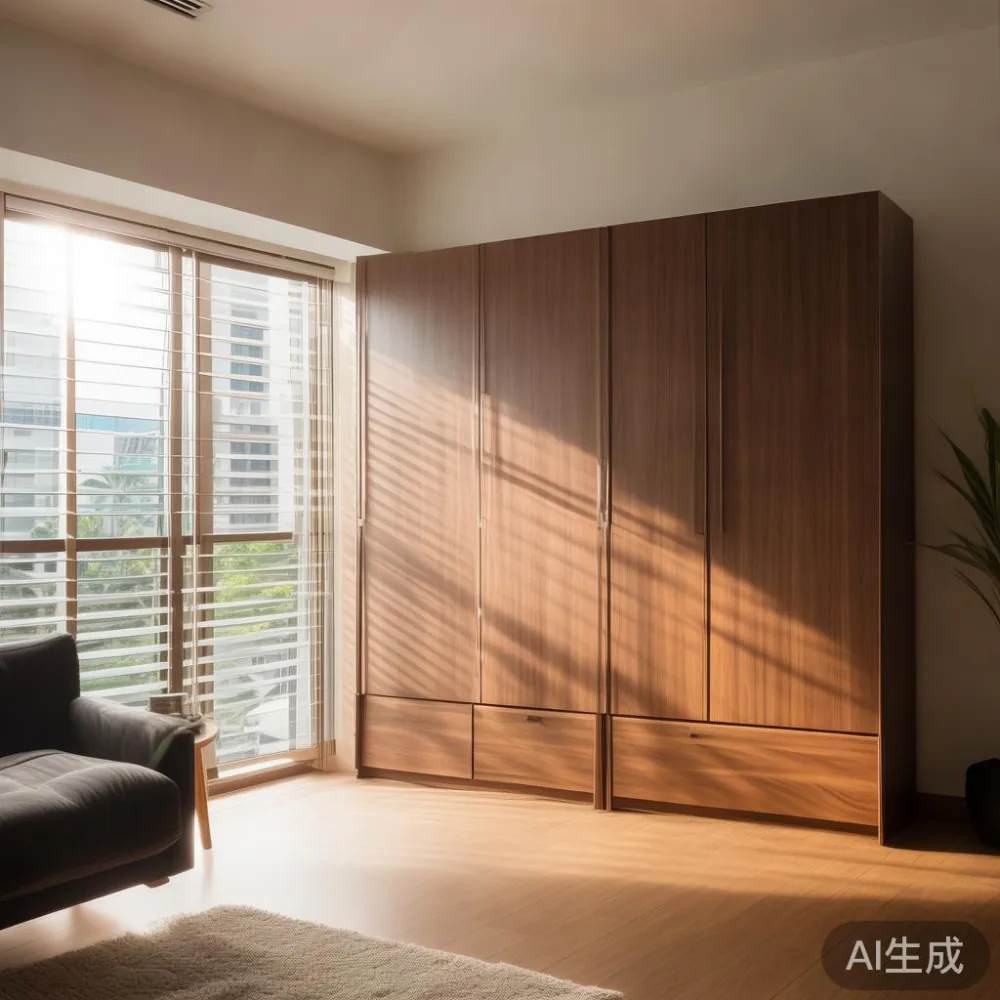
Third, anchor the wardrobe with a rug. A 160 cm by 230 cm rug, with at least 30 cm of floor visible on every side, grounds the room and stops the wardrobe from feeling like a wall that walked in. In light luxury interiors, a wool-viscose blend in oat or stone tends to hold up under Singapore's monsoon humidity better than cotton flatweave.
Light luxury without the heavy-handed bling
Light luxury is a slippery term. At MIDHILL we tend to use three reference points. French light luxury leans on cabriole silhouettes, tapered brass legs, and travertine or marble tops, often in a warm cream or champagne palette. American light luxury leans on cleaner lines, oversized hardware in brushed nickel, and a slightly darker walnut or smoked oak. Post-modern light luxury sits in between, mixing fluted glass, reeded doors, and a single curve on an otherwise rectilinear piece, which is often the easiest register to live with in a small flat because it gives you one poetic detail rather than five competing ones.
The trick in a small space is to pick one register and stay there. If your wardrobe has fluted glass and a curved reeded handle, do not also buy a marble table with thick brass. Either commit to French light luxury (marble, brass, soft curves) or to American light luxury (wood grain, slim pulls, darker stain), but resist the urge to combine every showroom sample into one room. A small flat amplifies inconsistency the way a small kitchen amplifies a bad knife: everything you do wrong gets louder.
For a working example of how to style European light luxury wardrobe in apartment settings, look at how designers treat the wardrobe as architecture rather than furniture. They paint the wall inside the open shelves the same colour as the wardrobe carcass, they line the back of any glass door with low-iron glass rather than green-tinted glass, and they keep the top 30 cm reserved for hard-shell suitcases so the silhouette stays clean.
The 60 cm rule: numbers every Tampines and Bedok buyer should know
Before you order, take a tape measure to the lift lobby and write down three numbers. The clear door opening of the passenger lift, usually 80 cm to 90 cm on most HDB blocks built between 2000 and 2020. The internal cabin depth, often 130 cm to 150 cm. The narrowest horizontal point of the corridor, frequently 120 cm to 135 cm in newer BTOs and as tight as 105 cm in older blocks along Tampines Street 21 and Bedok Reservoir Road.
Your wardrobe will be delivered flat-packed or assembled, but in either case the longest rigid piece is typically between 180 cm and 220 cm. That length has to negotiate two 90-degree turns and one corridor pinch. If your corridor measures 110 cm or less, specify a wardrobe that can be split into two 110 cm towers. The cost is one extra joinery panel, around S$120 to S$180, and the benefit is that you will not be that household blocking the lift lobby for 90 minutes on a Sunday morning.
Door frames matter as well. A standard HDB bedroom door is 80 cm by 205 cm. A 60 cm deep wardrobe will scrape the door frame unless you leave at least 70 cm between the wardrobe side and the opposite wall. This is also why a 55 cm depth wardrobe is the practical ceiling for most HDB rooms: anything deeper eats your doorway clearance and any future renovation.
Choosing the wardrobe silhouette for your room shape
Square rooms of 3 m by 3 m take a hinged-door wardrobe in the 180 cm to 200 cm range without complaint. Narrow rooms of 2.4 m by 3.6 m are usually better with sliding doors, because a hinged door needs 55 cm of swing clearance that a narrow room cannot spare. Sliding door wardrobes also avoid the issue of wardrobe doors hitting a solid wood bed frame when both are open at the same time, which is one of the most common complaints I hear from owners of small flats.
For people who like the look of a built-in but cannot afford the hacking cost (roughly S$2,800 to S$4,500 for a single wall in an HDB, before you factor in the 7 to 14 days of reinstatement when you move out), a freestanding wardrobe that runs floor to ceiling is a sensible workaround. Place a 5 cm to 8 cm filler panel on top to absorb the ceiling irregularity that almost every HDB flat has, and your wardrobe reads as built-in for about a third of the cost.
If you are considering styles beyond the standard hinged or sliding, the call I get most often from Punggol and Sengkang owners is about mirrored doors. A full-length mirror on a wardrobe is genuinely useful in a small flat where the bedroom is also the dressing area, but it does amplify every light source in the room. In a west-facing flat, a mirrored wardrobe opposite a window can feel like a stage spotlight at 4 pm. A better move is to mirror only the central two panels of a four-panel door and leave the outer panels in wood grain or reeded glass.
What about the rest of the room? Coordinating wardrobe, bed, and nightstand
The wardrobe sets the tone, and the rest of the room has to follow in its shade register. A good working trio in a small HDB master bedroom runs about S$2,400 to S$4,200 without GST, broken down roughly as follows. A 200 cm tall light luxury wardrobe in ash or oak at S$1,400 to S$2,200. A queen solid wood bed frame at 30 cm to 35 cm platform height at S$600 to S$1,100. A pair of 45 cm wide nightstand units in matching timber at S$180 to S$400 each. This is also where you can bring in a single accent piece like a Modern light luxury sideboard in the dressing area if you have a corridor niche wider than 120 cm, since a sideboard doubles as a drop zone for keys and wallets in a home without a foyer.
For the bed itself, the question of how to style European light luxury bed in room settings comes up almost as often as the wardrobe question, and the answer is similar: keep the silhouette low, keep the headboard upholstered in a fabric that repeats one colour already in the room, and avoid four-poster frames in any room under 13 sqm. A 152 cm queen with a 110 cm tall channel-tufted headboard reads elegant; a 200 cm king with a 130 cm wingback headboard reads like it escaped from a landed house in Bukit Timah.
On sofas and living room choices, the conversation drifts away from the wardrobe but the same rule applies. If you have a 2.4 m to 2.7 m living room wall, a Modern light luxury sofa at 210 cm to 230 cm wide in a bouclé or linen blend keeps the proportions right, and you can float a small MIDHILL coffee table at 110 cm by 60 cm in front of it without crowding the walkway to the dining table. Couples looking ahead often ask me about the best Japandi sofa for 2026 as a halfway house between contemporary and warm; in Singapore flats I tend to steer them toward a low-arm Japandi profile at 78 cm to 82 cm seat height because it visually lowers the room.
Storage inside the wardrobe: the part nobody thinks about at the showroom
Outside dimensions get all the attention. Inside dimensions are what you live with for the next decade. The minimum I would accept in a 200 cm tall wardrobe is 175 cm of internal hanging height, which fits a suit or a long dress at full length without brushing the floor. Internal depth of 50 cm to 53 cm lets hangers swing without the doors scraping. And the drawer boxes should run on full-extension soft-close runners rated to 35 kg per drawer, not the 15 kg economy runners that many mass-market wardrobes ship with.
A reasonable interior layout for one adult in a small flat is a single 180 cm hanging zone on the right, three 80 cm drawers on the left, and two 35 cm shelves above the drawers for knitwear. For two adults sharing a 180 cm wardrobe, swap to two 90 cm hanging zones and lose one drawer. If you own more than 60 pairs of shoes, store them under the bed in flat boxes rather than inside the wardrobe; the wardrobe is the wrong shape for shoes and you are paying wardrobe money per cubic centimetre for storage that flat boxes under a 30 cm platform bed handle at a fraction of the cost.
A small note on weight. Solid wood wardrobes in ash or oak at 200 cm by 180 cm weigh between 110 kg and 145 kg when assembled. That weight is your friend on the floor (it keeps the wardrobe stable against an accidentally slammed door), but it is also why delivery teams in Singapore usually send two people, charge around S$60 to S$120 for the local cartage on top of the purchase, and request lift bookings at least two days in advance for HDB blocks that require a separate service lift for furniture. Companies like MIDHILL arrange these bookings as part of the delivery, which removes one of the most common sources of moving-day frustration.
Materials and finishes that survive Singapore's climate
Singapore is hard on furniture. The combination of 28 to 32 degrees ambient temperature, 75 to 90 percent relative humidity for much of the year, and heavy afternoon sun on west-facing units will lift veneers, swell MDF, and cloud cheap lacquers inside three to four years. Solid ash, solid oak, and solid teak handle the climate well. Walnut is acceptable but tends to lighten under direct sun, so a UV-filtering film on west-facing windows (around S$18 to S$28 per sqm installed) pays for itself by keeping the wardrobe and any marble table in the room the same shade they were on day one.
Avoid high-gloss polyurethane finishes on wardrobes in small rooms. They mark under fingerprints, throw harsh reflections from ceiling lights, and read as a 1990s condo default. Instead go for a matte open-grain lacquer, a hand-rubbed oil finish, or a fine wire-brushed surface that hides micro-marks. For hardware, brushed brass and brushed nickel both age well; polished chrome and shiny gold both show water spots within a week of installation in a non-aircon laundry area.
If your wardrobe has reeded or fluted glass panels, specify low-iron glass. Standard clear glass has a faint green tint that becomes obvious when the panel is backlit by a window, and the green casts a sickly tone over folded shirts inside. Low-iron glass adds roughly S$80 to S$140 per panel but reads neutral in every light condition, which is what you want in a small room that has to do double duty.
Budget, GST, and the real landed cost in Singapore
Singapore's 9 percent GST applies to imported furniture at the point of entry and is included in the displayed price by most retailers, but shipping, lift access fees, and disposal of packaging are sometimes itemised separately. Free shipping over US$350 works out to roughly S$475, which clears most light luxury wardrobes and even some bed frame orders off the bat. The 14-day return window means you can live with the piece for almost a fortnight before committing, which is genuinely useful for a wardrobe where proportions only reveal themselves once the drawers are loaded and the doors have been opened 200 times.
A lifetime refinishing service is one of those things you think you will never use and then appreciate deeply in year six, when a teak surface has faded under daily UV and you would rather refinish the existing piece than throw away 145 kg of solid wood. A 10-year structural warranty covers the joinery, which is where most wardrobes fail first: drawer runners, cam locks, and door hinges. The structural warranty is what separates a wardrobe you keep for 15 years from a flat-pack piece you replace twice in the same window.
For buyers weighing one large wardrobe now against a series of cheaper pieces over the next few years, the maths usually favours the solid wood choice. A S$1,400 to S$2,200 wardrobe amortised over 12 years works out to S$10 to S$15 per month in furniture cost, which is less than two cups of kopi at the neighbourhood hawker centre. A S$500 flat-pack replaced three times in the same window costs more, fills your HDB corridor with cardboard each time, and ends in a piece you would not be sad to lose. Light luxury is not about spending more; it is about spending once.
A short checklist before you tap purchase
Measure the lift door at your block, the corridor pinch, and the bedroom door. Confirm the wardrobe can be split into two pieces under 115 cm each if any of those three measurements sits below 100 cm. Decide your register: French, American, or post-modern light luxury, and pick the wardrobe, bed frame, and nightstand in that same register on the same day so the timber batch and stain are consistent. Hold a 60 cm clearance from the wardrobe door swing to the nearest bed corner. Allow 5 to 7 working days for delivery inside Singapore, longer if the piece ships from a Foshan factory after a custom stain. And keep one wall, just one, slightly emptier than the rest of the room so the wardrobe has space to breathe. A small flat asks for one piece of restraint, not ten pieces of furniture. Give it that one piece, and the room feels calm, deliberate, and quietly expensive in a way no amount of marble or brass can manufacture on its own.