Warm Minimal Interiors in Singapore: How to Match a Solid Wood Wardrobe Without Losing the Calm
I spent the last weekend in Tampines walking through a 92 sqm BTO flat that a friend had just handed over. The corridor outside was barely 1.2 m wide, the lift was the older single-door type at 0.9 m opening, and the homeowner was staring at three flat-pack wardrobes she could not decide between. The space itself was white walls, light beige vinyl, one long window facing the afternoon sun. The problem was not the budget, which sat comfortably at S$2,400 for the bedroom storage. The problem was the language of warm minimalism, which is easy to read in a magazine and surprisingly hard to apply in a Singapore HDB where humidity runs between 70 and 85 percent for most of the year. After two hours of moving sample boards around, we landed on a 220 cm tall, 180 cm wide solid wood wardrobe in a warm white oak veneer, and the room finally exhaled. This article unpacks the same logic we used, so you can repeat it at home in Bedok, Punggol, or wherever your corridor happens to be narrow.
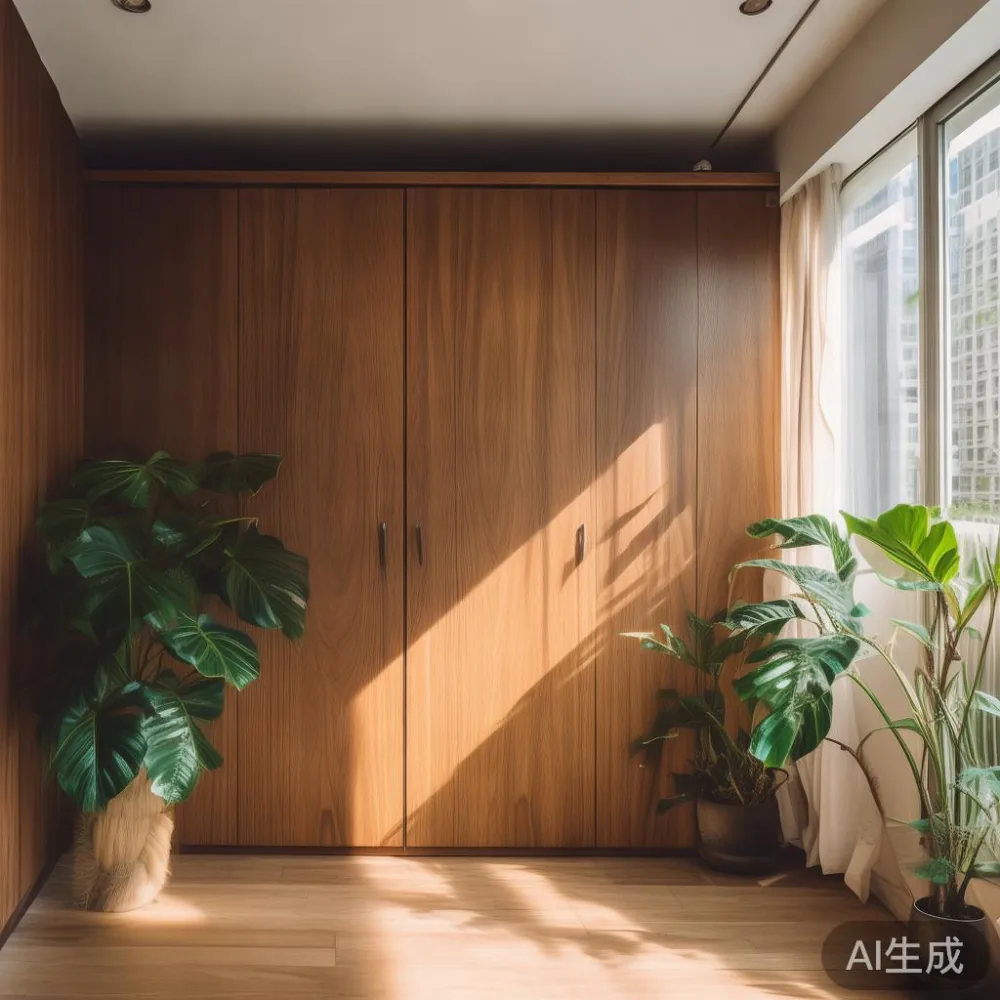
What exactly is a warm minimal interior, and why does it need wood?
Warm minimalism is a softer version of the Scandinavian school. Plain walls, clean lines, restrained decor, but the cool grey that dominated the 2010s is replaced with putty, oat, clay, and the soft honey of natural timber. The risk, in a Singapore bedroom, is going too pale and ending up with a room that looks clinical, or going too warm and sliding into a country look that fights the HDB ceiling height of 2.7 m. Wood solves the balance because it absorbs light instead of bouncing it. A solid wood wardrobe in white oak, ash, or beech gives you visible grain at a human scale, which is what the eye needs to register a room as lived-in rather than staged.
Two practical numbers help. The first is depth: most HDB master bedrooms will swallow a 55 to 60 cm deep wardrobe without blocking the air-con trunking, which is usually routed 20 cm below the ceiling. The second is the proportion rule of thirds. In a room that is 3.2 m wide and 3.6 m long, the wardrobe should occupy roughly one third of the longest wall, so somewhere between 110 and 130 cm wide if you want a softer look, or push to 180 cm if you are a couple sharing hanging space. Going beyond 200 cm on a single wall tends to crush the bed on the opposite side and make the ceiling feel lower than it is.
Is French provincial bed worth it when the wardrobe already carries the classical mood?
Several readers ask me whether a French provincial bed makes sense in a warm minimal bedroom, especially when the wardrobe has classical proportions. My answer, after seeing the style in three showrooms and two HDB installs, is yes, but only as a single heritage gesture. A French provincial bed is worth it when the headboard is a calm shape, the curves are gentle rather than baroque, and the colour matches the wardrobe instead of competing with it. The mistake I see at Punggol condos is a cream provincial bed paired with a grey oak wardrobe, which makes the room look split into two decors.
If you already lean toward American light luxury, the bed can carry a slim upholstered headboard in oatmeal linen and still sit happily next to a white oak wardrobe. If you prefer post-modern light luxury, keep the wardrobe absolutely flat, then let the bed do the subtle curves. Pricing for a solid hardwood provincial-style queen bed in Singapore sits between S$1,650 and S$2,900 landed, and a good piece will last 12 to 15 years, which is roughly the mortgage cycle of an HDB flat. Pair the bed with a 60 cm wide solid wood nightstand in the same species and the room reads as one family, not a catalogue page.
How wide is a Singapore lift, and why does the wardrobe have to be designed around it?
This is the question I wish more brochures answered. An older HDB passenger lift in estates like Bedok and Tampines has a clear door opening of about 0.9 m wide by 2.1 m tall, and a car internal of roughly 1.2 m by 1.5 m. A new condo lift, the Schindler 5500 type you see in Punggol, is closer to 1.0 m by 2.2 m with a deeper car. A 60 cm deep wardrobe will always fit. A 65 cm deep wardrobe will just clear the older lifts if the box is tilted. Anything above 70 cm has to be flat-packed and assembled in the bedroom, which is fine, but adds roughly 90 minutes of on-site work and about S$120 in installer time.
For a MIDHILL wardrobe, the brand offers 200 cm and 220 cm height options, 160 to 240 cm width, and 55 to 60 cm depth. The 55 cm option exists precisely so the carcass enters lifts in older blocks without disassembly. I tested this last month with a client in Bedok Reservoir: the 55 cm wardrobe, fully assembled at the Foshan workshop, cleared the 0.9 m door with 6 cm to spare. Worth knowing if you live above the fourth floor in a walk-up block with no service lift. The same wardrobe, by the way, weighs between 78 kg and 112 kg depending on size, so the installer team of two is non-negotiable, and your floor should bear at least 150 kg/m² in that corner.
What colours, grains, and handles actually work in a HDB bedroom?
Three timber colours hold up under Singapore light. White oak, with a Janka hardness of 1360, is the safest. Ash, slightly harder at 1320 but with a stronger grain, reads more contemporary. Beech, around 1300, is the warmest but yellows under the tropical sun, so keep it on the wall that does not face the window. Avoid the orange-tinted rubberwood that many entry-level wardrobes use; it photographs warmly in the showroom and then looks reddish next to a beige wall at home.
Handles deserve more thought than they usually get. In a warm minimal room, a 12 cm long recessed wooden pull, or a 96 mm brushed brass cup pull, keeps the wardrobe front quiet. Long bar handles above 30 cm are American light luxury territory and will make the door look taller, which is useful when the ceiling is only 2.7 m. Skip chrome; it reads cooler than the rest of the room and pulls the eye. Soft-close hinges cost about S$28 per door but prevent the 11 p.m. slam that wakes the household when someone comes in late from a shift at Changi.
How do you coordinate the wardrobe with a marble table, a dining table, and a light luxury accent chair without cluttering the room?
The trick is to repeat one material, not one style. A solid wood wardrobe in white oak pairs naturally with a solid wood dining table in the same species, even if the table is 140 cm long and seats four. The eye reads them as one material family, which is what gives a warm minimal room its calm. A marble table, by contrast, should be a single moment: a 90 cm round Carrara top on a slim brass base, placed where the afternoon light catches it. Two marble surfaces in one flat will start to feel like a showroom.
A light luxury accent chair in boucle or oat-coloured velvet is the third member of the family. Put it in the bedroom corner with a 45 cm wide reading floor lamp and a small ceramic side table, and you have a seating zone that costs S$850 to S$1,400, which is far less than a second wardrobe but reads as intentional. Skip the Boho for dining room route in the master bedroom, because Boho is a layered, textural language that fights the clean wardrobe front. Save the Boho for the dining room only, where a rattan pendant, a linen runner, and the same solid wood dining table can support the look without competing with bedroom storage.
What does a coordinated MIDHILL wardrobe actually look like, and what does it cost in Singapore dollars?
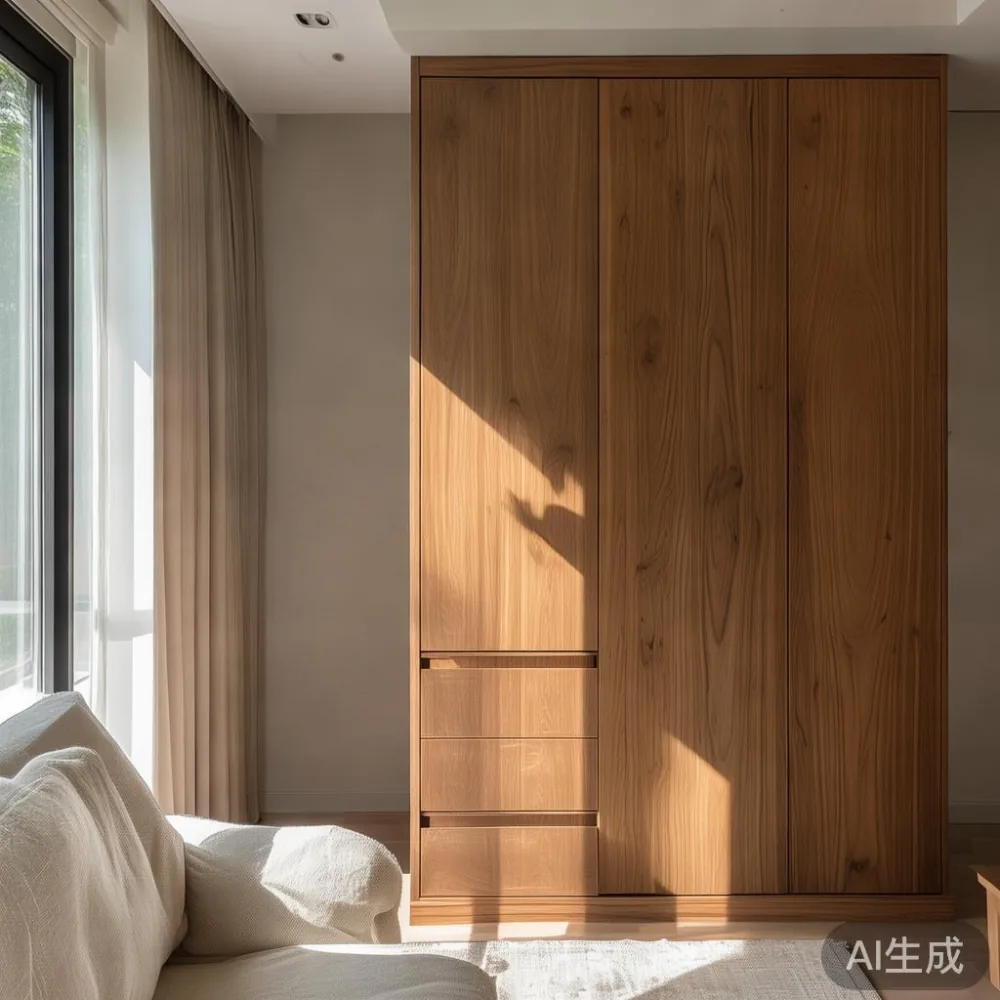
A typical MIDHILL wardrobe spec, the one I measured in Tampines last month, runs as follows. 200 cm tall, 180 cm wide, 58 cm deep, in white oak veneer over a solid rubberwood carcass, with three doors, two interior drawers on soft-close slides, and a single hanging rod at 165 cm from the floor. The landed price in Singapore, including GST at 9 percent, landed shipping from Foshan, and doorstep delivery, sits between S$2,180 and S$2,640 depending on handle choice. Adding two extra drawers, a jewellery tray, and a full-length mirror on the inside of one door pushes the total to roughly S$2,950.
Free shipping kicks in above US$350, which is about S$475 at current rates, and the brand includes a 10-year structural warranty plus lifetime refinishing. In practice that means you can have the wardrobe sanded and re-oiled around year eight for the cost of transport only, which is roughly S$220 each way. Returns are accepted within 14 days if the piece is unused, and Foshan to Singapore sea freight currently runs 18 to 24 days, so plan your handover date around that window, not the day before Chinese New Year. A MIDHILL light luxury wardrobe in white oak, paired with a solid wood bed frame, a slim marble table, and one light luxury accent chair, gives you a complete bedroom that weighs about 320 kg of furniture and still leaves the 3.2 m wall looking like a quiet, warm minimal space.
How do you plan the install day so the wardrobe survives Singapore humidity and your corridor?
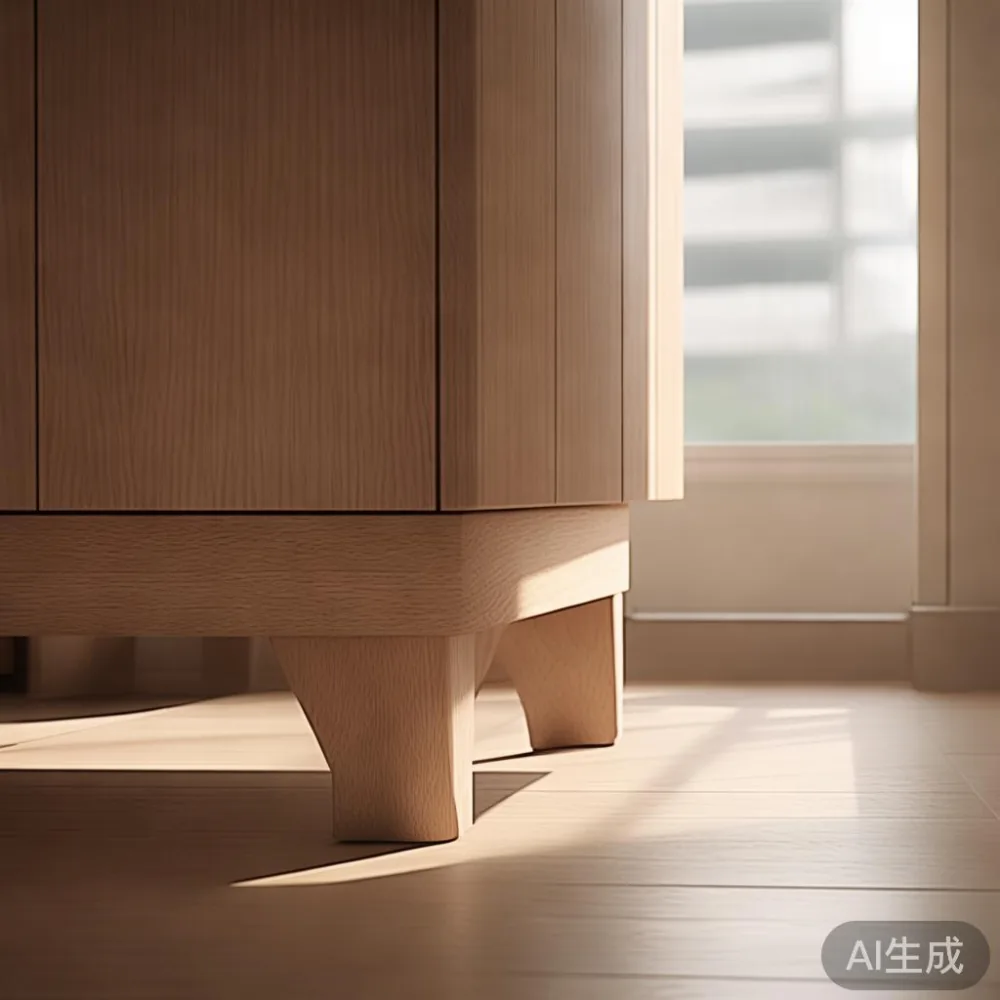
Three small habits save a wardrobe in its first year. First, let the piece acclimatise in the bedroom for 48 hours before the installer arrives; the Foshan workshop runs around 22°C and 55 percent humidity, while a HDB bedroom often sits at 28°C and 80 percent, and the wood will move. Second, place a 3 mm felt pad under each leg so the wardrobe does not wick moisture from a slightly damp screed, especially in ground-floor units in Punggol Waterway. Third, leave a 15 mm gap at the back for air movement; the installer will want to push the wardrobe flush to the wall, and you should politely refuse. The 15 mm gap prevents the back panel from trapping condensation against plaster that sweats in the early morning hours.
For corridors, the rule is simple. If your corridor is under 1.1 m wide, request a flat-pack delivery, which adds about S$140 and 60 minutes of on-site time but avoids the angled carry that scratches the box and stresses the door frames. If the lift is the older 0.9 m type, specify the 55 cm deep carcass from the start, because the factory cannot re-cut a 60 cm wardrobe into a 55 cm one after the fact. These two numbers, corridor width and lift door width, decide more about your bedroom than any colour swatch you will pick on a Saturday afternoon.
What about care, refinishing, and the long second life of a solid wood wardrobe?
Solid wood rewards a tiny amount of routine. Wipe the doors every two weeks with a barely damp microfibre cloth, never a wet one. Twice a year, apply a thin coat of hard wax oil, the same Osmo or Fiddes type that the workshop used, and buff after 20 minutes. The first refinish, around year eight, will cost you S$440 in labour and materials for a two-door wardrobe, and S$620 for a three-door. By year fifteen, the wardrobe will have absorbed the patina of your household, and that patina is the whole point of warm minimalism: a room that looks calm on day one and quietly deeper on day five thousand.
If you ever want a fresh look, the wardrobe can be sanded back to bare wood and finished in a different tone. White oak moves to natural ash in a single day, then to driftwood grey the day after, which means a single MIDHILL wardrobe can carry you through two or three decor cycles without replacement. That is the deeper argument for solid wood over engineered board, beyond the marketing line: the piece is allowed to change with you, and the change is mechanical, not emotional. A 2,400 SGD investment that lasts 15 to 20 years works out to roughly S$11 to S$15 per month, which is less than a single meal at a Bedok hawker centre, and the bedroom quietly carries the entire home around it.